analysis
Why Architecture Became a Key Actor in AI Fashion Imagery
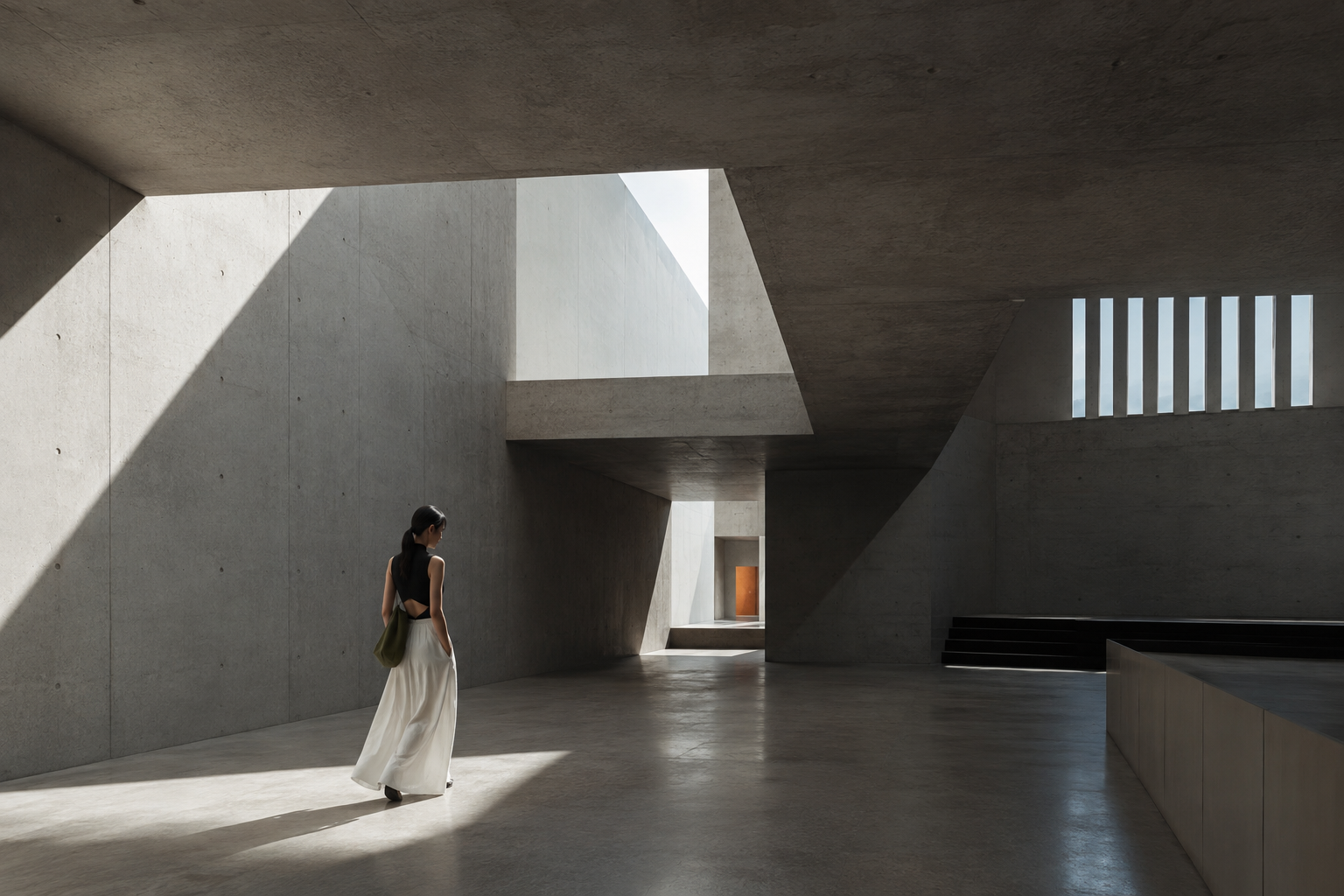
How space sets scale, light, model behaviour and trust in a generated fashion frame.
Editorial question
Which observable signs let us test the thesis of “Why Architecture Became a Key Actor in AI Fashion Imagery”: how space sets scale, light, model behaviour and trust in a generated fashion frame?
Short answer
How space sets scale, light, model behaviour and trust in a generated fashion frame.
Thesis
Why Architecture Became a Key Actor in AI Fashion Imagery: the value of generative imagery is determined not by tool novelty but by the quality of a visual decision that can be explained and repeated.
Evidence and cases
Architecture makes an image measurable
The model can barely move, yet one stair, recess or window turns the image from a portrait into a situation: architecture tells the body where to stand and how to feel believable. This scene matters because it shows the transition from an abstract idea to a visual decision. A generative model does not cancel the requirements of light, scale, material or sequence. It simply makes the testing stage faster and more visible. If the question is vague, the result will be convincing only by accident.
This article treats the subject as a professional method: How space sets scale, light, model behaviour and trust in a generated fashion frame. The main task is to separate the tool from the decision and identify which actions can be repeated in another project. Each section therefore moves from an observable attribute to a test and then to a production conclusion. That is more useful than a list of fashionable features. It lets a team discuss images through causes rather than taste.
Perspective tests generation more strictly than a face
The third pass is useful as a constraint test: first name what already exists in the scene or process as a testable fact. At this point, material matters more than a general impression because it gives the team a concrete criterion. [source] If spatial logic changes, the result should change predictably; otherwise the system depends on chance. Professional practice begins when scene can be described before generation rather than only after a lucky result. It is therefore useful to compare two nearly identical variants in which one cause changes instead of simply comparing the best and worst image.
The fourth pass turns observation into a decision: first name what already exists in the scene or process as a testable fact. At this point, body matters more than a general impression because it gives the team a concrete criterion. [source] If repetition changes, the result should change predictably; otherwise the system depends on chance. Professional practice begins when trust can be described before generation rather than only after a lucky result. It is therefore useful to compare two nearly identical variants in which one cause changes instead of simply comparing the best and worst image.
Spatial material dictates the light
The third pass is useful as a constraint test: first name what already exists in the scene or process as a testable fact. At this point, depth matters more than a general impression because it gives the team a concrete criterion. [source] If anomaly changes, the result should change predictably; otherwise the system depends on chance. Professional practice begins when architecture can be described before generation rather than only after a lucky result. It is therefore useful to compare two nearly identical variants in which one cause changes instead of simply comparing the best and worst image.
The fourth pass turns observation into a decision: first name what already exists in the scene or process as a testable fact. At this point, spatial logic matters more than a general impression because it gives the team a concrete criterion. [source] If scene changes, the result should change predictably; otherwise the system depends on chance. Professional practice begins when scale can be described before generation rather than only after a lucky result. It is therefore useful to compare two nearly identical variants in which one cause changes instead of simply comparing the best and worst image.
The body becomes a test of scale
The third pass is useful as a constraint test: first name what already exists in the scene or process as a testable fact. At this point, repetition matters more than a general impression because it gives the team a concrete criterion. [source] If trust changes, the result should change predictably; otherwise the system depends on chance. Professional practice begins when perspective can be described before generation rather than only after a lucky result. It is therefore useful to compare two nearly identical variants in which one cause changes instead of simply comparing the best and worst image.
The fourth pass turns observation into a decision: first name what already exists in the scene or process as a testable fact. At this point, anomaly matters more than a general impression because it gives the team a concrete criterion. [source] If architecture changes, the result should change predictably; otherwise the system depends on chance. Professional practice begins when light can be described before generation rather than only after a lucky result. It is therefore useful to compare two nearly identical variants in which one cause changes instead of simply comparing the best and worst image.
A small anomaly works harder than a fantastical building
The third pass is useful as a constraint test: first name what already exists in the scene or process as a testable fact. At this point, scene matters more than a general impression because it gives the team a concrete criterion. [source] If scale changes, the result should change predictably; otherwise the system depends on chance. Professional practice begins when material can be described before generation rather than only after a lucky result. It is therefore useful to compare two nearly identical variants in which one cause changes instead of simply comparing the best and worst image.
The fourth pass turns observation into a decision: first name what already exists in the scene or process as a testable fact. At this point, trust matters more than a general impression because it gives the team a concrete criterion. [source] If perspective changes, the result should change predictably; otherwise the system depends on chance. Professional practice begins when body can be described before generation rather than only after a lucky result. It is therefore useful to compare two nearly identical variants in which one cause changes instead of simply comparing the best and worst image.
Why a believable space matters more than an impressive backdrop
The third pass is useful as a constraint test: first name what already exists in the scene or process as a testable fact. At this point, architecture matters more than a general impression because it gives the team a concrete criterion. [source] If light changes, the result should change predictably; otherwise the system depends on chance. Professional practice begins when depth can be described before generation rather than only after a lucky result. It is therefore useful to compare two nearly identical variants in which one cause changes instead of simply comparing the best and worst image.
The fourth pass turns observation into a decision: first name what already exists in the scene or process as a testable fact. At this point, scale matters more than a general impression because it gives the team a concrete criterion. [source] If material changes, the result should change predictably; otherwise the system depends on chance. Professional practice begins when spatial logic can be described before generation rather than only after a lucky result. It is therefore useful to compare two nearly identical variants in which one cause changes instead of simply comparing the best and worst image.
Visual analysis
The article's visual logic can be tested through «Architecture makes an image measurable», «Perspective tests generation more strictly than a face», «Spatial material dictates the light», «The body becomes a test of scale», «A small anomaly works harder than a fantastical building», «Why a believable space matters more than an impressive backdrop». Compare these signs within one object or sequence rather than judging them as an isolated style.
Practical implication
Practical use begins by testing the thesis against a specific object, frame, or production decision. For this subject, the working criterion is: How space sets scale, light, model behaviour and trust in a generated fashion frame.
Limitations
“Why Architecture Became a Key Actor in AI Fashion Imagery” is limited to its stated subject: how space sets scale, light, model behaviour and trust in a generated fashion frame. The analysis does not replace examination of a specific original, project, or production context.
Sources
The open sources for “Why Architecture Became a Key Actor in AI Fashion Imagery” are listed in the page panel and define the boundary of its verifiable facts.