analysis
Shoot Day: Managing Image, People and Time
What actually needs control on set — from pre-light and tethering to the hero frame, continuity and a backup plan.
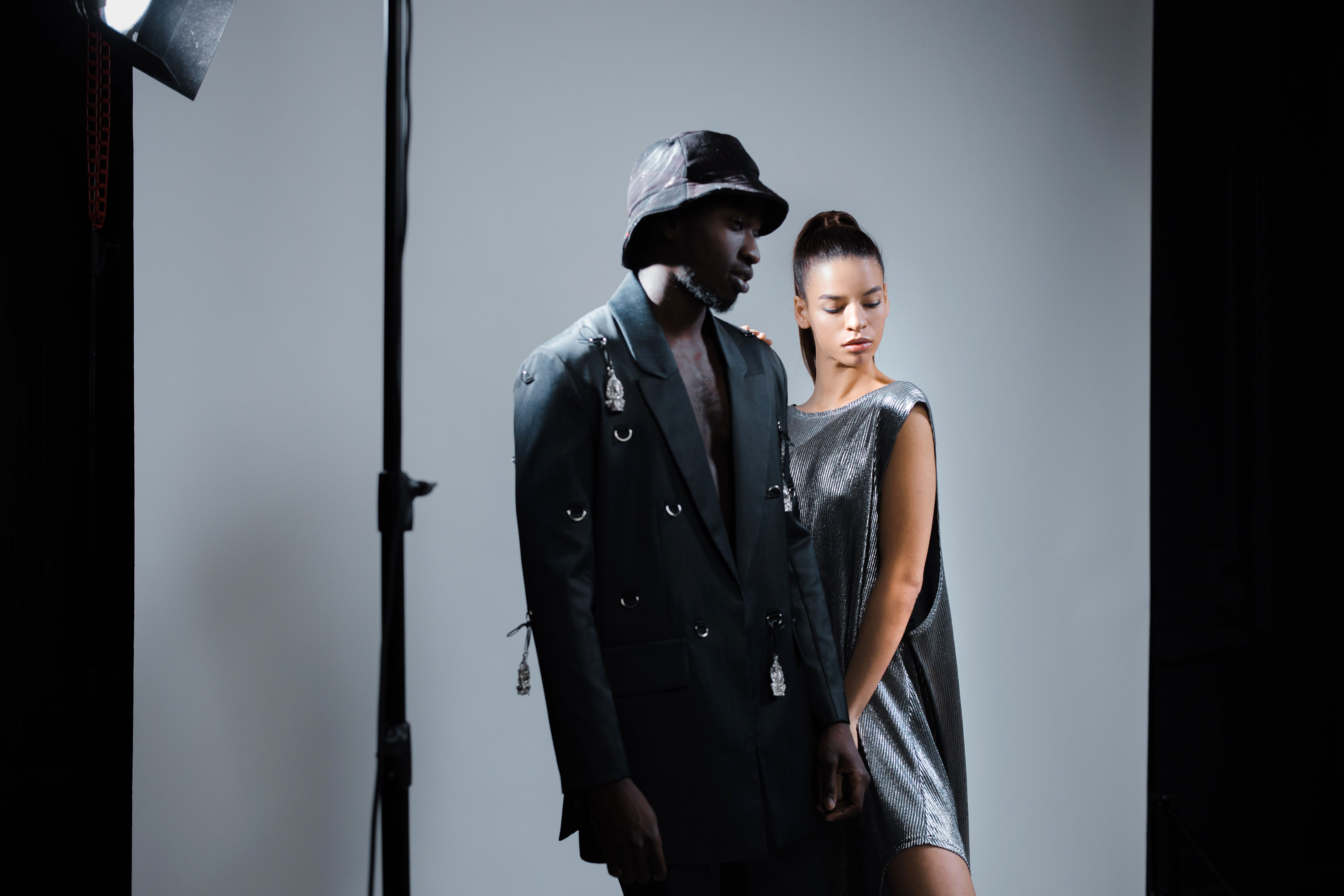
Hero: production workflow treated as an editorial subject.
Editorial question
How do you finish a single shoot day with an entire usable campaign rather than a handful of lucky photographs?
Short answer
Shoot day is where every decision from brief and preproduction collides with reality: people, time, light, fabric, technology and chance. A professional workflow does not remove improvisation; it protects it. The hero is captured under the right conditions, tethering gives the team shared visual control, naming and backup protect the material, and checkpoints prevent a collection of beautiful individual frames from replacing the actual campaign task.
Thesis
The most dangerous idea on set is that a good photographer will “figure it out.” They may — but only if the underlying system already works. Freedom follows control: stable light, clear priorities, useful file names, active backup, wardrobe checks and one shared monitor. Then an unexpected gesture becomes a discovery instead of a random event inside chaos.
Hero: production workflow treated as an editorial subject.
Evidence and cases
The First Hour Matters More Than the Last
Open the set by checking the environment, not the camera. What changed since recce? Where is the sun? Did a reflective banner appear outside? Is power working? Where will wardrobe and hair/makeup operate? This short walk prevents two hours of building a set only to discover that the required camera position is blocked.
Then establish the technical base: camera, card or tether, time sync, white-balance strategy, naming, capture folder and backup destination. These steps are boring only until a file disappears.
Pre-Light: Light Before Talent
Test with a person of similar height or a stand-in, but evaluate dynamic range, shadow shape, reflections, background, wall color and material response. If fabric matters, test fabric — not only a grey card.
Also test the limits of the lighting system. What happens if the model steps forward, lifts an arm, or changes into black? A setup that works only inside a forty-centimeter patch of floor may be too fragile for a live shoot.
Tethering as a Shared Language
A large monitor is not there so everyone can direct the photographer. It creates one source of truth. Styling sees folds and accessories, beauty sees skin and hair, art direction sees composition and sequence, the client sees the task. Decide in advance who may stop the shoot and for what reason, otherwise the monitor becomes a parliament.
Tethered capture also assigns names and storage at capture time, so naming must be designed before the first frame. Capture One supports Session structures and token-based naming, useful for disciplined high-volume shoots.
What to Check Beyond Beauty
Use an order. First technical risk: focus, intended motion, highlight retention, background problems. Then product: fit, jewelry, logo, shape, color. Then person: hands, eyes, hair, body tension, unwanted folds. Only then judge emotional power.
If the first reaction is only “wow,” the brain easily forgives a small problem that later makes the image unusable. A hero must be emotionally strong and technically publishable at the same time.
Direct Action, Not Poses
“Hand here, chin there” quickly turns a person into a mechanism. Give actions instead: cross the space without stopping; find the light and hold for a second; adjust the sleeve without looking at camera; pause as if a sound happened off frame. Pose then emerges as a consequence.
The action must still belong to the direction. A campaign built on architectural silence can be destroyed by energetic fashion choreography even if every frame looks individually impressive.
Continuity: Build a Series
It is easy to fall in love with a new technique and slowly change the project language. Periodically review a sequence of six to ten current selects, not only the latest image. Did camera height change? Did skin become warmer? Did contrast increase? Did a minor prop become the protagonist?
Continuity does not mean identical photographs. It means different photographs still obey the same underlying rules.
Hero Checkpoint
Do not leave the hero for later. Shoot it in the best conditions while the team is fresh. After strong variations, stop briefly: is there a technically clean frame, does it survive the required crop, is there text-safe space, is the product readable, is the approved look correct?
If the hero is not protected, do not move to the next complicated setup. This rule prevents the classic end-of-day problem: many beautiful supporting frames and no main image.
Time and Energy
A schedule should account for cognitive load, not only minutes. Complex lighting, emotionally demanding direction and the key client frame should not sit back-to-back without reset. Some tasks belong early while talent is fresh; others benefit from a team that has warmed up.
Buffers are not wasted time. They are system insurance. On a perfect day they become an extra image; on a difficult day they stop delay from cascading.
Backup and Data Hygiene
Create at least two independent copies as early as possible. Do not wait until wrap, especially with tethered workflows where the camera may not hold a duplicate. Verify more than the folder copy: compare file count and open random frames.
File names should still make sense six months later. A good structure connects job, date, look or shot, and version without becoming so complex that nobody uses it.
When to Deviate From Plan
A plan should not prohibit discovery. Unexpected light, a better movement, or fabric reacting beautifully to wind deserves exploration — once mandatory deliverables are protected.
Improvisation is professional when the team consciously breaks a rule for a stronger result. Chaos begins when a new solution appears only because the original one was never prepared.
Practical Takeaways
Check the location before building the camera. Pre-light with relevant material. Set tethering, naming and backup before the first important frame. Review with a checklist, not only emotion. Direct actions instead of poses. Check continuity in sequences. Protect the hero before optional experiments. Leave room in the schedule for reality.
Professional Checklist
☐ Location rechecked
☐ Pre-light approved
☐ Naming and capture folders tested
☐ Two-copy backup path ready
☐ Hero checkpoint scheduled
☐ Continuity review scheduled
☐ Wrap file-count verification
Visual analysis
The article's visual logic can be tested through «The First Hour Matters More Than the Last», «Pre-Light: Light Before Talent», «Tethering as a Shared Language», «What to Check Beyond Beauty», «Direct Action, Not Poses», «Continuity: Build a Series». Compare these signs within one object or sequence rather than judging them as an isolated style.
Practical implication
Check the location before building the camera. Pre-light with relevant material. Set tethering, naming and backup before the first important frame. Review with a checklist, not only emotion. Direct actions instead of poses. Check continuity in sequences. Protect the hero before optional experiments. Leave room in the schedule for reality.
Limitations
“Shoot Day: Managing Image, People and Time” is limited to its stated subject: what actually needs control on set — from pre-light and tethering to the hero frame, continuity and a backup plan. The analysis does not replace examination of a specific original, project, or production context.
Sources
The open sources for “Shoot Day: Managing Image, People and Time” are listed in the page panel and define the boundary of its verifiable facts.