analysis
A Magazine Is No Longer Paper
Why editorial culture now lives across the issue, archive, database, event, studio, object and space
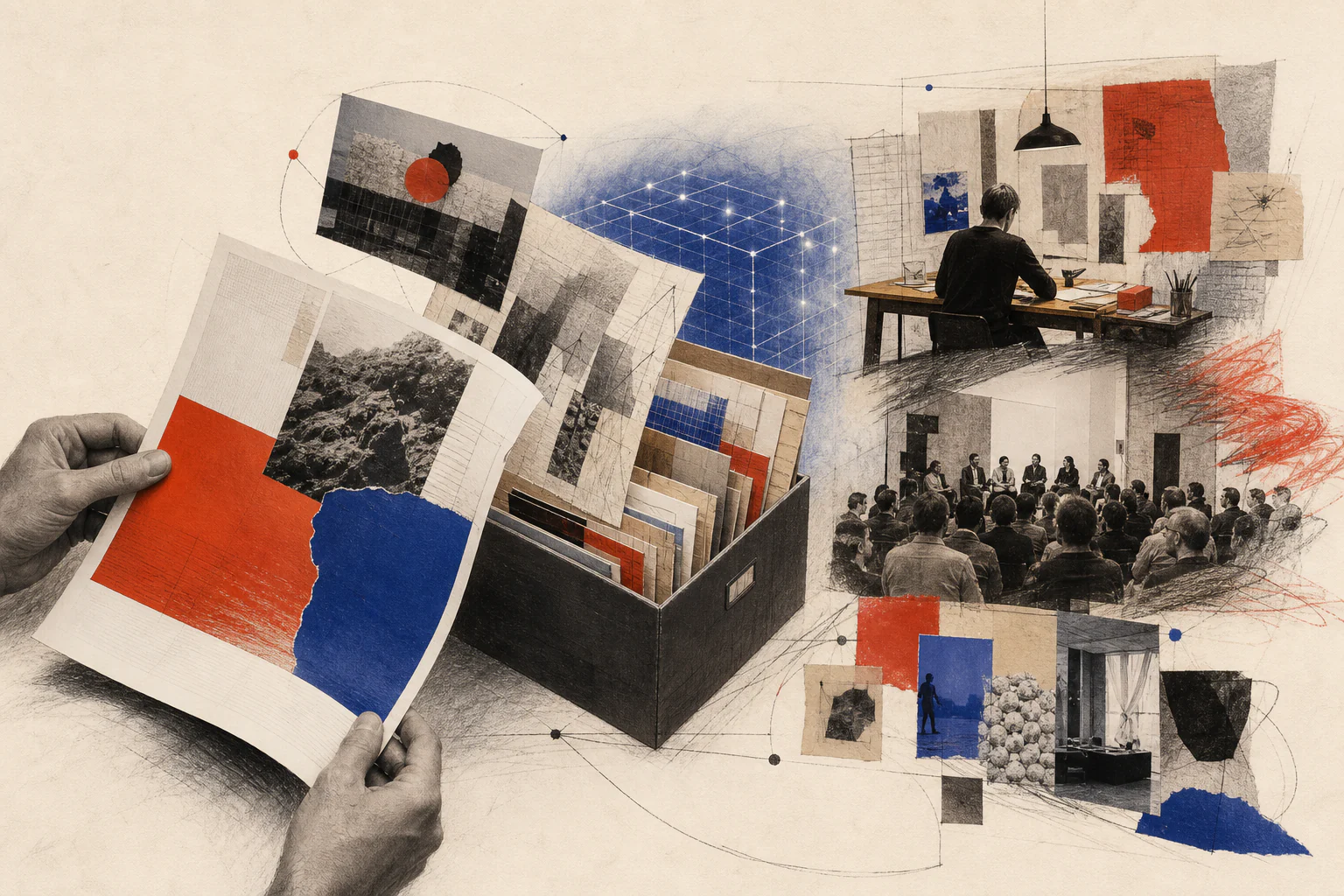
Paper was an interface of the magazine, not its essence. When carriers split into dozens of formats, editorial montage remains central: the ability to select, connect, rank and leave something outside the issue.
Editorial question
If a magazine can be a website, database, app, event, studio, exhibition and even a fashion brand, what still makes it a magazine?
Short answer
Editorial logic. Vogue shows how the issue expands into archive, Vogue Runway and Vogue World; Dazed turns editorial vision into a media group, studio, Dazed 100 and community; The Face shows that a cultural name can outlive a production stop and ownership change; Visionaire turns the carrier into an object and experience; 032c moves magazine voice into clothing, retail and gallery space. 1
Expansion does not guarantee quality. The more formats a magazine occupies, the more important it becomes to locate its independent editorial centre - the place that decides not only what to publish, but what not to publish.
Thesis
The contemporary magazine is no longer defined by its carrier. Its core is a repeatable editorial contract: selection, sequence, authorship, rhythm, memory and a relationship with an audience. Print remains one of the strongest interfaces of that system, but it now operates beside the archive, database, video, event, studio, app, object and physical space.
The phrase "a magazine is no longer paper" does not mean that print has lost value. It means the opposite: paper has become a deliberate choice among several modes of publication, while the value of the magazine has moved from carrier material to the editorial ability to organise cultural attention.
Paper was an interface of the magazine, not its essence. When carriers split into dozens of formats, editorial montage remains central: the ability to select, connect, rank and leave something outside the issue.
Evidence and cases
You open a magazine - without opening paper
In 2026 a magazine may begin without a cover. It may open as a runway database, an email, a vertical video, a livestream, a podcast, an exhibition, an app, a shop or an archive in which one search connects decades of images. Paper has not disappeared. What has disappeared is its monopoly on defining the magazine.
That distinction matters. Digitisation is often described as a simple migration: the magazine used to be printed, and now the same material is placed on a website. The strongest editorial institutions have changed more deeply. They do not produce a copy of the issue in another channel; they create several different entrances into one cultural system.
So the interesting question is no longer whether print will die. It is what remains of the magazine when the page stops being its boundary. 1
The issue was a container. The editorial desk turned out to be a system
The printed issue historically gave the magazine a very clear form: a finite number of pages, a sequence of stories, a cover, a date, a price and a physical moment of release. That finitude forced editors to choose. Everything could not fit; someone had to decide what entered the issue and what remained outside it.
Digital media removes the limit of volume but does not remove the editorial function. On the contrary, when publishing can be infinite, selection matters more. A magazine survives not because it has paper, but because it has a durable way of connecting subjects, authors, images and time.
In this sense paper was one interface of the magazine. Other interfaces are now the archive, database, video, event, studio, app and physical space. Without an editorial centre, however, all of these extensions become only a stream of content. 2
Vogue: the issue becomes archive, database and event
Vogue shows how a historic magazine can stop coinciding with the printed issue without abandoning print. The Vogue Archive preserves past issues as a continuous historical database, while Vogue Runway organises contemporary fashion by season, city, designer, review, photography and video. The reader no longer arrives only for the new issue; the reader arrives for navigation through the industry. 3 [source]
Vogue World moves further. It turns an editorial name into a live event and broadcast: physical space, performance, clothing, celebrities, partners and a digital audience gather around the magazine brand. Vogue World: Milano is scheduled for 22 September 2026 as the next edition of that event series. 3
The magazine now performs three functions at once: it stores memory, explains the present and produces an event. The printed issue remains important, but it can no longer contain the whole Vogue system.
Dazed: editorial instinct becomes infrastructure
Dazed grew out of a magazine, but the present structure of Dazed Media shows a different scale of editorial identity. Dazed, Dazed Studio, Dazed 100, international editorial nodes and Dazed Club exist within the same field. This is no longer a "magazine plus website" structure. It is a system in which editorial instinct is used for publishing, talent discovery, events, community and commercial production. 5
Dazed Studio is especially useful for analysis because it makes the border between editorial work and client production visible. The studio offers strategy, social storytelling, branded entertainment, visual direction, talent and community work. What was once a secondary commercial function of publishing becomes an explicit infrastructure. 5
Dazed 100 works in the opposite direction as an editorial mechanism for discovering the future: the list, regional editions and a network of emerging names do not simply describe youth culture; they participate in distributing attention within it. 5
The Face: the magazine can stop while the name keeps moving
The Face offers a more anxious example. The magazine closed in 2004 and was relaunched in 2019, then entered another institutional break. In May 2026 C86 announced that it had acquired The Face from Wasted Talent, while the current homepage says that The Face will return. 9 [source]
Even the legal definition of the site is revealing: The Face describes its system as the website, associated digital properties and the magazine in all formats, print or digital. The name is therefore defined more broadly than one carrier. 1
This is not proof that a magazine brand is immortal. Pauses, ownership changes and stopped production reveal the fragility of the model. But they also expose a strange property of the contemporary magazine: cultural capital can outlive a particular production cycle. The Face archive already operates as museum history; the 2025 Culture Shift exhibition at the National Portrait Gallery turned past pages into a public cultural object in their own right. 9
Visionaire: sometimes the magazine becomes more material, not less
If the digital story suggests that the magazine will gradually dissolve into the screen, Visionaire offers the opposite scenario. Its issues turned publishing into a portfolio, box, set, large-format object, limited edition or mechanism of interaction. Paper did not disappear; it became only one material among others. 13
Today Visionaire describes itself as an experiential agency and lists public art installations, film, immersive and interactive experiences, branded content and art multiples among its formats. This is almost a literal move from "the magazine as object" to "the editorial institution as producer of experience." 13
Visionaire 65 FREE broke the standard issue model especially clearly: a series of large-format posters was distributed free in urban space, turning the issue into publication, event and public image at once. Here the future of the magazine was not dematerialisation but a change in the idea of the carrier itself. 1
032c: the editorial voice moves onto the body, into the shop and into the gallery
032c describes itself as a media and fashion company for the 21st century: the project began as a Berlin magazine in 2000 and now connects magazine publishing, ready-to-wear and cultural experiences. On its current site, Magazine, Store, 032c Readytowear and editorial categories exist side by side. 15
The physical extension is especially legible. 032c WORKSHOP opened in Berlin as a stand-alone retail venue in which an exhibition zone precedes the product area; the brand framed the relationship almost architecturally, placing culture in front and commerce behind. In 2024 it launched a permanent 032c Gallery with its own exhibition programme. 15 [source]
The printed issue has not disappeared: Issue #49 "MEMPHIS" is the Summer 2026 edition. The simultaneity is what matters. 032c did not simply "move" from magazine to clothing or gallery. It made different carriers work as parts of one editorial world. 1
The central conflict: editorial culture or branded content
The further a magazine expands beyond the page, the harder it becomes to see where editorial work ends and commercial production begins. An in-house studio can fund journalism, an event can expand the audience, and a store can turn visual language into physical experience. But every new format also increases the risk that editorial tone becomes a service for commercial objectives.
For a fashion magazine this conflict is especially sharp: the industry it is supposed to analyse also buys advertising, commissions content, provides access to subjects and supplies much of its visual world. If the editorial platform itself becomes an agency, shop or fashion brand, the need to mark roles and interests only grows.
Interpretation
A magazine stops being a magazine not when paper disappears, but when the editorial desk loses the ability to say "no." If every partnership automatically receives the same cultural weight as an independent editorial decision, format expansion becomes a loss of editorial boundary.
The central question of the contemporary magazine is therefore not how many platforms it covers, but whether it preserves an independent logic of selection. 5
The algorithm gives an infinite feed. A magazine must give a finite position
The social feed is designed as endless continuation: the next clip, the next post, the next recommendation. The magazine historically worked differently. Even when it was weekly or monthly, each issue ended. That finitude gave sequence meaning: the cover, the opening story, the pause, the adjacency of images, the final page.
In digital media the magazine can lose this advantage if it simply copies platform mechanics and publishes everything in one equal stream. Then editorial hierarchy dissolves: important, sponsored, archival, urgent and incidental material begin to look like neighbouring cards.
A strong contemporary magazine has to reinvent finitude inside an infinite channel. That finite form might be an issue, selection, series, season, list, exhibition, event or carefully built archive route. The form itself is less important than the moment in which an editorial institution says: this is our version of what matters now. 5
A magazine is no longer paper - but it is still montage
Vogue turns the magazine into archive, database and event. Dazed extends editorial vision into a studio, talent list and community. The Face shows that a name and archive can survive a production stop and a change of ownership. Visionaire turns publishing into object and experience. 032c moves editorial identity into clothing, retail and gallery space.
These models are different, and none of them proves that paper is obsolete. On the contrary, the physical issue may become more valuable precisely because the screen is infinite. But paper is now one mode of the magazine rather than its definition.
The central legacy of magazine culture is montage: the ability to decide which images and voices belong together, what becomes central, what stays outside the issue and what rhythm reading should take. If that ability survives, the magazine can live in paper, database, film, event, exhibition or space. If it disappears, only content remains.
Visual analysis
The article's visual logic can be tested through «You open a magazine - without opening paper», «The issue was a container. The editorial desk turned out to be a system», «Vogue: the issue becomes archive, database and event», «Dazed: editorial instinct becomes infrastructure», «The Face: the magazine can stop while the name keeps moving», «Visionaire: sometimes the magazine becomes more material, not less». Compare these signs within one object or sequence rather than judging them as an isolated style.
Practical implication
Practical use begins by testing the thesis against a specific object, frame, or production decision. For this subject, the working criterion is: Why editorial culture now lives across the issue, archive, database, event, studio, object and space
Limitations
“A Magazine Is No Longer Paper” is limited to its stated subject: why editorial culture now lives across the issue, archive, database, event, studio, object and space. The analysis does not replace examination of a specific original, project, or production context.
Sources
The open sources for “A Magazine Is No Longer Paper” are listed in the page panel and define the boundary of its verifiable facts.