analysis
What makes a photograph look expensive
An expensive image rarely shouts. It knows how to hold distance, air and material.
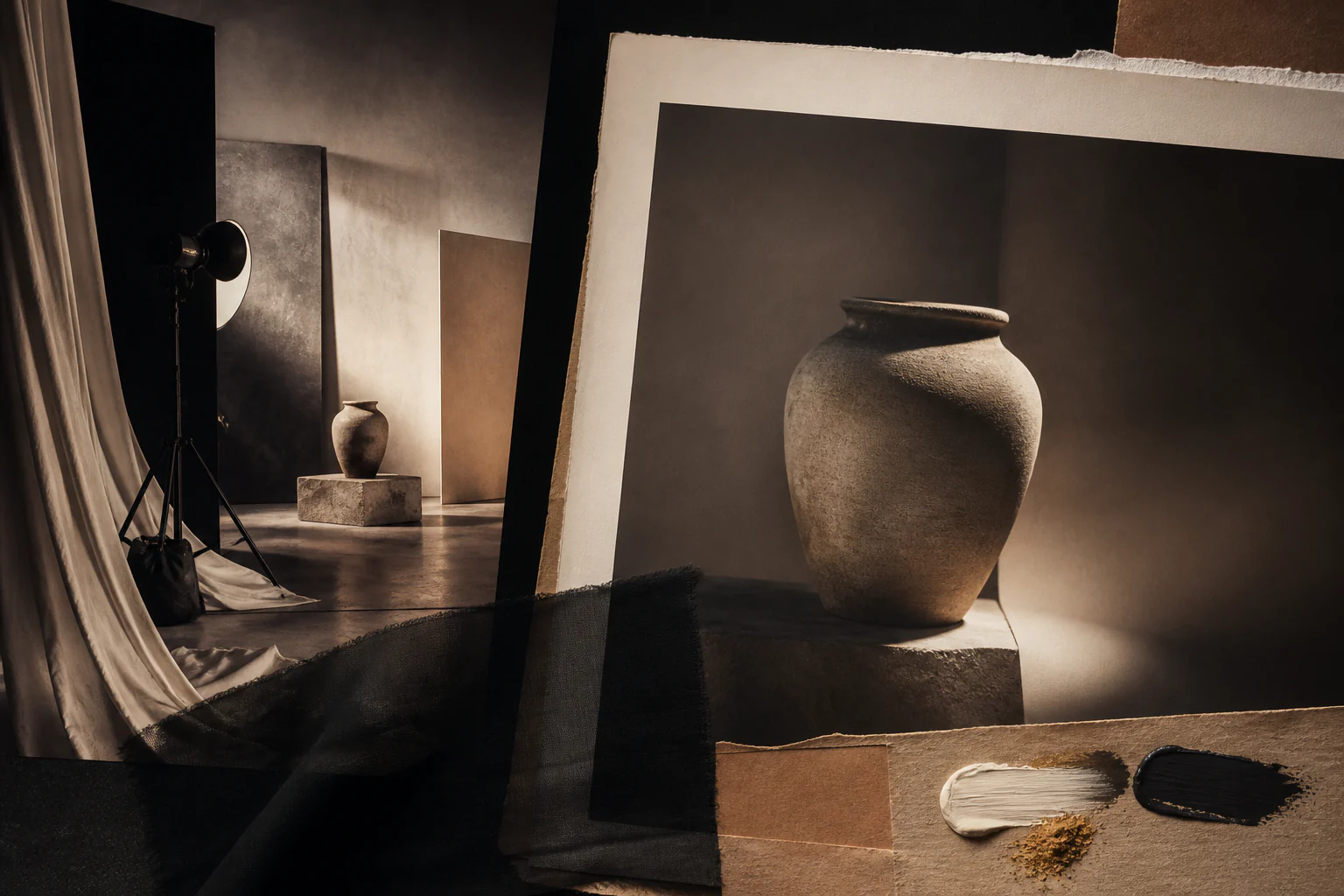
An expensive image rarely shouts. It knows how to hold distance, air and material.
Editorial question
Why can a photograph feel strong before we understand its plot?
Short answer
An expensive image rarely shouts. It knows how to hold distance, air and material.
Thesis
An expensive look is not created by the price of the camera, but by a system of decisions: light, distance, pause, clean color, confident composition, tactile material and the absence of visual noise.
An expensive image rarely shouts. It knows how to hold distance, air and material.
Evidence and cases
Proof versus discovery
A cheap image often tries to prove that it is beautiful. An expensive image lets the viewer discover it.
A cheap frame insists on its own beauty. An expensive one leaves work to the viewer and is therefore received as respect.
Air around the subject
Air around the subject is one sign of value: the person or object is given room to exist.
Free field around an object reports that the area was paid for. Tight cropping saves and reads as saving.
Material must be felt
Material must be felt: leather, metal, wool, concrete and glass cannot be photographed in the same way.
Leather, wool, metal, and glass require different light and different distance. Photographing every surface identically reveals an absence of decision.
One decision instead of many
Too many effects destroy trust. An expensive frame is usually held by one strong decision.
An expensive frame usually rests on one strong move. A sum of effects produces distrust, because it reads as an attempt at compensation.
Clean midtones
Color must be collected: dirty midtones immediately reveal accident.
A dirty midtone is the fastest sign of accident. It arises from mixed light and is barely correctable in post.
Tension matters more than pose
Pose and expression matter less than control of bodily tension and pause.
Control of bodily tone and pause acts more strongly than facial expression. This is what separates directing a frame from taking a picture.
Restraint as a device of luxury
In fashion imagery, value often appears through restraint rather than decoration.
In fashion imagery value arises more often from removal than from addition. A detail taken away costs more than one added.
Order of lines in an interior
In interiors, an expensive look is built from scale, line order and respect for empty zones.
An expensive room shot is built on aligning verticals and respecting empty zones. A tilted vertical devalues a frame instantly.
The object as a character
In product photography, value appears when the object looks less like inventory and more like a character.
A product shot as a stock item sells price. A product shot as a character sells belonging.
Control instead of effort
True expense is when the viewer does not see the effort, but feels the control.
Real expense is invisible: a viewer does not see labour and senses control. Visible effort always cheapens a result.
Visual analysis
The article's visual logic can be tested through «Proof versus discovery», «Air around the subject», «Material must be felt», «One decision instead of many», «Clean midtones», «Tension matters more than pose». Compare these signs within one object or sequence rather than judging them as an isolated style.
Practical implication
Practical use begins by testing the thesis against a specific object, frame, or production decision. For this subject, the working criterion is: An expensive image rarely shouts. It knows how to hold distance, air and material.
Limitations
“What makes a photograph look expensive” is limited to its stated subject: an expensive image rarely shouts. it knows how to hold distance, air and material. The analysis does not replace examination of a specific original, project, or production context.
Sources
- The Metropolitan Museum of Art — The Collection
- MoMA — Collection
- V&A — 100 years of fashion photography
- International Color Consortium
- Adobe — Understanding colour management