analysis
Why an accidental frame is rarely accidental
Accident works only for someone who has trained the eye in advance.
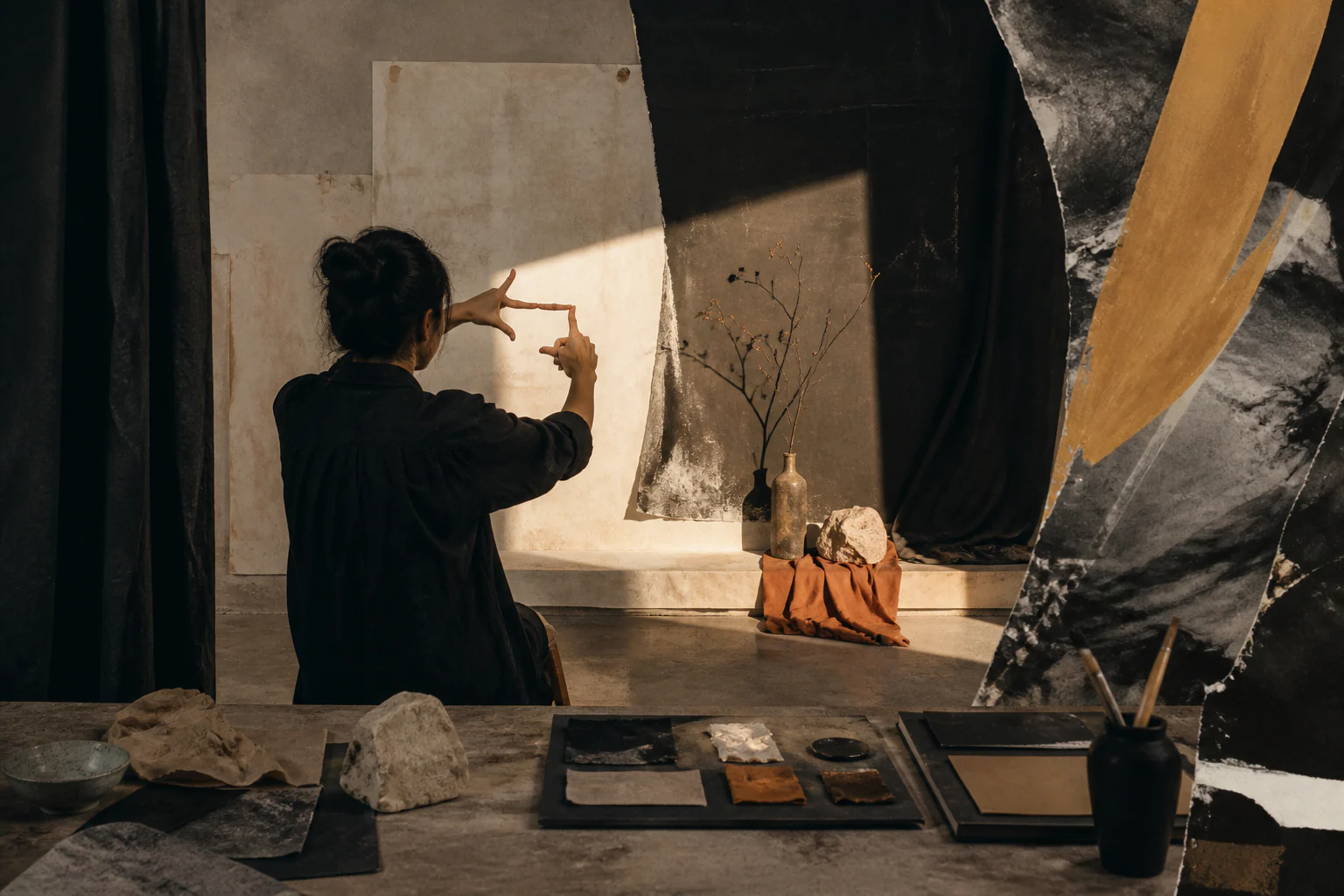
Accident works only for someone who has trained the eye in advance.
Editorial question
Why can a photograph feel strong before we understand its plot?
Short answer
Accident works only for someone who has trained the eye in advance.
Thesis
What the viewer calls an accidental frame is often the result of prepared attention: the photographer knows where to wait for a gesture, how to read light and when not to disturb the scene.
Accident works only for someone who has trained the eye in advance.
Evidence and cases
Readiness before the event
Accident favors the prepared. The camera must be ready before the event becomes beautiful.
A camera must be set before a scene becomes interesting. Chance goes to whoever finished preparing in advance.
Waiting instead of searching
A good street frame rarely emerges from chaos. It emerges from waiting in the right place.
A street frame comes more often from standing in the right place than from moving. Choosing the position is the main work and is done before shooting.
Prepared naturalness
In fashion shoots, the “natural moment” is often built in advance: clothing, light and movement are ready to receive the mistake.
In a fashion shoot a live moment is secured in advance: light set, clothing fixed, movement rehearsed. The mistake is permitted inside prepared conditions.
The gesture inside a ready frame
An accidental gesture becomes a photograph only when composition already exists around it.
An accidental movement becomes a photograph only where a composition already exists. Without one the gesture stays an event rather than an image.
Governing conditions
The photographer does not control everything, but controls the conditions in which accident can become meaning.
A photographer does not govern chance and does govern the conditions in which chance becomes useful. That is the professional part of the work.
Selecting the needed accident
A beginner catches everything. A professional knows what kind of accident they need.
A beginner shoots everything. A professional knows in advance what kind of deviation is required and lets the rest pass.
Defect or aliveness
Blur, closed eyes, tilted horizon or a strange hand can be an error or aliveness - the system of the frame decides.
Blur, closed eyes, and a tilted horizon read as error or as life depending on the rest of the frame. The system decides, not the individual feature.
The danger of the flawless
A too-perfect image can feel dead because reality never resists it.
A frame with no resistance from reality looks dead. A small inconsistency is often the only proof that reality was present.
Archive and attention
The archive of great photography is full of accidents, but almost never of accidental attention.
Collections of great photography are full of accidental events and contain almost no accidental attention. That distinction is decisive in reading the genre.
Life without chaos
An accidental frame becomes strong when the viewer feels life but does not see chaos.
A strong accidental frame gives a sense of life and no sense of disorder. Achieving that balance is the content of the genre.
Visual analysis
The article's visual logic can be tested through «Readiness before the event», «Waiting instead of searching», «Prepared naturalness», «The gesture inside a ready frame», «Governing conditions», «Selecting the needed accident». Compare these signs within one object or sequence rather than judging them as an isolated style.
Practical implication
Practical use begins by testing the thesis against a specific object, frame, or production decision. For this subject, the working criterion is: Accident works only for someone who has trained the eye in advance.
Limitations
“Why an accidental frame is rarely accidental” is limited to its stated subject: accident works only for someone who has trained the eye in advance. The analysis does not replace examination of a specific original, project, or production context.
Sources
- The Metropolitan Museum of Art — The Collection
- MoMA — Collection
- V&A — 100 years of fashion photography
- International Color Consortium
- Adobe — Understanding colour management