analysis
Why photography begins with light, not with the camera
The camera records. Light builds form, value, time and trust.
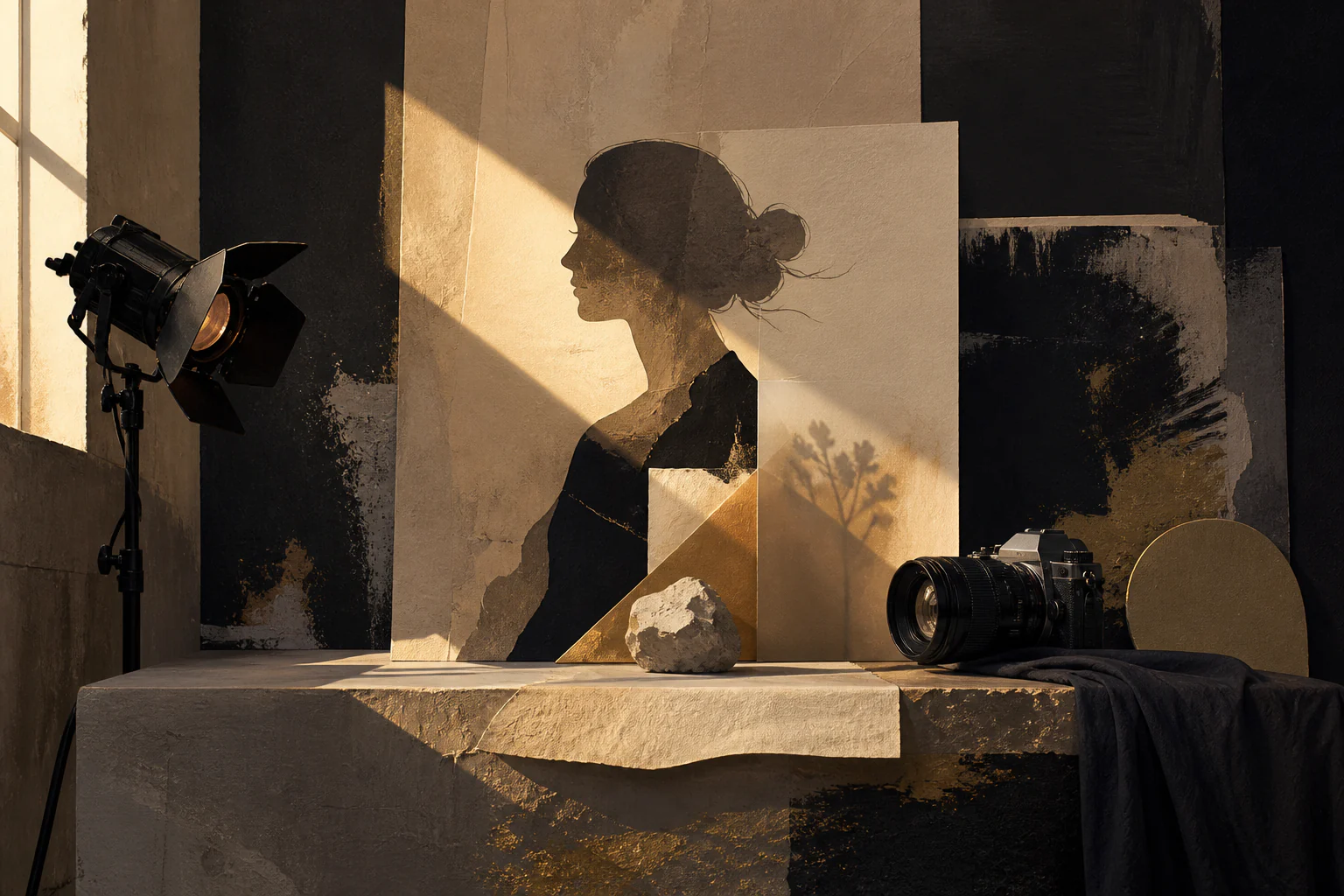
The camera records. Light builds form, value, time and trust.
Editorial question
Why can a photograph feel strong before we understand its plot?
Short answer
The camera records. Light builds form, value, time and trust.
Thesis
Photography is not created by the camera model but by the light situation: direction, distance, softness, color, reflection and shadow. The camera matters, but it arrives later as a recorder of an already-made light decision.
The camera records. Light builds form, value, time and trust.
Evidence and cases
Light decides the question of form
Light decides whether a face has form, a fabric has weight, a wall has air and an object has value.
The test is simple: look away from the frame and ask where the light comes from. If you cannot answer, the picture rests on subject matter rather than on construction.
Changing optics instead of changing light
Beginners often change the lens when they should move the light source or the subject by half a meter.
A lens changes coverage and perspective but not the character of illumination. Half a metre to the side yields a result no change of glass can reach.
Window versus studio
A window can look more luxurious than a studio when it has direction and pause; a studio can look cheap when the light has no purpose.
A window gives directional light with natural falloff; a studio gives control. What looks expensive is not the source but the deliberateness of its placement.
Shadow as the boundary of volume
Shadow is not the enemy of light. It shows where surface ends and volume begins.
Shadow reports where a surface ends. A frame without shadow reads like a drawing: the object is identified but not felt.
Light as a choice of what is sold
In fashion photography, light decides whether the image sells clothes, mood, skin, silhouette or myth.
The same outfit under different light sells fabric, or silhouette, or mood. A decision about light is a decision about what is actually being presented.
Light explains the scale of a room
In interior photography, light does not merely illuminate space: it explains rhythm and scale.
In an interior the direction of light shows depth and height more accurately than a wide angle. Even illumination consumes volume and flattens a room.
Material demands its own angle
In product photography, light practically redesigns the object: metal, leather, glass and plastic each need a different angle of trust.
Metal answers with a highlight, leather with a soft gradient, glass with transmission, plastic with diffusion. One lighting setup for every material means three of them were shot wrong.
What a sensor will not fix
The camera records the result, but it does not invent it. The most expensive sensor will not rescue flat light.
A sensor extends range and lowers noise. It creates no direction and generates no shadow, so flat light stays flat at any resolution.
The character of the transition
A professional looks not only at brightness, but at the character of the transition between light and shadow.
The professional marker is the width of the band between light and shadow. A sharp transition reports sun and a small source; a gradual one reports diffusion and proximity.
The question on set
The main question on set is not which camera, but where the light comes from and what it wants to say.
The correct first question is not about equipment but about position: where does the light come from and what should it say. Everything else follows.
Visual analysis
The article's visual logic can be tested through «Light decides the question of form», «Changing optics instead of changing light», «Window versus studio», «Shadow as the boundary of volume», «Light as a choice of what is sold», «Light explains the scale of a room». Compare these signs within one object or sequence rather than judging them as an isolated style.
Practical implication
Practical use begins by testing the thesis against a specific object, frame, or production decision. For this subject, the working criterion is: The camera records. Light builds form, value, time and trust.
Limitations
“Why photography begins with light, not with the camera” is limited to its stated subject: the camera records. light builds form, value, time and trust. The analysis does not replace examination of a specific original, project, or production context.
Sources
- The Metropolitan Museum of Art — The Collection
- MoMA — Collection
- V&A — 100 years of fashion photography
- International Color Consortium
- Adobe — Understanding colour management