research
032c — Berlin Culture, Fashion and the Magazine as a Production System
A Berlin magazine, fashion brand, gallery, store and archive operating as one cultural production system.
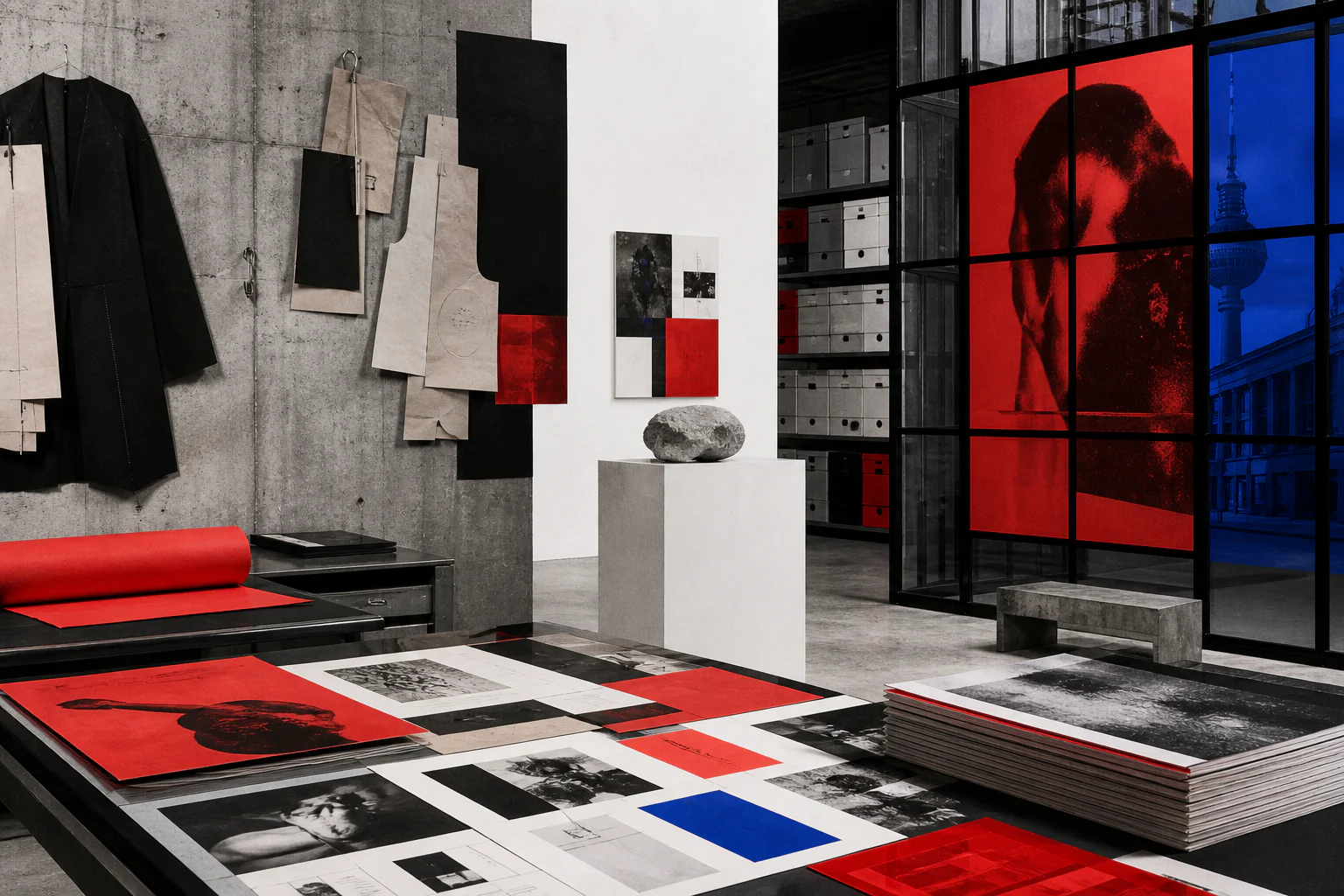
A Berlin magazine, fashion brand, gallery, store and archive operating as one cultural production system.
Editorial thesis
032c matters for VANSMITHLAB as a model of the magazine after the magazine: editing is not limited to the page, but builds space, clothing, events, gallery, store, digital platform and recognizable visual code.
Reader question
Why did a small Berlin publication like 032c become more influential than many conventional magazines, even though its logic feels hybrid, hard and not always easy for mass reading?
Short answer
Because 032c turned the magazine into a cultural operating system: it does not only report on fashion and art, but produces connections between people, objects, city, archive, commerce and desire.
Post-Wall Berlin: the city as an editorial environment
032c does not emerge as a conventional fashion magazine, but as a product of post-Wall Berlin: temporary spaces, club energy, galleries, architectural ruins, theory and new fashion. Its environment was investigative from the start: the magazine treated style as part of politics, art, music, the body and urban memory.
Joerg Koch: the editor as curator of cultural density
Joerg Koch matters not only as founder but as an editor-curator. At 032c, editorial work is not organized around quick news but around dense cultural selection: designer archives, interviews, art projects, criticism, cover figures and cultural documents are brought together inside one issue.
Why 032c: a color code instead of a normal title
The name 032c is tied to a red color code. This is crucial: the magazine chooses a sign close to industrial marking, printing and visual systems rather than a descriptive name. Red becomes not decoration but a way to turn the publication into a recognizable object.
Early issues: minimalism, red and refusal of soft gloss
The early issues worked almost like color samples and research folders. They had less of the usual magazine softness and more of the feeling of material, archive and laboratory. This beginning allowed 032c to stand apart from fashion titles that mainly sold a dream.
English from Berlin: locality without provincialism
032c is published from Berlin but addresses an international reader. English places it inside the global field of fashion, art and criticism, while the Berlin position keeps a distance from Paris, London and New York. Its particular tone emerges from that balance.
The magazine as a research dossier
One of 032c’s strengths is the long-form article, archival selection and thematic dossier. The magazine can speak about Raf Simons, Rei Kawakubo, Helmut Lang, architecture, body politics or club culture as connected parts of contemporary visual life.
Mike Meire and rough graphic energy
032c’s visual language is associated with sharp graphics, dense spreads, red color, large headlines and print force. Mike Meire’s work matters as an example of how a magazine can be intellectually rigorous and aggressively physical in its typography.
Manual for Freedom, Research and Creativity
The formula Manual for Freedom, Research and Creativity explains 032c well. It is not just a slogan but an editorial program: freedom as position, research as method, creativity as the production of cultural connections.
Fashion as an engine of visual culture
032c does not separate fashion from art, architecture and music. In the magazine, fashion operates as an engine of images, not as a clothing catalogue. Designers, photographers, models, musicians and artists appear inside one shared cultural map.
Designer dossiers: archive against seasonality
For 032c, current collections are not enough. Large designer features turn fashion into a historical and intellectual field. This resists seasonality: the magazine shows that a garment lives beyond the show when memory and theory surround it.
Supreme, streetwear and late capitalism
032c understood early that streetwear could not be reduced to youth clothing. It is a system of desire, scarcity, signs, collaboration and cultural capital. In the magazine, street culture sits next to museums, criticism, architecture and high design.
Photography: coldness, body and image power
032c photography often looks tense rather than romantic: bodies, clothing, interiors, clubs and objects are fixed as signs of time. The image does not merely decorate; it diagnoses how power, desire and style appear on surfaces.
The cover as a cultural signal
An 032c cover works as a sign of belonging to a certain cultural field. Musicians, actors, designers, artists and political figures can appear on it. The key is not simply the subject’s status but the way the cover places them inside a Berlin system of hardness, intellect and desire.
Advertiser, archive and independent tone
032c exists inside the fashion market, but it tries to preserve a tone of investigative autonomy. This tension matters: the magazine depends on the fashion economy and also criticizes its mechanisms, turning commerce into material for analysis.
032c Apparel: when the magazine becomes clothing
The move into clothing was not just external merchandise. 032c Apparel develops the magazine as wearable identity: red code, Berlin roughness, workwear, club memory and intellectual image begin to exist on the reader’s body.
Maria Koch: fashion design as an extension of editing
Maria Koch turns 032c into a fashion system in which clothing is not separate from the magazine. Her fashion experience translates editorial tone into cut, material, show and sales. The magazine becomes not only a media platform but a producer of things.
From product to runway: Paris Fashion Week as a scale test
032c’s move onto the Paris calendar shows that a magazine can grow into a new kind of fashion house. The key is not legitimation by Paris alone, but whether a media brand can build clothing with its own memory rather than simply exploit an audience.
032c WORKSHOP: the store as exhibition space
032c WORKSHOP in Berlin is a hybrid of store, office, gallery and cultural stage. The phrase “culture in the front, commerce in the back” makes the model precise: selling is not hidden, but framed by research, display and an urban gesture.
032c galleries: media enters space
The Berlin gallery and the Seoul expansion show that 032c is not limited to the page and to clothing. The gallery turns the brand into a spatial program: artists, objects, openings, dinners and urban connections become part of the same editorial ecosystem.
Seoul and the international geography of the brand
The opening of a space in Seoul matters as a sign of 032c moving beyond the Berlin myth. South Korea is not merely a market but a site of fashion intensity, where media, retail, youth culture and global visual scenes join quickly.
The digital platform: the magazine after the website
032c’s website does not simply accompany the print issue. It extends the magazine’s rhythm: texts, interviews, news, images, store, subscription and archive form a continuous flow. The printed issue still matters as a dense object and collecting point.
Issue #49: MEMPHIS and the 2026 status
Issue #49: MEMPHIS shows 032c still working as a seasonal cultural barometer. One issue can bring together fashion, theater, music, new magazine projects and object obsession. It confirms the publication as a dense production node.
EROS: a daughter magazine as universe expansion
The launch of EROS inside 032c shows that the brand thinks of magazines as separate organs within one system. A new magazine about objects and desire expands 032c not by multiplying sections, but by creating a new focus and editorial shell.
Why 032c is not simply streetwear
It is convenient to call 032c a streetwear brand, but that is too narrow. Its strength is the combination of clothing, criticism, print, art, club culture, architecture and commerce. Streetwear is one language inside a wider system of late urban style.
Berlin hardness as aesthetic capital
032c sells not only objects and issues but an image of Berlin: cold, smart, red, sexual, rough and architectural. This hardness becomes capital because it promises not classical luxury but access to cultural power.
Critique: where research ends and brand begins
032c’s main risk is that its research power dissolves into its own branding. When magazine, clothing, gallery and store become one system, the question is whether critique remains outside the market or becomes part of its seduction.
What designers can take from 032c
From 032c one should take not the red color as a trick but the method: make a magazine into a system of connections. Long memory, cultural dossiers, a clear visual code, the ability to connect print and objects, and the capacity to build real space around a publication are useful lessons.
What cannot be copied
One cannot simply repeat the red, the rough typography, the Berlin tone or the club sexuality. Without a real network of authors, city, archives, commerce, risk and editorial position, those elements become empty styling.
Contemporary relevance: media as production ecosystem
032c matters now because it shows that a magazine can be not only a content channel but a production ecosystem. It releases texts, images, objects, spaces, events and new media formats while keeping one nervous system.
Core legacy: the magazine after the magazine
032c’s core legacy is the magazine after the magazine. It is print publication, website, clothing label, gallery, store, archive and cultural club at once. Its lesson for VANSMITHLAB: a contemporary magazine can be not a page but a system for producing meaning.