research
Atelier LUMA
A research organisation in Arles since 2017. It works with the bioregion as a source of materials and knowledge.
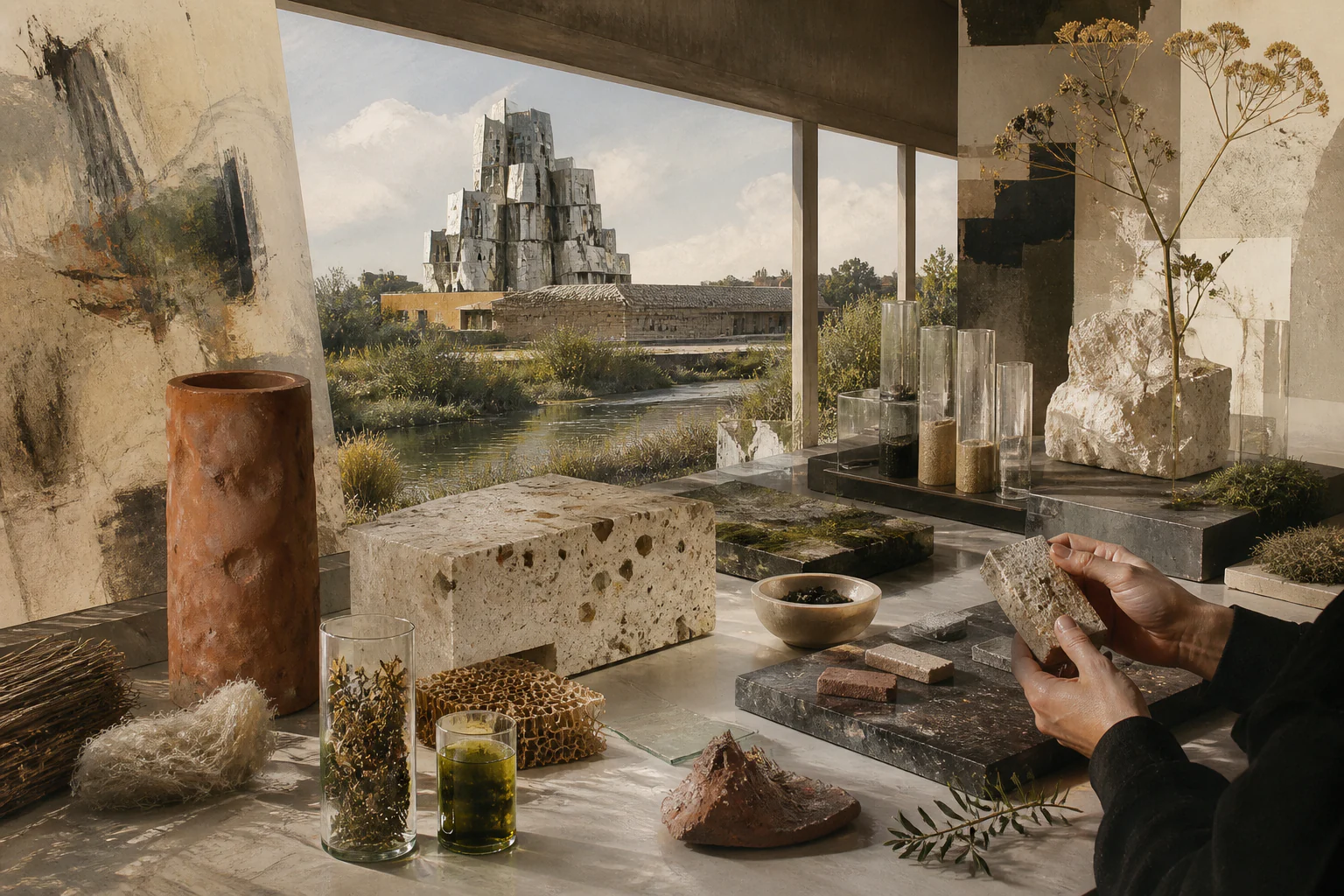
Became a prominent example of bioregional design in which material is considered together with territory, economy and local skill. This profile examines origins, method, concrete projects and influence rather than promotional self-description.
Editorial thesis
Atelier LUMA matters to VANSMITHLAB not as a catalogue of famous projects. Became a prominent example of bioregional design in which material is considered together with territory, economy and local skill. The central interest is the mechanism: works with the bioregion as a source of materials and knowledge, connecting local waste, agriculture, craft and industrial production.1
Reader question
What exactly in the method of Atelier LUMA changed professional practice, and why can that influence not be reduced to a recognisable style or client list?
Short answer
Atelier LUMA was founded in Arles in 2017. Its founders include LUMA Arles and a network of designers, researchers, craftspeople and local partners. Its practice works through a clear principle: works with the bioregion as a source of materials and knowledge, connecting local waste, agriculture, craft and industrial production.1 Became a prominent example of bioregional design in which material is considered together with territory, economy and local skill.1
1. Origins and context
Atelier LUMA was founded in Arles in 2017. Its founders include LUMA Arles and a network of designers, researchers, craftspeople and local partners. The organisation emerged within a professional context in which tools, markets and cultural expectations were changing the definition of the discipline itself. Atelier LUMA entered that process not as an isolated author but as a collective structure capable of turning a method into repeatable practice.1
2. How the method works
The core principle can be stated simply: works with the bioregion as a source of materials and knowledge, connecting local waste, agriculture, craft and industrial production. This matters because method defines not an exterior style but a way of making decisions: what to research, which constraints matter, where conflict lies and how form connects to use. The repeatability of that approach is what makes institutional influence visible.1
3. Camargue algae and salt: first anchor example
Camargue algae and salt. Research into local algae and salt shows how colour, surface and construction material can emerge from a specific ecology rather than a universal supply chain. The example matters as observable evidence of method: the relationship between problem and form can be inspected in a specific object, image, space or system rather than accepted from studio rhetoric.1
4. Materials from agricultural residue: second anchor example
Materials from agricultural residue. Work with rice, sunflower and other waste streams turns regional by-products into design research and possible production. The second example tests whether the approach remains coherent when scale, client, medium and cultural context change. It is therefore evidence of a working system rather than an addition to a list of famous projects.1
5. A system rather than a single device
With Atelier LUMA, it is more useful to look for a system of choices than one repeated visual gesture. Works with the bioregion as a source of materials and knowledge, connecting local waste, agriculture, craft and industrial production. Similarity between projects may therefore lie in research procedure, team organisation, material attitude or sequence of work rather than identical form. VANSMITHLAB records authorship through mechanism rather than superficial resemblance.
6. Influence on the discipline
Became a prominent example of bioregional design in which material is considered together with territory, economy and local skill. Influence becomes visible when questions and working methods enter the practice of other authors, schools, clients or institutions. This does not necessarily mean direct imitation; more often the range of acceptable solutions and the professional vocabulary itself changes.1
7. Critical distance
An experimental material is not sustainable simply because it is biological or recycled. Feedstock, energy, lifespan, scalability and end-of-life all require evidence. This matters for Atelier LUMA because reputation can turn successful decisions into universal mythology. VANSMITHLAB separates documented fact, interpretation and editorial judgment: influence is recognised without replacing analysis of limits, context and collective authorship.
8. Why the organisation matters now
Atelier LUMA continues research and implementation through LUMA Arles projects and regional partnerships.1 The relevance of the profile is not defined only by current commissions. The practice remains a useful comparison point because it reveals which professional questions survive changing technologies and fashions and which belonged to a specific historical moment.