research
HfG Ulm — When Design Tried to Become Almost a Science
Ulm, 1953–1968: a postwar school connected democracy, industry, visual communication and systems thinking.
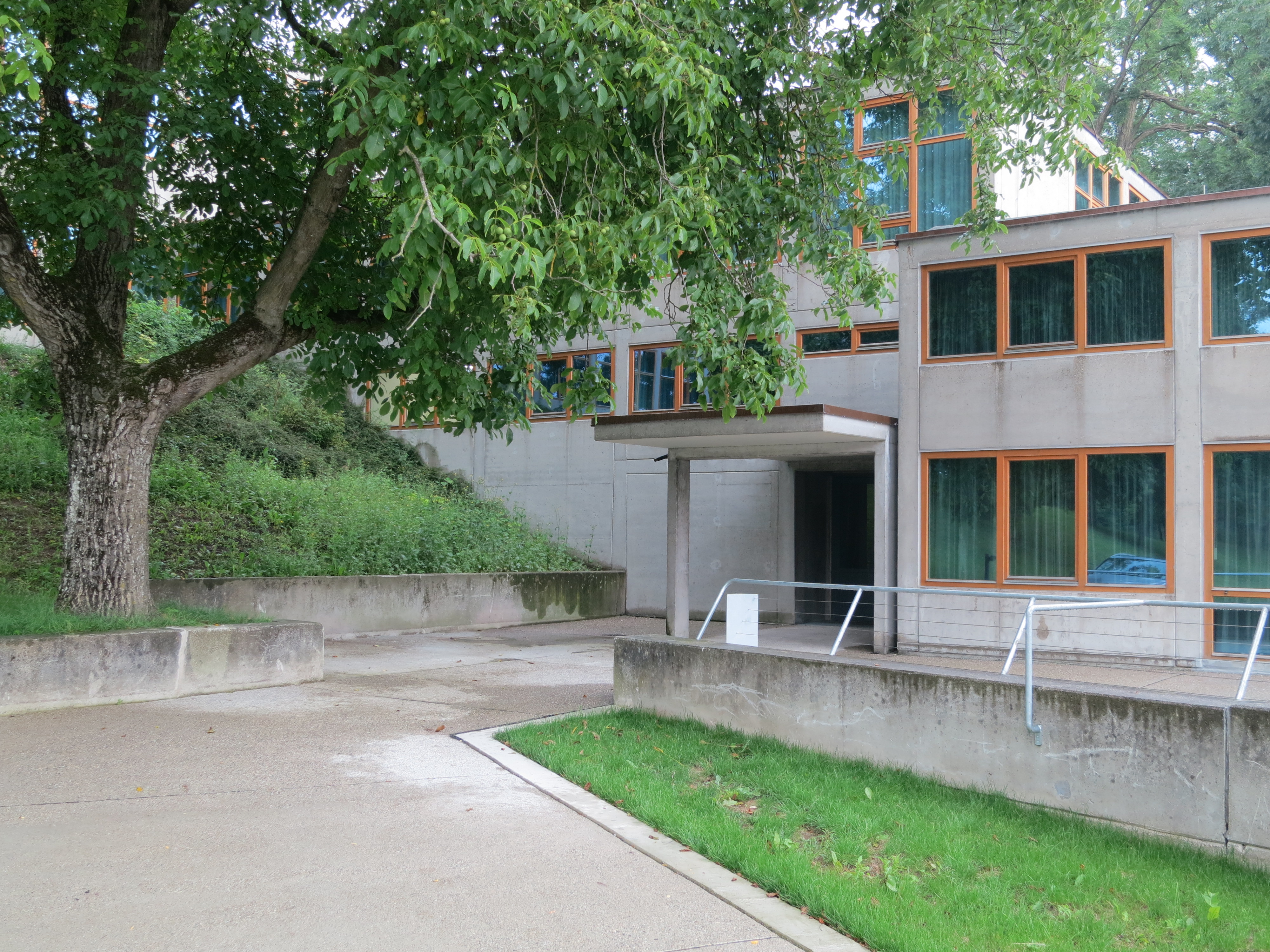
The Ulm School did not begin from a desire to make things look “more modern.” Its founders wanted to learn how to live again after fascism — and believed that clear environmental design could be part of a democratic project.
Editorial thesis
HfG Ulm radicalised the Bauhaus legacy: the designer ceased to be the sovereign artist of an object and became a participant in a complex process where analysis, technology, production, communication and user matter alongside form. 1
Reader question
How did a school that lasted fifteen years shape Braun’s language, Otl Aicher’s visual systems and the modern idea of systems design? 1
Short answer
Hochschule für Gestaltung Ulm was founded by Inge Scholl, Otl Aicher and Max Bill. Teaching began in 1953 and Max Bill’s campus was officially opened in 1955. At first the school consciously continued the Bauhaus line, but Tomás Maldonado and younger faculty soon demanded a more scientific and systemic model. From this emerged the “Ulm Model”: industrial design, visual communication, theory, semiotics, ergonomics and collaboration with real companies. The school closed in 1968, yet its methods became foundational to professional design in the second half of the twentieth century. 1
1. After fascism, design acquires political meaning
Inge Scholl and Otl Aicher helped build the Ulm Adult Education Center after the war. For them education was meant to support democratic culture after dictatorship. The Geschwister-Scholl-Stiftung, named in memory of Hans and Sophie Scholl of the White Rose resistance, became the institutional foundation of the future school. In Ulm, good design began not with taste but with civic responsibility. 2
2. 1953: the first 21 students and teachers from the old Bauhaus
The first classes took place in temporary rooms. Teachers of the first 21 students included Josef Albers, Walter Peterhans, Johannes Itten and Helene Nonné-Schmidt — a direct bridge to the Bauhaus. Yet this continuity soon became a source of conflict: the young school found the role of “Bauhaus after Bauhaus” too restrictive. 3
3. Max Bill builds the campus as a working system
The Oberer Kuhberg complex integrated study, workshops and life. Clear concrete architecture, open circulation and functional distribution of spaces demonstrated the school’s principle: an environment should be logical, economical and suitable for actual work. The campus did not represent modernism; it organised a way of living. 4
VANSMITHLAB interpretation: the school’s strength lies not in copying its outward language but in how learning is structured and observation is turned into decisions.
4. Maldonado against the heroic artist
Tomás Maldonado and younger faculty argued that the designer should not behave like an artist imposing personal form on industry. The designer should be an equal participant who understands technology, economics, user and information. Conflict with Max Bill in the mid-1950s marked the transition toward an independent Ulm model. [source]
5. Braun: the school meets real industry
Collaboration with Braun became the legendary example. Hans Gugelot, Otl Aicher, students and company designers worked on products and a system of visual clarity. The SK 4, associated with Gugelot and Dieter Rams, shows Ulm logic in a commercial object: construction is legible, controls are understandable, and visual noise is removed not for ascetic style but for use. [source]
6. The Ulm Stool: a small object carrying the school’s programme
The Ulm Stool by Max Bill, Hans Gugelot and Paul Hildinger can work as seat, table, carrying box or shelf. It may seem almost too simple, which is exactly why it explains the school so well: minimal material, clear construction, several scenarios and no decorative gesture. It is not a “beautiful stool” but a lesson in systems thinking made of wood. [source]
7. Visual communication: Aicher makes the system visible
Otl Aicher developed visual communication as a discipline of rules rather than isolated posters. Pictograms, grid, typography and colour were meant to work together in real environments. Later this logic reached enormous scale in the visual system for the 1972 Munich Olympics, outside the already closed school. [source]
VANSMITHLAB interpretation: the school’s strength lies not in copying its outward language but in how learning is structured and observation is turned into decisions.
8. Semiotics, ergonomics, science: design becomes less romantic
Mathematics, information theory, semiotics, sociology and other disciplines entered the curriculum. This did not make design an exact science, but it changed the status of the argument: forms required explanation. Ulm taught designers to be suspicious of intuition when it cannot survive the question “why?” [source]
9. 1968: why a strong school can still close
HfG faced financial and political conflicts, while its complex model required constant support. The school closed in 1968. Like the Bauhaus, it became famous partly because institutional life was short while its methods continued through graduates, companies and international design education. [source]
10. Ulm today: from object to system
To a contemporary UX, service or systems designer, Ulm feels unexpectedly familiar. User research, information, rules rather than isolated images, collaborative decision-making — HfG did not invent all of these in today’s terms, but it helped normalise the idea that designers are responsible for the logic of a system, not only the shape of an interface or object. [source]