encyclopedia
Coca-Cola “Masterpiece”: How Art Rights Became Part of VFX Production
Licensing and the preservation of artistic language set the technical limits of an advertising transition.
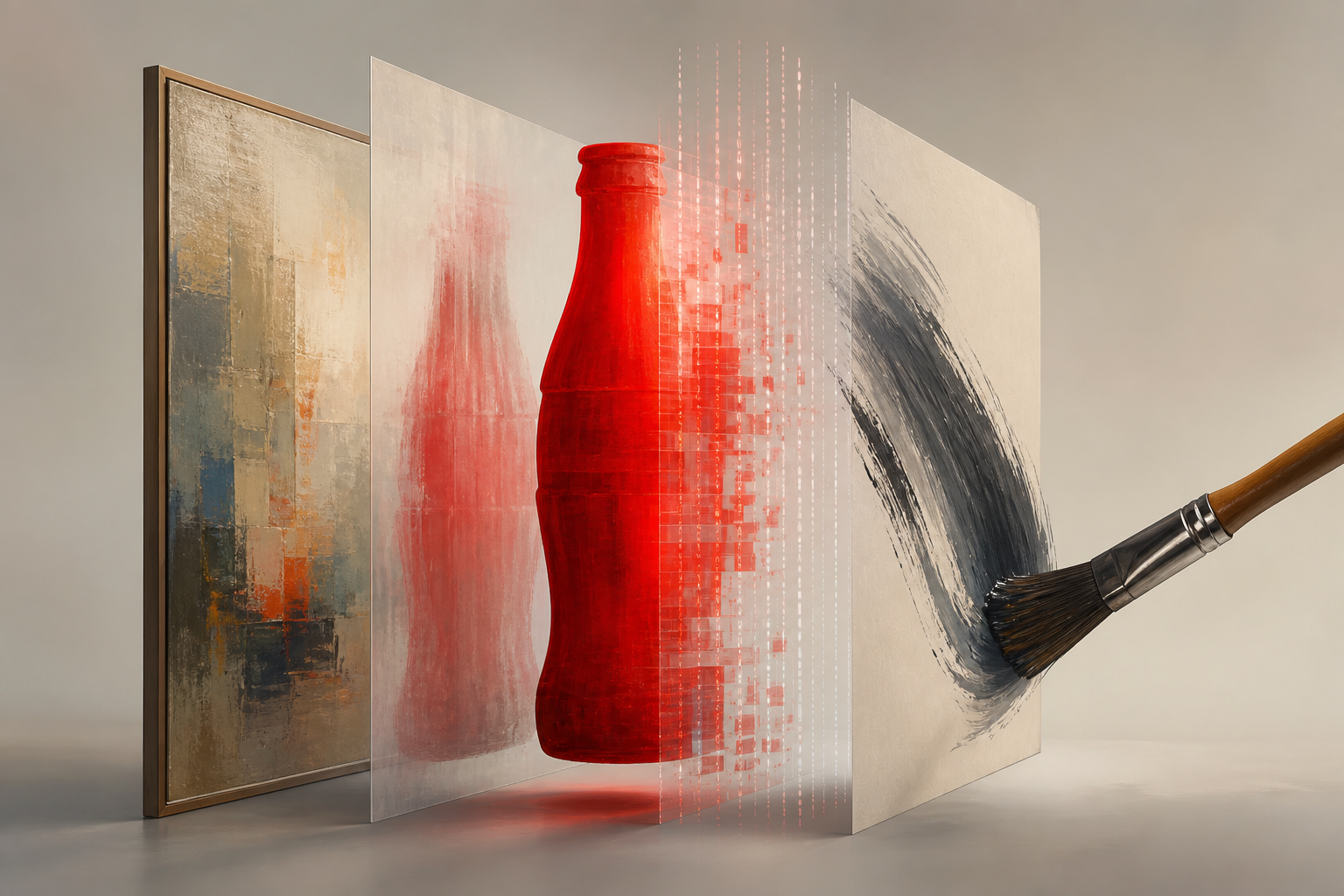
In the 2023 Masterpiece film, a bottle moves through different artistic worlds; the difficulty begins before compositing with what can be shown and how an image can move without losing its authorship.
Editorial thesis
Masterpiece shows that complex VFX begins before compositing: with rights, approvals and a technical solution that can move an image without erasing its artistic language.
Reader question
How can incompatible artistic worlds act in one film without becoming one digital texture?
Short answer
Coca-Cola built one action — passing the bottle — while giving each work its own animation and VFX logic.
1. The Bottle Moves Through a Museum
The source record states that Coca-Cola launched Masterpiece as a campaign in 2023. [source]. For the section on “The Bottle Moves Through a Museum,” the fact matters because of the production sequence behind it. The team first had to define what “The Bottle Moves Through a Museum” could not lose when the idea moved between formats. That constraint then became a selection criterion instead of remaining a polished sentence in a deck. A second anchor is this: The campaign also included work by contemporary artists. [source].
It shows that the visual result came from a chain of decisions rather than one lucky frame. That is why “The Bottle Moves Through a Museum” is better read as a system of relationships between material, time and audience. Remove that relationship and the message becomes generic and harder to verify. A third detail is that A company conference transcript discusses technology and AI in the campaign context. [source]. It adds a physical or organizational cost to the apparently simple idea.
The editorial interpretation here is that a mechanism is stronger than a slogan when the production method makes it visible. That is an interpretation, not a claim about private motives inside the team. Public sources show the result and selected stages, but not every internal approval or negotiation. For that reason, this article does not invent budgets, rejected alternatives or private decisions. For a small team, the practical lesson from “The Bottle Moves Through a Museum” is to write down one invariant and test every asset against it.
For a large system, that requires a shared shot list, visible statuses and one review order. The visual goal is reached when differences between outputs feel intentional rather than accidental. A viewer reads that intention through repeated rhythm, material detail or the sequence of an action. The section returns to the question of how “The Bottle Moves Through a Museum” changes not only the message but the way it is assembled. The answer is not a promotional adjective but an observable mechanism that can be described, checked and bounded.
2. A Licence Becomes a Technical Parameter
The source record states that The film moves a bottle through works associated with artists including Warhol, Turner, Munch, Van Gogh and Vermeer. [source]. For the section on “A Licence Becomes a Technical Parameter,” the fact matters because of the production sequence behind it. The team first had to define what “A Licence Becomes a Technical Parameter” could not lose when the idea moved between formats. A second anchor is this: The Coca-Cola announcement presents the film as a sequence of encounters between different art worlds. [source].
That is why “A Licence Becomes a Technical Parameter” is better read as a system of relationships between material, time and audience. A third detail is that The company later described a Masterpiece digital collection and a sale reported above 500,000 dollars. [source].
For a small team, the practical lesson from “A Licence Becomes a Technical Parameter” is to write down one invariant and test every asset against it.
The section returns to the question of how “A Licence Becomes a Technical Parameter” changes not only the message but the way it is assembled.
3. Do Not Standardize the Brush
The source record states that The campaign also included work by contemporary artists. [source]. For the section on “Do Not Standardize the Brush,” the fact matters because of the production sequence behind it. The team first had to define what “Do Not Standardize the Brush” could not lose when the idea moved between formats. A second anchor is this: A company conference transcript discusses technology and AI in the campaign context. [source].
That is why “Do Not Standardize the Brush” is better read as a system of relationships between material, time and audience. A third detail is that Rights and permissions determine what can be shown and what can be altered in a commercial film. [source].
For a small team, the practical lesson from “Do Not Standardize the Brush” is to write down one invariant and test every asset against it.
The section returns to the question of how “Do Not Standardize the Brush” changes not only the message but the way it is assembled.
Editorial interpretation
4. Contemporary Artists Beside the Canon
The source record states that The Coca-Cola announcement presents the film as a sequence of encounters between different art worlds. [source]. For the section on “Contemporary Artists Beside the Canon,” the fact matters because of the production sequence behind it. The team first had to define what “Contemporary Artists Beside the Canon” could not lose when the idea moved between formats. A second anchor is this: The company later described a Masterpiece digital collection and a sale reported above 500,000 dollars. [source].
That is why “Contemporary Artists Beside the Canon” is better read as a system of relationships between material, time and audience. A third detail is that The public materials do not disclose every contract term or the full VFX breakdown for each work. [source].
For a small team, the practical lesson from “Contemporary Artists Beside the Canon” is to write down one invariant and test every asset against it.
The section returns to the question of how “Contemporary Artists Beside the Canon” changes not only the message but the way it is assembled.
5. When Technology Should Disappear
The source record states that A company conference transcript discusses technology and AI in the campaign context. [source]. For the section on “When Technology Should Disappear,” the fact matters because of the production sequence behind it. The team first had to define what “When Technology Should Disappear” could not lose when the idea moved between formats. A second anchor is this: Rights and permissions determine what can be shown and what can be altered in a commercial film. [source].
That is why “When Technology Should Disappear” is better read as a system of relationships between material, time and audience. A third detail is that Coca-Cola launched Masterpiece as a campaign in 2023. [source].
For a small team, the practical lesson from “When Technology Should Disappear” is to write down one invariant and test every asset against it.
The section returns to the question of how “When Technology Should Disappear” changes not only the message but the way it is assembled.