encyclopedia
Apple “One Night on iPhone 7”: How One Night Became the Production Brief
A single night became a shared production condition for different authors and places.
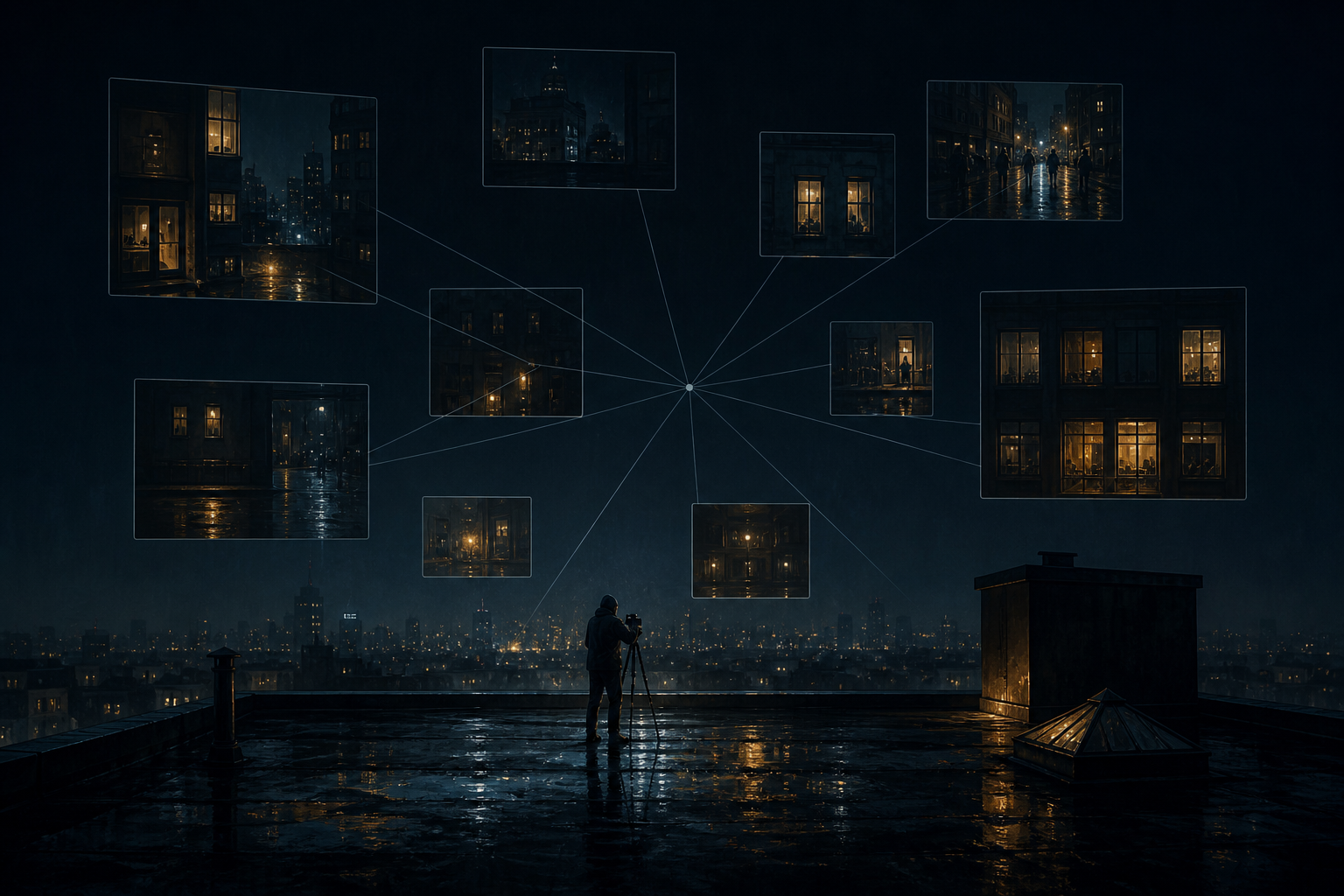
On the night of 5 November 2016, Apple sent photographers out with the iPhone 7; the project was stronger than a claim that something was simply shot on a phone because its constraint could be tested in the image.
Editorial thesis
The campaign demonstrated low-light capability through a synchronized documentary assignment rather than a laboratory comparison.
Reader question
Why do images from Java, Johannesburg and a Shanghai rooftop read as one campaign?
Short answer
Apple standardized the production condition — one night and one camera — while leaving geography, genre and authorship distinct.
1. Night as a Production Constraint
The source record states that Apple described the project as a night shoot made on iPhone 7. [source]. For the section on “Night as a Production Constraint,” the fact matters because of the production sequence behind it. The team first had to define what “Night as a Production Constraint” could not lose when the idea moved between formats. That constraint then became a selection criterion instead of remaining a polished sentence in a deck. A second anchor is this: Reuben Wu travelled to Java and used an iPhone 7 in a volcanic landscape. [source].
It shows that the visual result came from a chain of decisions rather than one lucky frame. That is why “Night as a Production Constraint” is better read as a system of relationships between material, time and audience. Remove that relationship and the message becomes generic and harder to verify. A third detail is that Elsa Bleda worked with Johannesburg nightlife. [source]. It adds a physical or organizational cost to the apparently simple idea.
The editorial interpretation here is that a mechanism is stronger than a slogan when the production method makes it visible. That is an interpretation, not a claim about private motives inside the team. Public sources show the result and selected stages, but not every internal approval or negotiation. For that reason, this article does not invent budgets, rejected alternatives or private decisions. For a small team, the practical lesson from “Night as a Production Constraint” is to write down one invariant and test every asset against it.
For a large system, that requires a shared shot list, visible statuses and one review order. The visual goal is reached when differences between outputs feel intentional rather than accidental. A viewer reads that intention through repeated rhythm, material detail or the sequence of an action. The section returns to the question of how “Night as a Production Constraint” changes not only the message but the way it is assembled. The answer is not a promotional adjective but an observable mechanism that can be described, checked and bounded.
2. The Constraint as Product Evidence
The source record states that The campaign connected photographers working in different locations and visual conditions. [source]. For the section on “The Constraint as Product Evidence,” the fact matters because of the production sequence behind it. The team first had to define what “The Constraint as Product Evidence” could not lose when the idea moved between formats. A second anchor is this: Ruairidh McGlynn photographed ice caves in Iceland at night. [source].
That is why “The Constraint as Product Evidence” is better read as a system of relationships between material, time and audience. A third detail is that Jennifer Bin photographed from high points in Shanghai. [source].
For a small team, the practical lesson from “The Constraint as Product Evidence” is to write down one invariant and test every asset against it.
The section returns to the question of how “The Constraint as Product Evidence” changes not only the message but the way it is assembled.
3. Authors Do Not Have to Look Alike
The source record states that Reuben Wu travelled to Java and used an iPhone 7 in a volcanic landscape. [source]. For the section on “Authors Do Not Have to Look Alike,” the fact matters because of the production sequence behind it. The team first had to define what “Authors Do Not Have to Look Alike” could not lose when the idea moved between formats. A second anchor is this: Elsa Bleda worked with Johannesburg nightlife. [source].
That is why “Authors Do Not Have to Look Alike” is better read as a system of relationships between material, time and audience. A third detail is that Apple presented the work as a campaign that moved from local images into public advertising. [source].
For a small team, the practical lesson from “Authors Do Not Have to Look Alike” is to write down one invariant and test every asset against it.
The section returns to the question of how “Authors Do Not Have to Look Alike” changes not only the message but the way it is assembled.
Editorial interpretation
4. From Phone to Outdoor Media
The source record states that Ruairidh McGlynn photographed ice caves in Iceland at night. [source]. For the section on “From Phone to Outdoor Media,” the fact matters because of the production sequence behind it. The team first had to define what “From Phone to Outdoor Media” could not lose when the idea moved between formats. A second anchor is this: Jennifer Bin photographed from high points in Shanghai. [source].
That is why “From Phone to Outdoor Media” is better read as a system of relationships between material, time and audience. A third detail is that The sources document the images and parts of the production, but not every internal selection decision. [source].
For a small team, the practical lesson from “From Phone to Outdoor Media” is to write down one invariant and test every asset against it.
The section returns to the question of how “From Phone to Outdoor Media” changes not only the message but the way it is assembled.
5. The Cost of Beautiful Simplicity
The source record states that Elsa Bleda worked with Johannesburg nightlife. [source]. For the section on “The Cost of Beautiful Simplicity,” the fact matters because of the production sequence behind it. The team first had to define what “The Cost of Beautiful Simplicity” could not lose when the idea moved between formats. A second anchor is this: Apple presented the work as a campaign that moved from local images into public advertising. [source].
That is why “The Cost of Beautiful Simplicity” is better read as a system of relationships between material, time and audience. A third detail is that Apple described the project as a night shoot made on iPhone 7. [source].
For a small team, the practical lesson from “The Cost of Beautiful Simplicity” is to write down one invariant and test every asset against it.
The section returns to the question of how “The Cost of Beautiful Simplicity” changes not only the message but the way it is assembled.