encyclopedia
LEGO “Rebuild the World”: A Global Brand Campaign Built as a Play System
One verb connects the film, events, creators and user-led transformations.
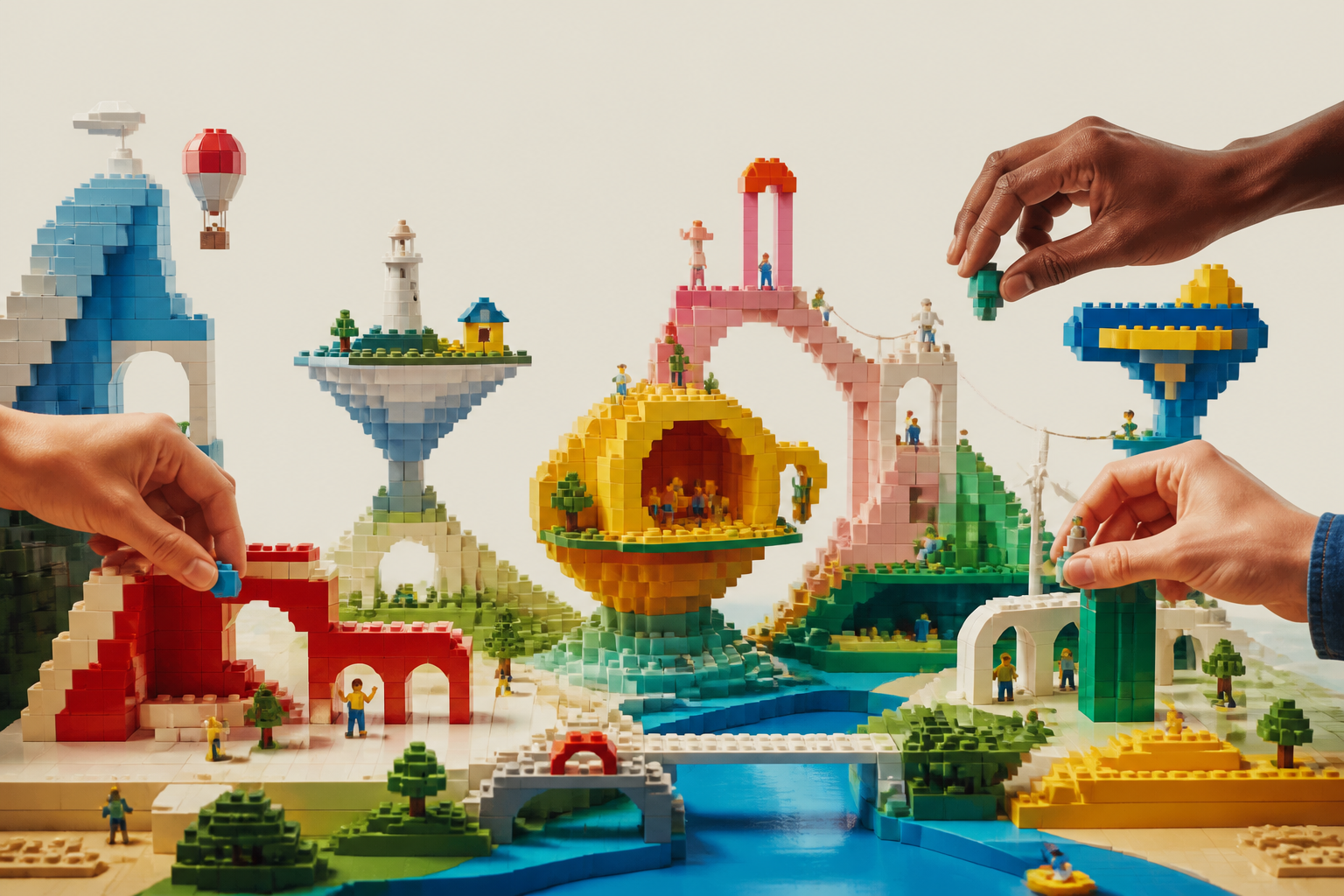
Launched in 2019, Rebuild the World was not organized around one product set but around the action of rebuilding: film, cultural partnerships and play formats could change their stories while keeping the same mechanism.
Editorial thesis
Rebuild the World worked as a platform because its central verb could move into film, workshops, public events and user play without changing the idea.
Reader question
How can a campaign survive for years when it is not tied to one story or one product?
Short answer
LEGO built a repeatable cycle of problem, imagined solution, building, disruption and rebuilding.
1. Why LEGO Needed a Global Manifesto
The source record states that LEGO launched Rebuild the World in September 2019. [source]. For the section on “Why LEGO Needed a Global Manifesto,” the fact matters because of the production sequence behind it. The team first had to define what “Why LEGO Needed a Global Manifesto” could not lose when the idea moved between formats. That constraint then became a selection criterion instead of remaining a polished sentence in a deck. A second anchor is this: The campaign was created with BETC Paris and included a film directed through the Traktor production context. [source].
It shows that the visual result came from a chain of decisions rather than one lucky frame. That is why “Why LEGO Needed a Global Manifesto” is better read as a system of relationships between material, time and audience. Remove that relationship and the message becomes generic and harder to verify. A third detail is that LEGO described later chapters in 2021 as ways to show creative problem solving and rebuilding. [source]. It adds a physical or organizational cost to the apparently simple idea.
The editorial interpretation here is that a mechanism is stronger than a slogan when the production method makes it visible. That is an interpretation, not a claim about private motives inside the team. Public sources show the result and selected stages, but not every internal approval or negotiation. For that reason, this article does not invent budgets, rejected alternatives or private decisions. For a small team, the practical lesson from “Why LEGO Needed a Global Manifesto” is to write down one invariant and test every asset against it.
For a large system, that requires a shared shot list, visible statuses and one review order. The visual goal is reached when differences between outputs feel intentional rather than accidental. A viewer reads that intention through repeated rhythm, material detail or the sequence of an action. The section returns to the question of how “Why LEGO Needed a Global Manifesto” changes not only the message but the way it is assembled. The answer is not a promotional adjective but an observable mechanism that can be described, checked and bounded.
2. The Film as a Demonstration of Brand Physics
The source record states that The LEGO Group described it as its first global brand campaign in around thirty years. [source]. For the section on “The Film as a Demonstration of Brand Physics,” the fact matters because of the production sequence behind it. The team first had to define what “The Film as a Demonstration of Brand Physics” could not lose when the idea moved between formats. A second anchor is this: Mark Ronson and other cultural creators were connected to later campaign activity. [source].
That is why “The Film as a Demonstration of Brand Physics” is better read as a system of relationships between material, time and audience. A third detail is that The campaign moved across film, events, challenges and creator collaborations. [source].
For a small team, the practical lesson from “The Film as a Demonstration of Brand Physics” is to write down one invariant and test every asset against it.
The section returns to the question of how “The Film as a Demonstration of Brand Physics” changes not only the message but the way it is assembled.
3. Events Put the Idea Back in Children’s Hands
The source record states that The campaign was created with BETC Paris and included a film directed through the Traktor production context. [source]. For the section on “Events Put the Idea Back in Children’s Hands,” the fact matters because of the production sequence behind it. The team first had to define what “Events Put the Idea Back in Children’s Hands” could not lose when the idea moved between formats. A second anchor is this: LEGO described later chapters in 2021 as ways to show creative problem solving and rebuilding. [source].
That is why “Events Put the Idea Back in Children’s Hands” is better read as a system of relationships between material, time and audience. A third detail is that The product functions as a set of rules and materials rather than only as a hero object. [source].
For a small team, the practical lesson from “Events Put the Idea Back in Children’s Hands” is to write down one invariant and test every asset against it.
The section returns to the question of how “Events Put the Idea Back in Children’s Hands” changes not only the message but the way it is assembled.
Editorial interpretation
4. How a Platform Outlives a Seasonal Wave
The source record states that Mark Ronson and other cultural creators were connected to later campaign activity. [source]. For the section on “How a Platform Outlives a Seasonal Wave,” the fact matters because of the production sequence behind it. The team first had to define what “How a Platform Outlives a Seasonal Wave” could not lose when the idea moved between formats. A second anchor is this: The campaign moved across film, events, challenges and creator collaborations. [source].
That is why “How a Platform Outlives a Seasonal Wave” is better read as a system of relationships between material, time and audience. A third detail is that The public sources support the campaign architecture but do not prove every audience or sales effect attributed to it. [source].
For a small team, the practical lesson from “How a Platform Outlives a Seasonal Wave” is to write down one invariant and test every asset against it.
The section returns to the question of how “How a Platform Outlives a Seasonal Wave” changes not only the message but the way it is assembled.
5. The Line Between Universality and Blur
The source record states that LEGO described later chapters in 2021 as ways to show creative problem solving and rebuilding. [source]. For the section on “The Line Between Universality and Blur,” the fact matters because of the production sequence behind it. The team first had to define what “The Line Between Universality and Blur” could not lose when the idea moved between formats. A second anchor is this: The product functions as a set of rules and materials rather than only as a hero object. [source].
That is why “The Line Between Universality and Blur” is better read as a system of relationships between material, time and audience. A third detail is that LEGO launched Rebuild the World in September 2019. [source].
For a small team, the practical lesson from “The Line Between Universality and Blur” is to write down one invariant and test every asset against it.
The section returns to the question of how “The Line Between Universality and Blur” changes not only the message but the way it is assembled.