encyclopedia
Patagonia “Worn Wear”: How Wear Marks Became Advertising Material
Repair, reuse and the history of a garment become the campaign’s content.
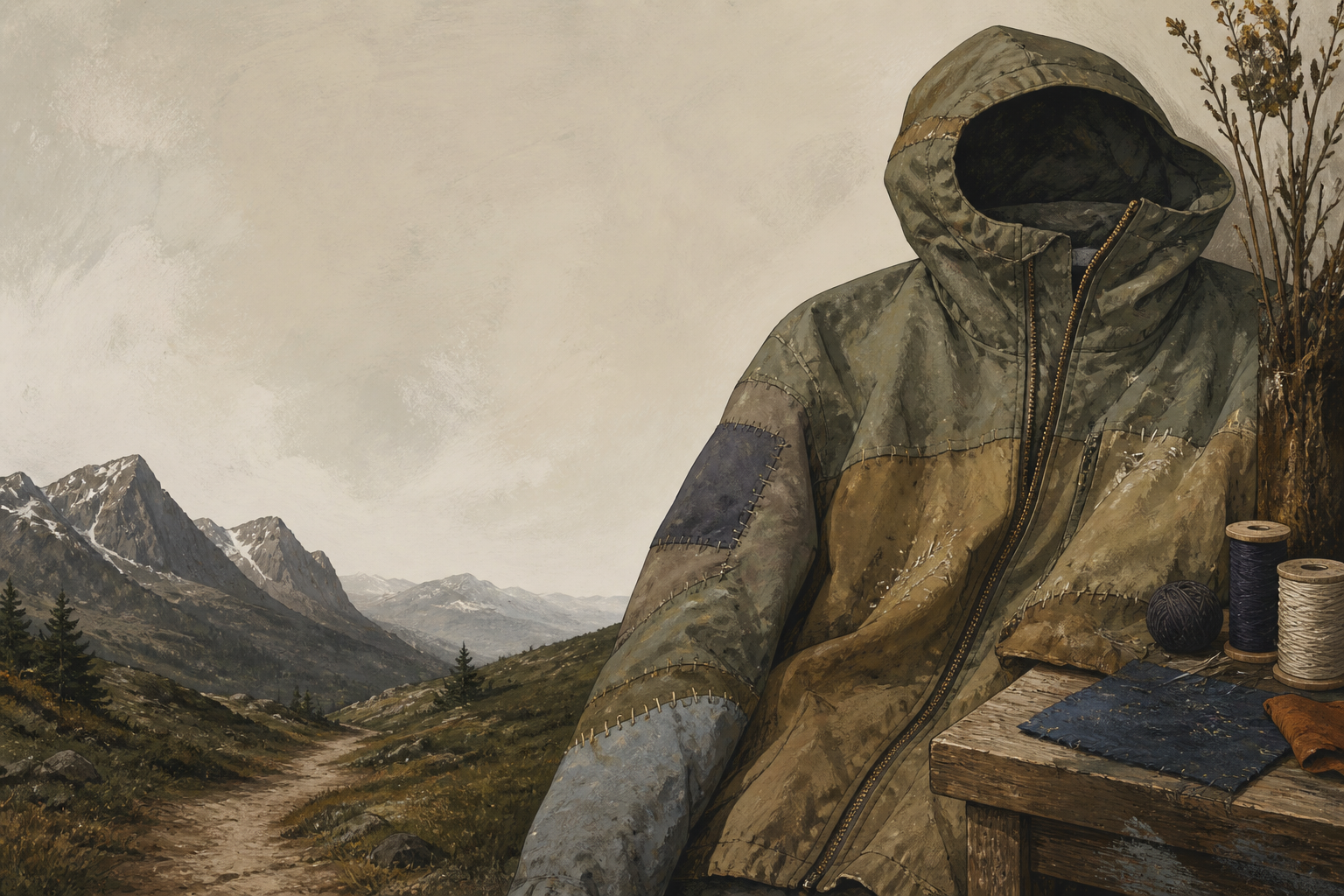
Worn Wear launched during Fashion Week in 2013 and opposed the culture of newness with garments that had already lived for years; its production material was not perfection but visible use.
Editorial thesis
Worn Wear changed not only the message but the source of content: old garments, repairs, owners’ stories and marks of use replaced the new lookbook.
Reader question
How can a clothing brand advertise durability without turning ‘do not buy new’ into a pose?
Short answer
Patagonia linked the communication to services, repair, film and owners’ stories, so the promise could be checked against the physical life of a garment.
1. Fashion Week Against Newness
The source record states that Patagonia announced Worn Wear in 2013 around New York Fashion Week. [source]. For the section on “Fashion Week Against Newness,” the fact matters because of the production sequence behind it. The team first had to define what “Fashion Week Against Newness” could not lose when the idea moved between formats. That constraint then became a selection criterion instead of remaining a polished sentence in a deck. A second anchor is this: Patagonia published a film about the stories people wear. [source].
It shows that the visual result came from a chain of decisions rather than one lucky frame. That is why “Fashion Week Against Newness” is better read as a system of relationships between material, time and audience. Remove that relationship and the message becomes generic and harder to verify. A third detail is that Patagonia documented repair and reuse initiatives in its environmental reporting. [source]. It adds a physical or organizational cost to the apparently simple idea.
The editorial interpretation here is that a mechanism is stronger than a slogan when the production method makes it visible. That is an interpretation, not a claim about private motives inside the team. Public sources show the result and selected stages, but not every internal approval or negotiation. For that reason, this article does not invent budgets, rejected alternatives or private decisions. For a small team, the practical lesson from “Fashion Week Against Newness” is to write down one invariant and test every asset against it.
For a large system, that requires a shared shot list, visible statuses and one review order. The visual goal is reached when differences between outputs feel intentional rather than accidental. A viewer reads that intention through repeated rhythm, material detail or the sequence of an action. The section returns to the question of how “Fashion Week Against Newness” changes not only the message but the way it is assembled. The answer is not a promotional adjective but an observable mechanism that can be described, checked and bounded.
2. The Owner’s Story Instead of the Perfect Look
The source record states that The project positioned used garments and their stories against the pressure to buy new. [source]. For the section on “The Owner’s Story Instead of the Perfect Look,” the fact matters because of the production sequence behind it. The team first had to define what “The Owner’s Story Instead of the Perfect Look” could not lose when the idea moved between formats. A second anchor is this: The campaign connected communication to repair, used clothing and longer product life. [source].
That is why “The Owner’s Story Instead of the Perfect Look” is better read as a system of relationships between material, time and audience. A third detail is that The brand used owner stories and visible wear as evidence rather than hiding them in retouching. [source].
For a small team, the practical lesson from “The Owner’s Story Instead of the Perfect Look” is to write down one invariant and test every asset against it.
The section returns to the question of how “The Owner’s Story Instead of the Perfect Look” changes not only the message but the way it is assembled.
3. Black Friday Becomes a Film Premiere
The source record states that Patagonia published a film about the stories people wear. [source]. For the section on “Black Friday Becomes a Film Premiere,” the fact matters because of the production sequence behind it. The team first had to define what “Black Friday Becomes a Film Premiere” could not lose when the idea moved between formats. A second anchor is this: Patagonia documented repair and reuse initiatives in its environmental reporting. [source].
That is why “Black Friday Becomes a Film Premiere” is better read as a system of relationships between material, time and audience. A third detail is that The campaign’s ethical claim is stronger when a service or action makes it operational. [source].
For a small team, the practical lesson from “Black Friday Becomes a Film Premiere” is to write down one invariant and test every asset against it.
The section returns to the question of how “Black Friday Becomes a Film Premiere” changes not only the message but the way it is assembled.
Editorial interpretation
4. Repair as a Media Format
The source record states that The campaign connected communication to repair, used clothing and longer product life. [source]. For the section on “Repair as a Media Format,” the fact matters because of the production sequence behind it. The team first had to define what “Repair as a Media Format” could not lose when the idea moved between formats. A second anchor is this: The brand used owner stories and visible wear as evidence rather than hiding them in retouching. [source].
That is why “Repair as a Media Format” is better read as a system of relationships between material, time and audience. A third detail is that The public sources show the program’s declared practices but do not prove that every customer changed purchasing behaviour. [source].
For a small team, the practical lesson from “Repair as a Media Format” is to write down one invariant and test every asset against it.
The section returns to the question of how “Repair as a Media Format” changes not only the message but the way it is assembled.
5. The Anti-Ad That Still Builds a Brand
The source record states that Patagonia documented repair and reuse initiatives in its environmental reporting. [source]. For the section on “The Anti-Ad That Still Builds a Brand,” the fact matters because of the production sequence behind it. The team first had to define what “The Anti-Ad That Still Builds a Brand” could not lose when the idea moved between formats. A second anchor is this: The campaign’s ethical claim is stronger when a service or action makes it operational. [source].
That is why “The Anti-Ad That Still Builds a Brand” is better read as a system of relationships between material, time and audience. A third detail is that Patagonia announced Worn Wear in 2013 around New York Fashion Week. [source].
For a small team, the practical lesson from “The Anti-Ad That Still Builds a Brand” is to write down one invariant and test every asset against it.
The section returns to the question of how “The Anti-Ad That Still Builds a Brand” changes not only the message but the way it is assembled.