critic theorist profile
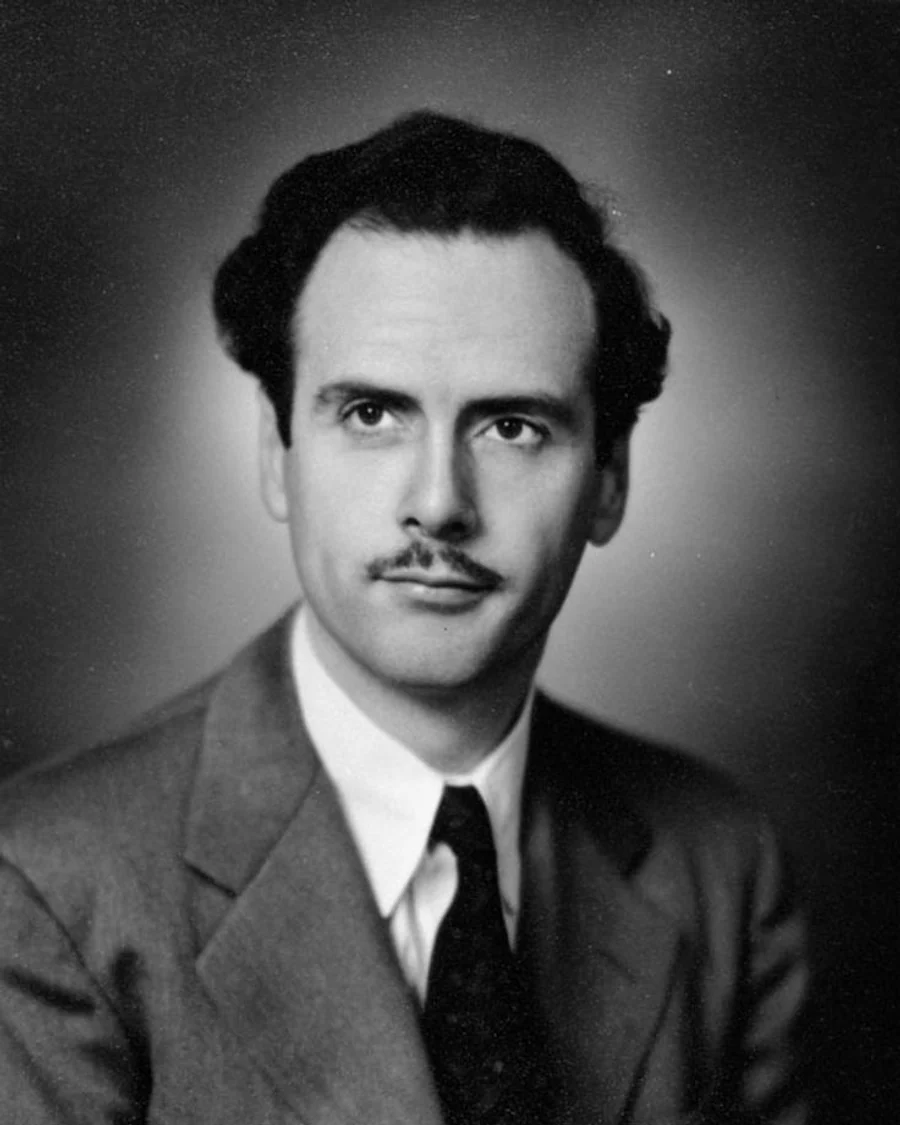
Marshall McLuhan
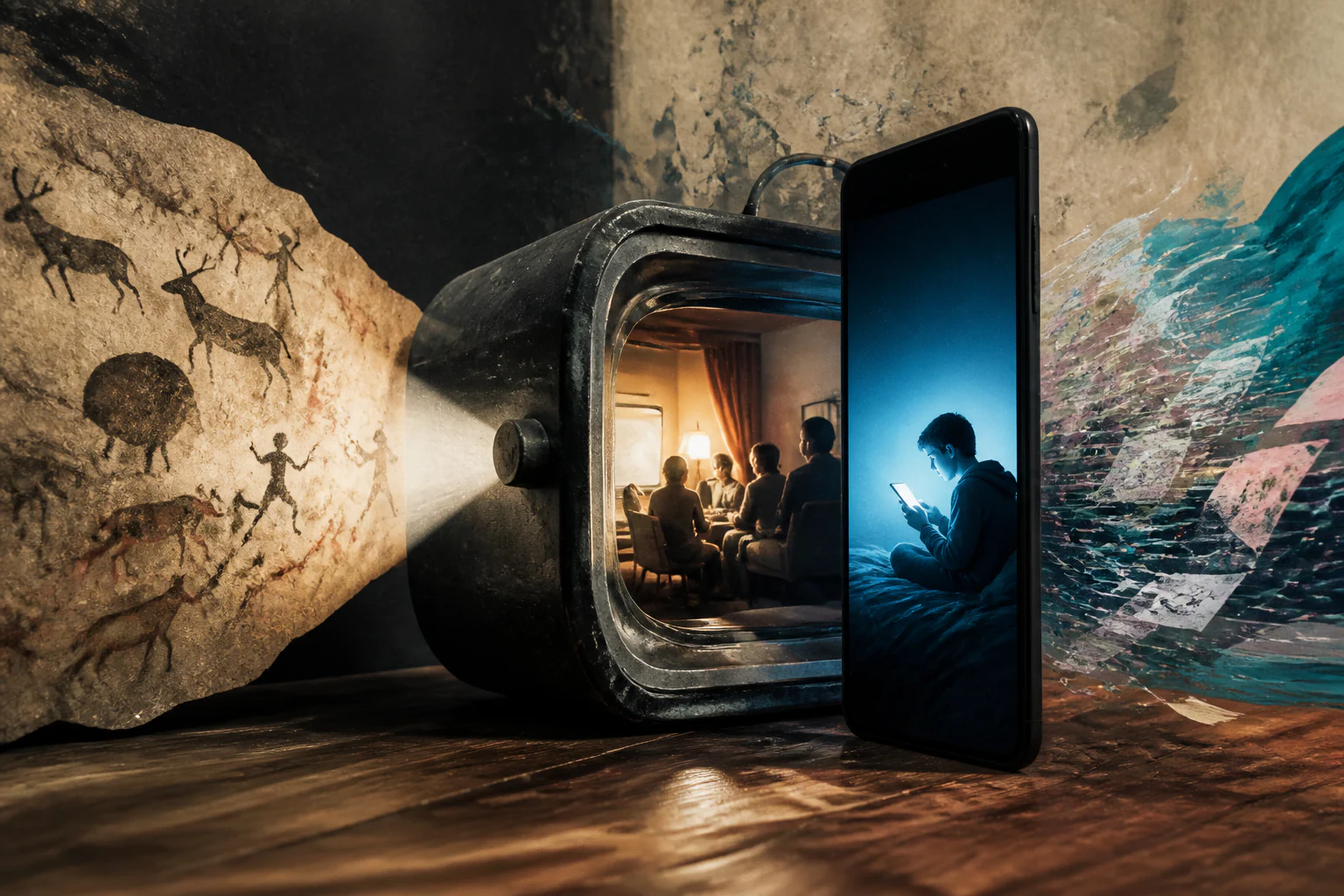
The carrier of a message changes perception more than the message does.
Editorial thesis
McLuhan matters for proposing that a means of transmission be treated as content in itself: the structure of a channel reorganises perception regardless of what passes through it.
Reader question
What should be studied if a message is inseparable from its means of transmission?
Short answer
The structure of the channel: its speed, distance, required effort, and which senses it engages. These parameters act identically on every user.
1. Position
McLuhan worked as a media theorist and came from literary studies. His method is closer to literary analysis than to social science, which explains both his strength and his vulnerability.
2. The central formula
The claim that the medium is the message is directed against the habit of assessing content alone. It requires looking at a channel’s structure before looking at what passes through it.
3. What this means in practice
The telephone changed the organisation of labour regardless of what was said. The change was produced by the availability of instant contact, not by its content.
4. Extension as concept
He described technologies as extensions of the body and senses: the wheel extends the foot, writing extends memory. The metaphor is convenient for thinking and is not an explanation.
5. Amputation as reverse side
Every extension is accompanied by the loss of a corresponding capacity. The arrival of writing weakened oral memory — a mechanism he described consistently.
6. Hot and cool
He distinguished channels by the density of data transmitted and the participation required. A low-definition channel demands completion and therefore engages more than a saturated one.
7. The problem with that distinction
The classification withstands testing poorly and was applied inconsistently by him. It is useful as a device for posing a question and imprecise as a theory.
8. Print and linearity
He argued that typographic setting formed linear, sequential thinking. The claim is influential and unproven; it should be read as a hypothesis.
9. Electronic simultaneity
He predicted a return to simultaneous, non-linear perception under the influence of electronic channels. This is the part of his reasoning that has been most confirmed.
10. The global village
The concept describes the compression of distance by electronic communication. It is often cited as optimistic, whereas he also implied increased conflict under enforced proximity.
11. Form of presentation as method
His books are deliberately non-linear and built as collage. This matches the claim: an account of simultaneity should not be sequential.
12. The aphorism as instrument
He formulated through probes rather than proofs. This was a deliberate choice: the aim is to provoke observation rather than settle a question.
13. The vulnerability of the method
The absence of demonstration makes his claims unverifiable. The texts work as optics rather than as knowledge, and conflating these modes is the principal error of reading.
14. Influence on design
His frame is useful to a designer: it forces the question of what a carrier does rather than only what is depicted on it. This applies to packaging, screen, and space.
15. What transfers
The question of the channel transfers. Before assessing a message one should describe its carrier — a procedure applicable to any project.
16. What does not transfer
His classification of channels does not transfer. It fails when applied to contemporary environments and should be left as a historical episode.
17. Critique
A justified objection: technological determinism attributes independent will to a medium and removes from view those who own it. Economics and power are almost absent from his scheme.
18. Historical position
He is the starting point of thinking about the media environment as an object of design. Subsequent criticism refined and limited him without abolishing his framing.
19. Link to the knowledge base
The material connects to the entries on the magazine as system, the image without a camera, the store as media, and technology changing imagination.
20. How to read this today
Use him as a set of questions rather than assertions. Asking what a channel does is always useful; accepting his answers on faith is not.