critic theorist profile
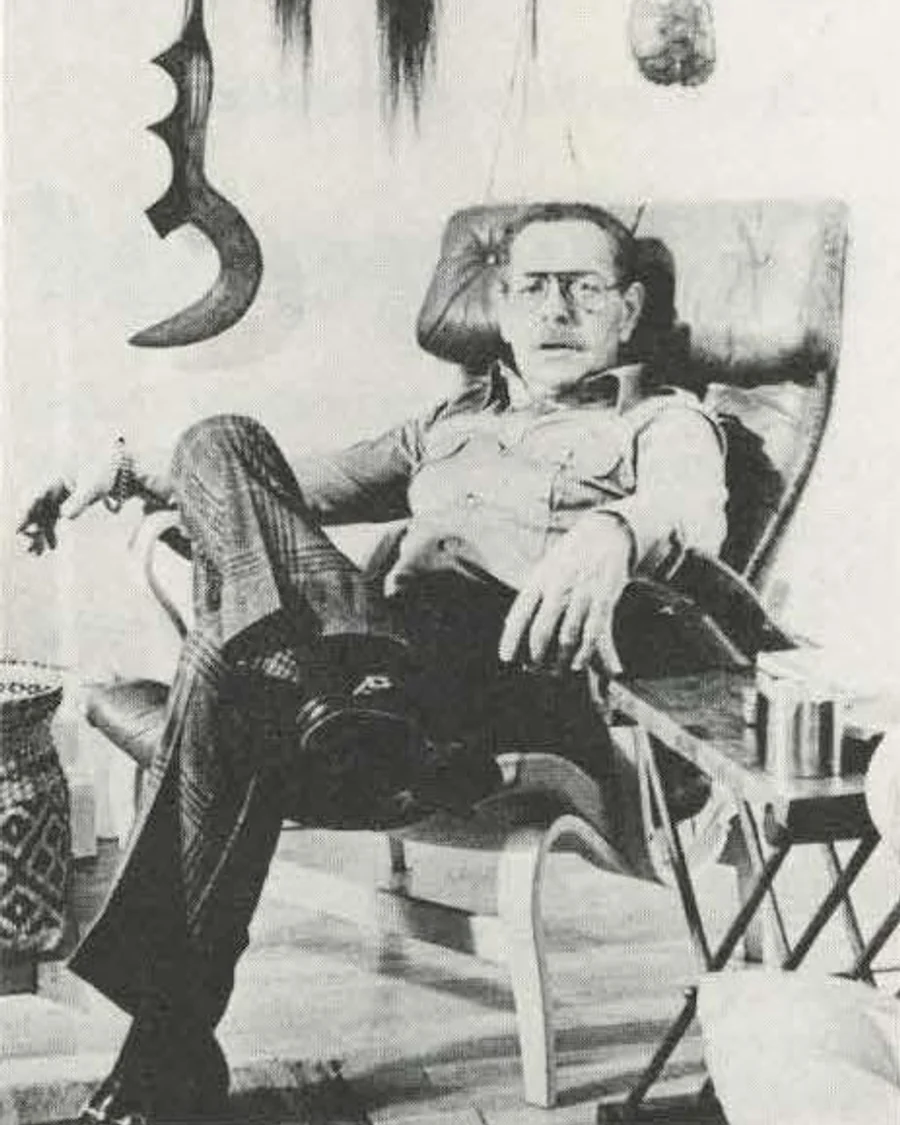
Victor Papanek
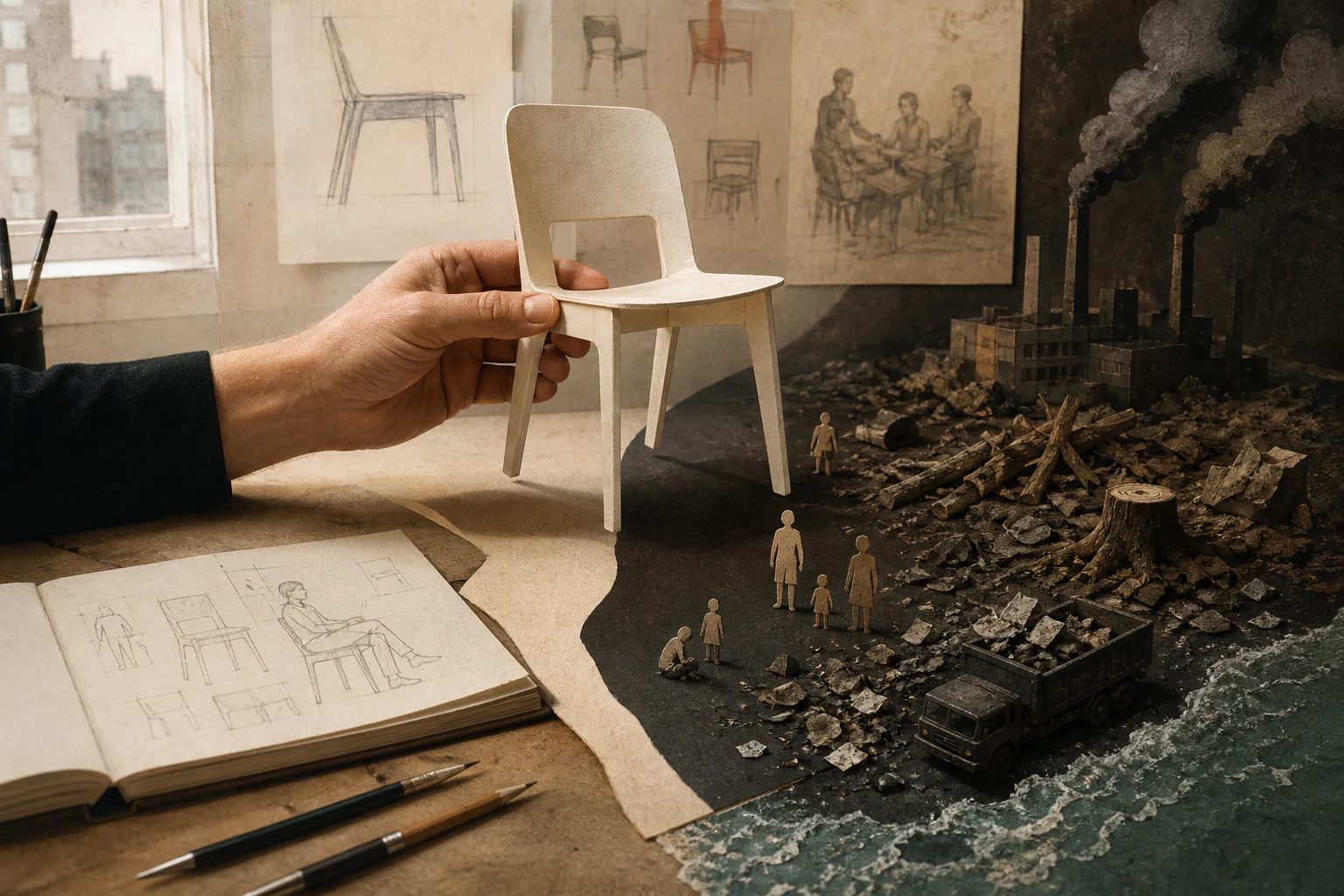
The demand that the consequences of a design decision be counted as part of the decision itself.
Editorial thesis
Papanek matters for raising the question of designer responsibility before the industry was ready to discuss it, and for framing it as professional rather than moral.
Reader question
Is a designer responsible for how their object is used and what becomes of it afterwards?
Short answer
To the extent that those consequences are predictable at the design stage; unpredictability here is more often a refusal to calculate than genuine uncertainty.
1. Position
Papanek worked as a designer, teacher, and critic and consistently contested the commercial basis of the profession. His texts address designers rather than the public.
2. The central claim
He argued that a significant part of professional work is directed at producing the unnecessary and the harmful. The accusation is addressed to the structure of the industry rather than to individual authors.
3. Sharpness of formulation
His book opens with a direct accusation of the profession, which produced both influence and rejection. The sharpness was an instrument: a moderate formulation would not have been heard.
4. The industry’s reaction
Professional bodies met his position with hostility. This is an essential part of the case: criticism from inside a discipline is received more badly than criticism from outside.
5. Designing for the majority
He pointed out that design serves a narrow affluent group while most of the world’s population remains outside its attention. That argument remains accurate.
6. Design for disability and age
He was among the first to frame designing for people with impairments as a core task rather than a charitable one. The contemporary discipline of accessibility continues that line.
7. Low-cost technologies
His own projects concentrate on objects makeable from available materials by local means. A known example is a radio receiver assembled from reclaimed materials.
8. Critique of his projects
These works were criticised as impractical and as imposing an external solution on local communities. Both objections are justified and do not invalidate the framing of the question.
9. The environmental argument
He wrote about materials, waste, and service life decades before this became an industry agenda. The chronological priority here is significant.
10. Responsibility as a professional category
The key move in his position is shifting the discussion from moral to professional. Consequence is treated as a design parameter alongside strength and cost.
11. Teaching as principal channel
A substantial part of his influence ran through teaching. Changing a curriculum acts longer than a publication, and that is where he worked.
12. The archive
His materials are held in a dedicated archive, making the position verifiable from documents rather than from quotations. This is rare for a figure of this kind.
13. What transfers
The question transfers: who pays for the consequence. It applies to any project and has a verifiable answer if asked at the brief stage.
14. What does not transfer
His own design practice does not transfer. The solutions he proposed are technically obsolete, whereas his framing of the problem has retained its force.
15. Substantive critique
A justified objection: he proposed abandoning commercial work without describing how the profession would sustain itself. The absence of an economic component weakens the position.
16. A second objection
The position of an external expert designing for a community without its participation is now recognised as problematic. His practice reproduced what it criticised.
17. Contemporary confirmation
Regulatory requirements on repairability and the return cycle are turning his arguments into obligations. What was a moral appeal is becoming a standard.
18. Historical position
He is the starting point of the line of responsible design and simultaneously an example of how early correctness combines with weak execution.
19. Link to the knowledge base
The material connects to the entries on sustainability, repair, the logistics of form, and production processes.
20. How to read this today
Read him as a framing of problems rather than a set of solutions. The questions have remained correct, the answers have dated, and distinguishing the two is necessary.