curator profile
Paola Antonelli
How a Museum Expands the Boundaries of Design — from Paper Clip to Video Game and Data

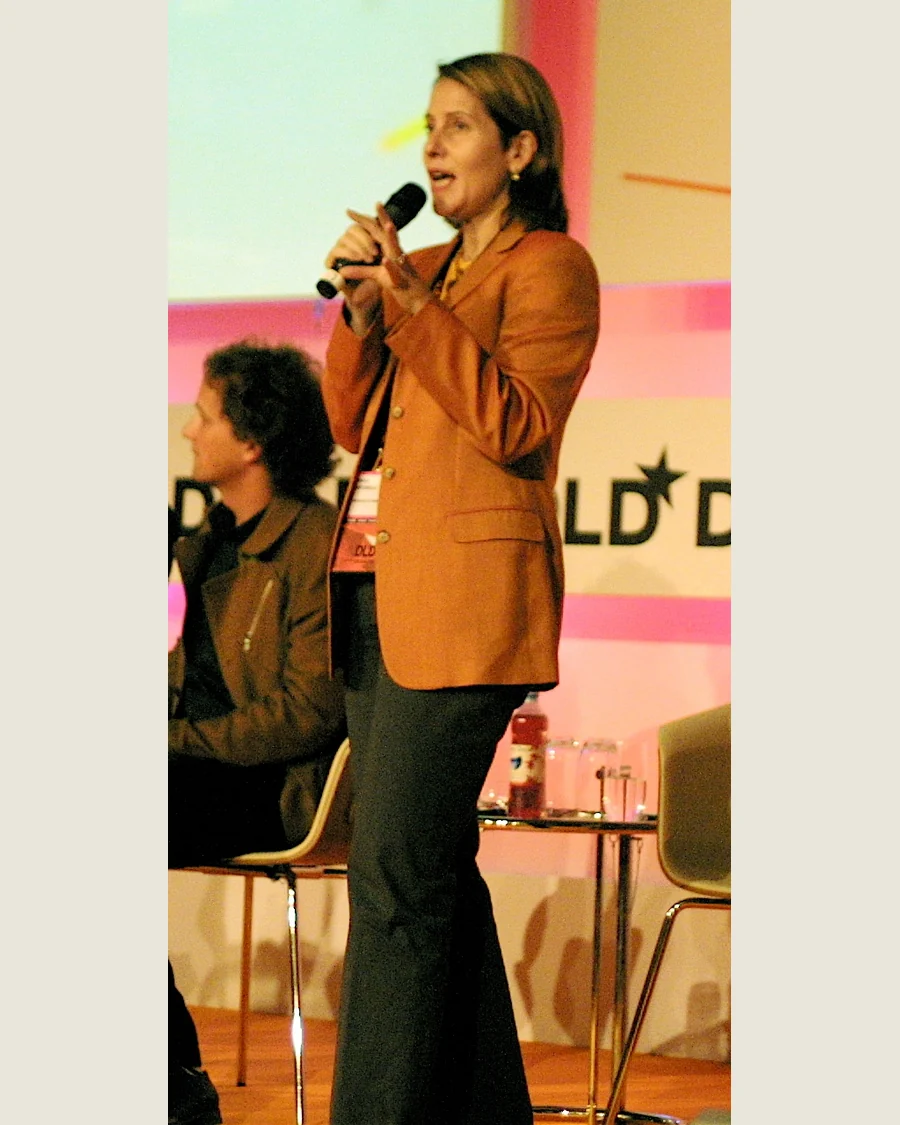
Antonelli has turned design curating into an institutional test of boundaries: what can count as a design object, what a museum can acquire, preserve and explain, and how to discuss technology without automatic optimism.
Editorial thesis
Paola Antonelli matters not because she simply brought technology into the museum. Her work systematically changes the criteria of the design collection: from material object to behaviour, from unique object to reproducible symbol, from product to interface, from beauty to risk, repair, access and information. The curator does not serve a finished canon; she designs the canon’s boundary.
Reader question
How can a museum collect the @ sign, a video game, an algorithmic interface or a data-visualisation system without dissolving design into the claim that everything is design?
Short answer
Through action and cultural impact as criteria. Antonelli expands media without abandoning selection: an object or system must demonstrate specific design intelligence in how it organises behaviour, information, material, access, interaction or social meaning.
1. Milan: an architect who chose design as the wider field
Paola Antonelli trained in architecture at the Politecnico di Milano. MoMA’s current biography still describes her as an architect trained at the Polytechnic of Milan, yet her career consistently expands scale—from building to object, interface, system, symbol, game and cultural behaviour. [source]
That is the right starting point. For Antonelli, design is not a stylistic speciality or a category of attractive objects. It is a way of organising relations among people, technology, information, environment and society.
2. 1994: entering MoMA and treating the museum as a laboratory for defining design
Antonelli joined The Museum of Modern Art in 1994. Today she remains Senior Curator in the Department of Architecture and Design and the Museum’s founding Director of Research and Development. [source]
The significance is not simply longevity. Across three decades the museum object of design changes: chair and poster are joined by microchip, digital interface, @ sign, video game, biomaterial and data-visualisation system.
3. Mutant Materials, 1995: material becomes a designed system
In 1995 Antonelli organised Mutant Materials in Contemporary Design, an exhibition of more than two hundred objects and prototypes devoted to new and modified materials. MoMA stressed that physical properties could themselves be designed and customised. [source]
This establishes an early method: look beyond the finished form to the technological layer that changes the range of possibility. Material is not decoration; it is part of design intelligence.
4. Workspheres, 2001: design studies the transformation of work rather than office furniture
Workspheres examined changing work patterns and the balance between work and life through environments, interfaces, tools and prototypes. The exhibition was organised by Antonelli with research assistant Sarah Robins. [source]
The curatorial move changes scale. Instead of a catalogue of office furniture, the question becomes how habits, bodies and spaces change when work itself becomes mobile, networked and flexible.
5. Humble Masterpieces, 2004: the museum canon shrinks to a paper clip and Post-it
Humble Masterpieces assembled nearly 120 everyday objects, from Post-it notes and Band-Aids to Bic pens and paper clips. Antonelli proposed inexpensive, mass-produced and nearly invisible objects as legitimate achievements of design. [source]
This is not the populist claim that everything is design. Selection remains strict. What changes is that price, rarity and decorative spectacle stop functioning as automatic measures of museum importance.
6. The museum object as criterion rather than fetish
Humble Masterpieces reveals a recurring Antonelli principle: collection is not there to fetishise the object but to preserve a decision. One small thing can concentrate ergonomics, production, distribution and everyday habit. [source]
The curator therefore behaves less like a collector of beauty and more like an editor of arguments. The useful question is: what does this object explain about the way we live?
7. SAFE, 2005–2006: design between risk, fear and protection
SAFE: Design Takes On Risk, organised by Antonelli and Patricia Juncosa Vecchierini, brought together more than 300 products and prototypes, from refugee shelters and demining equipment to sports protection and information design. [source]
The exhibition expanded function beyond physical strength. Design also regulates information, stress, perceived control and the ability to act under emergency conditions.
8. Design and the Elastic Mind, 2008: the designer as mediator between humans and acceleration
Design and the Elastic Mind explored how design helps people adapt to fast scientific and technological change, and technology adapt to human needs. In MoMA’s audio Antonelli explicitly describes the designer as mediator in this two-way process. [source]
This is one of the central arguments of her career: good design does not merely make technology attractive. It translates complexity into form, action and intelligible experience.
9. When an exhibition includes DNA, nanotechnology and interfaces
Elastic Mind joined objects, scientific research, computation, biology and speculative projects. Its checklist challenged the line between a designed product and a research prototype. [source]
For a museum this is a risk: if something has not become a mass product, why collect or exhibit it? Antonelli’s answer is that design can preserve not only a completed present but a mode of thinking about the future.
10. 2010: how to acquire the @ sign when there is no unique object
In 2010 MoMA added the @ sign to its design collection. Antonelli explained the acquisition as a conceptual act: the Museum was not purchasing a physical original, but recognising design that exists as a widely used sign and protocol of communication. [source]
The move radically expands museum ownership. A collection can preserve cultural function even when there is no unique object to place in a case.
11. Talk to Me, 2011: things become interlocutors and interfaces
Talk to Me: Design and the Communication between People and Objects explored communication among people, systems and things, from phones and computers to less obvious interfaces. [source]
After this exhibition an object is harder to treat as silent form. Every designed thing communicates status, offers action, warns, asks for attention or connects the user to a larger system.
12. Interaction design: the museum collects behaviour, not only appearance
Interaction design matters in Antonelli’s practice because the result unfolds in time: the user acts, the system responds and experience changes. This demands different museum practices—documentation, software preservation, hardware emulation and the recording of behaviour. [source]
The curator must therefore describe not only what a thing looks like but what it does when it meets a person.
13. 2012: video games enter MoMA’s collection
In 2012 MoMA announced its first 14 video-game acquisitions; in 2013 they appeared in Applied Design. Antonelli argued for games primarily as interaction design, where behaviour, aesthetics, code and spatial-temporal experience all matter. [source]
Public debate often collapsed into the question “is it art?” The curatorial answer was more precise: a museum does not need to turn design into art in order to recognise cultural significance.
14. Applied Design, 2013: Pac-Man beside more familiar design objects
Applied Design displayed the first 14 games as part of a broader design presentation. MoMA described them as the beginning of a new branch of the collection. [source]
The decisive move was not to create a video-game corner, but to integrate interactive media into the general history of design. The museum no longer divides culture into serious material objects and secondary digital ones.
15. Design and Violence, 2013–2015: design can also cause harm
Design and Violence was created by Antonelli and Jamer Hunt, with Michelle Millar Fisher, as an open curatorial experiment that initially lived online. It examined design in contexts of control, weapons, borders, punishment and dual use. [source]
This is a necessary correction to optimistic design rhetoric. If design has power, it cannot be discussed only through improvement. The same capacity to organise action can restrict, exclude and harm.
16. Open curating: audience response becomes part of the exhibition mechanism
The online form of Design and Violence allowed invited authors and readers to contest individual cases in public. Curatorial framing stopped appearing as a final museum verdict. [source]
For difficult ethical subjects this can be stronger than a neutral showcase. The museum does not promise to solve the conflict; it designs conditions in which conflict becomes visible and discussable.
17. Research & Development: the museum as society’s R&D
Antonelli is MoMA’s founding Director of Research and Development and develops the R&D Salons, thematic gatherings that test the idea of museums as a research-and-development layer for society. [source]
This expands the curator’s profession. Exhibitions and acquisitions remain central, but the museum can also test questions before they harden into finished cultural categories.
18. 2015: the Rainbow Flag as design object and collective history
In 2015 MoMA brought the Rainbow Flag into its design collection. Antonelli and Michelle Millar Fisher explicitly preserved Gilbert Baker’s authorship and the history of the first flag in 1978, while connecting the symbol to LGBTQ+ community and collective making. [source]
Like the @ sign, the flag matters less as a rare original than through reproducibility, public recognition and the ability to organise belonging.
19. This Is for Everyone, 2015: technology is not automatically democratic
This Is for Everyone: Design Experiments for the Common Good, organised by Antonelli and Michelle Millar Fisher, asked directly whether digital design, so often presented as democratising, is actually for everyone. [source]
This is an important change in tone. The curator does not only expand the technological canon; she tests its promises—access, universality, openness and the actual distribution of benefits.
20. Items: Is Fashion Modern?, 2017: fashion through 111 things rather than a pantheon of designers
Items: Is Fashion Modern? was organised by Antonelli and Michelle Millar Fisher around 111 garments and accessories. The show was explicitly driven by objects, not designers, connecting clothing to politics, labour, identity, economy, functionality and technology. [source]
For fashion history this matters: a T-shirt, sari, keffiyeh or Levi’s 501 can explain culture as effectively as a couture masterpiece. The canon is built through the social work of things.
21. Why fashion appears at MoMA as design rather than luxury spectacle
Items approached clothing through production, use and cultural charge. That makes it possible to avoid a fashion-exhibition model in which the main argument is the fame of a house or the spectacle of archival objects. [source]
Antonelli’s method remains consistent: object and action in the world come first; authorial status and brand prestige come after.
22. Broken Nature, 2019: from good design to restorative design
The XXII Triennale di Milano, Broken Nature: Design Takes on Human Survival, was curated by Antonelli with Ala Tannir, Laura Maeran and Erica Petrillo, with Laurie Mandin. It examined damaged relationships between humans and natural systems and the possibilities of restorative design. [source]
The shift is important: making a new product less harmful is not enough. Design must also ask whether damaged relationships can be replenished.
23. Broken Nature as collective infrastructure rather than a personal manifesto
Triennale publishes a detailed account of the curatorial team, exhibition design, identity and international participations. This matters for attribution: a project at this scale does not belong to one curator. [source]
Antonelli sets a theme and framework, but the exhibition emerges from an international network of teams, researchers, designers and institutions. Collective authorship is part of the content, not merely a production fact.
24. Material Ecology, 2020: biology, fabrication and the inseparability of material and form
MoMA’s Neri Oxman: Material Ecology was organised by Antonelli with Anna Burckhardt. It examined research linking materials science, digital fabrication and biological design. [source]
For Antonelli this continues the Mutant Materials line at a new scale: materials do not merely gain improved properties; designing can occur through living or computationally controlled processes.
25. Never Alone, 2022–2023: interaction design receives its own historical exhibition
Never Alone: Video Games and Other Interactive Design was organised by Antonelli, Paul Galloway, Anna Burckhardt and Amanda Forment. It connected the @ sign, emoji, games and other interface systems. [source]
By then the question had moved beyond whether games could be collected. The new task was to write a history of interaction design in which game, symbol, software and assistive interface occupy one field.
26. From 14 games to 36: acquisition becomes a long-term programme
In 2022 Antonelli and Paul Galloway wrote that a decade after the first 14 acquisitions, MoMA’s collection contained 36 video games. [source]
That confirms the 2012 acquisition was not a publicity stunt. It created a durable museum branch requiring preservation, research and new display methods.
27. Pirouette, 2025: design history through turning points rather than styles
Pirouette: Turning Points in Design, organised by Antonelli and Maya Ellerkmann, ran at MoMA from January to November 2025. Emoji, the Walkman, the Accessible Icon, the Telfar Shopping Bag and other objects appeared together. [source]
This is a mature version of her method: design history is not a linear sequence of styles, but a series of moments in which a new thing changes human behaviour or a cultural rule.
28. 2026: Paola Antonelli remains Senior Curator and Director of R&D
As of August 2026, MoMA’s official staff profile still lists Antonelli as Senior Curator, Department of Architecture and Design, and Director, Research and Development. [source]
A current profile should state this plainly: she is not only a historical figure whose method ended in the 2010s, but an active curator continuing to shape the museum’s programme.
29. Full Disclosure, 2026–2027: information design becomes a museum field in its own right
For 27 September 2026 MoMA has scheduled Full Disclosure: The Edge of Information Design, the Museum’s first exhibition devoted entirely to information design. It is organised by Antonelli, Jules Bernstein and Forrest Pelsue and will feature 30 digital and analog works, including six new acquisitions. [source]
This is a logical continuation of the entire trajectory: design has long ceased to mean object alone. Information, visualisation and the ability to make complexity legible become museum objects in their own right.
30. The central legacy: a curator expands not taste but the boundary of what a museum can recognise as design
Paola Antonelli matters not simply as a curator who likes technology. Her work repeatedly changes institutional criteria: an everyday object can be a masterpiece; a symbol can be an acquisition; a game can be a collection object; an interface can belong to design history; fashion can be a social system; ecological repair can be a design task; data visualisation can become a museum field. [source]
The central question of her career is therefore institutional: if design really organises contemporary life, can a museum collect and explain all forms of that influence—even those that do not fit comfortably inside a traditional display case?