stylist profile
Venetia Scott
Fashion photography that abandoned glossy staging in favour of the appearance of ordinary life.
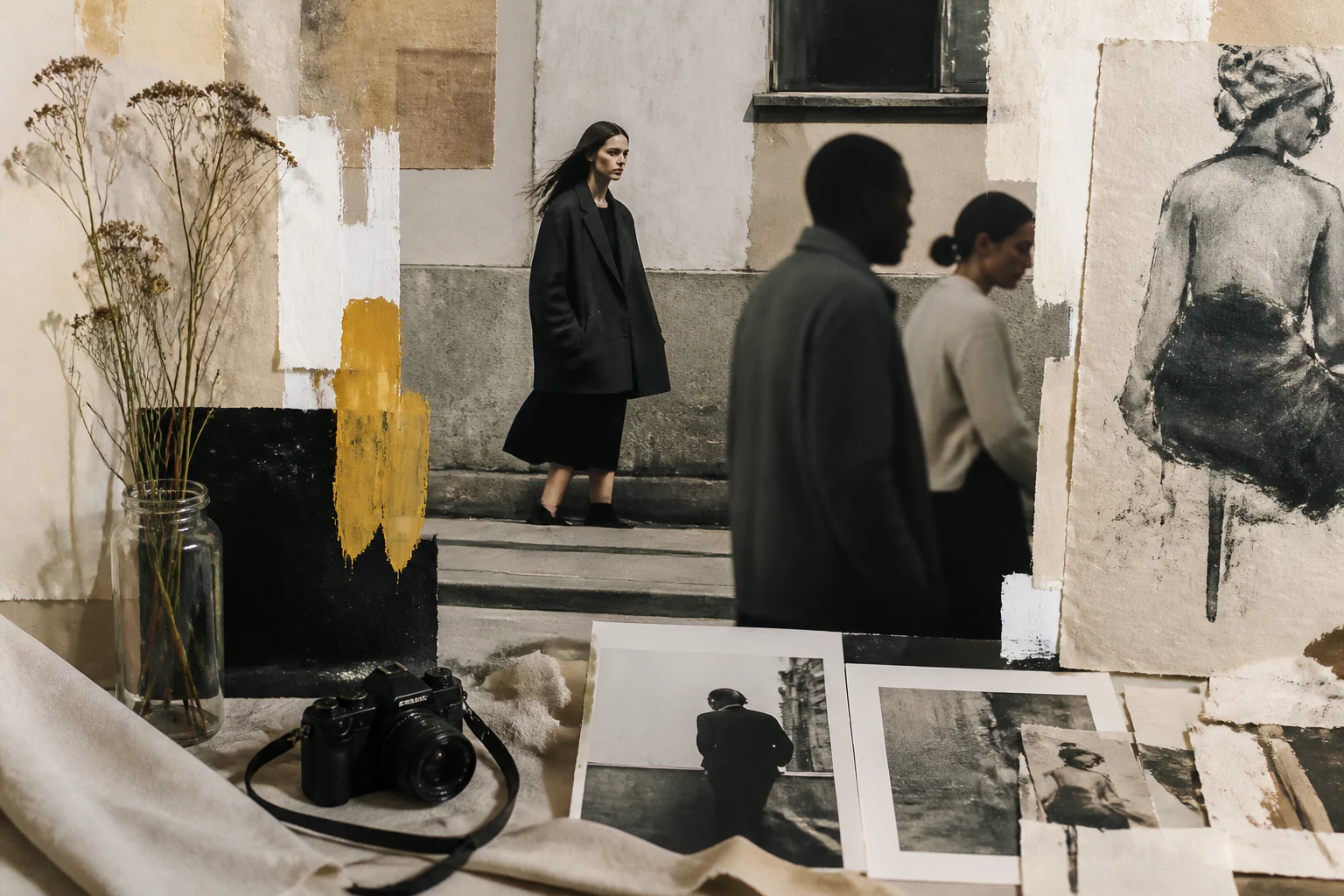
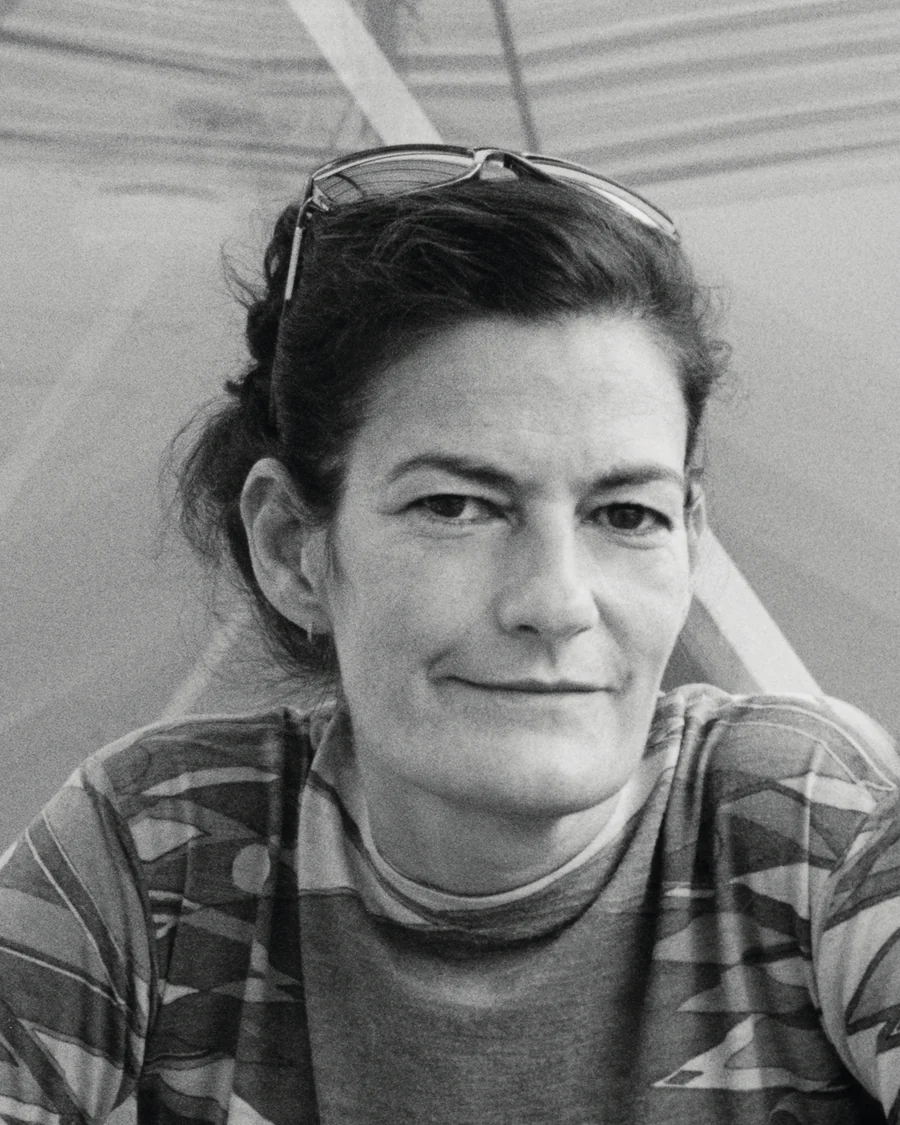
Editorial thesis
Scott matters as an author working simultaneously as stylist and photographer: combining the two roles removed the gap between assembling a look and photographing it.
Reader question
What changes when one person both chooses and photographs the clothing?
Short answer
The translation between two intentions disappears: a look is not assembled for later interpretation by a camera but built directly for a particular frame.
1. Position
Scott works as a stylist and photographer, which is atypical in this professional milieu. Combining the roles is a method rather than a convenience.
2. The British context of the 1990s
Her work is tied to a period when British fashion photography abandoned studio gloss for the appearance of the everyday. It was a deliberate break with the preceding norm.
3. Realism as construction
An impression of chance is achieved by staging: light, pose, and setting are chosen to look unchosen. This is a laborious device rather than an abdication of work.
4. Natural light
A substantial part of her work uses available rather than studio light. This limits control and introduces an unevenness that reads as credibility.
5. Domestic settings
Locations are lived-in interiors and ordinary streets rather than a studio. Clothing is presented in an environment where it might be worn rather than in neutral space.
6. Attitude to the model
Her frames avoid the pose as such: a person is caught between actions rather than at a moment of self-presentation. This moves attention from the body to the situation.
7. Long working relationships
She collaborated over long periods with particular brands and authors, giving her work consistency. Recognisability here is accumulated through time rather than through a device.
8. The campaign as genre
A significant part of her work is advertising campaigns, applying a realist language to a commercial task. This matters: the device works outside editorial freedom too.
9. A break with the preceding norm
Before this shift fashion photography presented unattainable perfection. The realist line offered recognisability instead of unattainability, changing the image’s addressee.
10. The dispute about veracity
Realism here is a style rather than a documentary mode. The shoot remains staged, and claiming otherwise would be inaccurate.
11. Critique of the period
The British line of the 1990s was justifiably criticised for aestheticising deprivation and for a narrow physical type. These objections apply to the period as a whole and must inform any reading of individual authors.
12. What transfers
The combination of roles transfers. An author responsible for both the look and the frame achieves a coherence unattainable when functions are divided.
13. What does not transfer
The impression of ease does not transfer. It results from selection out of a large quantity of material and demands the same resource as a studio shoot.
14. Link to photography of selection
The method relies on shooting large quantities and choosing afterwards. The work is concentrated in selection, as in documentary practice.
15. Influence on mass photography
The realist language spread far beyond fashion and became the norm on social platforms. What was a position turned into a default styling.
16. The reverse effect
Once realism became commonplace, studio staging returned as a mark of distinction. The opposition survives; the poles have swapped.
17. Historical position
Her work documents the moment when credibility became more persuasive than perfection. That shift still defines fashion photography.
18. Link to the knowledge base
The material connects to the entries on fashion photography, editorial photography, advertising photography, and the contact sheet as a process of selection.
19. How to read this today
Look for traces of staging in an apparently accidental frame: light direction, hand position, what has been removed from view. Realism here is the result of decisions rather than their absence.
20. A test question
Ask how many frames were shot and who made the selection. The answer shows where the authorial work sits in this practice.