analysis
Citation, copying, and archive — when repetition becomes new design
Repetition becomes new design not when the surface changes but when access, context, authorship, and function change.
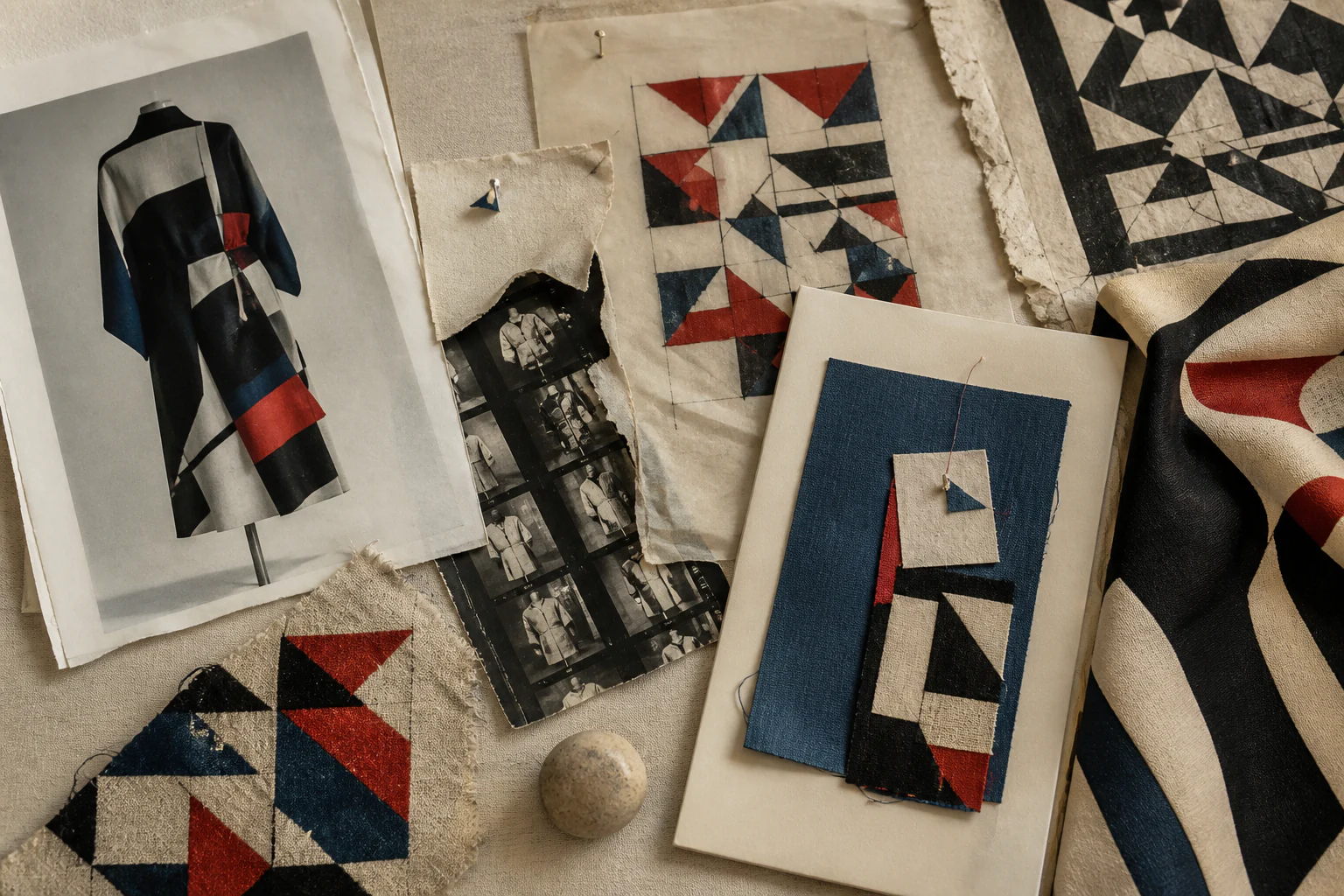
Repetition becomes new design not through a change of surface, but when the system of access, the context, the authorship, and the function of an object change.
Repetition becomes new design not when the surface changes but when access, context, authorship, and function change.
Editorial question
How should we read this problem: repetition becomes new design not when the surface changes but when access, context, authorship, and function change.
Short answer
Repetition becomes new design not when the surface changes but when access, context, authorship, and function change.
Thesis
Two visually identical objects can be different things if their position in a system differs: who the author is, who is licensed to produce, whom it is for, what has been said about it. Form is not the only carrier of difference.
Repetition becomes new design not when the surface changes but when access, context, authorship, and function change.
Evidence and cases
Thesis: difference is made by position, not form
Two visually identical objects can be different things if their position in a system differs: who the author is, who is licensed to produce, whom it is for, what has been said about it. Form is not the only carrier of difference.
Four different operations
The word "repetition" hides four distinct operations: citation, reproduction, reissue, and counterfeit. What distinguishes them is not resemblance to the original but declaration. Citation acknowledges its source; counterfeit conceals it.
Citation: the source is named
Citation works only through recognition. It counts on the viewer knowing the original and builds meaning from the distance between source and new use. Without recognition, a citation becomes an ordinary form.
Reproduction: a run without a claim
Reproduction copies an image without claiming to be the original. A museum postcard does not deceive: it presents itself as derivative and is therefore legitimate. The honesty of the carrier decides everything.
Reissue: the right is restored
A reissue of a historical model by the rights-holding manufacturer creates a legitimate new object. It is not a copy but a continuation of production — and the difference is legal rather than visual.
Counterfeit: a concealed claim
Counterfeit differs in exactly one respect: it asserts an origin it does not have. Its harm is informational rather than aesthetic — it destroys the possibility of citing an object.
The readymade: transfer without alteration
The readymade showed the limit case: the object does not change at all, only the context of presentation does. If an institution can create difference without a single physical change, then difference is certainly not located in form.
Pop art: the run as content
Pop art made reproducibility a subject rather than a means. A work about the mass image must be mass in form, or it contradicts its own claim. Here copying became an argument.
Postmodernism legalised citation
Postmodern design brought ornament and historical form back inside quotation marks. Citation made it possible to use what modernism had rejected without abandoning contemporaneity — and the device has stayed in use.
The archive became a production tool
Fashion houses turned their own archives into a source of product. Reissuing a model from the archive is at once a historical gesture and a commercial decision, and the two usually cannot be separated.
Access changes meaning
The digitisation of collections changed the status of repetition. When an original is available to anyone at high resolution, copying stops being a privilege and becomes an ordinary operation — and value shifts to selection and explanation.
Function as differentiator
The same object changes type when its purpose changes. A chair designed for a pavilion and its domestic version are different objects in their requirements, though the silhouette matches. Function separates things as effectively as form.
Material as differentiator
Translating a form into another material creates a new object even when the outline matches exactly. A chair in plywood and the same chair in plastic have different behaviour, service life, and production logic.
Scale as differentiator
A change of scale changes the type of problem. An enlarged detail becomes furniture; a reduced building becomes an object. Proportion does not scale linearly, which makes the transfer a substantive operation.
Learning was always copying
Copying a model is the basic method of instruction in every discipline, from handwriting drills to redrawing someone else’s layout. The problem arises not in copying but in publishing a copy as an original.
First turn: reproducibility became normal
Industrial production made the run the ordinary condition of an object. From that point "original" stopped meaning a single example and came to mean the first authorised version.
Second turn: citation became a legitimate device
Recognising citation as a legitimate method freed designers from the demand for novelty at any cost. Assessment shifted from "is this new" to "why this particular source".
Third turn: the archive became public
Open digital collections made sources available to everyone simultaneously. This devalued the rarity of knowledge and raised the price of accurate attribution — knowing a source is no longer enough; it must be named correctly.
What is usually misunderstood
The error is to treat a percentage of change as the test of legitimacy. Legal and ethical boundaries are set by the claim of origin and by rights, not by the share of altered surface.
Counterargument: everything already existed
The familiar objection: originality is impossible, every form has a predecessor, and distinguishing citation from copy is wordplay serving rights holders.
Where the counterargument holds
It holds as a description of the creative process. Nobody works from zero, and the demand for absolute novelty is dishonest about how design is actually made.
Where it fails
It fails as an excuse. The difference between acknowledged and concealed borrowing is practical rather than philosophical: it determines whether a reader can verify a claim of origin.
A test: is the source named
The only working test is declaration. Is the source named, are rights stated, is the new version distinguishable from the original in documentation. Everything else is a matter of taste; this is a matter of verifiability.
Link to the movement entries
The entries on postmodernism, pop art, and Memphis show how citation became a legitimate method and what arguments supported it.
Link to the institutions
The entries on the museum, the exhibition, and the collection explain who keeps the record of origin, without which citation and copy cannot be told apart.
What this changes in practice
The practical conclusion: record the source while working, not after publication. A reference made in advance turns borrowing into method; one made under pressure turns it into an excuse.
What stays with the original
The original keeps what cannot be reproduced: its date, the circumstances of its appearance, and its role in a history of decisions. A copy can repeat a form but cannot occupy a place in a chronology.
The current state
The speed of circulation has made attribution fragile: an image travels faster than its caption. Systems for confirming provenance have therefore become an infrastructural task rather than a formality.
Editorial conclusion
Repetition becomes new design when the verifiable position of an object changes: rights, purpose, material, scale, or declared source. A change of surface alone produces nothing.
How to read the subject today
On meeting a familiar form, ask not "where have I seen this" but "has it been stated where this was before". The presence of an answer separates work from appropriation.
Visual analysis
The article's visual logic can be tested through «Thesis: difference is made by position, not form», «Four different operations», «Citation: the source is named», «Reproduction: a run without a claim», «Reissue: the right is restored», «Counterfeit: a concealed claim». Compare these signs within one object or sequence rather than judging them as an isolated style.
Practical implication
Practical use begins by testing the thesis against a specific object, frame, or production decision. For this subject, the working criterion is: Repetition becomes new design not when the surface changes but when access, context, authorship, and function change.
Limitations
“Citation, copying, and archive — when repetition becomes new design” is limited to its stated subject: repetition becomes new design not when the surface changes but when access, context, authorship, and function change. The analysis does not replace examination of a specific original, project, or production context.
Sources
- MoMA — Readymade
- Design Museum — Memphis Group: awful or awesome?
- Design Museum — Ettore Sottsass
- Vitra Design Museum — Online Collection
- The Met — The Costume Institute
- V&A — Museum
- VANSMITHLAB AI Master Content Plan — project master plan