analysis
How an industrial material becomes a symbol of luxury
Luxury is produced not by rare raw material but by moving a cheap technology into a precise cultural context.
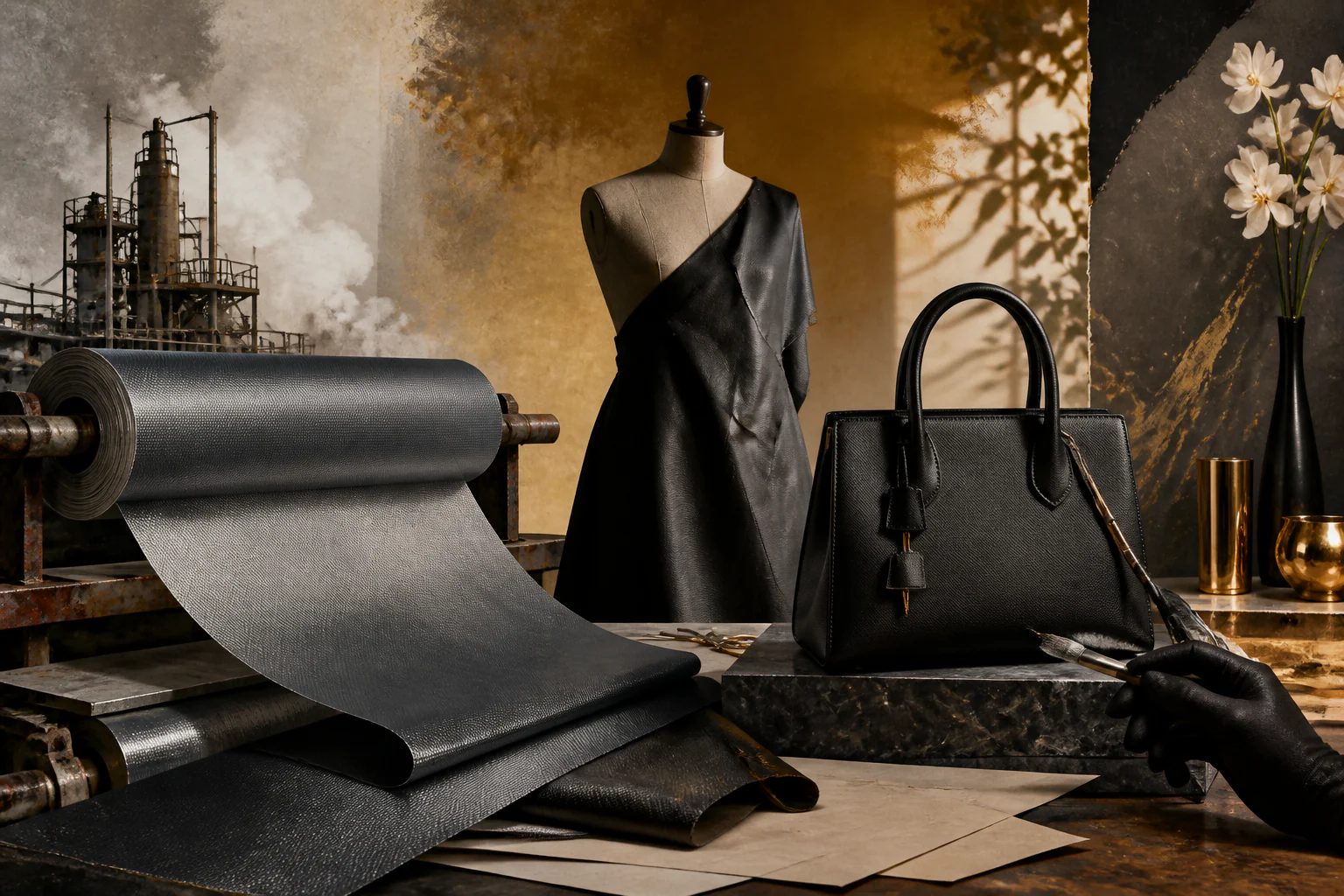
Luxury is no longer obliged to look like material rarity: sometimes it is produced by moving a cheap technology into a precise cultural context.
Luxury is produced not by rare raw material but by moving a cheap technology into a precise cultural context.
Editorial question
How should we read this problem: luxury is produced not by rare raw material but by moving a cheap technology into a precise cultural context.
Short answer
Luxury is produced not by rare raw material but by moving a cheap technology into a precise cultural context.
Thesis
An industrial material becomes luxury not when the raw material becomes expensive, but when the system that displays it changes: authorship, edition size, store, warranty, and explanation. The material stays the same; everything around it is repriced.
Luxury is produced not by rare raw material but by moving a cheap technology into a precise cultural context.
Evidence and cases
Thesis: context creates price, not raw material
An industrial material becomes luxury not when the raw material becomes expensive, but when the system that displays it changes: authorship, edition size, store, warranty, and explanation. The material stays the same; everything around it is repriced.
Nylon: the obvious case
Nylon was created as a technical fibre and for decades signified cheapness and utility. Its revaluation happened not in a laboratory but in retail: the same fibre, placed inside a house with a history, a pricing policy, and a service network, came to read as a sign of modernity rather than economy.
What is actually transferred
What moves is not the material but its regime of use. A technical cloth that meant abrasion resistance in workwear means, in a luxury bag, a refusal of demonstrative leather. Meaning is set not by the fibre but by what it declines.
The role of refusal
Refusal works harder than addition. When a house with a reputation for leather craft releases an object in synthetic material, it spends accumulated credibility — and that expenditure is what reads as a gesture rather than as saving.
Concrete in the interior
The same mechanism operates in space. Concrete meant infrastructure and poor finish; in a gallery or store interior it came to mean precision of pour, quality of formwork, and a deliberate refusal of cladding. Cost moved into execution.
Plywood and moulded veneer
Moulded plywood was a technology for cheapening mass production. In the work of Charles and Ray Eames it became the carrier of a complex three-dimensional form that cannot be achieved cheaply. The material stayed cheap; the process did not.
Plastic and the monolithic form
The Panton Chair of 1967 showed that moulded plastic could carry a form unattainable in wood. Here cheap raw material justified a high price through the complexity of tooling and rights to the construction, not through rarity.
Tooling as hidden cost
In all these cases cost lies in tooling: the mould, the die, the formwork, the machine. It is invisible in the finished object, yet it is exactly what makes copying expensive and therefore protects price.
Edition as instrument
A limited edition turns a reproducible material into a scarce object. This is a purely administrative operation — production could do more — but it restores the scarcity that the material itself does not supply.
The institution ratifies the transfer
A museum collection fixes the revaluation. When an object made of industrial material enters a design collection, its status stops depending on current fashion: the institution issues a long-term warranty of significance.
The role of the label and the catalogue
A catalogue record makes material legible: it names composition, date, manufacturer, and author. Without that record a technical material simply looks cheap; with it, it becomes a documented decision.
The store as a frame for price
The same fibre reads differently in a discounter and in a flagship store. Space, density of display, light, and the presence of a salesperson set the price expectation before the customer touches the object.
The image as a frame
Photography does the same work. A technical material shot like an archival object — even light, neutral ground, a close-up of texture — is presented as an object of study rather than a discounted product.
Repair and extended life
A repair service changes the economics of a material. If a manufacturer commits to fixing an object for years, synthetic stops being disposable and the buyer pays for service life rather than for composition.
Recycling as argument
A recycled version of an industrial fibre sells for more than virgin material, though technically it is the same polymer. The premium pays for the chain of collection, sorting, and proof of origin — that is, for documentation rather than substance.
First turn: from rarity to execution
Historically luxury meant rare raw material: silk, sable, ivory. The shift moved value from substance to the precision of its working, and that shift made industrial materials available to luxury.
Second turn: from execution to system
Then value shifted again — from execution to the system around the object: warranty, service, archive, right of repair, proof of origin. Material became one element rather than the source of price.
Third turn: material as position
Today the choice of an industrial material often reads as an ethical or technological position. That makes it non-neutral: the claim must be verifiable, or it turns into a liability.
What is usually misunderstood
A frequent error is to think it is enough to take a technical cloth and set a high price. Without tooling, edition, service, and explanation the transfer does not occur: the buyer sees expensive workwear.
Counterargument: it is just a markup
The objection is blunt: this is an ordinary brand markup, and talk of context disguises it. The material costs what it costs; the rest is rhetoric.
Where the counterargument holds
It holds where there is no tooling, no service, no limited edition, and no documentation of origin. Then only the markup remains, and it deserves to be called by its name.
Where it fails
It fails when costs can be shown: the price of a mould, the expense of a recycled-material collection chain, the payroll of a repair workshop. These items are verifiable and explain price without rhetoric.
Verifying provenance
The practical test is simple: ask for the document. Composition, supplier, share of recycled content, warranty term, and repair conditions either exist in writing or they do not. The absence of a document is itself an answer.
Link to the material entries
The entries on nylon, polyester, fibreglass, carbon fibre, and acrylic supply the physical half of the argument: what a material genuinely does and does not do, independent of price.
Link to the institutions
The entries on the museum, the exhibition, and the collection carry the second half: who ratifies a material’s cultural status, and on what grounds.
What this changes in practice
For a designer the conclusion is this: when choosing an industrial material, design the entire frame in advance — tooling, edition, service, and explanation. Otherwise the material will be read according to its original reputation.
What stays physical
Physics is not revalued along with reputation. A polymer ages, yellows, and loses strength under ultraviolet; concrete cracks. These properties persist regardless of the store in which the object was sold.
The current state
The transfer now happens faster and more often, and therefore devalues faster. When everyone uses a technical material its sign stops working, and price must again be justified by execution and service.
Editorial conclusion
An industrial material becomes luxury where a verifiable system has been built around it: tooling, edition, document, service, and institutional ratification. Without that system only a price claim remains.
How to read the subject today
Ask not "what is it made of" but "what has been built around it". The second answer explains the price; the first explains only how the object behaves in use.
Visual analysis
The article's visual logic can be tested through «Thesis: context creates price, not raw material», «Nylon: the obvious case», «What is actually transferred», «The role of refusal», «Concrete in the interior», «Plywood and moulded veneer». Compare these signs within one object or sequence rather than judging them as an isolated style.
Practical implication
Practical use begins by testing the thesis against a specific object, frame, or production decision. For this subject, the working criterion is: Luxury is produced not by rare raw material but by moving a cheap technology into a precise cultural context.
Limitations
“How an industrial material becomes a symbol of luxury” is limited to its stated subject: luxury is produced not by rare raw material but by moving a cheap technology into a precise cultural context. The analysis does not replace examination of a specific original, project, or production context.
Sources
- Prada Group — Prada Re-Nylon
- V&A — Fashioned from Nature
- Vitra Design Museum — Online Collection
- Design Museum — Chairs of the 1960s
- Design Museum — Collection
- MoMA — Readymade
- The Met — The Costume Institute
- VANSMITHLAB AI Master Content Plan — project master plan