analysis
Why technology changes not speed, but the shape of imagination
A technology’s main effect is not the acceleration of old work but the appearance of objects and images that were previously hard to conceive.
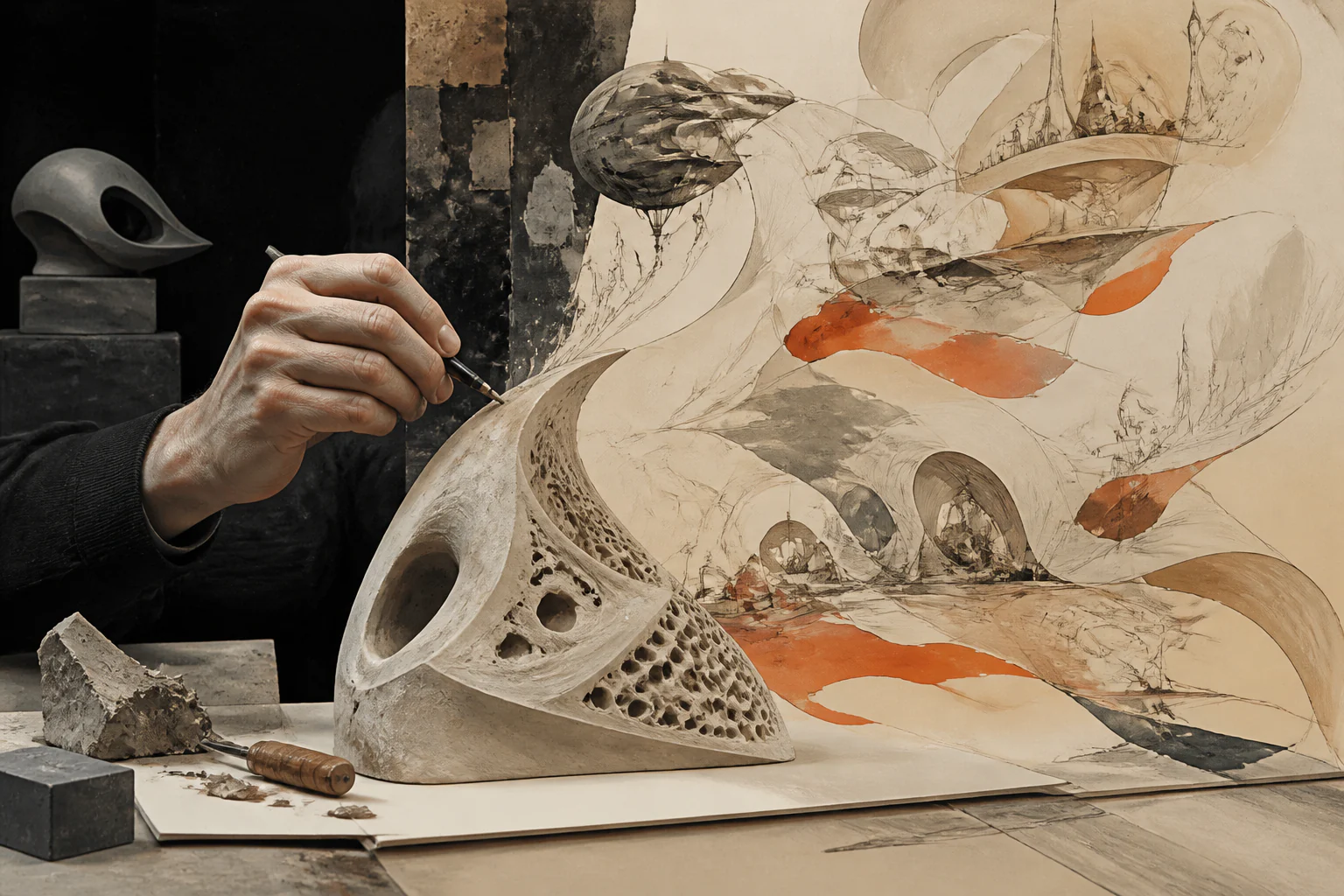
A technology’s principal action is not the acceleration of old work but the appearance of images, objects, and processes that were previously hard to imagine.
A technology’s main effect is not the acceleration of old work but the appearance of objects and images that were previously hard to conceive.
Editorial question
How should we read this problem: a technology’s main effect is not the acceleration of old work but the appearance of objects and images that were previously hard to conceive.
Short answer
A technology’s main effect is not the acceleration of old work but the appearance of objects and images that were previously hard to conceive.
Thesis
A technology is usually sold as a saving of time, but its main effect is different: it changes the set of decisions that occur to anyone at all. Acceleration is noticed immediately; expansion only in retrospect.
A technology’s main effect is not the acceleration of old work but the appearance of objects and images that were previously hard to conceive.
Evidence and cases
Thesis: a tool expands the thinkable
A technology is usually sold as a saving of time, but its main effect is different: it changes the set of decisions that occur to anyone at all. Acceleration is noticed immediately; expansion only in retrospect.
Imitation always comes first
A new technology first reproduces an old task faster. Only afterwards do things appear that were impossible in the previous technology — and it is at the second step that real change occurs.
Moulded plywood as example
The press for bending plywood did not speed up chair making: it made possible a three-dimensional shell that cannot be carved. What appeared was not a faster chair but a different type of form.
Moulded plastic as example
Monolithic moulding did not speed up joinery — it abolished it. A chair from a single element was not an improvement of the earlier process but an object that made no sense in the earlier logic.
The layer changed thinking about the image
The layer and the mask did not merely speed up retouching. They introduced the idea of an image as a reversible assembly rather than a single print — and from there a different way of conceiving a frame began.
Reversibility as a new freedom
The ability to undo changed authorial behaviour: it became rational to try deliberately risky options. This is not a saving of time but a change in permissible risk.
A cheap variant changes the method
When the cost of one variant falls, the way of working changes: instead of one considered solution there is a field of attempts. Method shifts from planning to selection.
Title sequences as a case of expansion
The emergence of title sequences showed that typography can exist in time. This did not speed up layout — it added a dimension the printed page did not have.
The tool sets a vocabulary of form
Every technology makes some forms cheap and others expensive: a cutter radius, a minimum moulding thickness, a Bézier curve. A tool’s vocabulary gradually becomes an era’s vocabulary.
Constraint is more productive than possibility
New forms arise more often from constraints than from freedom. It is precisely the impossibility of doing something the accustomed way that forces a solution that did not previously exist.
The lag between access and understanding
Time passes between a tool’s appearance and meaningful work with it: failures must accumulate, criteria must form, and effect must be learned apart from decision. This gap is normal.
The first generation of work is recognisable
Early work in a new technology almost always demonstrates the technology itself. This is a necessary stage, but such work ages fastest, because the effect stops surprising.
Maturity arrives when the technology is invisible
A technology becomes a language when it stops being a subject. In mature work the tool is visible only to a specialist, while the viewer sees a decision.
Acceleration has a limit
Execution speed is now barely the bottleneck. What constrains are judgement, approval, and audience attention — human processes that do not accelerate along with the tool.
The problem shifted to selection
When production is easy, the scarce thing becomes grounds for choice. Value moves from the ability to make to the ability to explain why this one was chosen.
First turn: the tool removed an intermediary trade
Every wave removed an intermediate role: the typesetter, the lab technician, the draughtsman. The vacated place was filled not by idleness but by new decisions that previously nobody was positioned to make.
Second turn: production separated from place
The digital file broke the link between design and workshop. This changed not tempo but geography and team composition — and with them which projects are possible at all.
Third turn: part of generation is delegated
The system is now given not execution but the generation of variants. This touches an earlier stage of thinking than all previous shifts, and so its consequences are harder to predict.
What is usually misunderstood
The main misunderstanding is to measure a technology in hours saved. Such a report always looks modest and misses the only significant effect: the change in the set of possible decisions.
Counterargument: the tool is neutral
The old objection: a tool decides nothing, everything depends on who holds it. A bad designer with a new tool remains a bad designer.
Where the counterargument holds
It holds at the level of quality. A tool genuinely does not replace judgement, and access to technology produces no good decisions by itself.
Where it fails
It fails at the level of the possible. A tool is not neutral about what is feasible at all: it makes some decisions cheap and others unavailable, and thereby steers thinking.
A test: what became impossible
A useful test is to ask not what became easier but what became harder. Every technology closes something, and the list of losses usually describes the shift more accurately than the list of gains.
Link to image grammar
The entries on Photoshop, compositing, visual effects, title sequences, and motion design show concrete cases where a tool opened a new dimension rather than accelerating an old one.
Link to objects and materials
The entries on plywood, moulded plastic, and composites supply the object half of the argument: how a production technology generated forms rather than merely shortening schedules.
What this changes in practice
When learning a tool, look not for a faster version of a familiar operation but for a task that could not previously be posed. The first yields savings; the second yields new work.
What stays unchanged
The criteria do not change: proportion, legibility, durability, appropriateness. Technology expands the set of solutions but does not abolish the way they are judged.
The current state
Tools now appear faster than criteria for judging them can form. This temporarily shifts attention to effect, and a deliberate effort is required to return it to decision.
Editorial conclusion
Technology changes the shape of imagination because it redistributes the cost of decisions. What is cheap becomes thinkable and what is expensive drops out of consideration — and this happens before an author registers a choice.
How to read the subject today
When assessing a new tool, do not ask how much faster it is. Ask which work became possible for the first time and which quietly stopped being done.
Visual analysis
The article's visual logic can be tested through «Thesis: a tool expands the thinkable», «Imitation always comes first», «Moulded plywood as example», «Moulded plastic as example», «The layer changed thinking about the image», «Reversibility as a new freedom». Compare these signs within one object or sequence rather than judging them as an isolated style.
Practical implication
Practical use begins by testing the thesis against a specific object, frame, or production decision. For this subject, the working criterion is: A technology’s main effect is not the acceleration of old work but the appearance of objects and images that were previously hard to conceive.
Limitations
“Why technology changes not speed, but the shape of imagination” is limited to its stated subject: a technology’s main effect is not the acceleration of old work but the appearance of objects and images that were previously hard to conceive. The analysis does not replace examination of a specific original, project, or production context.
Sources
- Computer History Museum — Make Software: Photoshop
- Adobe — Nondestructive editing in Photoshop
- Computer History Museum — Pixar’s Luxo Jr.
- Computer History Museum — Ivan Sutherland
- Design Museum — Chairs of the 1950s
- Vitra Design Museum — Online Collection
- VANSMITHLAB AI Master Content Plan — project master plan