analysis
Why the store became media
The store stopped being a point of sale and became a publishing channel: a spatial magazine and a brand interface.
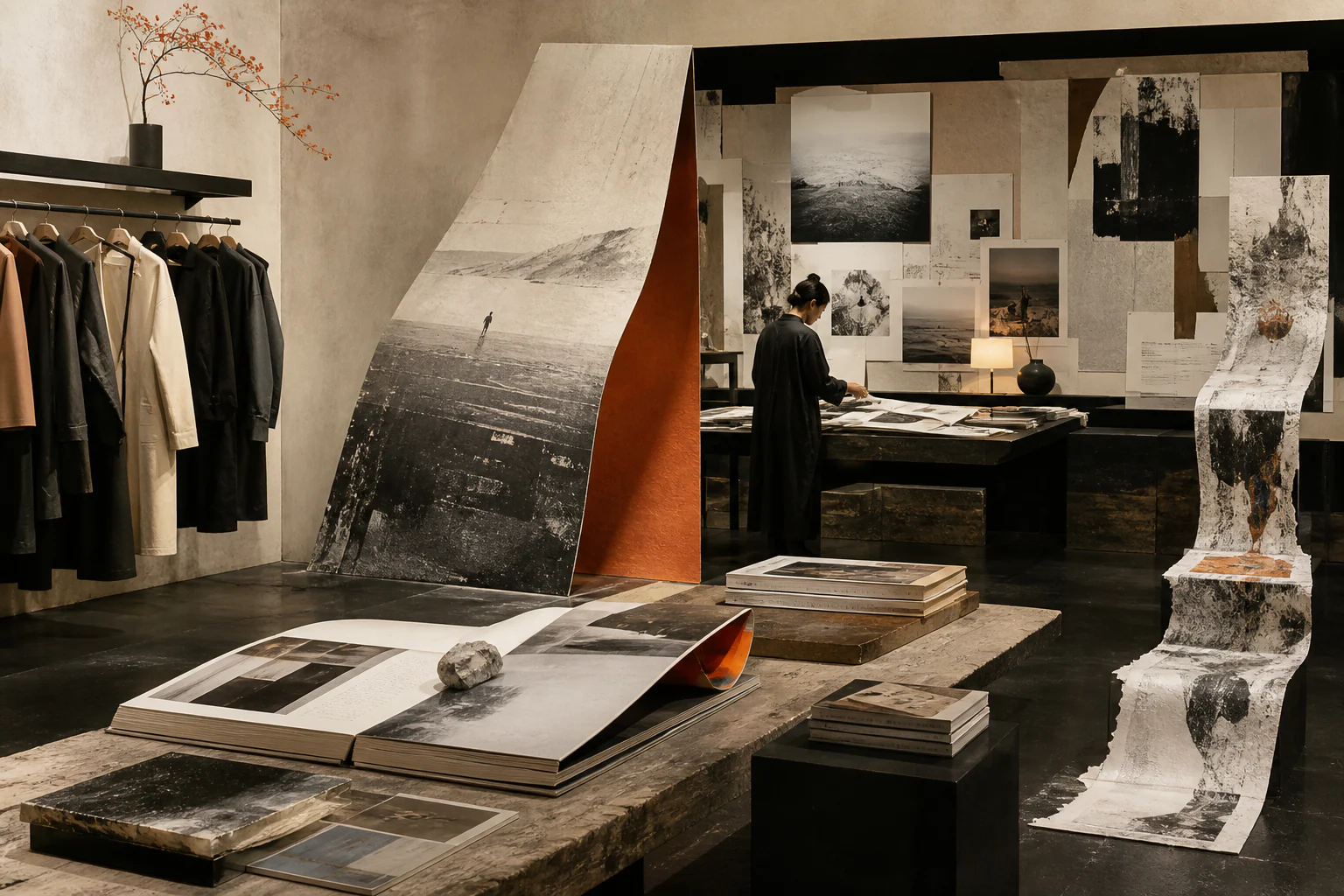
The store is no longer only a place of sale: it has become a publishing channel, a spatial magazine, and a brand interface.
The store stopped being a point of sale and became a publishing channel: a spatial magazine and a brand interface.
Editorial question
How should we read this problem: the store stopped being a point of sale and became a publishing channel: a spatial magazine and a brand interface.
Short answer
The store stopped being a point of sale and became a publishing channel: a spatial magazine and a brand interface.
Thesis
A store still sells, but the economic point of a flagship has long ceased to be turnover per square metre. It lies in producing images, explanations, and memorable experience — that is, in what a publication used to do.
The store stopped being a point of sale and became a publishing channel: a spatial magazine and a brand interface.
Evidence and cases
Thesis: selling became a by-product
A store still sells, but the economic point of a flagship has long ceased to be turnover per square metre. It lies in producing images, explanations, and memorable experience — that is, in what a publication used to do.
The department store was the first print run
Bon Marché, opened by Aristide Boucicaut in Paris in 1852, introduced fixed prices, free entry, and open display. This was publishing logic: goods were presented to everyone identically, like a page, rather than negotiated individually, like a deal.
The shop window as cover
A shop window performs the function of a cover: it selects one story out of the whole assortment and promises it to a passer-by. Like a cover, it changes on a schedule and is judged by its ability to stop the eye in a second.
Display as layout
The arrangement of goods is layout: there is a lead item, there is secondary matter, there are margins. Density of display sets the pace of reading exactly as density of type does, and signals price in the same way.
Route as table of contents
A store plan sets a sequence: what the reader meets first, what is found only by going deeper. It is a table of contents built into floor and walls, and it governs attention more firmly than text does.
The concept store introduced curation
The concept store moved the editorial operation of selection into retail: value is created not by completeness of assortment but by the justification of exclusions. The customer pays for someone else’s decision about what not to show.
The flagship as editorial statement
The Prada Epicenter in New York, designed by OMA and opened in 2001, was made as a publication: part of the floor area was given not to sales but to public space and to the display of a position. The store stated a thesis, not an assortment.
The showroom and the second audience
The showroom shows that retail always had two audiences: the buyer and the professional intermediary. A buyer, a stylist, and a journalist take material from the showroom for their own publication — retail operates as a press office.
The store produces images
The key shift: the visitor photographs. Space is designed with a frame in mind — light, background, angle, a recognisable detail. The store became a shoot location where the crew arrives free of charge and distributes the result itself.
Schedule instead of permanence
An interior used to live for years; now it changes seasonally, like an issue. An installation, a collaboration, a temporary corner — these are releases, and they create a reason to return that the assortment alone does not provide.
Online took the transaction
When purchase moved into an interface, the physical point lost its monopoly on the deal and acquired a different task: to explain, to show material at close range, and to build the trust a screen cannot supply.
Tactility as editorial argument
What cannot be transmitted through a screen became the store’s main content: weight, seam, the sound of a fastening, the temperature of metal. This is literally exclusive material available only in this channel.
The salesperson as editor
The staff role shifted from closing a sale to explaining. They recount material origin, the history of a model, the terms of repair — that is, they do the work of editorial copy beside an image.
Metrics became media metrics
The measures changed too: alongside revenue, dwell time, publication reach, and mention counts are tracked. This is a media vocabulary applied to real estate.
Museum and store converged
Both typologies now manage route, lighting, label, and permissible distance to the object. The difference remains in the right to take the object away, not in the way it is shown.
First turn: entry became free
Nineteenth-century open display made the store a public space. From that point a visit no longer implied a purchase, and an audience appeared where there had been only a clientele.
Second turn: space acquired an author
Commissioning an interior from a known architect turned the store into a signed work. An author appeared — and with the author came the possibility of review, citation, and archiving.
Third turn: the visitor became the distributor
The smartphone completed the transformation. A store’s circulation is no longer limited by the number of passers-by: one successful space travels further than paid advertising.
What is usually misunderstood
The error is to think a striking interior suffices. Without selection, schedule, and explanation the result is scenery that yields one photograph and gives no reason to return.
Counterargument: a store must sell
The objection is practical: rent, staff, and stock are paid for by revenue, not by mentions. The media function does not pay for floor area.
Where the counterargument holds
It holds entirely for an ordinary unit in a shopping centre with no authored design and no events programme. There, media rhetoric is a way of excusing poor conversion.
Where it fails
It fails for flagships whose construction budget cannot be recovered from sales on that floor area. Such projects are financed as marketing and assessed by media metrics — the cost structure itself shows this.
A test: three markers
A store works as media if three conditions hold: part of the floor area does not sell, content changes on a schedule, and the visitor is given an explanation rather than only a price. Two out of three indicate a transitional state.
Link to the typology entries
The entries on the boutique, the department store, the concept store, the showroom, and the shop window analyse the individual mechanisms assembled here into a single line of argument.
Link to image grammar
The entries on art direction, advertising photography, and the magazine cover explain the rules governing the image the store now produces.
What this changes in practice
A store should be designed like an issue: with an editorial plan, a calendar of changes, a budget for explanation, and a photographic vantage point considered in advance. Otherwise the space works at half strength.
What stays retail
The physics of retail has not vanished: stock logistics, size availability, the queue at the till, and returns shape actual experience more than an installation does. The media layer does not cancel the operational base.
The current state
The distinction between store, exhibition, and shoot location has almost dissolved, and this creates a new problem: so many spaces are now designed for the photograph that the photograph has stopped being a differentiator.
Editorial conclusion
The store became media because the transaction moved to another channel while explanation and material experience stayed tied to place. Retail kept what cannot be digitised and began to publish it.
How to read the subject today
On entering a store, ask what has been published here and who selected it. If there is no answer, you are in a warehouse with good lighting; if there is, you are in an issue.
Visual analysis
The article's visual logic can be tested through «Thesis: selling became a by-product», «The department store was the first print run», «The shop window as cover», «Display as layout», «Route as table of contents», «The concept store introduced curation». Compare these signs within one object or sequence rather than judging them as an isolated style.
Practical implication
Practical use begins by testing the thesis against a specific object, frame, or production decision. For this subject, the working criterion is: The store stopped being a point of sale and became a publishing channel: a spatial magazine and a brand interface.
Limitations
“Why the store became media” is limited to its stated subject: the store stopped being a point of sale and became a publishing channel: a spatial magazine and a brand interface. The analysis does not replace examination of a specific original, project, or production context.
Sources
- V&A — Museum
- MoMA — Readymade
- Design Museum — The story of the Design Museum
- Fondazione Prada — History
- The Met — The Costume Institute
- Vitra Design Museum — Online Collection
- VANSMITHLAB AI Master Content Plan — project master plan