research
Grilli Type
A type studio in Zurich since 2009. It reinterprets Swiss typographic tradition through contemporary families, screen use and expressive details inside rational systems.
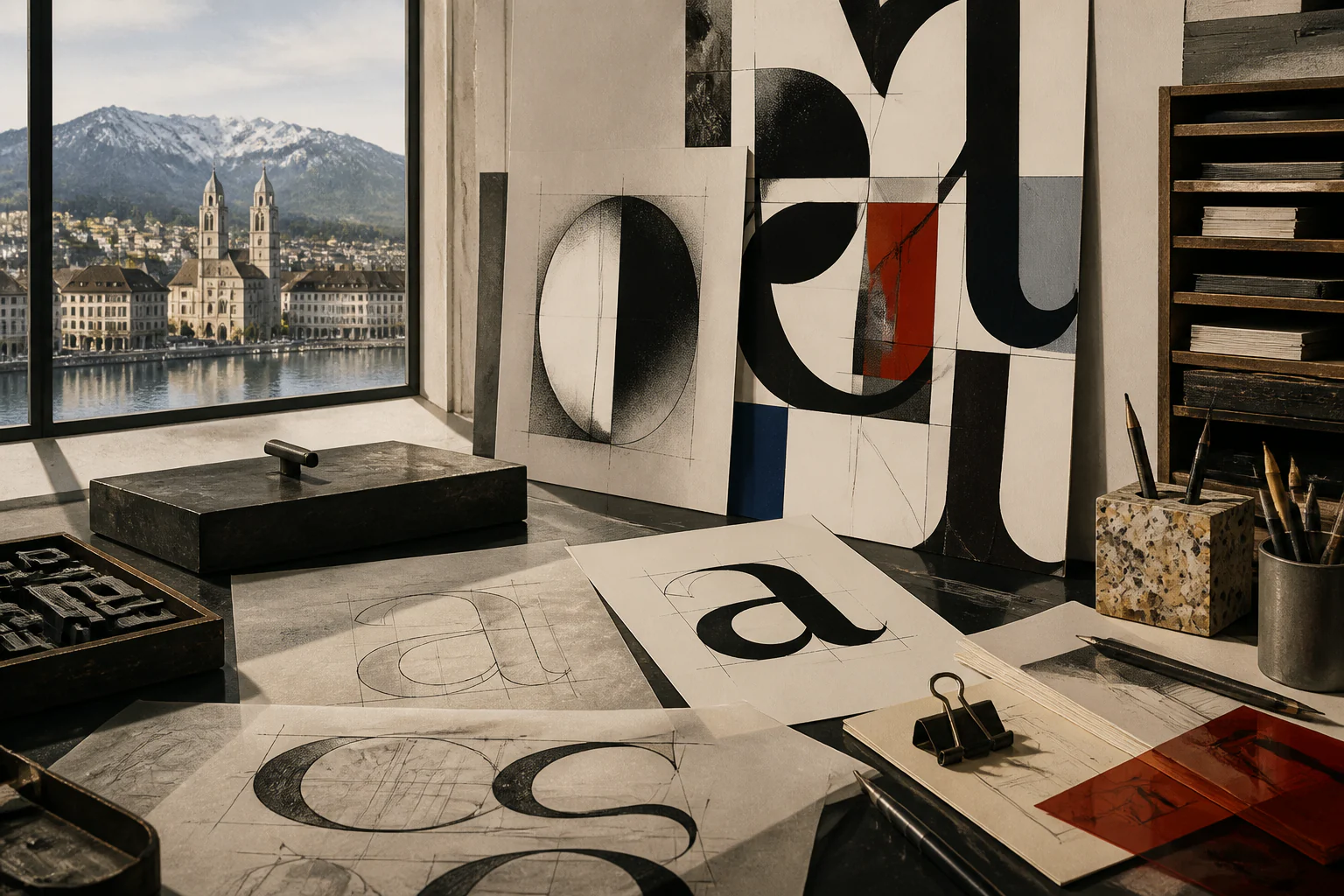
Helped update international ideas of Swiss type by moving beyond literal repetition of the modernist canon. This profile examines origins, method, concrete projects and influence rather than promotional self-description.
Editorial thesis
Grilli Type matters to VANSMITHLAB not as a catalogue of famous projects. Helped update international ideas of Swiss type by moving beyond literal repetition of the modernist canon. The central interest is the mechanism: reinterprets Swiss typographic tradition through contemporary families, screen use and expressive details inside rational systems.1
Reader question
What exactly in the method of Grilli Type changed professional practice, and why can that influence not be reduced to a recognisable style or client list?
Short answer
Grilli Type was founded in Zurich in 2009. Its founders include Noël Leu and Thierry Blancpain. Its practice works through a clear principle: reinterprets Swiss typographic tradition through contemporary families, screen use and expressive details inside rational systems.1 Helped update international ideas of Swiss type by moving beyond literal repetition of the modernist canon.1
1. Origins and context
Grilli Type was founded in Zurich in 2009. Its founders include Noël Leu and Thierry Blancpain. The organisation emerged within a professional context in which tools, markets and cultural expectations were changing the definition of the discipline itself. Grilli Type entered that process not as an isolated author but as a collective structure capable of turning a method into repeatable practice.1
2. How the method works
The core principle can be stated simply: reinterprets Swiss typographic tradition through contemporary families, screen use and expressive details inside rational systems. This matters because method defines not an exterior style but a way of making decisions: what to research, which constraints matter, where conflict lies and how form connects to use. The repeatability of that approach is what makes institutional influence visible.1
3. GT America: first anchor example
GT America. The family combines American gothic and European neo-grotesque traditions, turning a historical contrast into a versatile contemporary system. The example matters as observable evidence of method: the relationship between problem and form can be inspected in a specific object, image, space or system rather than accepted from studio rhetoric.1
4. GT Sectra: second anchor example
GT Sectra. The sharp contrast serif shows that editorial type can be both functional and strongly characterful. The second example tests whether the approach remains coherent when scale, client, medium and cultural context change. It is therefore evidence of a working system rather than an addition to a list of famous projects.1
5. A system rather than a single device
With Grilli Type, it is more useful to look for a system of choices than one repeated visual gesture. Reinterprets Swiss typographic tradition through contemporary families, screen use and expressive details inside rational systems. Similarity between projects may therefore lie in research procedure, team organisation, material attitude or sequence of work rather than identical form. VANSMITHLAB records authorship through mechanism rather than superficial resemblance.
6. Influence on the discipline
Helped update international ideas of Swiss type by moving beyond literal repetition of the modernist canon. Influence becomes visible when questions and working methods enter the practice of other authors, schools, clients or institutions. This does not necessarily mean direct imitation; more often the range of acceptable solutions and the professional vocabulary itself changes.1
7. Critical distance
Type lives not in an alphabet specimen but in text, interfaces, wayfinding and multiple languages. Expression must be tested alongside readability, character support, technology and licensing. This matters for Grilli Type because reputation can turn successful decisions into universal mythology. VANSMITHLAB separates documented fact, interpretation and editorial judgment: influence is recognised without replacing analysis of limits, context and collective authorship.
8. Why the organisation matters now
Grilli Type continues as an independent foundry with international distribution.1 The relevance of the profile is not defined only by current commissions. The practice remains a useful comparison point because it reveals which professional questions survive changing technologies and fashions and which belonged to a specific historical moment.