encyclopedia
Nike “You Can’t Stop Us”: Editing as the Main Production Engine
Editing, archive search and VFX design the match between movement and meaning in advance.
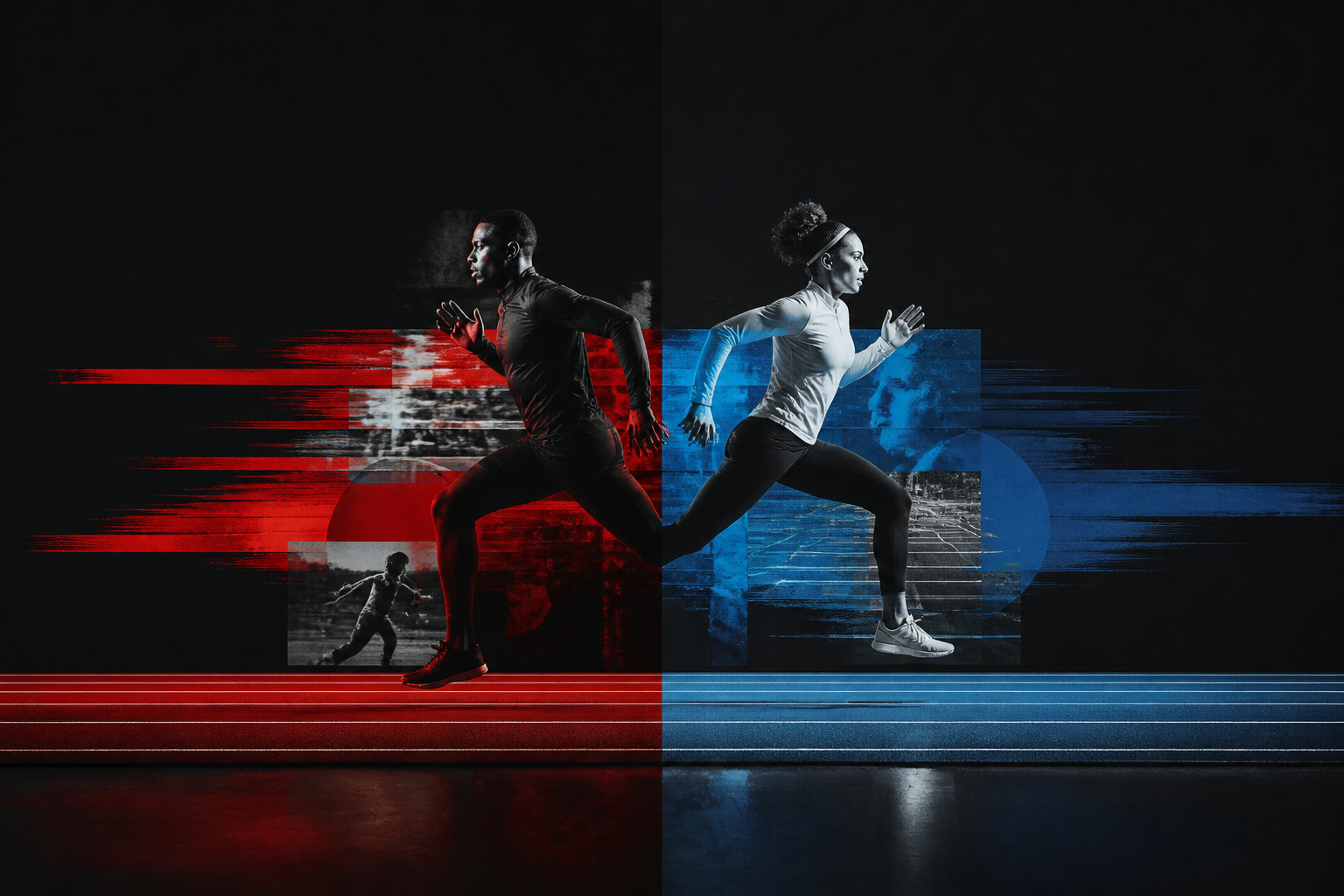
Nike’s 2020 film makes split-screen feel instantaneous, although published materials describe thousands of researched sports sequences, dozens of final pairings and more than a thousand hours of compositing.
Editorial thesis
You Can’t Stop Us treats editing not as the last polish but as a production method that governs material search, shooting, VFX and drama from the start.
Reader question
What changes in production when movement matching becomes the main casting criterion?
Short answer
The team did not search for merely similar shots: it built pairs in which physical continuity carried a story about acting together.
1. Editing as a Production Method
The source record states that Wieden+Kennedy identifies You Can’t Stop Us as a Nike film released in July 2020. [source]. For the section on “Editing as a Production Method,” the fact matters because of the production sequence behind it. The team first had to define what “Editing as a Production Method” could not lose when the idea moved between formats. That constraint then became a selection criterion instead of remaining a polished sentence in a deck. A second anchor is this: The One Club record identifies Wieden+Kennedy, Pulse Films, A52 and Joint Editorial in the production. [source].
It shows that the visual result came from a chain of decisions rather than one lucky frame. That is why “Editing as a Production Method” is better read as a system of relationships between material, time and audience. Remove that relationship and the message becomes generic and harder to verify. A third detail is that The same record describes 72 sequences, 24 sports and 53 athletes in the final spot. [source]. It adds a physical or organizational cost to the apparently simple idea.
The editorial interpretation here is that a mechanism is stronger than a slogan when the production method makes it visible. That is an interpretation, not a claim about private motives inside the team. Public sources show the result and selected stages, but not every internal approval or negotiation. For that reason, this article does not invent budgets, rejected alternatives or private decisions. For a small team, the practical lesson from “Editing as a Production Method” is to write down one invariant and test every asset against it.
For a large system, that requires a shared shot list, visible statuses and one review order. The visual goal is reached when differences between outputs feel intentional rather than accidental. A viewer reads that intention through repeated rhythm, material detail or the sequence of an action. The section returns to the question of how “Editing as a Production Method” changes not only the message but the way it is assembled. The answer is not a promotional adjective but an observable mechanism that can be described, checked and bounded.
2. Split-Screen as a Matching System
The source record states that The film debuted around the return of the NBA and was narrated by Megan Rapinoe. [source]. For the section on “Split-Screen as a Matching System,” the fact matters because of the production sequence behind it. The team first had to define what “Split-Screen as a Matching System” could not lose when the idea moved between formats. A second anchor is this: The One Club reports that 4,000 action sequences were researched. [source].
That is why “Split-Screen as a Matching System” is better read as a system of relationships between material, time and audience. A third detail is that The One Club reports more than 1,040 hours of compositing. [source].
For a small team, the practical lesson from “Split-Screen as a Matching System” is to write down one invariant and test every asset against it.
The section returns to the question of how “Split-Screen as a Matching System” changes not only the message but the way it is assembled.
3. Archive Search Becomes Casting
The source record states that The One Club record identifies Wieden+Kennedy, Pulse Films, A52 and Joint Editorial in the production. [source]. For the section on “Archive Search Becomes Casting,” the fact matters because of the production sequence behind it. The team first had to define what “Archive Search Becomes Casting” could not lose when the idea moved between formats. A second anchor is this: The same record describes 72 sequences, 24 sports and 53 athletes in the final spot. [source].
That is why “Archive Search Becomes Casting” is better read as a system of relationships between material, time and audience. A third detail is that The VFX team rebuilt backgrounds, removed people and tracked reconstructed spaces to preserve the split-screen movement. [source].
For a small team, the practical lesson from “Archive Search Becomes Casting” is to write down one invariant and test every asset against it.
The section returns to the question of how “Archive Search Becomes Casting” changes not only the message but the way it is assembled.
Editorial interpretation
4. VFX Hides the Amount of Work
The source record states that The One Club reports that 4,000 action sequences were researched. [source]. For the section on “VFX Hides the Amount of Work,” the fact matters because of the production sequence behind it. The team first had to define what “VFX Hides the Amount of Work” could not lose when the idea moved between formats. A second anchor is this: The One Club reports more than 1,040 hours of compositing. [source].
That is why “VFX Hides the Amount of Work” is better read as a system of relationships between material, time and audience. A third detail is that The public case record documents the method and scale but does not establish that every search step was automated. [source].
For a small team, the practical lesson from “VFX Hides the Amount of Work” is to write down one invariant and test every asset against it.
The section returns to the question of how “VFX Hides the Amount of Work” changes not only the message but the way it is assembled.
5. Why the Finished Film Feels Effortless
The source record states that The same record describes 72 sequences, 24 sports and 53 athletes in the final spot. [source]. For the section on “Why the Finished Film Feels Effortless,” the fact matters because of the production sequence behind it. The team first had to define what “Why the Finished Film Feels Effortless” could not lose when the idea moved between formats. A second anchor is this: The VFX team rebuilt backgrounds, removed people and tracked reconstructed spaces to preserve the split-screen movement. [source].
That is why “Why the Finished Film Feels Effortless” is better read as a system of relationships between material, time and audience. A third detail is that Wieden+Kennedy identifies You Can’t Stop Us as a Nike film released in July 2020. [source].
For a small team, the practical lesson from “Why the Finished Film Feels Effortless” is to write down one invariant and test every asset against it.
The section returns to the question of how “Why the Finished Film Feels Effortless” changes not only the message but the way it is assembled.