encyclopedia
Kazakhstan in Global Fashion
From the 1947 House of Fashion Models to KFW, Mercedes-Benz Fashion Week Almaty, Visa Fashion Week and a new generation of labels
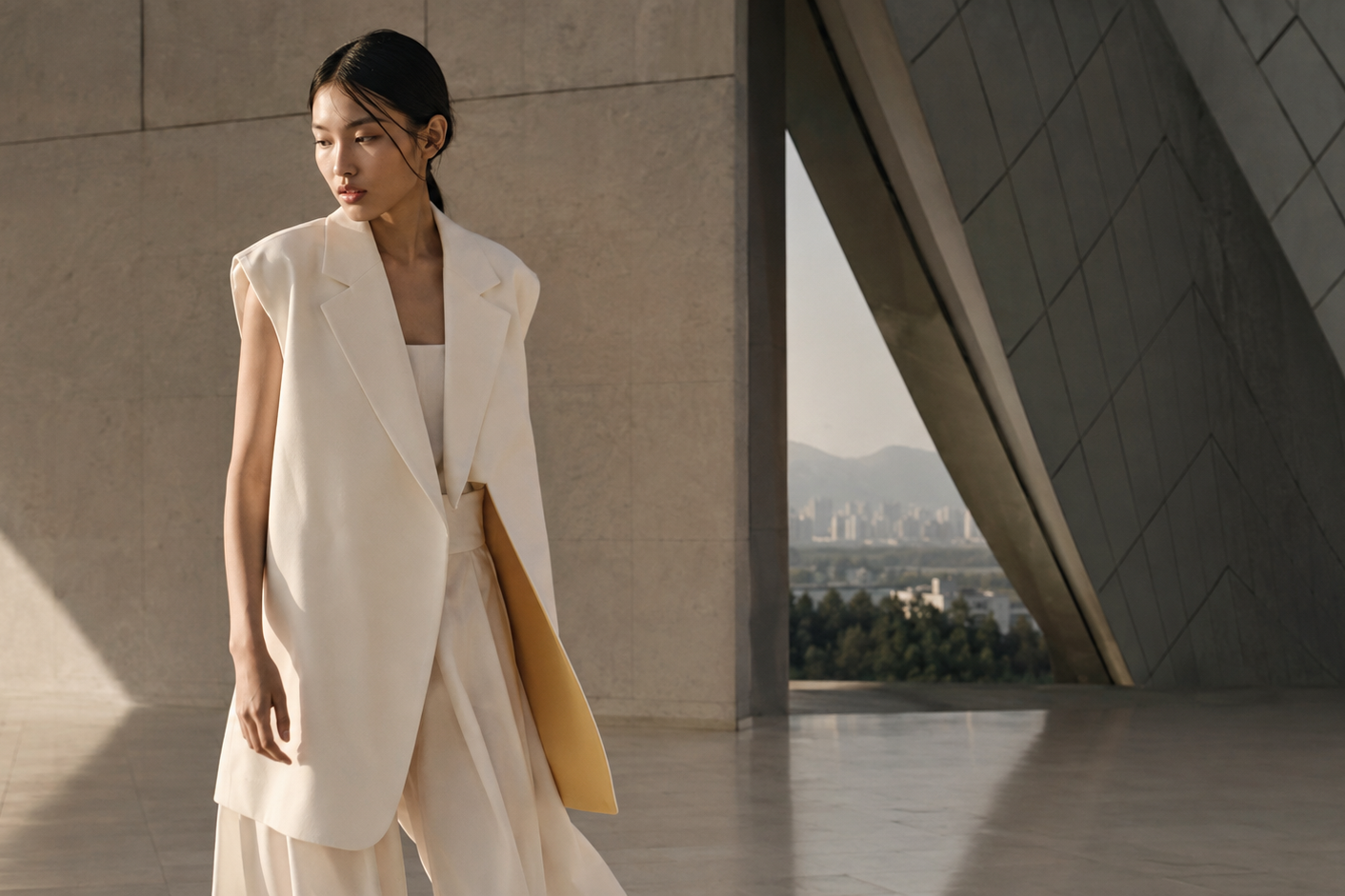
Kazakhstan’s fashion industry did not begin with social media. Its institutional history reaches back to the Republican House of Fashion Models founded in 1947, then Symbat, fashion publishing and a fashion theatre. The 1990s transformed designers into entrepreneurs. Almaty Fashion Week created a professional calendar in 2004; Central Asia Fashion added B2B infrastructure in 2006; Mercedes-Benz Fashion Week Almaty arrived in 2014; Visa Fashion Week Almaty in 2019. The scene exists. The harder questions now are production, investment, export and a recognisable contemporary code.
Editorial thesis
Kazakhstan has already passed the stage of proving that it has fashion. Schools, fashion houses, weeks, designers, stylists, photographers, models, glossy media, buyers and retail all exist. The next task is harder: turn strong individual actors into a sustainable industry and a national image that can be recognised without a Made in Kazakhstan label.
Reader question
Why, despite a visible local scene and many designers, is Kazakhstan not yet read globally as a fashion centre as clearly as Japan, Belgium, South Korea or even Georgia?
Short answer
Because international recognition is never produced by one talented label. It requires a chain: education → manufacturing → collection → image making → show → criticism and media → buyer → retail → export → next season. Kazakhstan has built many links, but not all of them are equally strong.
History: 1947: before brands, there was a system
In 1947 a small sewing laboratory was transformed into the Republican House of Fashion Models. Later, separate houses for clothing, footwear and knitwear were brought together under Symbat in 1987. This matters because fashion already existed as an institution between design, industry and dress culture.
Symbat began publishing Kazakhstan’s first fashion magazine in 1958 and created a fashion theatre in 1987. Long before independent labels, the ecosystem already contained design, production context, presentation and a media image of clothing.
History: 1990s: the designer becomes an entrepreneur
The collapse of the Soviet production system removed the chain in which raw material, textiles, design and factories could be distributed across republics. A new designer had to become author, technologist, salesperson and business owner at once.
Kuralai Nurkadilova founded her fashion house in 1994. Mechanical Piano began as an atelier in 1997. Aigul Kassymova opened an atelier the same year and formalised AIGUL KASSYMOVA as a brand in 2006. This generation shifted the profession from ‘designer inside a system’ to personal entrepreneurship.
History: 2004: almaty fashion week and the birth of a calendar
The launch needs precise wording. KFW’s official history names Sayat Dossybayev and Alex Chzhen as the project’s initiators and founders. Dossybayev’s idea grew from his experience of international fashion weeks; Chzhen became partner and art director. But the event was not simply a two-person operation. Botagoz Aldongarova has worked with the project since the first 2004 season as director and remains a key figure in the organisation.
The first Almaty Fashion Week took place at the InterContinental. KFW recalls Kuralai Nurkadilova, FRESHART and invited international designers including Denis Simachev. Its most important legacy was not a guest list but a professional rhythm: prepare collection, show it, photograph it, publish it, then replace it next season.
History: 2006: central asia fashion and the invisible market
Fashion becomes an industry when trade infrastructure appears beside the runway. Central Asia Fashion opened in autumn 2006, launched a hosted buyers programme in 2008 and moved to a professional B2B format in 2013.
This layer matters precisely because it is less glamorous than runway. Purchasing, distribution, assortment, manufacturing links and store relationships are what turn fashion from a cultural event into an industry.
History: 2014: mercedes-benz fashion week almaty
From 24 to 28 April 2014 Almaty hosted its first Mercedes-Benz Fashion Week. Vogue Russia described the city as a new point on the fashion map. Labels in the debut season included Aika Alemi, Aigul Kassymova, Aida KaumeNOVA, Lanthane 57, Kravets, Alima and Leonid Zherebtsov.
MBFW introduced a different international event standard: press, street style, foreign guests, lectures, backstage production and a visual culture around the show. By October 2017 the event had reached its eighth season. For a period it existed alongside KFW, evidence that the scene had expanded rather than simply renamed itself.
History: 2019: visa fashion week almaty
The first Visa Fashion Week Almaty took place in spring 2019. International guests included representatives of WGSN, Vogue Talents, WWD Japan, L’Officiel Ukraine and street-style photographer Acielle / Style Du Monde. Kazakhstan-based participants included Leonid Zherebtsov, KIRPI and Blacky.
For a new generation, fashion week was becoming an export interface. KIRPI gives a concrete example: after contact with a Japanese buyer, the label says it has been purchased for a Tokyo showroom since 2019.
History: Young designers and entry into the profession
A mature scene creates routes for new names. KFW developed New Generation Open Way; designers such as Aida Kaumenova, Erlan Zholdasbek and Leonid Zherebtsov are cited among its alumni. Newer programmes such as Next Designer Award empowered by Visa link recognition with funding and a professional show.
History: Retail and mass identity
The industry cannot be measured only by couture and fashion weeks. Qazaq Republic, founded in 2017, represents a different path: contemporary national coding embedded in everyday basics and scalable retail. It marks a shift from a special-event designer piece to an identity worn daily.
Practice / Example: Ainur turisbek
Ainur Turisbek offers one of the clearest international directions. Her official site describes an Almaty-based, self-taught designer who presents and sells collections during Paris Fashion Week. Leather, subculture, family imagery and reworked heritage produce identity without literal national costume.
Practice / Example: Kirpi
KIRPI is useful as a case of fashion week becoming business infrastructure. The label has its own workshop, has participated in MBFW Almaty and Visa Fashion Week, and reports international press and a Japanese buyer since 2019. The chain is visible: product → show → media → buyer → export.
Relation To Fashion: Clothing is only half of fashion
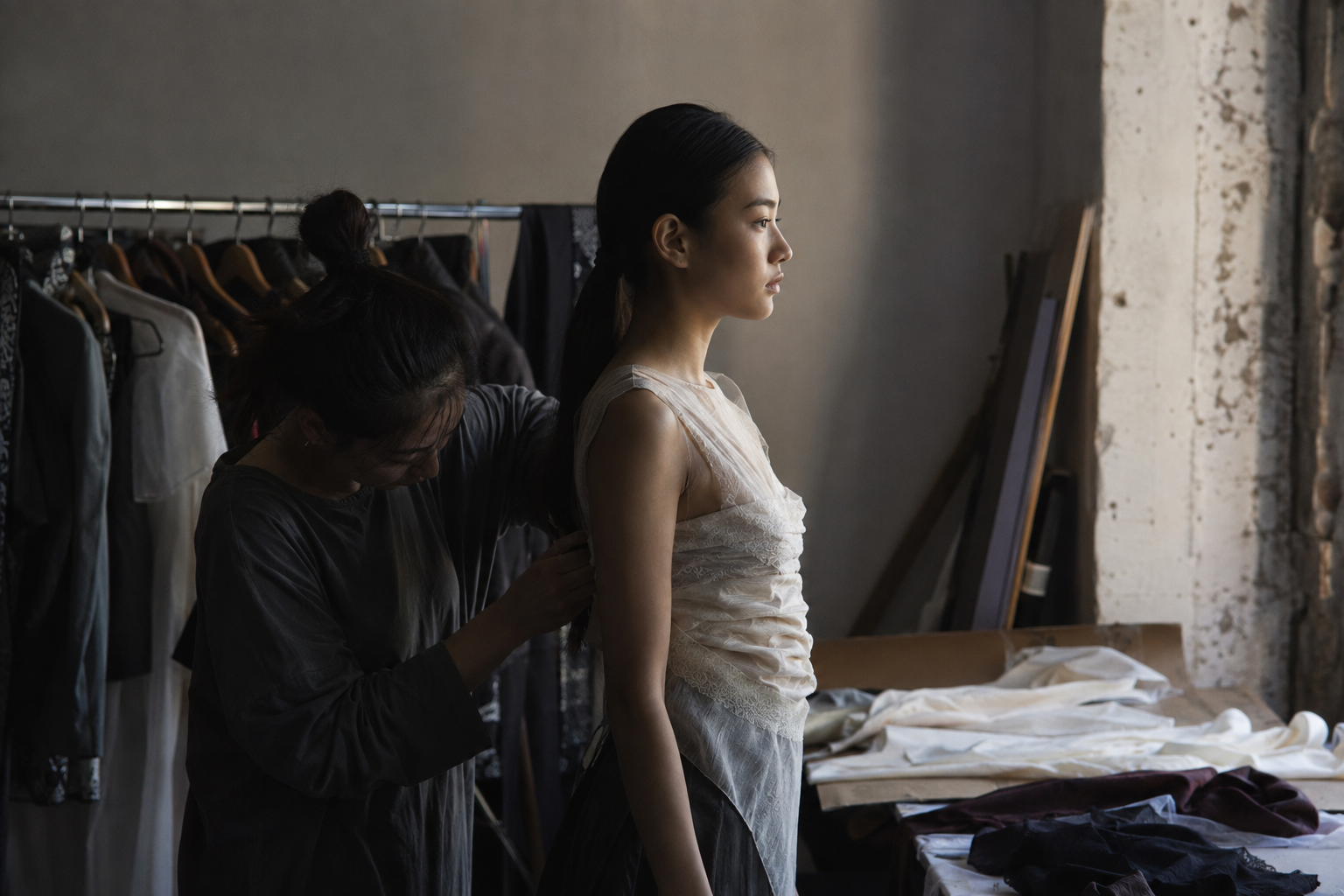
A fashion scene exists to the extent that its image exists. Clothing without casting, styling, photography, hair and makeup, set, runway direction, graphic identity and campaign system remains product rather than cultural image. Kazakhstan’s scene became more visible as professional backstage, street style, glossy media and international photographers grew around collections.
Relation To Architecture / Space
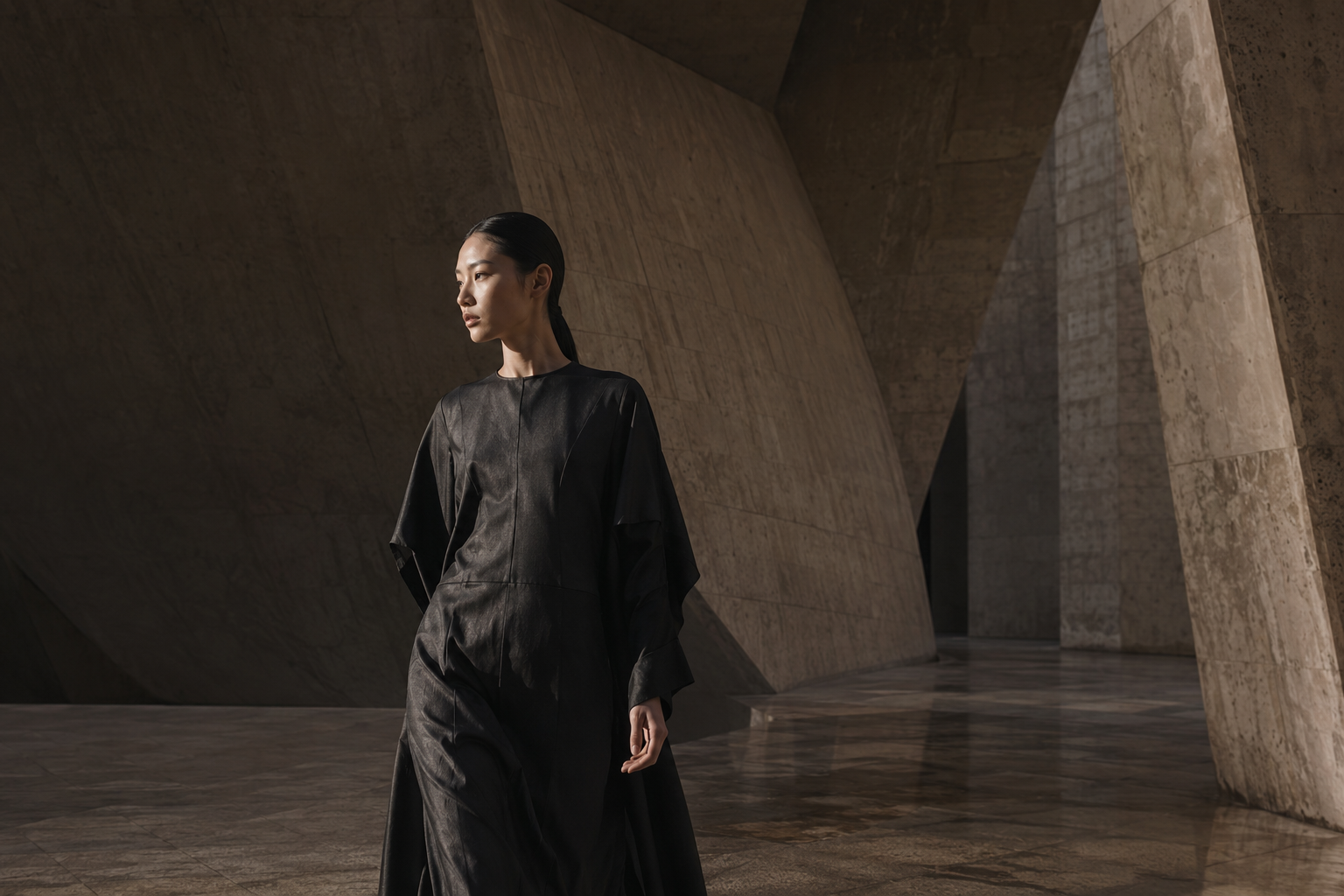
Kazakhstani fashion does not need to prove origin through endless steppe or yurts. Almaty offers modernism, green streets and mountain topography; Astana offers monumental civic scale, glass and exposed open space; industrial and post-Soviet environments provide a third vocabulary. Location can be local without folklore.
Relation To Image / Photography
International readability is accumulated through a repeatable image system. If each season is photographed in a random new style, a country does not build visual memory. A strong scene repeats principles: casting, light, relation to architecture, typography and the way fabric and body are shown.
Relation To Object / Material
Kazakhstani designers often work between imported textiles and local craft. This is both limitation and opportunity. Limited industrial capacity complicates scale, while leather, felt, metal and embroidery can create object value when they are not treated as souvenir markers.
Relation To Technology
Digital fashion, AI visuals, 3D sampling and virtual production can reduce the cost of image making and prototyping, but they do not solve garment manufacturing. Technology is best used as an accelerator of campaign and development, not as a replacement for fabric, fit, construction and supply chain.
Critical View: The scene exists, the industry is still incomplete
Designer and producer Saken Zhaksybayev has described a core problem directly: Kazakhstani fashion may be bright and interesting yet often remains unprofitable; investors are not used to the long cycle of light industry. Add limited manufacturing capacity, a relatively small domestic market, imported materials and the gap between a beautiful show and consistent distribution.
The more precise conclusion is that Kazakhstan has built a scene and is still building the industry. Fashion weeks, brands, glossy media and audiences are strong; scale, export infrastructure and patient capital remain weaker.
Contemporary Context: What changes now
By the 2020s a local brand no longer has to wait for one major fashion week. Social platforms, direct-to-consumer retail, pop-ups, multi-brand stores and collaborations create parallel routes. Fashion week keeps its cultural and networking role, but audience can now be built every day.
Practical Takeaways
Designer: build collection–campaign–sales as one system. Photographer: create a repeatable language rather than another isolated beautiful shoot. Stylist: treat local labels as contemporary product, not as material obliged to look ethnic. Investor: understand fashion as long-cycle manufacturing. Institutions: connect education, production, market and international exchange.
Key Terms
Fashion ecosystem; fashion week; B2B; buyer; showroom; retail; direct-to-consumer; campaign system; runway direction; fashion image; light industry; local brand; export readiness.
Related Nodes
Fashion photography; art direction; campaign systems; styling; Kazakhstan Fashion Week; MBFW Almaty; Visa Fashion Week Almaty; Central Asia Fashion; local identity; retail.
Timeline
1947 — Republican House of Fashion Models. 1958 — first Symbat fashion magazine. 1987 — houses of models consolidated and fashion theatre launched. 1994 — Kuralai fashion house. 1997 — Mechanical Piano and Aigul Kassymova ateliers. 2004 — Almaty Fashion Week. 2006 — Central Asia Fashion and AIGUL KASSYMOVA brand. 2011 — New Generation Open Way develops. 2014 — first Mercedes-Benz Fashion Week Almaty. 2017 — Qazaq Republic. 2019 — Visa Fashion Week Almaty. 2020s — independent labels, DTC, international buyers and new designer competitions.
Article Close
Kazakhstan’s fashion no longer needs to prove its existence. It has history, institutions, several generations of designers, fashion weeks, a market and international contacts. The next step is to make this infrastructure produce repeatable value: strong product, recognisable image and an exportable system.