curator profile
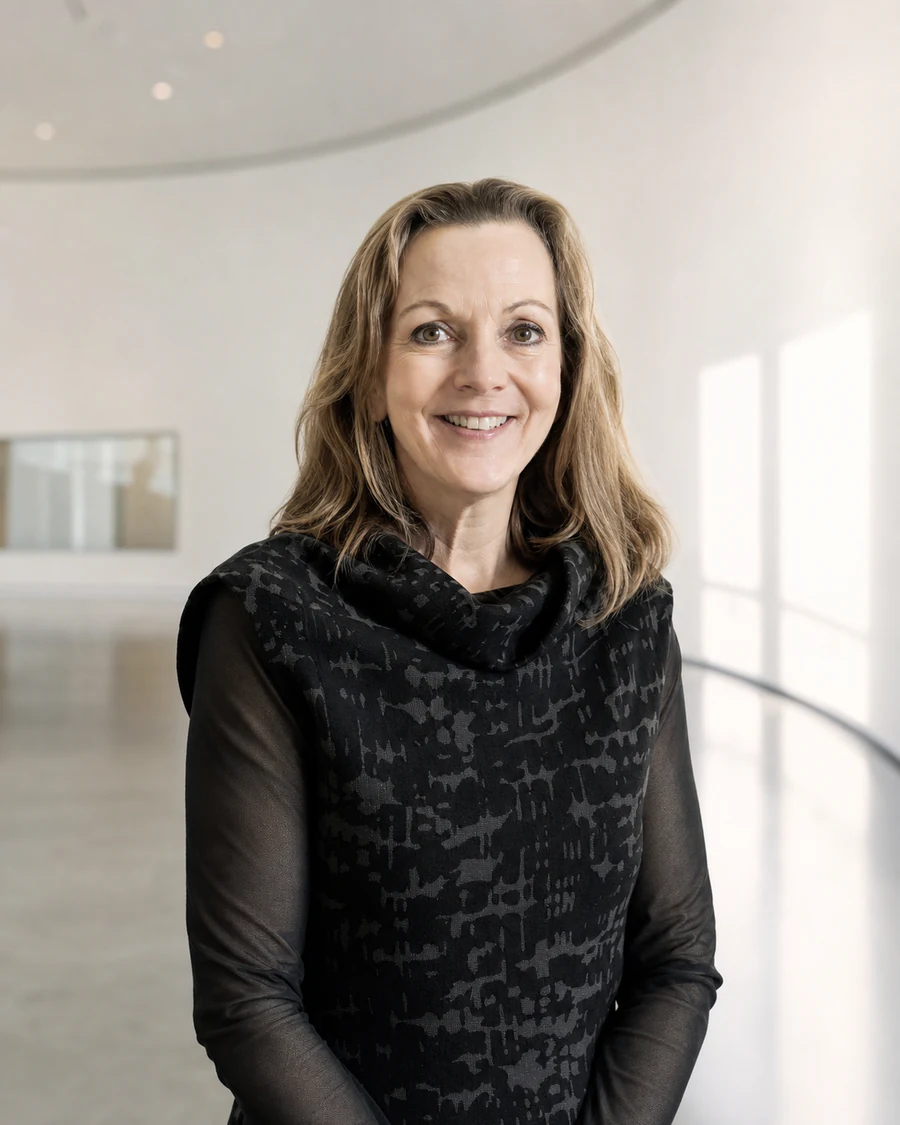
Alexandra Munroe
Curatorial work that rewrites art history by including what the canon left outside itself.
Editorial thesis
Munroe matters for showing that expanding a canon is a research task rather than a representational one — it requires archival work, not a quota.
Reader question
How is what the Western canon excluded brought into art history?
Short answer
Through archival work and exhibitions showing connections the canon did not see: not by adding names to a list but by rebuilding the chronology itself.
1. Position
Munroe works as a curator and scholar specialising in Asian contemporary art within a major international museum. Her work joins research with institutional strategy.
2. The problem of the canon
Western art history of the twentieth century was built on a European and American line. Artistic movements of other regions remained outside the chronology rather than inside it in secondary positions.
3. Research as condition
Inclusion requires work with archives, languages, and local history. This is slow scholarly work, without which widening the roster remains decorative.
4. The exhibition as rewriting of chronology
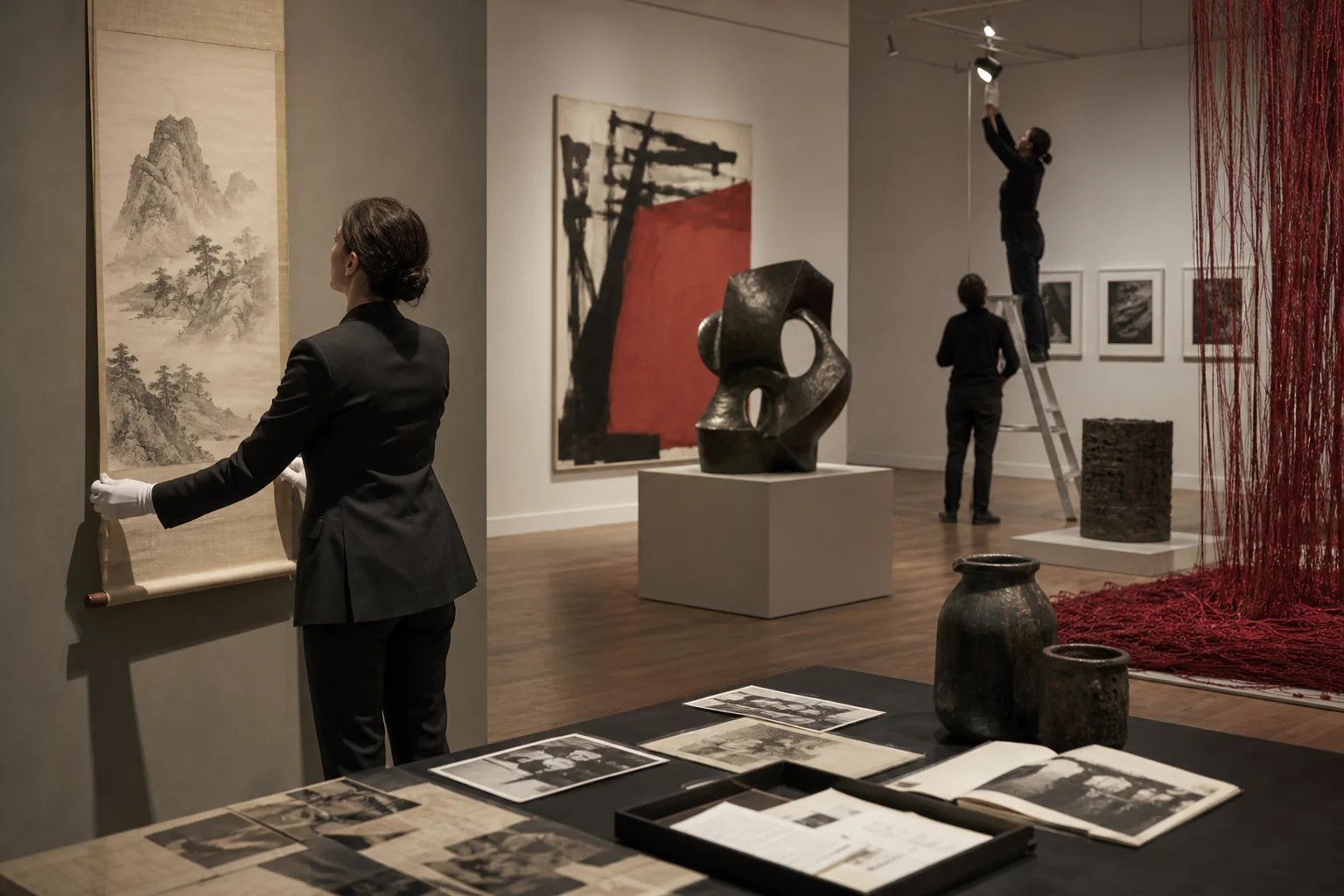
Her projects show parallel developments instead of influence radiating from a centre to a periphery. The change of scheme matters more than the number of names included.
5. Against the influence model
A scheme in which a region receives Western ideas belatedly describes the observer’s position rather than the facts. The alternative is networks of exchange without a single centre.
6. Postwar Japanese art
A substantial part of her work concerns postwar Japanese movements that developed simultaneously with Western ones and independently of them. Chronological simultaneity is the principal argument.
7. Acquisitions as long-term work
Changing the composition of a collection acts longer than an exhibition. An acquired work stays in the institution and changes what can be shown in future.
8. Institutional strategy
Her position involves working with a board, funding, and museum priorities. A curatorial decision here is inseparable from an administrative one.
9. A museum’s international network
Working in an institution with branches in different countries raises the question of whose history is told in each. This is a structural problem of the networked museum.
10. The risk of exoticisation
An exhibition of regional art in a Western museum risks presenting it as exotic. Avoiding this is possible only by abandoning a geographic frame for a thematic one.
11. The catalogue as long-term result
A scholarly catalogue outlives an exhibition and serves as a source for subsequent research. For canon-widening work it is the principal carrier of the result.
12. What transfers
The procedure transfers: archival research, revision of chronology, acquisition, publication. The sequence applies to any excluded material.
13. What does not transfer
The institutional resource does not transfer. Work of this scale requires a museum with a budget for research and acquisition.
14. Critique
A justified objection: inclusion in a Western museum itself confirms its right to determine significance. Widening the canon strengthens the institution that composed it.
15. A second objection
Selection within a region reproduces hierarchies of its own. Replacing one centre with another does not remove the problem of a centre as such.
16. The case for the defence
The alternative to inclusion is continued absence. Working from inside an institution is limited but produces a verifiable result in collections and publications.
17. Historical position
Her work documents the period when widening the canon moved from demand into institutional practice with a budget and staff.
18. Link to the knowledge base
The material connects to the entries on the museum and design history, the exhibition, canonical objects, and the Japanese line.
19. How to read this today
Look at the composition of a collection rather than at an exhibition programme. Acquisitions show an institution’s long-term position more accurately than temporary projects.
20. A test question
Ask whether the permanent display changed. A temporary exhibition signals intention; a permanent one records the result.