curator profile
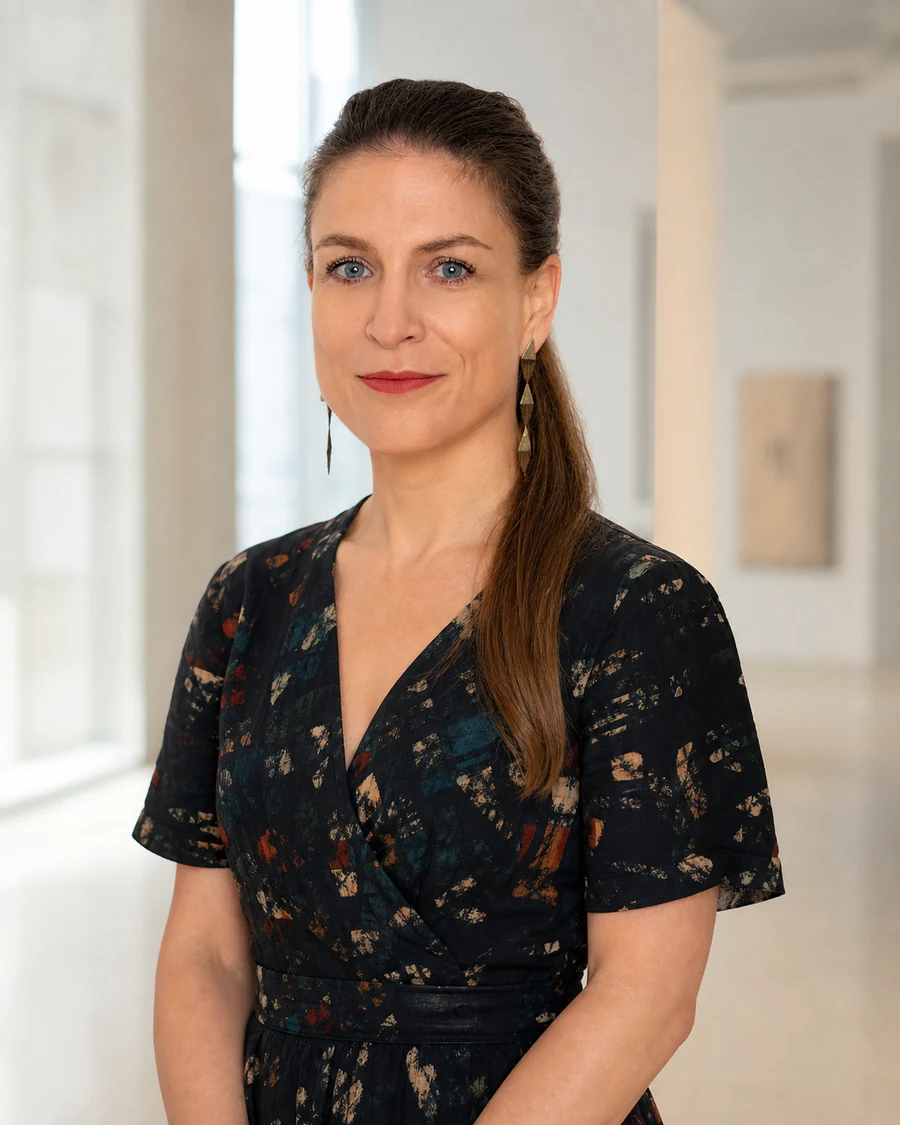
Zoë Ryan
Curating architecture and design as an institution’s programmatic work rather than as a series of individual exhibitions.
Editorial thesis
Ryan matters as a figure working with design inside museum and university systems: her case shows what the institutionalisation of a discipline requires.
Reader question
What is required for design to occupy a stable place in an institution’s programme?
Short answer
Staff, an acquisition budget, and a repeatable programme: a one-off exhibition does not create a position; continuity does.
1. Position
Ryan works as a curator of architecture and design and has directed institutions in the field. Her practice joins exhibition work with administration.
2. Design inside an art museum
A design department in an art museum always occupies a subordinate position in budget and floor area. Half a curator’s task here is defending that position.
3. A programme instead of exhibitions
Stability is secured by a repeatable format: a series, a biennial, a regular cycle. An individual project creates no expectation in an audience.
4. Contemporary design as a difficult subject
Showing contemporary practice is harder than historical: works are unfinished, authors alive, assessment unsettled. The institution assumes the risk of judgement.
5. Commissioning as a curatorial instrument
Commissioning new work instead of displaying existing work changes the curator’s role: they participate in production rather than selection. This is closer to editorial work.
6. Acquisition as a long-term decision
Including an object in a collection acts longer than an exhibition and determines what a museum can show in twenty years. It is the most consequential part of the work.
7. The problem of conserving design
Design objects age differently from painting: plastic degrades, electronics obsolesce, textile deteriorates. Conservation here requires decisions an art museum does not usually make.
8. Immaterial objects
An interface, a service, and a protocol have no physical body. Including them in a collection raises the question of what exactly is acquired — a right, a description, or a reproduction.
9. The university position
Working in an academic environment shifts the task from public to teaching. This is a different addressee and a different criterion of success from a museum.
10. Publication as result
A catalogue and research outlive a display. For a discipline contesting its academic status, publication is a weightier result than attendance.
11. An international perspective
Her projects consistently move beyond the Western canon. This requires research resource and connections, of which a design department usually has less than an art department.
12. What transfers
The strategy transfers: a stable programme, an acquisition budget, publication as a mandatory result. This is an administrative construction applicable in any institution.
13. What does not transfer
Position inside an institution does not transfer. The ability to run a programme depends on support from leadership and board, which does not follow from curatorial quality.
14. Critique
A justified objection: institutional curating of design depends on industry funding. Manufacturers of furniture and appliances support exhibitions about their own products.
15. A second objection
Showing contemporary practice brings a museum closer to the market: an exhibition raises the value of participants’ work. Distance here is structurally difficult.
16. The case for the defence
Transparency about funding sources and a published selection criterion mitigate the problem without removing it. It is the best available solution.
17. Historical position
Her work belongs to the period when design curating became an independent profession with a methodology of its own rather than a branch of art curating.
18. Link to the knowledge base
The material connects to the entries on the museum and design history, the exhibition, the vitrine as an architecture of attention, and corporate collections.
19. How to read this today
Look at a programme across five years rather than at an individual project. Continuity and the composition of acquisitions show an institution’s position more accurately than a headline exhibition.
20. A test question
Ask who funded an exhibition and whether that funder appears among the exhibitors. The answer determines the status of the judgement.