curator profile
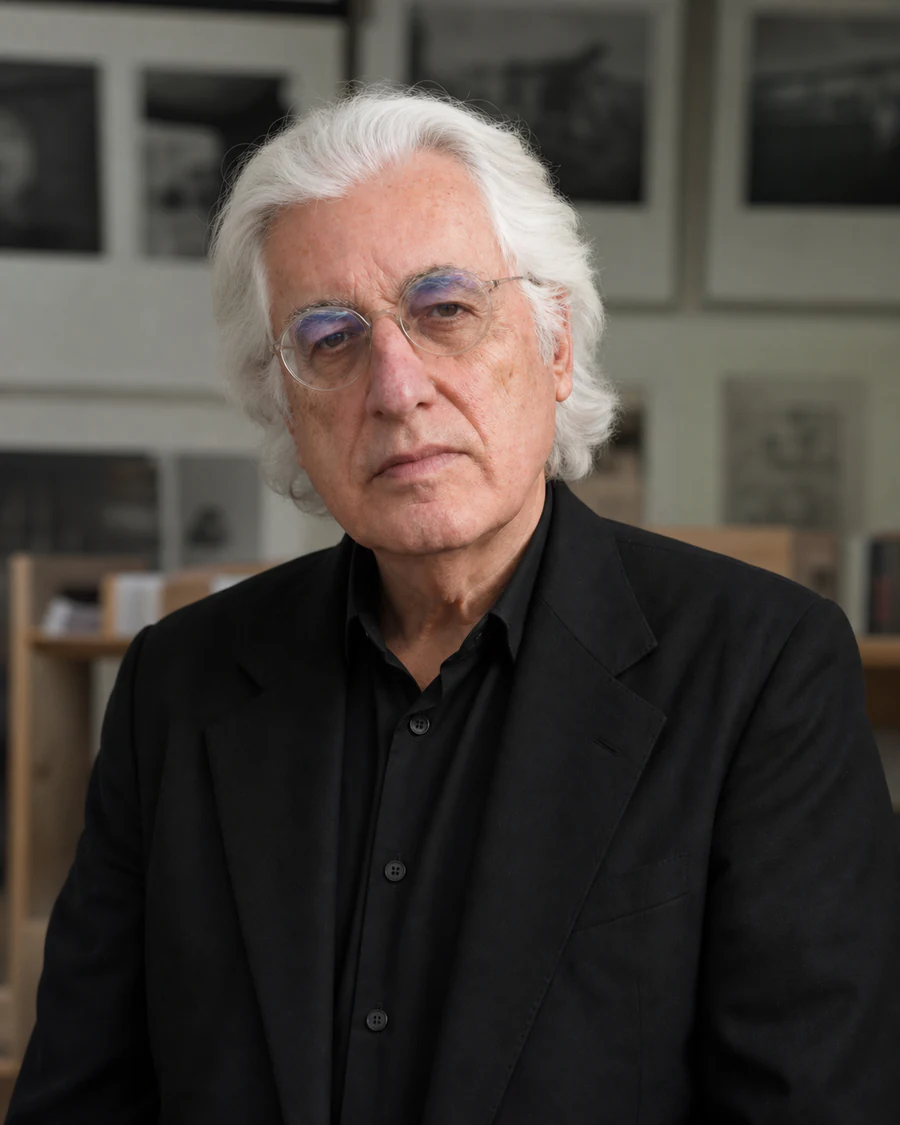
Germano Celant
The critic who gave a movement its name and thereby made it exist for history.

Editorial thesis
Celant matters as a case in which the act of naming proved equivalent to creation: a group of scattered practices became a movement at the moment a term appeared.
Reader question
What does a critic do by introducing a new name for work that already exists?
Short answer
They produce a boundary: determining what is included and what stays outside, and setting the language in which the work will subsequently be discussed.
1. Position
Celant worked as a critic and curator and is associated chiefly with Italian postwar art. His case is notable for combining criticism, curating, and institution building.
2. The name as act
In the late 1960s he introduced a term for a circle of Italian artists working with simple and unprocessed materials. The term took hold and determined how the work was received.
3. What a name does
It turns a coincidence into a programme. Artists working independently become participants in a shared movement, and subsequent history is written accordingly.
4. Material as content
The movement was defined by rejecting industrial and expensive materials in favour of earth, cloth, wood, and waste. The choice of material was a political statement.
5. A context of resistance
The position formed in opposition to industrial optimism and the art market system. Poor material was an argument against the commodity status of the work.
6. The paradox of its subsequent fate
Works conceived as anti-market became expensive museum objects. This is the usual fate of a radical gesture and is part of the material rather than a reproach to the artists.
7. The critic as participant
He did not describe the movement from outside but formed it: selecting participants, organising exhibitions, publishing texts. The role here is closer to producer than to analyst.
8. The problem with that role
A critic who created a movement cannot be its independent historian. Subsequent scholarship has to separate facts from his own construction.
9. Who was left outside
Every name excludes. Artists working similarly but not admitted to the circle fell outside the movement’s history, and restoring their presence is separate work.
10. Working with a corporate foundation
In a later period he directed the exhibition programme of a foundation created by a fashion house. This carried his method into an environment with different funding and different aims.
11. Reconstruction as genre
One of his known devices was the precise reproduction of historical exhibitions in a new space. This turns a display into an object of research.
12. What reconstruction proves
It shows that an exhibition is a work with authorship and composition rather than a neutral presentation. Arrangement carries meaning on equal terms with the exhibits.
13. The archive as foundation
His practice relied on documents, plans, and photographs of past displays. Without an archive reconstruction would be invention, and this is a condition of the method.
14. What transfers
The device of reconstruction as a research instrument transfers. It applies to the history of design and fashion, where an exhibition is likewise an authored work.
15. What does not transfer
The position of movement-creator does not transfer. It is possible in a small milieu at an early stage and is not reproduced in a developed institutional system.
16. Critique
A justified objection: concentrating the roles of critic, curator, and historian in one person deprives a movement’s history of independent verification. His version long remained the only one.
17. A second objection
Working with a corporate foundation raises the question of independent judgement. An institution funded by a fashion house determines significance and simultaneously profits from it.
18. Historical position
His case is useful for discussing how art history is produced: not by discovery but by naming, selection, and repetition.
19. Link to the knowledge base
The material connects to the entries on radical design, the exhibition as argument, the museum and canon, and corporate collections.
20. How to read this today
Ask who gave a phenomenon its name and what remained outside the term. The answer usually explains the structure of a history better than a list of participants.