fashion editor profile
Diana Vreeland
The editor who established that a magazine produces not a report on fashion but a fiction with a logic of its own.
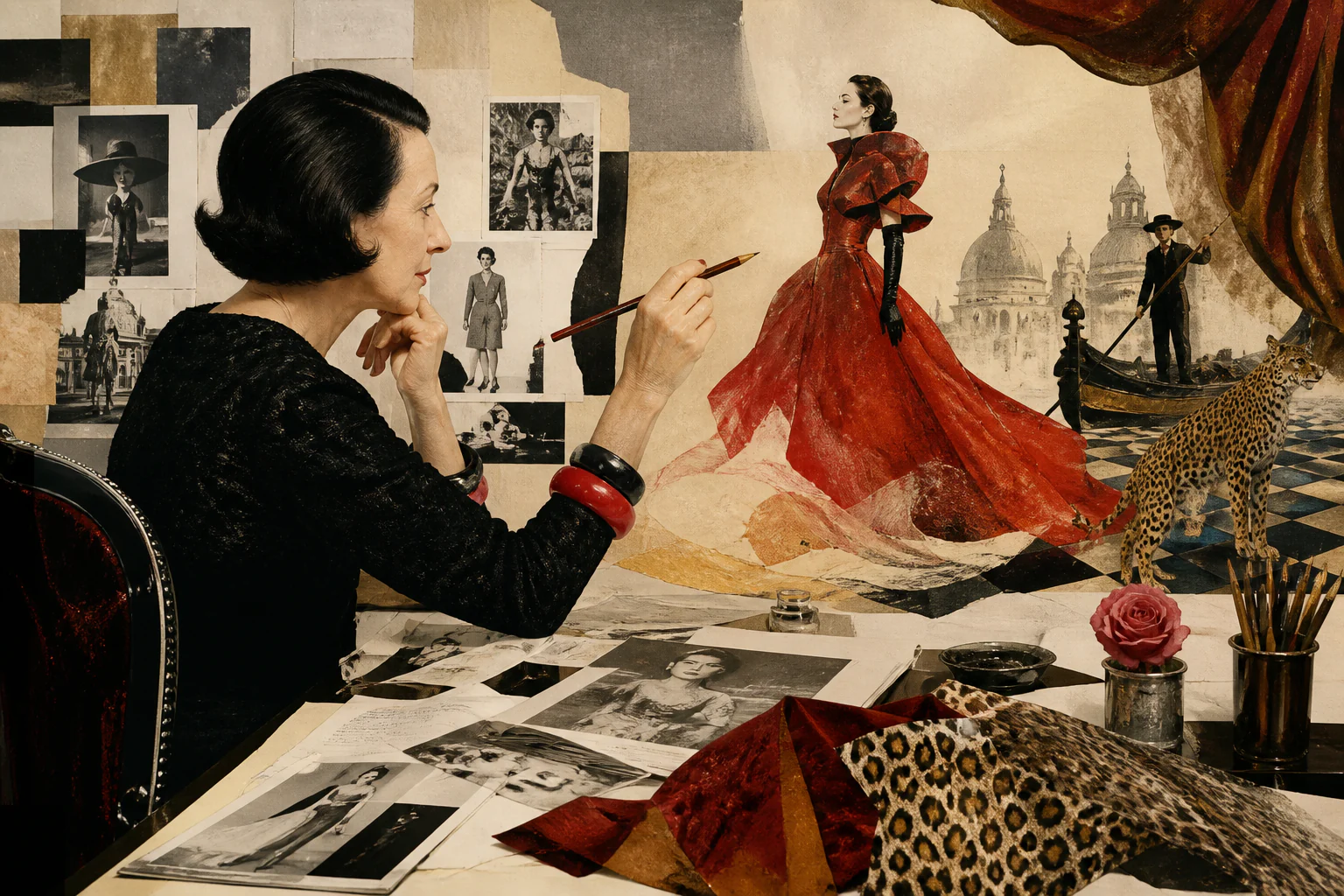
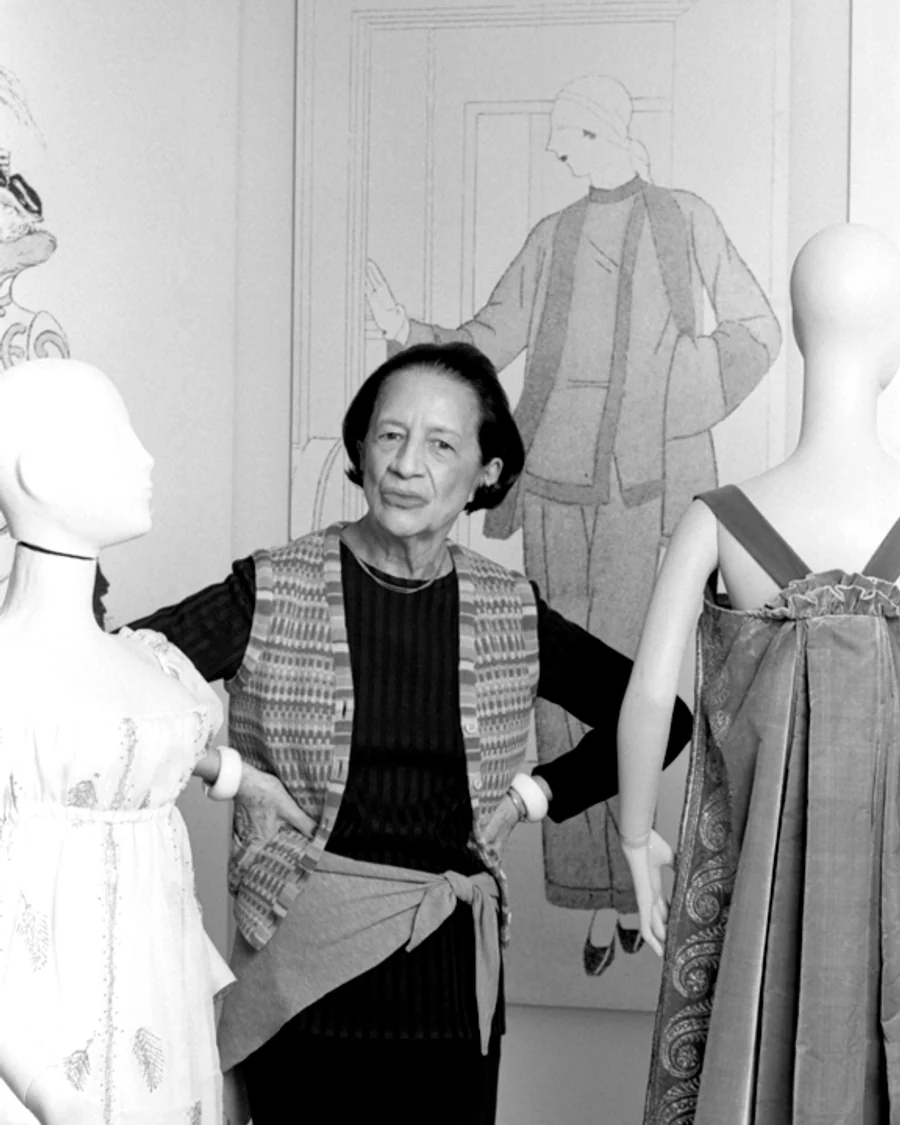
Editorial thesis
Vreeland matters as the figure who turned an editorial post into an authorial one: the magazine stopped documenting clothing and began inventing a world in which it is possible.
Reader question
What does a fashion magazine produce if it is not a catalogue of what can be bought?
Short answer
It produces desire and a frame of reading: clothing is presented inside an invented narrative, and it is the narrative that determines what a reader sees in it.
1. Position
Vreeland worked as a fashion editor and later as a curator of a costume collection. She understood both posts identically: as the right to invent the context in which an object would be seen.
2. The editor as author
Before her, editorial work was understood as selecting and organising other people’s material. She turned it into the production of a statement of her own, in which a shoot is set by the editor rather than supplied to them.
3. Fiction instead of report
Her pages did not report what was worn but proposed what could be imagined. That shift separated the fashion magazine from trade information and made it a genre in its own right.
4. Exoticism as device
Shoots were taken to distant geographies and invented settings. The device worked through distance: the further from the everyday, the more freely the clothing could be read.
5. The problem with that device
The same device reproduced a colonial gaze: another culture served as backdrop for Western clothing. That criticism is justified and is part of the material rather than a later imposition.
6. The memo as a genre
Her editorial notes were formulated as categorical assertions without justification. This is a professional instrument: an editor does not explain but sets a frame within which others work.
7. Working with photographers
She set briefs for shoots and matched authors to narratives. The photographer here is the executor of an editorial intention rather than a supplier of finished material.
8. Discovering faces
A substantial part of her influence was introducing new types. Deciding who appears in frame is an editorial decision and changes the notion of normative appearance.
9. A move into the museum
In the later part of her career she led the costume department of a major museum and carried the editorial method into display. An exhibition was built like a magazine spread in space.
10. A dispute with museum norms
Her exhibitions were criticised by curators for prioritising impression over accuracy: mannequins, lighting, and juxtapositions obeyed narrative rather than chronology. That dispute shaped the subsequent development of the genre.
11. What she proved
A costume exhibition can draw an audience comparable to an art exhibition. This changed fashion’s standing inside the museum system and secured its funding.
12. The cost of the method
Prioritising impression led to handling of objects now recognised as unacceptable under conservation standards. Achievement and damage here are inseparable.
13. Speech style as instrument
Her public formulations were aphoristic and deliberately exaggerated. This is part of the professional apparatus: a memorable phrase travels further than an argument.
14. Attitude to truth
She did not consider documentary accuracy an obligation of a magazine. That position is honest and is simultaneously the source of every objection to the genre.
15. What transfers
The construction of the post transfers: the editor sets the brief, chooses the executors, and answers for the statement as a whole. That model works in any publication.
16. What does not transfer
The impunity of fiction does not transfer. Contemporary requirements on labelling and on the treatment of other cultures restrict devices she used freely.
17. Critique
A justified objection: her method rested on exclusion. The range of permissible bodies, faces, and circumstances was narrow, and the expansion attributed to her was limited.
18. Historical position
She is the starting point of the line in which a magazine produces an image rather than a report. Every subsequent figure in this circle works inside the frame she set.
19. Link to the knowledge base
The material connects to the entries on the magazine cover, editorial photography, the exhibition as argument, and the museum costume collection.
20. How to read this today
Read her pages as fiction rather than as evidence. The question is not whether people dressed that way but what world is proposed and who it excludes.