fashion editor profile
Phyllis Posnick
The fashion editor as a co-author of photography: staging, risk and the precision of one image
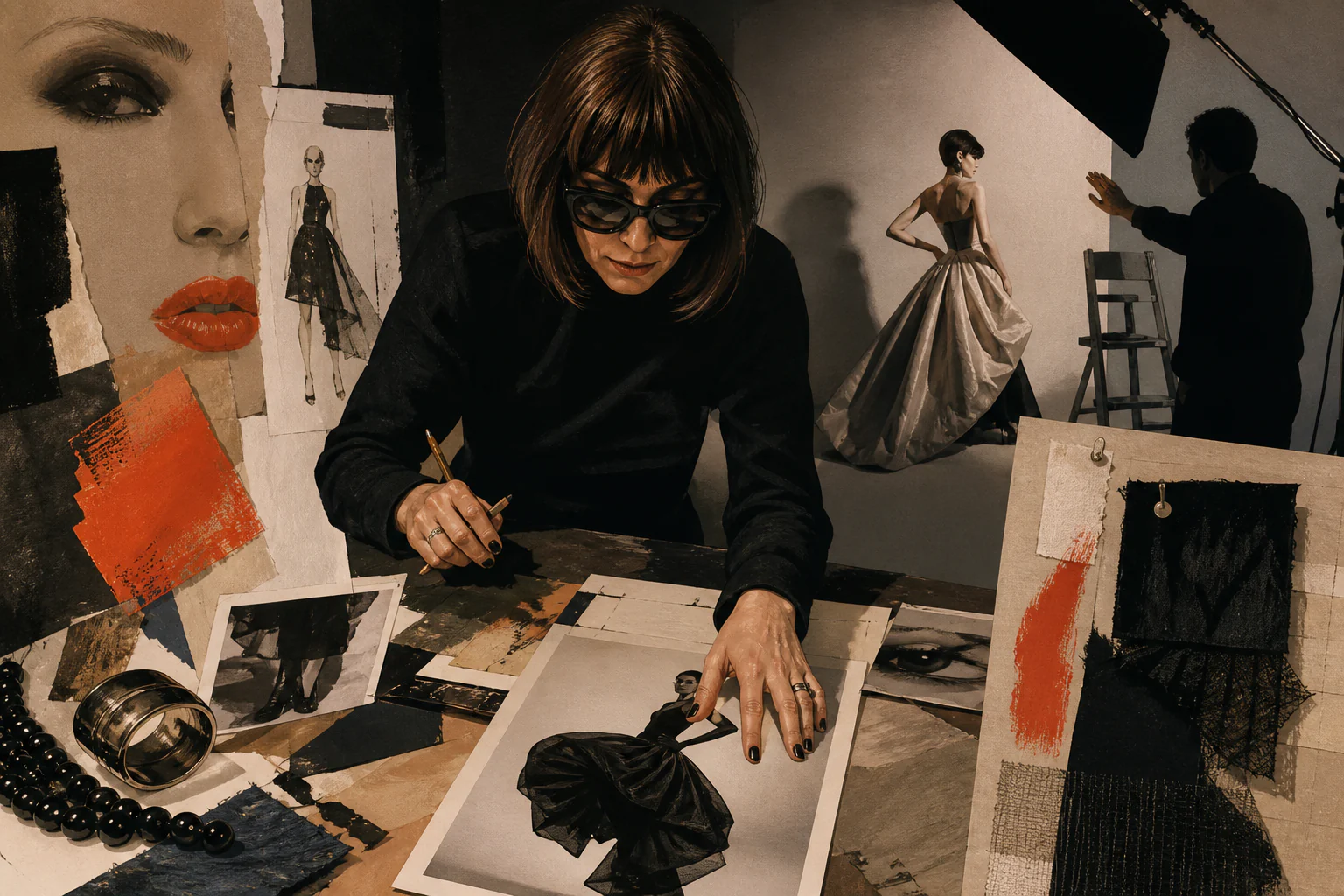
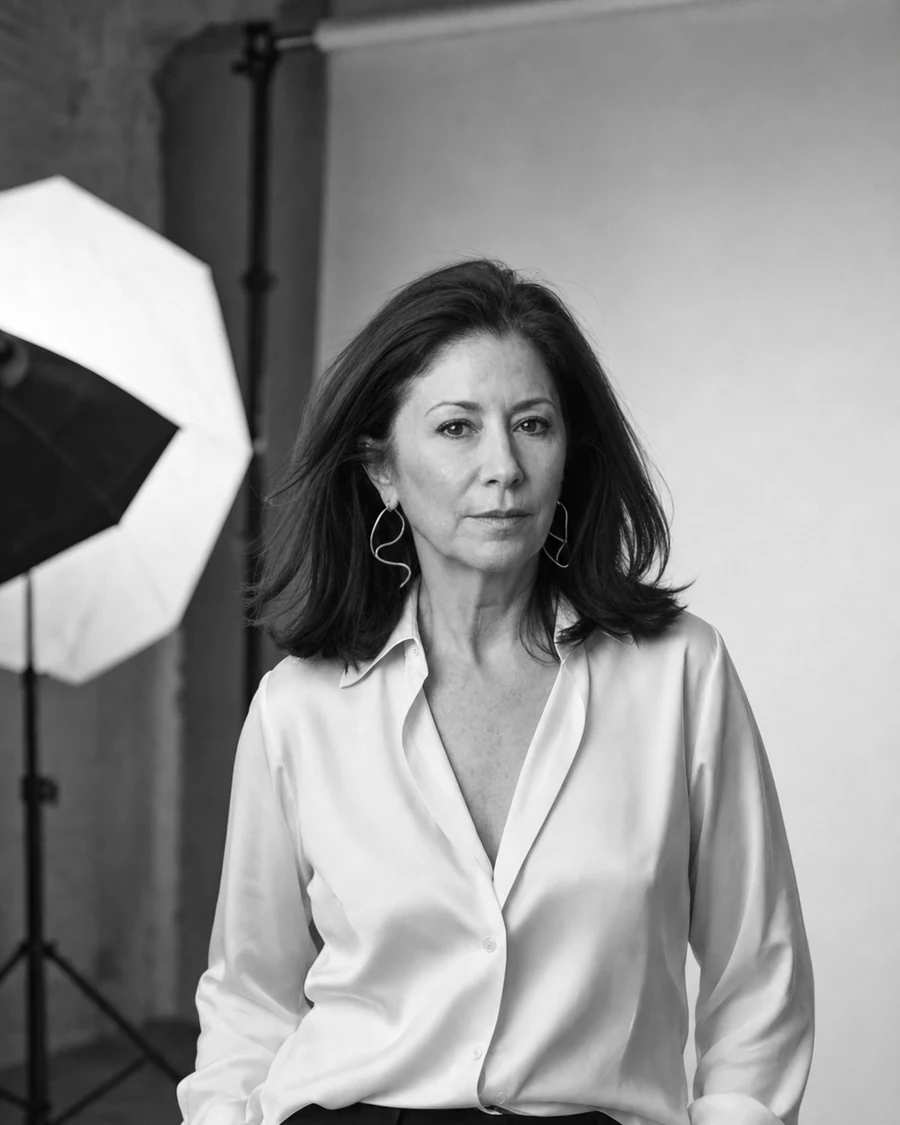
Phyllis Posnick shows that a fashion editor can shape a photograph as decisively as the clothes themselves. Her practice is built around the idea of the frame, collaboration with the photographer, precision of props and the willingness to push a setup until it becomes an image that stops the viewer.
Editorial thesis
Phyllis Posnick shows that a fashion editor can shape a photograph as decisively as the clothes themselves. Her practice is built around the idea of the frame, collaboration with the photographer, precision of props and the willingness to push a setup until it becomes an image that stops the viewer.
Reader question
How can an editor who remains outside the frame become one of the principal authors of its meaning?
Short answer
Posnick worked for decades at Vogue, especially with photographers for whom the editorial idea was part of the shoot rather than a preparatory service. Her celebrated “stoppers” reveal the editor as the person who connects clothes, body, props, humour and unease into one visual construction.
1. The road to Vogue: a profession formed inside the magazine
Posnick built her career in editorial fashion and became one of the key editors at American Vogue, where her work centred on constructing shoots and long-term relationships with photographers. [source]
2. Mechanism: the editor as author of the brief
The editor does not service a finished photograph; she participates in deciding what should be pictured in the first place. The point is not an isolated gesture but a way of organising practice. The decision connects author, material, institution, technology and audience, so it cannot be reduced to a personal signature or a polished result. For VANSMITHLAB this episode functions as a mechanism that can be compared across neighbouring practices. [source]
3. Significance: the editor as author of the brief
This episode explains why Phyllis Posnick belongs in VANSMITHLAB’s map of authors. The significance lies in changing professional rules: who decides, how authorship is distributed, what counts as the result, and how the work enters public culture. The profile therefore keeps context attached to achievement instead of turning biography into a list of milestones. [source]
4. Irving Penn: precision as a shared discipline
Posnick’s long collaboration with Irving Penn became one of the central relationships of her career. In Vogue she recalled his studio discipline, attention to objects and insistence on every detail. [source]
5. Mechanism: collaboration with the photographer
A strong editor does not impose a style on the photographer; she creates conditions in which the photographer’s method can become more exact. The point is not an isolated gesture but a way of organising practice. The decision connects author, material, institution, technology and audience, so it cannot be reduced to a personal signature or a polished result. For VANSMITHLAB this episode functions as a mechanism that can be compared across neighbouring practices. [source]
6. Significance: collaboration with the photographer
This episode explains why Phyllis Posnick belongs in VANSMITHLAB’s map of authors. The significance lies in changing professional rules: who decides, how authorship is distributed, what counts as the result, and how the work enters public culture. The profile therefore keeps context attached to achievement instead of turning biography into a list of milestones. [source]
7. Still life, body and uncanny props
In Posnick’s sittings, objects often work alongside clothes and models: food, insects, mannequins, medical or domestic details can turn a shoot into a short visual story. [source]
8. Mechanism: props as meaning
Props matter not as decoration but as devices of meaning: they change the psychology of the image and make the viewer pause. The point is not an isolated gesture but a way of organising practice. The decision connects author, material, institution, technology and audience, so it cannot be reduced to a personal signature or a polished result. For VANSMITHLAB this episode functions as a mechanism that can be compared across neighbouring practices. [source]
9. Significance: props as meaning
This episode explains why Phyllis Posnick belongs in VANSMITHLAB’s map of authors. The significance lies in changing professional rules: who decides, how authorship is distributed, what counts as the result, and how the work enters public culture. The profile therefore keeps context attached to achievement instead of turning biography into a list of milestones. [source]
10. Helmut Newton: provocation under editorial control
Posnick also worked with Helmut Newton, whose photography was built around sexuality, power and theatricality. The editor’s role was to keep provocation tied to a specific editorial purpose. [source]
11. Mechanism: the boundary of provocation
Provocation becomes meaningful only when there is a reason for it to exist rather than a desire to reproduce a familiar effect. The point is not an isolated gesture but a way of organising practice. The decision connects author, material, institution, technology and audience, so it cannot be reduced to a personal signature or a polished result. For VANSMITHLAB this episode functions as a mechanism that can be compared across neighbouring practices. [source]
12. Significance: the boundary of provocation
This episode explains why Phyllis Posnick belongs in VANSMITHLAB’s map of authors. The significance lies in changing professional rules: who decides, how authorship is distributed, what counts as the result, and how the work enters public culture. The profile therefore keeps context attached to achievement instead of turning biography into a list of milestones. [source]
13. The “stopper”: an image that interrupts the page turn
Posnick used the word “stopper” for an image strong enough to make a reader stop turning pages. In 2016 the principle became the basis of her book Stoppers. [source]
14. Mechanism: stopping attention
The measure of success becomes neither detail nor product status, but the physical interruption of attention. The point is not an isolated gesture but a way of organising practice. The decision connects author, material, institution, technology and audience, so it cannot be reduced to a personal signature or a polished result. For VANSMITHLAB this episode functions as a mechanism that can be compared across neighbouring practices. [source]
15. Significance: stopping attention
This episode explains why Phyllis Posnick belongs in VANSMITHLAB’s map of authors. The significance lies in changing professional rules: who decides, how authorship is distributed, what counts as the result, and how the work enters public culture. The profile therefore keeps context attached to achievement instead of turning biography into a list of milestones. [source]
16. Beauty without a safe formula
In Posnick’s editorial work beauty often sits beside discomfort, absurdity or a slight sense of danger, separating it from neutral catalogue display. [source]
17. Mechanism: tension within beauty
Editorial photography gains power when the viewer is asked not only to desire an object but to interpret an image. The point is not an isolated gesture but a way of organising practice. The decision connects author, material, institution, technology and audience, so it cannot be reduced to a personal signature or a polished result. For VANSMITHLAB this episode functions as a mechanism that can be compared across neighbouring practices. [source]
18. Significance: tension within beauty
This episode explains why Phyllis Posnick belongs in VANSMITHLAB’s map of authors. The significance lies in changing professional rules: who decides, how authorship is distributed, what counts as the result, and how the work enters public culture. The profile therefore keeps context attached to achievement instead of turning biography into a list of milestones. [source]
19. Editor and photographer: authorship is distributed
Posnick has publicly acknowledged photographers, models, hair and makeup artists and other collaborators. Even a strong editorial concept is realised collectively. [source]
20. Mechanism: collective authorship
This makes it possible to describe the editor as an author of relationships rather than the owner of the whole image. The point is not an isolated gesture but a way of organising practice. The decision connects author, material, institution, technology and audience, so it cannot be reduced to a personal signature or a polished result. For VANSMITHLAB this episode functions as a mechanism that can be compared across neighbouring practices. [source]
21. Significance: collective authorship
This episode explains why Phyllis Posnick belongs in VANSMITHLAB’s map of authors. The significance lies in changing professional rules: who decides, how authorship is distributed, what counts as the result, and how the work enters public culture. The profile therefore keeps context attached to achievement instead of turning biography into a list of milestones. [source]
22. The magazine as a sequence of interruptions
Posnick’s work was made for magazine spreads and sequences. A single image had to be powerful while still operating within the rhythm of an issue. [source]
23. Mechanism: magazine rhythm
The editor designs not only the picture but the moment of encounter with it, before and after neighbouring pages. The point is not an isolated gesture but a way of organising practice. The decision connects author, material, institution, technology and audience, so it cannot be reduced to a personal signature or a polished result. For VANSMITHLAB this episode functions as a mechanism that can be compared across neighbouring practices. [source]
24. Significance: magazine rhythm
This episode explains why Phyllis Posnick belongs in VANSMITHLAB’s map of authors. The significance lies in changing professional rules: who decides, how authorship is distributed, what counts as the result, and how the work enters public culture. The profile therefore keeps context attached to achievement instead of turning biography into a list of milestones. [source]
25. Stoppers: an archive becomes a method
The book Stoppers assembled Posnick’s work with different photographers and presented an editorial career as a sequence of visual decisions rather than hidden service labour. [source]
26. Mechanism: the editor’s archive
Publishing the archive changes the profession’s status: the invisible editor gains an authored history of her own. The point is not an isolated gesture but a way of organising practice. The decision connects author, material, institution, technology and audience, so it cannot be reduced to a personal signature or a polished result. For VANSMITHLAB this episode functions as a mechanism that can be compared across neighbouring practices. [source]
27. Significance: the editor’s archive
This episode explains why Phyllis Posnick belongs in VANSMITHLAB’s map of authors. The significance lies in changing professional rules: who decides, how authorship is distributed, what counts as the result, and how the work enters public culture. The profile therefore keeps context attached to achievement instead of turning biography into a list of milestones. [source]
28. Legacy: the editor builds conditions for a strong frame
Posnick matters to image history because her practice makes the editorial part of a shoot visible: research, concept, team selection, props, risk and final edit. [source]
29. Mechanism: editorial architecture of the frame
Her legacy lets us discuss fashion photography not as a meeting between camera and model but as a production in which meaning begins before the shutter is released. The point is not an isolated gesture but a way of organising practice. The decision connects author, material, institution, technology and audience, so it cannot be reduced to a personal signature or a polished result. For VANSMITHLAB this episode functions as a mechanism that can be compared across neighbouring practices. [source]
30. Significance: editorial architecture of the frame
This episode explains why Phyllis Posnick belongs in VANSMITHLAB’s map of authors. The significance lies in changing professional rules: who decides, how authorship is distributed, what counts as the result, and how the work enters public culture. The profile therefore keeps context attached to achievement instead of turning biography into a list of milestones. [source]