illustrator profile
Erté
Illustration, Theatre and the Fashion Image as an Autonomous World
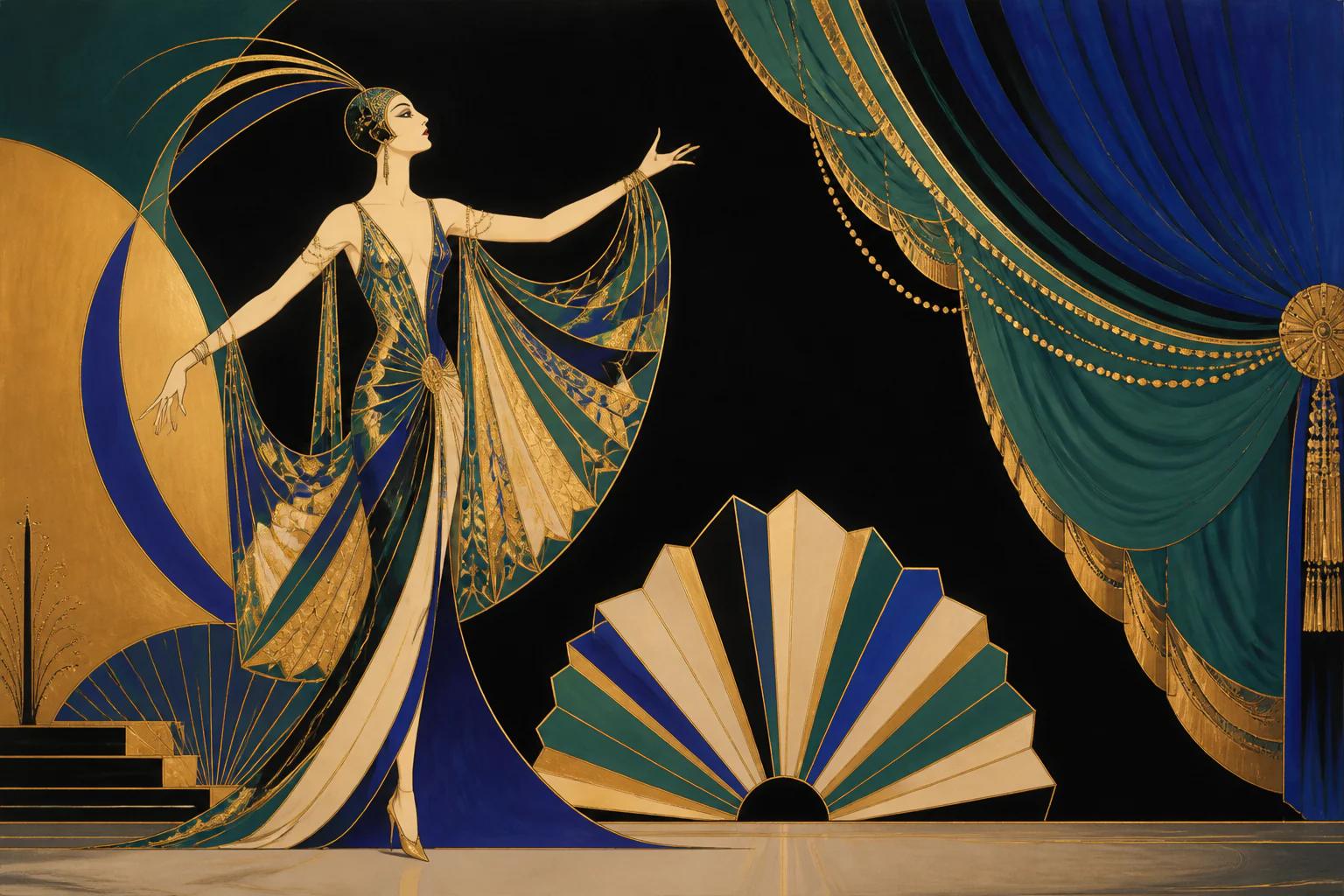
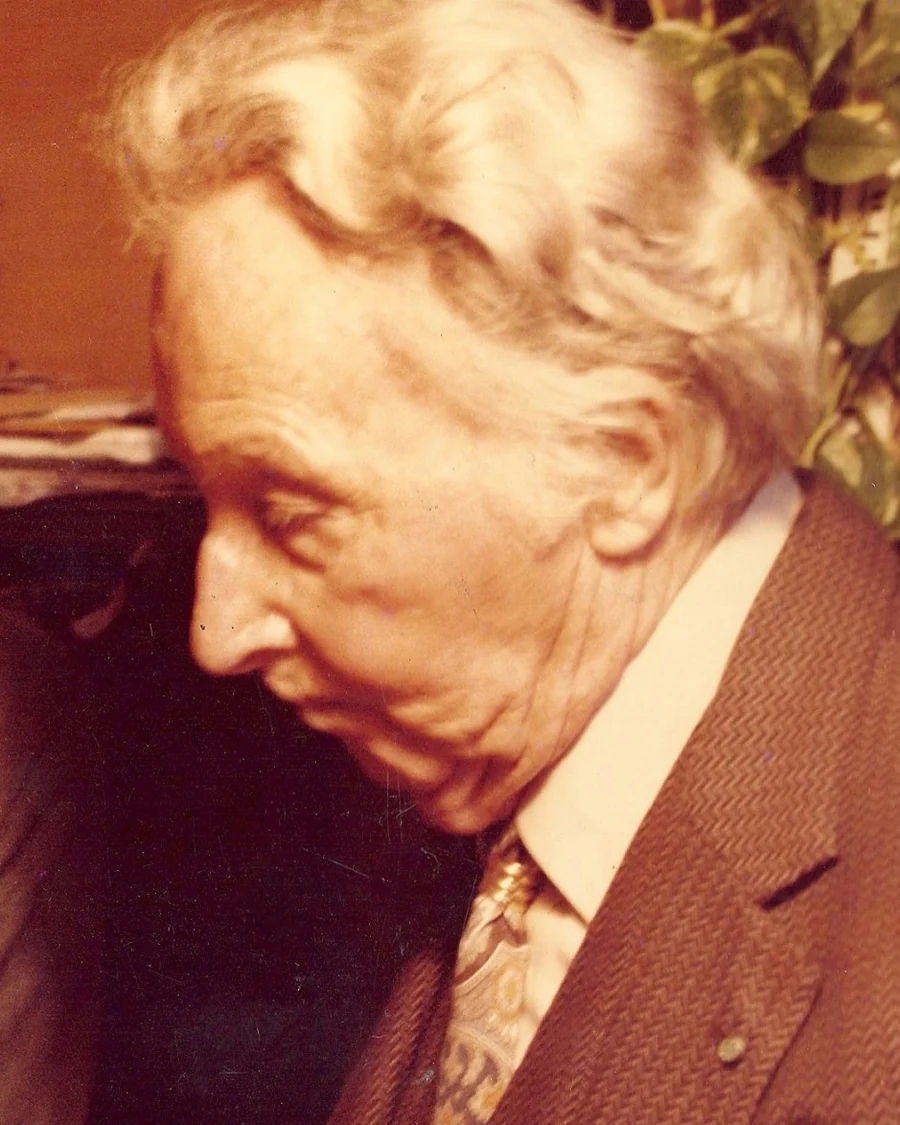
Erté demonstrated that fashion imagery does not have to document clothing: line, ornament, stage, editorial selection and product imagination can build an autonomous visual reality without a camera.
Editorial thesis
Erté’s central contribution is not an Art Deco decorative vocabulary by itself. He turned the illustrator into the author of an image-system capable of operating across magazine, fashion report, theatre, scenography and product design while preserving the distinction between authorship of an image and authorship of the thing depicted.
Reader question
Why can Erté still feel contemporary when his visual language is so closely tied to the 1910s–1930s and Art Deco?
Short answer
Because his strongest method is not decorative styling. He controls silhouette, viewing distance, page rhythm and the movement of an idea between media—problems that remain central to editorial imagery today.
1. Saint Petersburg, 1892: an artist appears before Art Deco becomes a label
Romain de Tirtoff was born in Saint Petersburg on 23 November 1892. The Bibliothèque nationale de France records him as a French artist of Russian birth whose work crossed fashion, graphic art, theatrical costume and stage design. [source]
It is useful not to begin with Art Deco as a ready-made label. Erté’s visual language formed earlier through fashion illustration, theatre, decorative drawing and Parisian practice, and only later became one of the period’s most recognisable emblems.
2. Erté: a pseudonym becomes a visual brand from two initials
The name Erté comes from the French pronunciation of the initials R.T.—Romain de Tirtoff. The BnF maintains Erté as the principal international form of the name, with Tirtoff as the linked identity. [source]
It is more than a convenient signature. The short name behaves almost like an authorial logo, equally at home beneath a fashion illustration, theatre drawing, commercial image or object.
3. Paris, 1912: relocation turns drawing into a profession
The BnF records Erté as living in Paris from 1912. Here drawing stops being a private artistic practice and enters professional systems of fashion, print and theatre. [source]
Paris matters less as a mythic capital of taste than as infrastructure: couturier, magazine, printer, theatre, music hall, client and workshop form one production environment.
4. Paul Poiret, 1913: fashion drawing as translation of another designer’s work
The BnF records Erté as a pupil of Paul Poiret from 1913. Work around a couturier imposed an important discipline: the drawing had to communicate another person’s garment while preserving the designer’s authorship and making the fashion legible and desirable as image. [source]
That boundary remains central throughout his career. An illustrator can strongly author the image without automatically becoming the author of the garment it depicts.
5. 1912–1914: Orientalism as a historical language that now requires context
The Musée des Arts décoratifs holds a 1912 Erté drawing with Orientalised dancers, while the V&A places Erté among Art Deco stage designers who used forms of the imagined “exotic East.” [source]
Today such imagery should not be described as neutral Eastern inspiration. It belongs to a European Orientalist system in which distinct cultures were often compressed into decorative fantasy. Context does not erase visual force; it makes the history more precise.
6. 1915: Harper’s Bazar turns an illustrator into an international figure
After his first cover for Harper’s Bazar in 1915, Erté received a long exclusive contract. The Metropolitan Museum of Art records the collaboration as continuing through 1936. [source]
One authorial language could now circulate serially and internationally. The magazine becomes more than a client: it is a machine for repeatedly reproducing style.
7. 264 issues and 240 covers: scale matters more than legend
A Met research article gives a precise estimate: between 1915 and 1936 Erté contributed to at least 264 issues of Harper’s Bazar and designed 240 of their covers. [source]
That scale changes the meaning of authorship. Erté did not make one famous cover; he shaped a recurring visual expectation. The reader recognised a world before opening the magazine.
8. Fashion reports: Erté was more than a drawing hand
The Met notes that Erté sent Harper’s Bazar fashion reports, personal letters and cover designs from Europe. He served as a mediator between the Paris fashion system and an American readership. [source]
This expands illustration into an editorial function. He not only depicts clothes but helps decide what deserves attention and translates a local scene into international media language.
9. The cover as autonomous image: it does not have to document a dress
Looking back at the 1920s, Harper’s Bazaar describes Erté as the maker of more than two hundred covers across 21 years. His fluid, colourful illustrations represented the magazine through mood and silhouette rather than literal catalogue documentation. [source]
Fashion illustration is therefore not an inferior substitute used before photography matured. It is an autonomous medium capable of impossible light, pose, body and space.
10. Large colour fields plus minute detail: composition controls distance
The Met describes Erté’s covers through the combination of broad uninterrupted colour fields with minute whimsical details. [source]
The formula works at two distances. From afar the cover reads immediately as colour and silhouette; close up, ornament and metallic detail reward attention. It is graphic design and fashion fantasy at once.
11. Gouache and metallic paint: the image surface imitates precious material
Many Erté drawings at The Met are made in gouache with metallic paint. This is not a minor catalogue detail: reflective pigment allows paper to suggest fabric, jewellery, stage light and costume surface. [source]
Illustration is more material than a digital reproduction suggests. The original gouache is a physical object with a reflective surface, not merely an image available for endless copying.
12. “La Flamme et L’Allumette,” 1919: fashion imagery becomes visual metaphor
The Met holds La Flamme et L’Allumette, a 1919 illustration for Harper’s Bazar. It demonstrates a characteristic move from outfit depiction toward image-concept: figures can operate as characters, symbols and decorative structures simultaneously. [source]
This is the distance between a fashion plate and an editorial image. Clothing remains present, but the work cannot be reduced to what the reader should buy.
13. The 1920s: Art Deco is not ornament alone but a system of silhouette
Erté is often used as visual shorthand for Art Deco, but his method cannot be reduced to zigzags, gold and geometry. Harper’s Bazaar and The Met repeatedly emphasise fluid line, stylised figure and theatrical silhouette. [source]
The central mechanism is control of contour. Body, garment, accessory and ground become one legible shape, allowing dense ornament without visual collapse.
14. The fashion body: elongation as image construction, not anatomical norm
Erté’s figures are often elongated, fluid and physically impossible. They are not attempts at realistic anatomy and should not be treated as neutral documents of an era’s “ideal woman.” [source]
The illustrator alters anatomy for the rhythm of garment and page. A contemporary reading should distinguish artistic deformation from real body standards: stylisation can influence beauty norms without being a record of actual bodies.
15. George White’s Scandals: magazine and stage share the same imaginary world
Erté designed costumes and sets for George White’s Scandals in New York. The Met preserves a large group of these 1920s works, including designs for Les Mers and The Mask. [source]
The transition from magazine to stage is logical: the same elongated figure, ornament and colour must now operate not on paper but across theatrical distance, movement and light.
16. Les Mers, 1923: costume becomes a moving emblem
For George White’s Scandals in 1923 Erté created a group of maritime images including L’Océan and La Mediterranée. The Met preserves separate gouaches and their production attribution. [source]
The series demonstrates his ability to turn a theme into variation. Each costume is a separate character, yet together they build a visual alphabet of the sea through colour, headpiece, drapery and silhouette.
17. Manon, Chicago Opera Company, 1922: costume must serve another dramaturgy
The Met holds an Erté costume design for Manon, Chicago Opera Company, from 1922. [source]
Opera disciplines fashion fantasy. Costume exists inside an already established work, music, character and production. The designer is not the sole author of the world but enters a collective theatrical system.
18. The Mask, 1926: scenography as a graphic image one can enter
The 1926 stage set design for The Mask in George White’s Scandals shows how closely illustration and stage architecture interact in Erté’s practice. [source]
The background is conceived almost as flat graphic composition yet must acquire depth, entrances, performer scale and technical execution. Scenography turns drawing into environment.
19. Hollywood, 1925: cinema tests costume at close range
The BnF records Erté working on costume and set design for Hollywood studios in 1925. [source]
Cinema changes the condition of the image: theatrical form designed for distance now meets a camera capable of reading texture and detail closely. It is another example of adapting a visual language between media rather than simply repeating a drawing.
20. Delman Shoes, 1930s: the illustrator enters product design
During the 1930s Erté designed shoes for the New York firm Herman Delman. The Met preserves the gouaches and has compared them with surviving Delman footwear in The Costume Institute. [source]
Here drawing ceases to be merely an image of a product and becomes part of product development. Manufacturing and technical execution, however, remain the work of Delman and its makers.
21. Fashion reproduction: A. Beller & Co. shows how drawings become commercial copies
FIT Special Collections preserves A. Beller & Co. fashion sketches based on Erté designs from roughly 1914–1920 and licensed for reproduction. [source]
This is a material history of fashion media. Between original design drawing and consumer existed a chain of translation, licensing and commercial reproduction long before digital content.
22. Illustrator + journalist + tastemaker: the profession exceeds the picture
Research at FIT explicitly frames Erté’s overlapping work inside Harper’s Bazar through the roles of journalist, critic, artist and tastemaker. [source]
For VANSMITHLAB this is not a reason to assign every possible taxonomy role. Editorially, however, it shows that illustration can perform critical and selective functions without becoming a different profession in metadata.
23. Why photography did not instantly “kill” Erté
By the 1930s fashion photography was taking a larger role in magazines, yet Harper’s Bazaar continued publishing Erté into the middle of the decade. [source]
Media change is not a switch. Illustration retains capacities the camera does not have to provide: absolute control of line, impossible bodies, flat graphic space, symbolic scenes and freedom from physical production.
24. 1936–1937: the magazine cycle ends, not the career
The Met dates the principal Harper’s Bazar collaboration to 1915–1936, while the BnF gives 1915–1937. The difference reflects how institutions define the final phase of the relationship. [source]
The profile should not pretend one date is beyond dispute. More accurately, the regular magazine cycle ended in the mid-1930s while Erté’s theatre and art practice continued.
25. Yana, 1937: theatrical language outlives the magazine era
The Met holds a costume design for Yana at the Théâtre du Châtelet from 1937. [source]
The work demonstrates the persistence of theatrical thinking. For Erté, fashion illustration was not one specialism abandoned for theatre; the two practices fed one another across decades.
26. 1929: a solo exhibition turns applied art into history during the artist’s lifetime
The BnF records the catalogue for an Erté exhibition at Hôtel Jean Charpentier in Paris, held from 27 May to 10 June 1929, with Maurice Feuillet and Georges Barbier associated with the publication. [source]
This is an important institutional moment. An illustrator working across magazine, theatre and commercial commissions is presented as an independent artist while still actively producing applied work.
27. 1967: The Met acquires an entire exhibition group
The Met notes that in 1967 the Museum acquired the complete contents of a New York exhibition of Erté, creating a major body of original gouaches. [source]
For applied-arts history this is a consequential act: the museum preserves not one masterpiece but a serial practice—covers, costumes, stage and product drawings. Seriality allows method to be studied rather than only famous images.
28. Roland Barthes and Erté: decoration becomes an object of theory
The BnF bibliography includes an Erté publication featuring a text by Roland Barthes, issued in the 1970s. [source]
The pairing matters. Decorative fashion illustration, easily dismissed as too beautiful for theory, becomes material for serious visual reading. Ornament does not resist semiotic analysis; it complicates it.
29. Rights in 2026: museum access does not mean free reproduction
Current Met object pages for Erté identify rights and reproduction through Artists Rights Society (ARS), New York, in 2026. [source]
This is a crucial production point for VANSMITHLAB. A museum making metadata and a viewing image available online does not automatically grant publication rights. Every reproduction needs a separate rights review.
30. 2026: Erté proves that fashion imagery can exist without a camera
In 2026 major institutional collections—notably The Met, BnF, the Musée des Arts décoratifs and FIT—continue to make Erté accessible through object records, archives and research. [source]
His central legacy is not a recipe for “making Art Deco.” It is proof that fashion imagery can operate as an independent world where line, typography, costume, stage, editorial judgment and product imagination connect without requiring photographic reality.