analysis
Light: How It Builds an Image
Not a catalogue of setups, but a way to see why the same subject becomes a different image under different light.
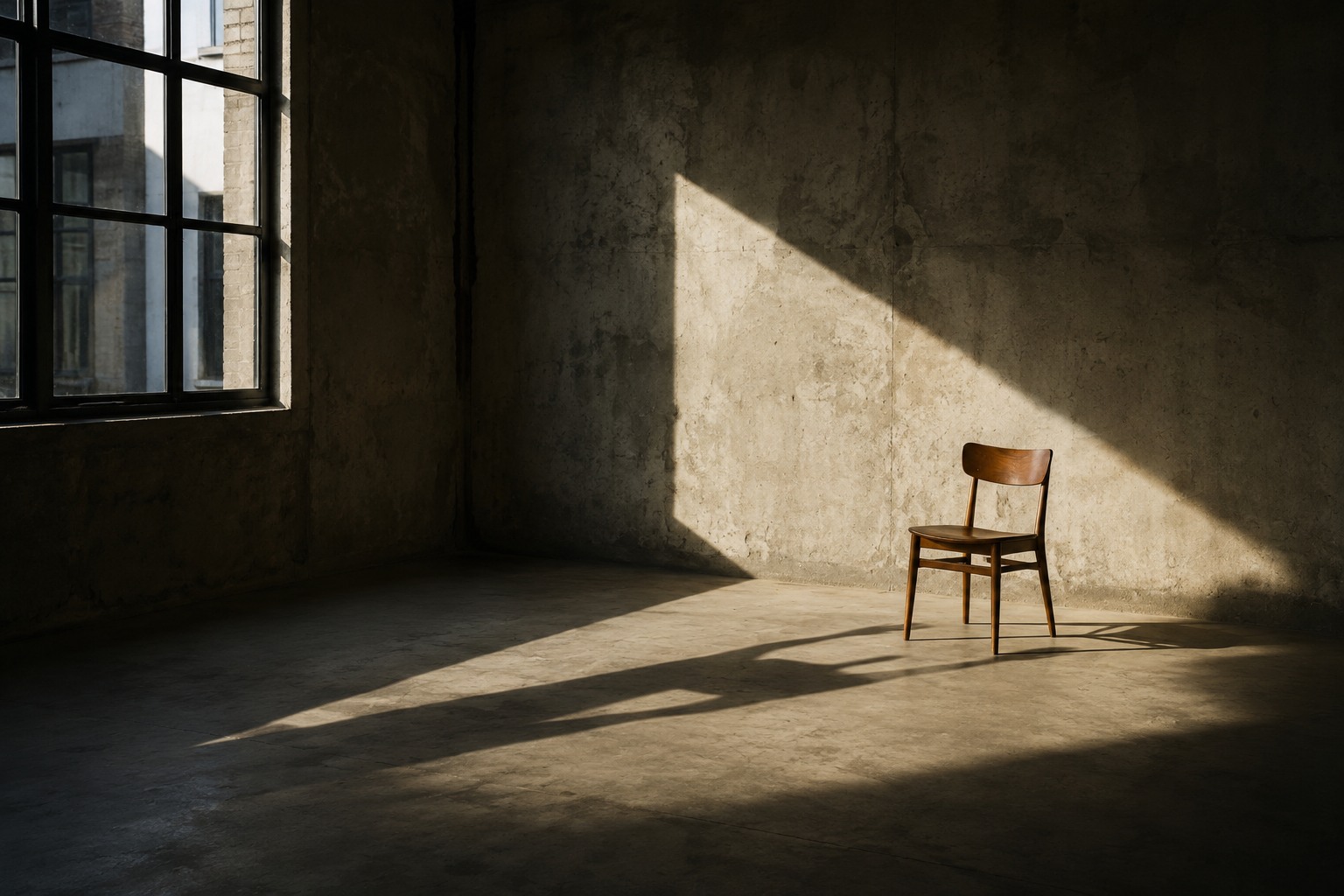
A photographer can change lens, background and clothes and still make almost the same picture. Move the light by a metre, however, and more than the shadow changes: material weight, facial age, room depth and the emotional temperature of the story all shift.
Editorial question
Why can a photograph made with one window feel deeper and more expensive than a scene lit with five sources?
Short answer
Because the number of lamps is not the quality of light. Readability comes from direction, apparent source size, distance, contrast, colour and the way light interacts with surfaces. One coherent source often creates more believable scene physics than several poorly coordinated ones.
Thesis
Light is neither decoration nor merely a technical means of exposure. It distributes attention, describes form, sets distance between objects and determines what the viewer feels before they can name what they see.
A photographer can change lens, background and clothes and still make almost the same picture. Move the light by a metre, however, and more than the shadow changes: material weight, facial age, room depth and the emotional temperature of the story all shift.
Evidence and cases
Begin by turning the lights off
The most useful habit on set begins not with switching on a flash but with a pause. Look at the light that already exists: a window, a door, a pale wall opposite, a reflective floor, an overcast sky. Then ask not “is it bright enough?” but “what is this light saying about the space?” Shadow is not automatically a problem; it can create volume and separate planes. Adobe notes that light-shadow balance creates dimension, directs focus and strengthens contrast. [source]
Good lighting often starts by removing things. Turning off a ceiling fixture, moving a reflector away or flagging part of a window can do more than adding another lamp. Reduction forces you to shape the scene instead of flooding it.
Hard and soft are geometry, not personality
Hard and soft light are descriptions of shadow-edge transition, not value judgments. The larger a source appears relative to the subject, and the closer it is, the softer the transition tends to be. Adobe explicitly connects diffusion, source size and softness. [source]
Soft does not automatically mean gentle; hard does not automatically mean dramatic. A huge north-facing window may make skin calm but the room emotionally cold. A narrow slash of direct sun can be hard yet feel summery and light. Emotion comes from combinations of direction, colour, contrast and story.
Direction is a hidden perspective
Frontal light reduces visible relief, side light emphasises it, and backlight separates silhouette while turning hair, fabric or dust into a luminous edge. Direction therefore behaves almost like a second lens: it changes how form is read.
Photograph one object without moving the camera. Light it from the front, side and back. You will obtain three different “materials” from the same physical object. On stone the pores appear, on fabric the nap, on metal the reflection line. Light does not merely illuminate surface; it translates surface into image.
Distance controls more than brightness
With artificial light, distance influences falloff. The inverse-square law explains why illuminance changes especially rapidly when the source is close. Nikon’s training material connects this directly to control over background and surrounding exposure. [source]
What matters photographically is the visual consequence. A close source can keep a face bright while the background falls darker. Move it away and exposure becomes more even across depth. Distance becomes a way to shape space without adding equipment.
Shadow is not missing information
Beginners often open shadows simply because software allows it. But a dark area does not have to reveal detail. Shadow can stop the eye, hide the irrelevant or create pause. Adobe frames dynamic range as the relation between highlight and shadow regions and describes their role in depth. [source]
If every shadow is lifted equally, the frame begins speaking at one volume. Strong images are closer to music: loud notes, quiet notes and silence.
The colour of light changes skin, concrete and air
Colour temperature is more than a white-balance setting. Warm evening light can turn grey concrete honey-coloured; cool north light can make it feel mineral. Mixed sources can be a mistake or a narrative device: cool daylight against a warm lamp can make the boundary between outside and inside visible.
Golden hour is valued not because the clock is magical but because the sun is lower, directional and warmer. Adobe describes these qualities directly. [source]
Why one source can beat five
A single source forces you to decide where the “sun” of the scene is. It creates understandable causality: this is the light, this is the shadow, this is the reflection. Every additional source needs a reason. When those reasons contradict one another, viewers may not know why, but the scene starts to feel artificial.
This is not an argument against complex lighting. Large productions may use many fixtures; the craft lies in making complexity read as one believable physical world.
Practice: a day of observation without shooting
Spend one day deliberately not photographing. At 9am notice how light enters a room; at noon see where relief disappears; late afternoon observe which surfaces begin to bounce warm light. MoMA’s Ming Smith learning material asks viewers to pay attention to time of day, angle, light and shadow and how they affect mood. [source]
The next day make only three images: one about form, one about material and one about a person. Limitation forces choice, and choice is the beginning of a personal lighting language.
Conclusion: light is editing reality
When a photographer says “I lit the set,” it sounds technical. A more accurate sentence would be: “I decided what the viewer sees first, what feels heavy, what disappears and where depth begins.” Light edits reality before the shutter is pressed.
That is why sophisticated lighting rarely impresses by the number of lamps. It feels inevitable, as if the space had always been that way and the camera simply noticed it.
Visual analysis
The article's visual logic can be tested through «Begin by turning the lights off», «Hard and soft are geometry, not personality», «Direction is a hidden perspective», «Distance controls more than brightness», «Shadow is not missing information», «The colour of light changes skin, concrete and air». Compare these signs within one object or sequence rather than judging them as an isolated style.
Practical implication
Practical use begins by testing the thesis against a specific object, frame, or production decision. For this subject, the working criterion is: Not a catalogue of setups, but a way to see why the same subject becomes a different image under different light.
Limitations
“Light: How It Builds an Image” is limited to its stated subject: not a catalogue of setups, but a way to see why the same subject becomes a different image under different light. The analysis does not replace examination of a specific original, project, or production context.
Sources
The open sources for “Light: How It Builds an Image” are listed in the page panel and define the boundary of its verifiable facts.