analysis
Research: How to Find Patterns, Not Pictures
References become useful only when you know what you are taking from them — light, behaviour, structure or the logic of a decision.
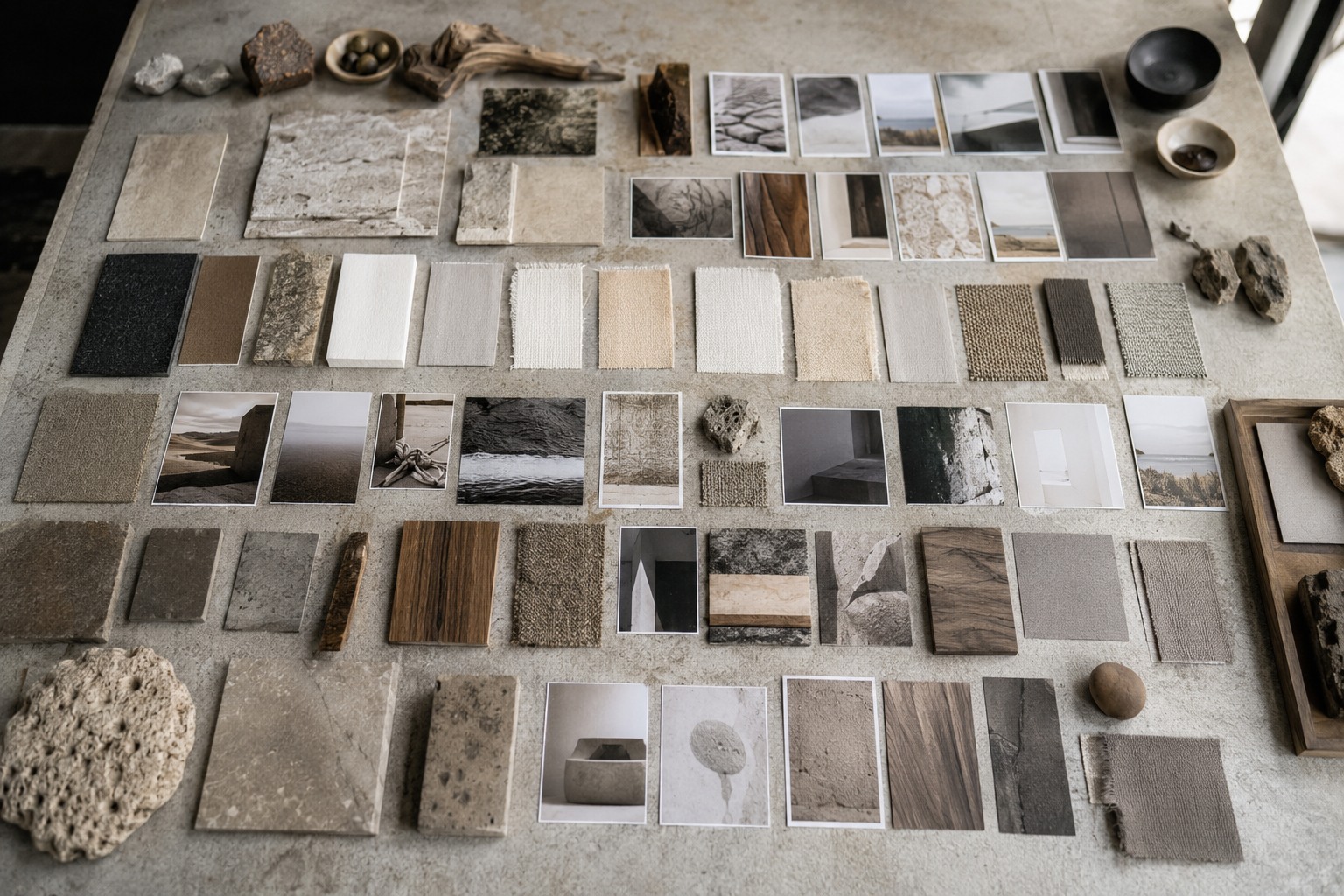
A folder of five hundred beautiful images can be less useful than five precise observations. A huge moodboard can create the illusion of work: you looked, saved and sorted a lot, yet still do not know what image you actually need to make.
Editorial question
How can you tell whether a moodboard helps you invent your own solution rather than nudging you to copy someone else?
Short answer
Break every reference into function: what exactly works and why. Then look for recurring principles across different sources. If the result can be stated in words and tested in a frame, research has become direction; if the result is still “something beautiful like this,” it is still a collection.
Thesis
Research is valuable not for the volume of references collected but for its ability to turn scattered observations into a testable visual hypothesis.
A folder of five hundred beautiful images can be less useful than five precise observations. A huge moodboard can create the illusion of work: you looked, saved and sorted a lot, yet still do not know what image you actually need to make.
Evidence and cases
The beautiful reference is the most dangerous
The more you love another image, the easier it is to confuse admiration with analysis. You copy the surface: wall colour, pose, lens, furniture. Research becomes useful when you ask which mechanism actually works — perhaps the figure is tiny against space, the light enters through one slit, or the material repeats across clothes and architecture.
Then the reference stops being a template and becomes evidence of a principle.
Research should disturb certainty first
IDEO describes design research as a way of seeking information that surprises and unsettles existing understanding rather than merely confirming it. [source]
If you are researching “contemporary luxury,” do not start only with luxury campaigns. Look at museums, airports, hospitals, banks and religious interiors. The useful feeling may live outside your industry references.
Collect reasons, not images
Every saved reference should have a one-sentence note: “not the colour — the scale of the figure”; “the reflection doubles the room”; “the useful thing is the silence around the object.”
If you cannot write the note, the image probably just pleases you. That is fine, but it is not yet working research.
Synthesis turns chaos into direction
After gathering material, the most important step is to stop searching. IDEO describes synthesis as reducing research, clustering it and turning it into concrete questions for the next phase. [source]
In practice: cut fifty references to ten, cluster them by mechanisms — light, space, behaviour, material, colour — and write one conclusion for each group.
Look for extreme cases
Average examples confirm the norm; extremes reveal the boundaries. IDEO uses extreme users and unexpected behaviours because edge cases expose solutions that disappear in the average. [source]
Visually, compare the flattest light with the most dimensional, the nearly empty frame with the overloaded one, the luxurious interior with the purely utilitarian. Contrast clarifies your choice.
A moodboard needs internal conflict
If every image on the board is almost identical, you are no longer researching; you are illustrating a decision already made. A strong board can hold opposing forces: strict geometry and human movement, cold materials and warm skin, archival form and current technology.
Conflict creates a space in which a new solution can appear.
Translate references instead of transferring them
To avoid copying, change discipline. If you like a fashion image, find the same principle in architecture or film. If you like an interior, translate its rhythm into clothing or body placement.
Mechanism survives while literal form changes. Translation across contexts is often where authorship begins.
Test research with a frame
Research does not end with the presentation. It ends with a test. Build a simple scene and make one frame: does the chosen scale work? Does the window create the needed shadow? Does the real material break the palette?
If the test contradicts the moodboard, the test wins. Reality is the best editor of references.
Archive the rejected paths
Rejected directions remain valuable if the reason for rejection is recorded. A similar brief a year later may make an old path relevant. An archive also prevents you from repeating the same search process without learning from it.
Research needs memory: original question, sources, conclusions, tests and decisions.
Conclusion: research is a machine for differences
The goal is not to gather enough images for a client deck. Research should make differences visible: why this light and not that one, this scale and not another, this silence rather than decorative noise.
When a team can argue specifically instead of saying “I like it / I don’t like it,” the research has done its job.
Visual analysis
The article's visual logic can be tested through «The beautiful reference is the most dangerous», «Research should disturb certainty first», «Collect reasons, not images», «Synthesis turns chaos into direction», «Look for extreme cases», «A moodboard needs internal conflict». Compare these signs within one object or sequence rather than judging them as an isolated style.
Practical implication
Practical use begins by testing the thesis against a specific object, frame, or production decision. For this subject, the working criterion is: References become useful only when you know what you are taking from them — light, behaviour, structure or the logic of a decision.
Limitations
“Research: How to Find Patterns, Not Pictures” is limited to its stated subject: references become useful only when you know what you are taking from them — light, behaviour, structure or the logic of a decision. The analysis does not replace examination of a specific original, project, or production context.
Sources
The open sources for “Research: How to Find Patterns, Not Pictures” are listed in the page panel and define the boundary of its verifiable facts.