analysis
Visionaire: The Magazine That Refused to Be a Magazine
How material, scale, scarcity and public experience turned publishing form into an authorial argument
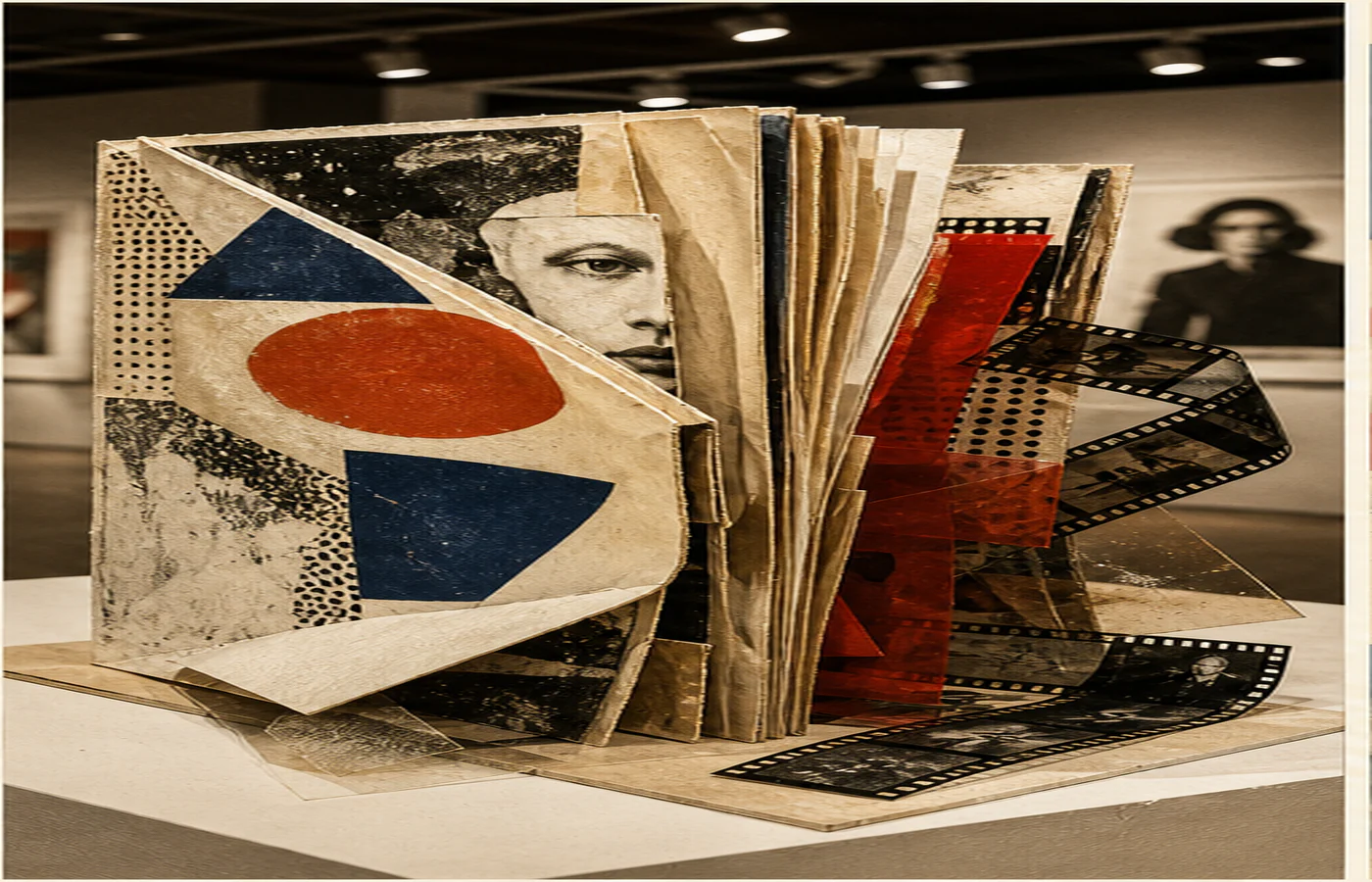
Visionaire matters not because it made the strangest magazines. Its radicalism lies elsewhere: issue after issue, the theme changed the physical behaviour of the medium itself - and the same method later moved from collectible object into public space.
Editorial question
Why did a magazine known for expensive limited editions and impossible formats eventually arrive at free posters, public installations and live opera?
Short answer
Because Visionaire was never really researching the magazine as such; it was researching the medium. First it made materiality and scarcity part of editorial language, then discovered that the same logic could design access, urban space, performance and collective experience. Its history is therefore not a linear move from print to digital but an expansion of the idea of publication.
VANSMITHLAB thesis: Visionaire refused to be a magazine precisely in order to investigate more radically what a magazine could become.
Thesis
Visionaire shows that a publication becomes authorial not when it acquires unusual packaging but when form begins to carry the thesis. Paper, case, scale, limited edition, hand assembly or public distribution can change the meaning of an image as decisively as photography, text or editing.
The project's central conflict runs between two poles: scarcity creates intensity and object value while restricting access; public circulation expands audience while potentially dissolving uniqueness. Visionaire moved from limited-edition publishing toward an experiential agency because it kept testing that conflict in practice.
Visionaire matters not because it made the strangest magazines. Its radicalism lies elsewhere: issue after issue, the theme changed the physical behaviour of the medium itself - and the same method later moved from collectible object into public space.
Evidence and cases
A magazine you have to stand beside
In 2011 Visionaire released issue 61, Larger Than Life. Its deluxe edition measured roughly 57.5 by 79 inches - almost one and a half by two metres. This is no longer a magazine that can sit on your lap on a train. To see it, the reader needs floor or wall space, distance, time and often another pair of hands. Scale itself forces the body to behave differently. 8
That is the shortest way to understand Visionaire. The project was never especially interested in improving the conventional magazine. Again and again it asked what happens when the theme of an issue changes not only photography and text but the medium itself - paper, case, size, edition, opening mechanism and mode of distribution.
The question, then, is not whether Visionaire can still be called a magazine. The more important question is why refusing to treat the magazine as a fixed form became one of the most radical editorial gestures of recent decades.
The medium stops being neutral
Conventional magazine logic assumes that the carrier should be predictable enough to disappear: format repeats, pages turn in the same way and printing serves content. Visionaire reverses that hierarchy. Material, packaging and scale become part of the argument rather than a service layer.
This does not make the image less important. It gives the image a physical condition. A photograph on a standard page and the same photograph as a separate print, insert, pop-up or sheet close to human scale are read differently. Visionaire makes visible what publishing often hides: every image exists inside a particular material regime.
VANSMITHLAB interpretation: Visionaire's defining authorial move is not "expensive printing." It makes the issue theme alter the behaviour of the medium. Material, scale and packaging therefore operate as editorial decisions rather than decoration.
1991: the first issue already works like a prototype
Visionaire 01: Innocent: Spring appeared in 1991 in a numbered edition of one thousand. RISD describes a mixture of loose sheets and small volumes, vellum and multiple papers; the publishers later recalled using printer remnants so that pages deliberately did not share the same stock. Bill Cunningham contributed an early fashion report. 4
This matters for more than the mythology of a low-budget independent beginning. A production limitation immediately became a method. Instead of concealing heterogeneous materials and pretending to be a standard professional magazine, the editors turned heterogeneity into structure.
The core Visionaire principle appears here: a production problem can become an editorial advantage. Rather than imitate the form enabled by a large budget, a publication can make limitation the reason to invent another form.
Louis Vuitton: the brand becomes a production instrument
Visionaire 18: Fashion Special Louis Vuitton, published in 1996, was the project's first full Fashion Special. RISD records loose sheets, a specially designed Louis Vuitton leather portfolio made for the monogram centenary, and an enormous contributor list spanning designers, photographers and artists. 5
This introduces a central conflict for fashion media. A brand can buy attention and turn editorial space into advertising. But a brand can also supply production capacity that allows an editorial project to make an object ordinary magazine economics could not support. Visionaire repeatedly operated on this line.
The strength of such collaborations is not luxury as status. It is the ability of packaging to become part of the theme and the experience. The weakness is equally clear: the more spectacular the branded object, the easier it becomes to confuse editorial experiment with an expensive souvenir.
Love: the issue becomes almost a unique object
In Visionaire 38: Love Tiffany & Co, the standard issue was replaced by an old romance novel into which new objects were glued or inserted by hand - postcards, photographs, poems, a feather, pressed flowers and other material gestures. The copy existed not only as print run but as manual assembly. 6
This changes the reader's relationship to publication. What sits in front of the reader is no longer a stream of identical copies but an object to open carefully, inspect and preserve. Reading becomes handling. Time slows not because the text is longer but because physical form demands attention.
Visionaire therefore blurs the boundary between magazine, artist's book, collectible edition and object design. Editorial work no longer ends with image selection and layout; it includes the scenario of use.
Surprise and Larger Than Life: theme becomes mechanism
Visionaire 55: Surprise transformed work by Yayoi Kusama, Andreas Gursky, Cai Guo-Qiang, Sophie Calle, Steven Klein, Steven Meisel and others into complex pop-up constructions. RISD notes the involvement of paper engineer Bruce Foster and the need to develop technical solutions specifically for the issue. 3
A few issues later, Visionaire 61 takes scale as its theme and makes the idea literal. The image becomes almost architectural: instead of looking down at a picture, the viewer stands next to it. 3
In both cases the theme stops being a word on a cover. Surprise must physically surprise; Larger Than Life must physically exceed ordinary size. This is one of Visionaire's most useful lessons: format is strongest when it does not illustrate an idea but performs it.
Scarcity creates aura - and a problem
Limited editions, complex production and unusual materials turned Visionaire into a collectible object. Some issues exist in hundreds or thousands of copies; particular series were produced in even smaller numbers. In 2017 Visionaire 67 Fetish with Steven Klein appeared as a set of ten original colour C-prints in an edition of 200 numbered copies. 1
Scarcity changes the cultural status of publication: it is not simply read but stored, resold, exhibited and protected from damage. Yet this is also the project's most serious critical problem. If value is determined mainly by scarcity, price and ownership, editorial content risks becoming an alibi for the collectible market.
Visionaire is especially interesting because it eventually found a reason to invert its own model. After decades in which desirability was built through limitation, the project began to test the opposite question: what happens if publication becomes free and public?
FREE: the exclusivity model turns inside out
Visionaire 65 FREE operated through the public distribution of large-format art posters. In New York twelve new prints were given away in Times Square and from FREE ART Trucks; the larger series extended across Miami, Los Angeles and New York. Visionaire itself reported close to 200,000 posters distributed through the three-city project. 12
This is one of the most important turns in the project's history. Visionaire, which had made scarcity part of its reputation, turns the word FREE into physical structure: art does not remain protected inside a case but leaves a truck, enters the hands of passers-by and circulates through the city.
The conflict between scarcity and access cannot be solved by simply choosing one side. A limited edition can create intensity and responsibility toward an object; free distribution can expand access and return art to public space. Visionaire is compelling because it tested both systems through its own practice.
From issue to space: Glass Handel as a live publication
As of 2026 Visionaire officially describes itself as an experiential agency rooted in limited-edition publishing and now working across public art, film, immersive and interactive experiences, branded content and art multiples. At the same time its site retains the edition archive, shop and the label Visionaire Publishing 2026. 1
This evolution is especially clear in Glass Handel. In spring 2026 the project was presented in Madrid at Teatro Real as part of Bloomberg CityLab; Cecilia Dean and James Kaliardos described it through the same logic that once structured an issue of Visionaire: invited artists, filmmakers, choreographers and designers receive room for independent interpretation while the audience becomes part of a moving composition. 1
Here the word magazine finally stops describing material and starts describing method. An issue can become an event, opera, installation or film if an editorial frame still binds multiple authorial gestures into a single experience.
Why Visionaire matters now: the medium demands a decision again
In digital culture an image can be copied, resized, forwarded and stripped of its original context with almost no friction. Generative tools intensify that fluidity. Against that background Visionaire reminds us of an old fact that feels newly urgent: the mode of appearance is not neutral. File size, paper, screen, box, edition, interface and space change what we see and how long we are willing to look.
But literally copying Visionaire would be pointless. A large case, rare paper or exotic printing technique quickly becomes design fetish on its own. The important thing is not effect but causality: why does this particular idea require this particular form? Without an answer, materiality becomes decoration.
Return to issue 61, the magazine you have to stand beside. Its radicalism is not the record size as stunt. It is the fact that the theme changes the viewer's bodily position. That remains Visionaire's central lesson for VANSMITHLAB: the medium becomes an author only when it makes meaning happen physically.
Visual analysis
The article's visual logic can be tested through «A magazine you have to stand beside», «The medium stops being neutral», «1991: the first issue already works like a prototype», «Louis Vuitton: the brand becomes a production instrument», «Love: the issue becomes almost a unique object», «Surprise and Larger Than Life: theme becomes mechanism». Compare these signs within one object or sequence rather than judging them as an isolated style.
Practical implication
Practical use begins by testing the thesis against a specific object, frame, or production decision. For this subject, the working criterion is: How material, scale, scarcity and public experience turned publishing form into an authorial argument
Limitations
“Visionaire: The Magazine That Refused to Be a Magazine” is limited to its stated subject: how material, scale, scarcity and public experience turned publishing form into an authorial argument. The analysis does not replace examination of a specific original, project, or production context.
Sources
The open sources for “Visionaire: The Magazine That Refused to Be a Magazine” are listed in the page panel and define the boundary of its verifiable facts.