analysis
Minimalism: why absence sometimes costs more than decoration
Minimalism is expensive not through the number of elements but because it moves cost into the precision of surface, joint, and tolerance.
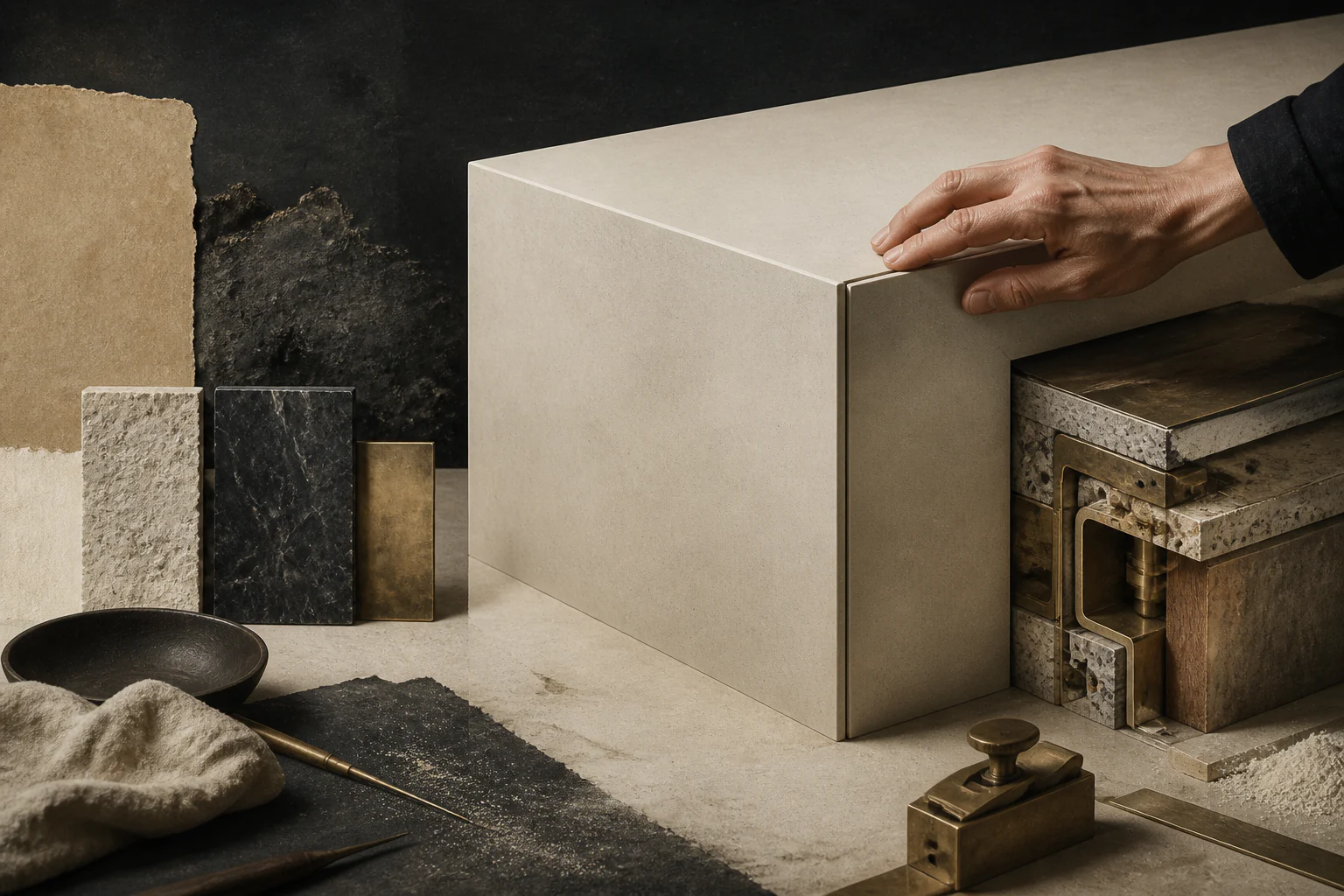
Minimalism is expensive not because there is less of it, but because it moves cost into the precision of surface, proportion, material, and control.
Minimalism is expensive not through the number of elements but because it moves cost into the precision of surface, joint, and tolerance.
Editorial question
How should we read this problem: minimalism is expensive not through the number of elements but because it moves cost into the precision of surface, joint, and tolerance.
Short answer
Minimalism is expensive not through the number of elements but because it moves cost into the precision of surface, joint, and tolerance.
Thesis
Removing an element does not remove the problem the element solved. A skirting board covered a joint, a moulding forgave an irregularity, a pattern hid a stain. Remove them and you must solve the same problem with precision — and precision costs more.
Minimalism is expensive not through the number of elements but because it moves cost into the precision of surface, joint, and tolerance.
Evidence and cases
Thesis: what is removed is not free
Removing an element does not remove the problem the element solved. A skirting board covered a joint, a moulding forgave an irregularity, a pattern hid a stain. Remove them and you must solve the same problem with precision — and precision costs more.
Decoration as a tolerance system
Ornament was historically an engineering instrument: it absorbed the error of hand labour. Rich profiling allowed a building to be assembled from parts of varying dimension while still reading as whole.
A bare surface does not forgive
A flat white wall reveals every deviation: a wave in the plaster, a difference in tone, a shadow from an imprecise corner. The required standard of work rises, and with it skill and time.
The joint becomes the subject
Where there is no decoration, all visual interest moves to the joint: the gap, the shadow, the line where two materials meet. Design reduces to managing the seam, and execution to holding tolerances in millimetres.
Hidden systems cost more
A minimalist interior requires concealing what is normally visible: wiring, ventilation, fixings, hinges, lighting. A concealed system is always more complex than an exposed one and almost always harder to service.
Material selection tightens
When there is a single surface, its uniformity becomes critical. A smaller share of any batch of stone, veneer, or cloth passes selection, and the rejects enter the price. The raw material is the same; the yield is not.
Proportion instead of ornament
Without ornament the only remaining means of expression is proportion. It cannot be bought with material: it requires iteration, mock-ups, and decisions that are invisible in the finished object.
Emptiness is paid-for area
In an interior and in retail, empty space costs literally: it is rented floor area that sells nothing. Sparse display is a direct financial outlay, read by the customer as status.
The same in typography
A page with wide margins and generous leading consumes paper. The Swiss tradition made air a carrier of meaning, but in print it was always paid for in run length and format.
The same in clothing
A plain coat without trim presents the cut directly: the shoulder line, the sleeve set, the straightness of the front edge. There is nothing to hide an error behind, so a minimal garment demands more expensive tailoring, not less.
Reduction as discipline, not style
The principle "less, but better", in Dieter Rams’s formulation, describes a method of selection rather than an appearance. It requires justifying every retained element — and the work of justification is the main labour.
The modernist lineage
The rejection of ornament in the early twentieth century was an argument about the honesty of construction and the cost of hand labour. It was not conceived as a way of making things more expensive, but under industrial production that is what happened.
Maintenance is part of the price
A minimal surface demands upkeep: a seamless floor shows a scratch, a matt lacquer shows a fingerprint, a white wall shows a mark. Cost of ownership rises, and that is part of the total price of absence.
Repair becomes harder
Concealed fixings and seamless surfaces make disassembly difficult. Replacing one element may require dismantling its neighbours, turning a small repair into an expensive operation.
The image favours minimalism
A sparse scene photographs more easily and reads better on a small screen. This created a feedback loop: minimalism spreads partly because it wins in a feed, not only in a room.
First turn: from economy to precision
Initially the rejection of decoration promised savings by abolishing hand carving. In practice the cost relocated — from the carver’s workshop into machine tolerance and quality control.
Second turn: from precision to sign
When precision became broadly achievable, minimalism turned into a sign. Cheap imitation appeared: the same shapes at low execution quality, where absence became economy again.
Third turn: divergence
Today one word covers two incompatible things — expensive reduction paid for in tolerance, and cheap emptiness obtained by not doing the work. They can be told apart only at close range.
What is usually misunderstood
The error is to treat minimalism as an absence of decisions. Usually the opposite is true: more decisions were made, all of them concealed, and the viewer sees only the result of selection.
Counterargument: it is simply sold for more
The objection is blunt: a white box cannot cost more than a finished room, and the high price is explained by market position rather than by construction difficulty.
Where the counterargument holds
It holds for a large share of the market. A significant part of "minimalist" interiors and objects is genuinely made cheaply, with restraint used to excuse work not done.
Where it fails
It fails where the difference is measurable: tolerance class, flatness of plane, seam deviation, material rejection rate. These are figures from a cost sheet, not from a press release.
A test: come closer
The test is performed at thirty centimetres. Look at a corner, at the meeting of two materials, at an edge, and at how a shadow falls. Expensive reduction survives this look; cheap does not.
Link to the movement entries
The entries on minimalism, modernism, the Swiss style, and the Bauhaus supply the historical line: where the rejection of ornament came from and what arguments supported it.
Link to the materials
The entries on concrete, terrazzo, stone, and patina explain the physical side: why some surfaces forgive error and others must be flawless.
What this changes in practice
When designing minimally, budget for tolerance, selection, and inspection rather than for material. Such a project’s cost sheet should differ in structure, not only in total.
What stays physical
Material keeps living: concrete cracks, white yellows, matt burnishes. Reduction does not cancel ageing; it makes it more visible, because there is nothing to hide it behind.
The current state
Minimalism has become a mass language and therefore no longer signals quality by itself. Distinction has moved from form to execution, and execution is visible only up close and over time.
Editorial conclusion
Absence costs more where it has been paid for in tolerance, selection, and concealed engineering. Where it has not been paid for, it is not minimalism but incompleteness borrowing its reputation.
How to read the subject today
Do not judge minimalism by its overall look — that is the same everywhere. Judge it by the edge, the joint, and how the object looks after a year of use.
Visual analysis
The article's visual logic can be tested through «Thesis: what is removed is not free», «Decoration as a tolerance system», «A bare surface does not forgive», «The joint becomes the subject», «Hidden systems cost more», «Material selection tightens». Compare these signs within one object or sequence rather than judging them as an isolated style.
Practical implication
Practical use begins by testing the thesis against a specific object, frame, or production decision. For this subject, the working criterion is: Minimalism is expensive not through the number of elements but because it moves cost into the precision of surface, joint, and tolerance.
Limitations
“Minimalism: why absence sometimes costs more than decoration” is limited to its stated subject: minimalism is expensive not through the number of elements but because it moves cost into the precision of surface, joint, and tolerance. The analysis does not replace examination of a specific original, project, or production context.
Sources
- Design Museum — What is good design? Dieter Rams’s ten principles
- Design Museum — Dieter Rams
- Design Museum — John Pawson
- MoMA — Bauhaus 1919–1933: Workshops for Modernity
- Bauhaus Dessau Foundation — Bauhaus Building
- Vitra Design Museum — Online Collection
- VANSMITHLAB AI Master Content Plan — project master plan