research
Givenchy: separates and the screen image
The house that offered combinable pieces instead of a single silhouette and built its reputation through cinema.
Editorial thesis
Givenchy matters for two contributions: separates, which broke the monolithic couture look, and an early understanding that a house’s reputation is produced by the screen.
Reader question
What happens to a house whose identity was built on a relationship with one actress after that relationship ends?
Short answer
It must find a new foundation, and the house’s history since is a sequence of such attempts. Founded 1952; key figure Hubert de Givenchy; context Paris.
1. Founding and the first collection
The house opened in Paris in 1952. Its first collection was built on inexpensive fabrics and simple forms — a budget-driven decision that turned out to be programmatic.
2. The blouse as an independent object
The best-known piece of the first collection was a simple cotton blouse named after a model. It sold separately rather than as part of an ensemble, and that was a decisive shift.
3. Separates as method
The idea of combinable pieces instead of a complete look moved the decision from couturier to customer. This is a structural change: the house began supplying a vocabulary while the client composed the sentence.
4. The economic consequence
Separates widen access: one item can be bought instead of an ensemble. The device anticipated the logic of ready-to-wear years before it became an industrial norm.
5. Cinema as a reputation channel
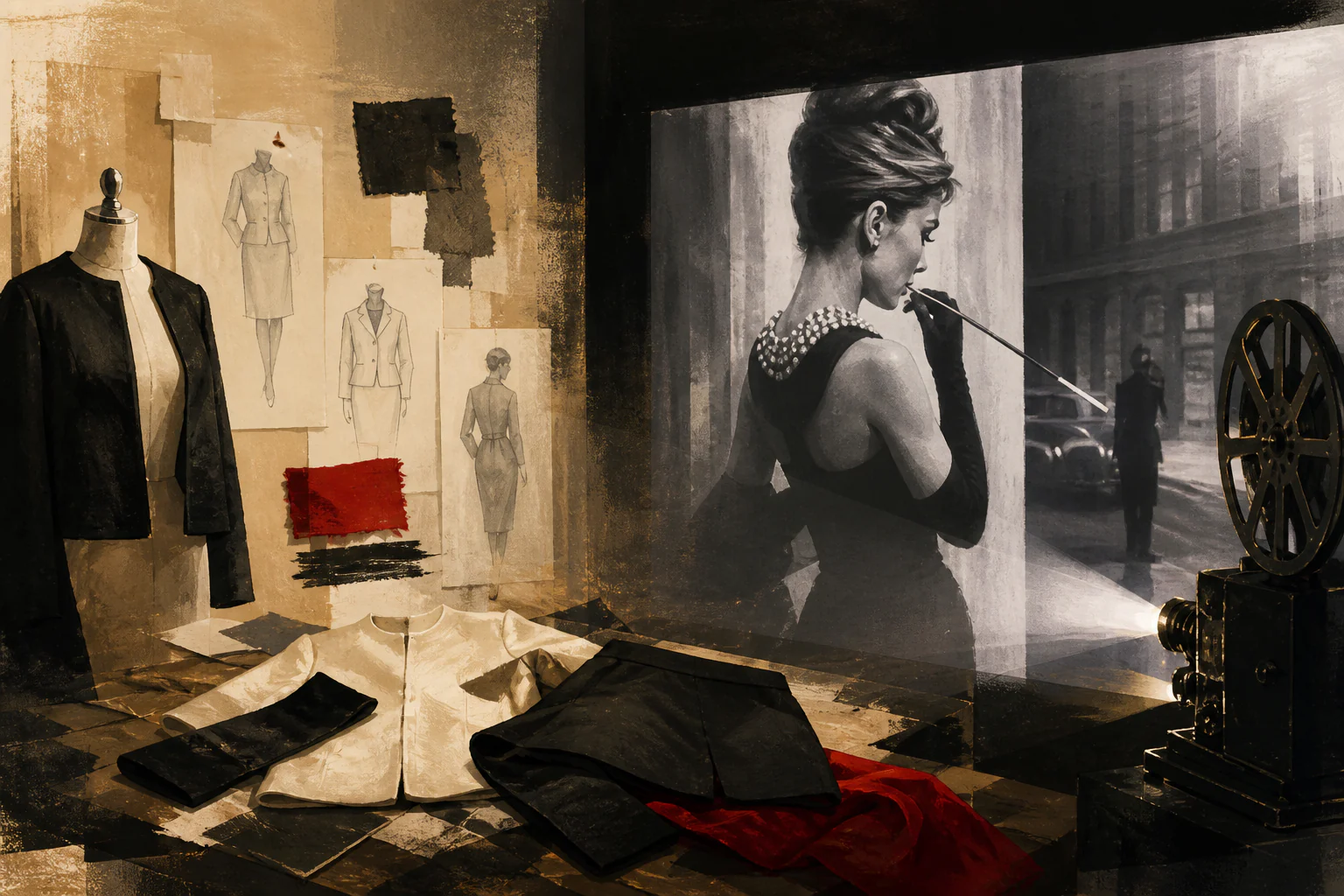
Years of work with a single actress gave the house what advertising cannot: a stable image seen by millions inside a narrative. The clothing was remembered together with a character.
6. The black dress as a cultural object
A dress from a film of the early 1960s became an independent cultural object, cited apart from both the film and the house. It is a rare case of an object outliving both its author and its context.
7. A personal contract instead of advertising
The relationship with the actress was formalised as a long-term collaboration, including fragrance. It is an early version of the ambassador model that later became an industry standard.
8. Dependence on a single image
The reverse side of the strategy is tying identity to a particular person. When the collaboration ended, the house was left with a strong but historically sealed image.
9. Entering a conglomerate
The house was acquired by a major French group at the end of the 1980s. From that point creative leadership is appointed by the owner, and the frequency of changes rises sharply.
10. The British appointments of the 1990s
In the mid-1990s the house was led successively by two British designers. The appointments were calculated for scandal and press attention, and they did return visibility to the house.
11. A conflict between method and atelier
Both appointments exposed a common conflict: a theatrical authorial method sits badly with an atelier tuned to restrained construction. The house gained attention at the cost of coherence.
12. The gothic line of the 2000s
An extended leadership from the mid-2000s built a new identity on a dark palette, print, and street culture. It was the first durable answer to the question of what the house is after its original image.
13. A return to the couture line
Leadership at the end of the 2010s restored soft construction and a couture register, confirmed by a highly public wedding-dress commission. Once again a single image defined a season.
14. The current direction
In 2024 Sarah Burton was appointed creative director of women’s and men’s collections. The appointment reads as a bet on a constructional school — that is, on the atelier rather than on an image.
15. Critical questions
The critique is justified: over three decades the house has changed creative leadership repeatedly, and no line has lasted long enough to become a foundation. Frequent change is an owner’s management decision, and it explains the discontinuity of identity better than the quality of individual designers.
16. How to read this house today
Read the house as a sequence of management bets rather than as a single line. The question is not what Givenchy’s style is but which foundation the owner is attempting to build in the current cycle.