research
Harper’s Bazaar
Fashion, modernism, and the magazine as an editorial laboratory
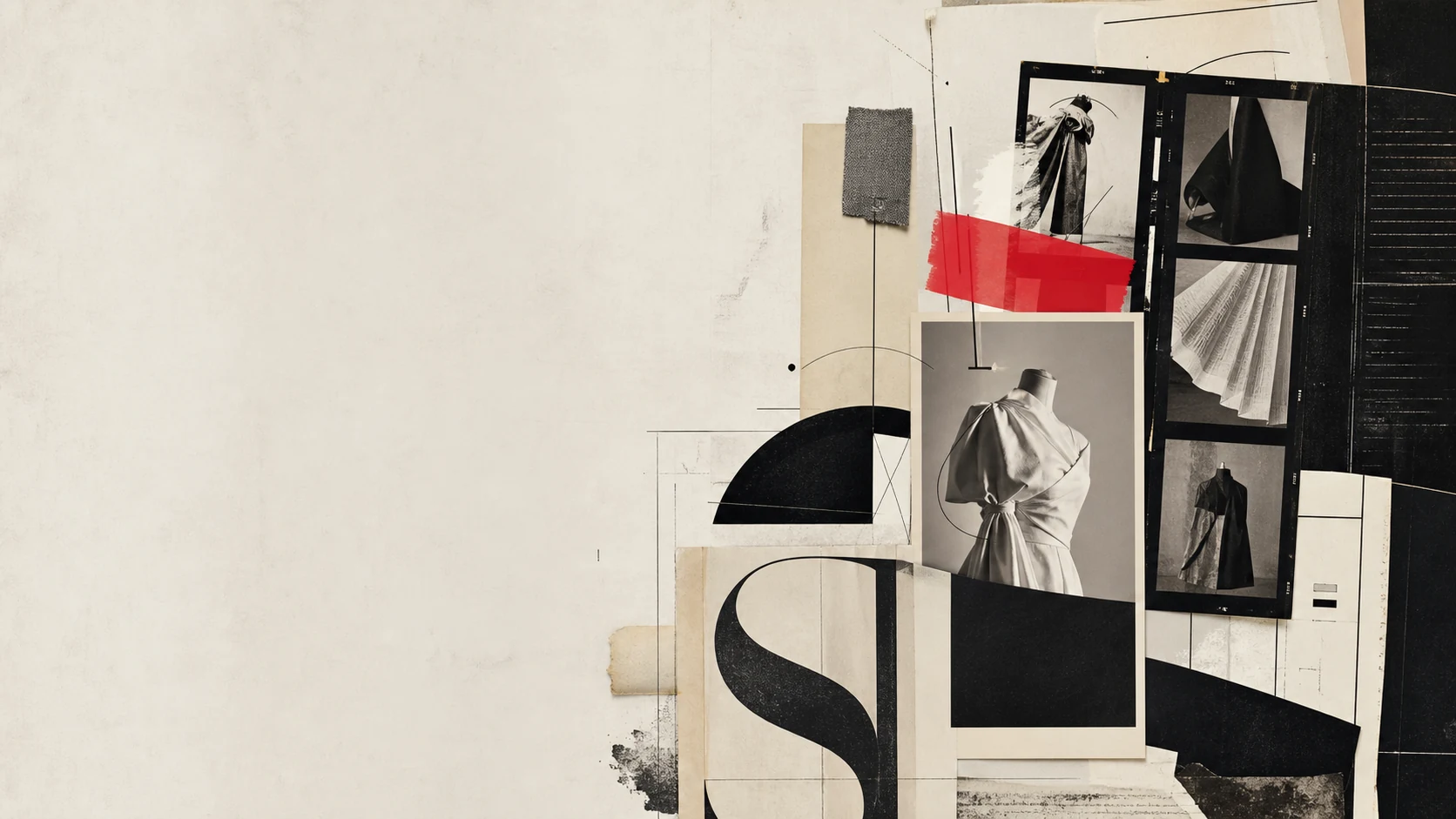
Harper’s Bazaar matters not only as one of the oldest fashion magazines. Its history shows how an editorial institution can turn print technology, illustration, photography, typography, literary writing, and cultural risk into a single system. From Mary Louise Booth to Samira Nasr, the magazine repeatedly changed its visual language while preserving a core function: creating a space where fashion meets ideas and new ways of seeing.
Editorial thesis
Harper’s Bazaar should be read not as a sequence of famous covers but as an editorial laboratory. Its influence emerges from relationships among publishing economics, print, art direction, fashion editing, literature, photography, production, and systems of talent. [source]
Reader question
What happens when a fashion magazine stops merely reporting style and begins inventing the very way modernity is seen?
Short answer
The magazine becomes a system of cultural production: it does not only select clothes and images, but establishes rhythm, scale, authorship, reading patterns, and the boundaries of permissible experiment. Harper’s Bazaar repeatedly rebuilt that system—from woodcut and illustration to modernist layout, fashion photography, and digital platforms. [source]
1. 1867: Harper’s Bazar begins as a magazine of fashion, culture, and modern life
The first issue of Harper’s Bazar appeared on November 2, 1867. Harper & Brothers described it as a “repository of fashion, pleasure, and instruction”: not a catalogue of dresses, but a guide to reading modern life through clothing, culture, manners, and ideas. 15 From the beginning, visual pleasure was linked to education—a connection that later became central to the magazine’s authority.
2. Mary Louise Booth: the first editor sets an intellectual scale
The first editor was Mary Louise Booth, a writer, translator, and journalist who worked across several languages and took part in the social debates of her time. 20 Her appointment matters: Harper’s Bazar did not imagine its female audience merely as consumers of fashion, but as readers of literature, culture, politics, and social norms.
3. Der Bazar and a transatlantic image system
The idea for the magazine grew from Fletcher Harper’s encounter with the Berlin publication Der Bazar. The German magazine circulated fashion imagery through an international system of shared printing materials, and Harper saw an opportunity to adapt that model for the United States. 14 Harper’s Bazaar was therefore global long before air travel, fashion weeks, or digital networks; international exchange was embedded in the technology of image reproduction itself.
4. From the start, fashion means more than clothing
In its early decades, clothing appeared beside fiction, poetry, etiquette, cultural observation, and writing about social life. 3 This is fundamental: the magazine did not only tell readers what to wear. It connected outward appearance to cultural competence. Carmel Snow would later formulate the idea differently, but the logic of the “well-dressed mind” was present from the beginning.
5. Literature, society, and the 1920s: building cultural authority
In the 1920s Harper’s Bazar continued to combine fashion and literature, publishing writers including Virginia Woolf and Vita Sackville-West, while Anita Loos’s Gentlemen Prefer Blondes appeared in serial form. 14 At the end of the decade the publication added a second “a” and became Harper’s Bazaar. The typographic change was small, but it coincided with a broader modernization of the magazine’s literary and visual language.
6. Erté: illustration turns the cover into an autonomous image
Erté worked with the magazine for two decades and created more than two hundred covers. 8 His line, ornament, and theatrical silhouettes belong to an era when fashion illustration was not a substitute for photography but an autonomous visual language. The cover already functioned as a promise of a world—not literal documentation of clothing, but an image of desired modernity.
7. Photography before the 1930s revolution: from salon to modern eye
Photography was present in Harper’s Bazaar before the radical transformation of the 1930s. In 1921 William Randolph Hearst recruited Baron Adolph de Meyer, known for a soft, painterly manner. 14 This was a transitional stage: photography still inherited salon aesthetics, but the magazine was learning to use the camera not only to record a garment but to construct atmosphere.
8. Carmel Snow: from fashion department to a new editorial model
Carmel Snow arrived from Vogue in 1932–1933 and soon became the leading editor of Harper’s Bazaar. 19 Her method depended on choosing people rather than micromanaging every frame. She assembled designers, photographers, editors, and writers with different temperaments. That human montage became the foundation of the magazine’s so-called golden age.
9. Martin Munkacsi, 1933: movement enters fashion photography
In 1933 Snow took Martin Munkacsi to a beach where he photographed model Lucile Brokaw running in a swimsuit. 9 For fashion photography this marked a shift from static pose to a body in real movement and space. Fashion began to appear not as an object on a mannequin but as an action—a step, wind, speed, a gesture.
10. Alexey Brodovitch, 1934: the magazine gains a visual director
In 1934 Snow encountered Alexey Brodovitch’s work at an Art Directors Club exhibition and invited him to become art director. 4 Brodovitch brought European modernism into the American fashion magazine, but his contribution cannot be reduced to a list of stylistic tricks. He treated the spread as a stage: photography, typography, emptiness, and page sequence had to operate together.
11. White space, cropping, and rhythm: the page begins to move
Under Brodovitch, white space became active and aggressive cropping became a way to control attention. 15 He shifted scale, broke symmetrical habits, allowed images to bleed, and created rhythms from spread to spread. The page stopped being a box for text and photographs and became a temporal composition: readers effectively edited the issue through the motion of turning pages.
12. Diana Vreeland: “Why Don’t You…?” and fashion as fantasy
Diana Vreeland joined Harper’s Bazaar in 1936 and became famous for the Why Don’t You…? column, a mixture of advice, absurdity, luxury, and provocation. 14 Her work demonstrates that fashion editing is not only the selection of clothes. It is the production of tone and fantasy—a way of making fashion feel like permission to imagine life differently.
13. Louise Dahl-Wolfe: color, air, and American modernity
Louise Dahl-Wolfe began working for Bazaar in 1936 and became one of the key figures in a new American fashion photography. 14 Her color location work replaced the closed salon with air, sunlight, desert, and architecture. Clothing interacted with landscape, and the modern woman gained space in which to move rather than a decorative set around her.
14. Junior Bazaar and Lillian Bassman: a laboratory inside the magazine
Junior Bazaar, launched in 1945, became a platform for a younger audience and for visual experimentation. The Met credits Richard Avedon, Lillian Bassman, and Alexey Brodovitch together on the inaugural cover. 14 This example is especially important for VANSMITHLAB: the magazine was not made by “one genius,” but by a network of interdependent editorial roles.
15. Richard Avedon: photography becomes a performance of character
Richard Avedon began working for Harper’s Bazaar in the mid-1940s under Brodovitch’s mentorship and quickly became the magazine’s leading photographer. 14 His models left the studio for streets, clubs, circuses, and the city. More importantly, they did not simply display clothes; they performed temperament, risk, speed, and social confidence. Fashion photography became a short drama.
16. Dovima with Elephants, 1955: fashion, scale, and tension
Dovima with Elephants, photographed by Avedon at the Cirque d’Hiver in Paris in 1955, became one of the best-known images in fashion photography. 9 A Dior evening dress is set against the massive bodies of elephants. The effect depends on incompatible scales: fragility and force, couture and circus, the model’s control and the potential chaos of the space coexist at once.
17. Snow + Brodovitch + Vreeland + Avedon: influence is produced by a team
It is easy to turn the 1930s–1950s into a pantheon of Snow, Brodovitch, Vreeland, and Avedon, but that is an oversimplification. 14 The visual system also depended on fashion editors, photographers, assistants, retouchers, typographers, copy editors, and production teams. A strong magazine is not a sum of celebrities but an environment in which different authors amplify one another.
18. 1958–1961: Nancy White and Henry Wolf change the tone without breaking the system
After Brodovitch’s departure and the gradual end of the Snow era, Nancy White led the magazine and Henry Wolf became art director in 1958. 19 Wolf did not imitate his predecessor; he added dry humor, typographic play, and conceptual covers. The transition showed Bazaar’s ability to change its visual grammar without losing editorial daring.
19. Marvin Israel: documentary severity enters the fashion magazine
Wolf was followed in 1961 by Marvin Israel. Harper’s Bazaar notes that Israel commissioned documentary photographers including Walker Evans, Bill Brandt, Lee Friedlander, and Diane Arbus. 14 This brought a harder observational optic into fashion: beauty was no longer sealed off from reality, and the magazine moved closer to the languages of the street, documentary photography, and cultural tension.
20. Ruth Ansel and Bea Feitler: a new generation of art direction
After Israel left in 1963, his deputies Ruth Ansel and Bea Feitler became co-art directors. 20 In their twenties, they were given responsibility for one of the world’s most influential visual magazines and developed a language of bold conceptual images. Their authorship matters by name: design history has too often made women visible in the picture while leaving them invisible in art direction.
21. April 1965: Jean Shrimpton, Avedon, and the issue as a unified work
The April 1965 issue, overseen by Avedon on the twentieth anniversary of his work with Bazaar, is a model of the magazine issue as a unified visual work. The Jean Shrimpton cover with a vivid pink construction around her face became an icon of the era and emerged through collaboration among Avedon, Ansel, Feitler, and the fashion team. 15 Later recollections differ in detail, so collective staging is more accurate than a single-author story.
22. The 1960s: surrealism, the Space Age, and pop culture
During the 1960s Bazaar absorbed the Space Race, Pop Art, surrealism, and new forms of mass culture. 14 Melvin Sokolsky suspended models in transparent spheres above Paris, Hiro built almost science-fictional arrangements of light and objects, and covers became graphic events. The magazine did not merely illustrate the future; it rehearsed its visual language.
23. Why the myth of one genius distorts Harper’s Bazaar history
Brodovitch often becomes the symbol of all Bazaar’s visual success, but museum and archival records reveal a more complex system. 11 Lillian Bassman, Ruth Ansel, Bea Feitler, photographers, fashion editors, and production teams shaped the magazine as decisively as the famous art director. Bazaar’s history is therefore more useful as a culture of editorial collaboration than as a chain of solitary heroes.
24. 1992: Liz Tilberis and Fabien Baron rebuild visual authority
In 1992 Liz Tilberis arrived from British Vogue and invited Fabien Baron to become creative director. 15 Their first September issue with Linda Evangelista restored a sense of visual inevitability: minimal cover text, disciplined typography, large-scale photography, and the idea of “modern elegance.” It was not a retro return to Brodovitch, but a new construction of his underlying principle: risk plus clarity.
25. The 1990s: supermodels, youth culture, and modern elegance
Bazaar in the 1990s coincided with the era of supermodels, minimalism, deconstruction, and youth culture. 15 Patrick Demarchelier, Peter Lindbergh, David Sims, Craig McDean, and other image-makers contributed; Kate Moss appeared in Tilberis’s first issue and soon became a recurring figure. The magazine again acted as a filter between advanced fashion and mass imagination.
26. 2001–2020: Glenda Bailey and Stephen Gan restore theatricality
Glenda Bailey became editor in chief in 2001, with Stephen Gan as a major creative collaborator. Bailey recalled that one of the first tasks was to restore Bazaar’s historical logo while constructing a new visual era. 17 Their strategy favored theatrical and sometimes ironic covers and stories that increasingly worked not only on the printed page but as media events.
27. Global editorial coordination: from local editions to shared staging
In 2013 Harper’s Bazaar launched a Carine Roitfeld fashion portfolio simultaneously across 26 international editions. 18 The project shows another layer of the editorial system: local magazines retain their own teams and contexts, while selected material can be coordinated as an international release. This is not simply translation of one page, but synchronization of production, brand, and publication time.
28. 2020: Samira Nasr and a new language of representation
In 2020 Samira Nasr became editor in chief of the U.S. Harper’s Bazaar and the first Black woman to hold the position in the magazine’s history. 19 Her appointment came with a stated ambition to make the publication more colorful, inclusive, and contemporary across platforms. For Bazaar’s history, this is not a cancellation of the past but a test of whether a legacy institution can revise its own norms of visibility.
29. 2022–2026: magazine as print, digital, and event platform
Samira Nasr’s official profile and her 2026 editor’s letters confirm that she remains editor in chief of Harper’s Bazaar. 19 Today the magazine exists simultaneously as a print issue, website, social channels, video, podcast, newsletter, commercial infrastructure, and event space. Editorial rhythm has become continuous, and the visual system has to operate across several scales at once.
30. The core legacy: Harper’s Bazaar as an engine of editorial experiment
Harper’s Bazaar’s legacy cannot be reduced to beautiful covers. Its strength lies in a repeated ability to turn technical and cultural changes into new magazine form: nineteenth-century reproduction systems, illustration, photography, modernist layout, color, documentary optics, global coordination, and digital publishing. 14 The core lesson for VANSMITHLAB is that editorial style remains alive only while the system makes room for new authors, new technologies, and new ways of seeing.