research
The History of the Saint Laurent Fashion House
How Yves Saint Laurent and Pierre Bergé transformed the languages of menswear, art, the street and cinema into a new model of modern fashion—and how the house continued after its founder’s departure
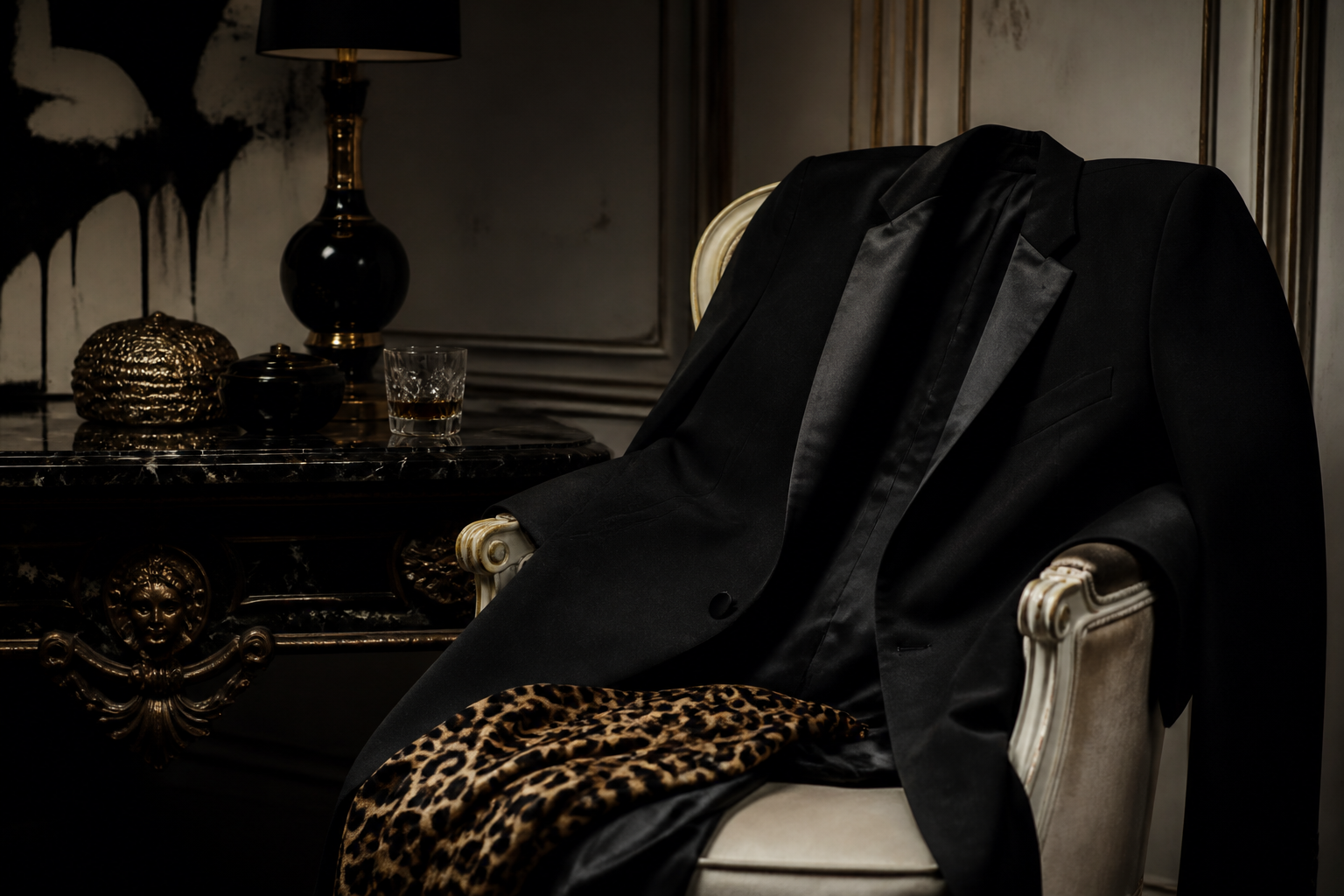
“Saint Laurent changed fashion through more than a single object. The house connected haute couture with the street, masculine construction with women’s freedom, painting with fabric and ready-to-wear with authored design; it later turned its own archive into a system that successive creative directors could reinterpret.”
Editorial thesis
Saint Laurent’s influence rests not on a list of “firsts,” but on the creation of a new relationship between haute couture and modern life. Yves Saint Laurent repeatedly translated menswear, uniforms, street types, painting, theatre, cinema and non-European visual sources into the women’s wardrobe. Pierre Bergé turned this practice into a resilient organisation and an independent ready-to-wear system. After 1999, the house continued as part of a major luxury group: its later history became a test of whether an authored legacy could outlive its author.
Reader question
How did the house founded by Yves Saint Laurent and Pierre Bergé in 1961 change womenswear, designer ready-to-wear and fashion’s visual culture, and then survive the founder’s departure, changes of ownership and a succession of radically different creative periods?
To present Saint Laurent as a system of clothing, images, business, archives and cultural institutions. The article distinguishes the history of Yves Saint Laurent haute couture from the active commercial house of Saint Laurent, does not repeat advertising claims of “being first” without qualification, and treats freedom, gender, cultural borrowing and sustainability as subjects for analysis rather than ready-made brand slogans.
The principal subject is the fashion house founded in 1961, including haute couture from 1961 to 2002, Saint Laurent Rive Gauche, contemporary ready-to-wear, leather goods, footwear, accessories and cultural projects.
Yves Saint Laurent’s biography before 1961 is considered only as essential context: Oran, his training in Paris, his work at Dior, his meeting with Pierre Bergé and his departure from Dior.
After the 2008 transaction, YSL Beauté is treated as a licensed business owned by L’Oréal, not as a fashion division managed by Saint Laurent.
Musée Yves Saint Laurent Paris, the Fondation Pierre Bergé – Yves Saint Laurent and Musée Yves Saint Laurent Marrakech are connected with preserving the legacy, but are not organisationally identical to the operating commercial house.
Claims that he “invented the women’s tuxedo,” “liberated women” or “created ready-to-wear” are replaced by more precise formulations: popularised, institutionalised, adapted, created an independent authored line or changed the professional model.
Cultural references to Africa, Morocco, Russia, Spain, India and China are considered in historical context and alongside contemporary questions about the power to interpret; aesthetic admiration does not preclude analysis of the colonial gaze.
Current financial and management data are fixed as of 5 August 2026 and are not applied to other periods.
Every image passes through a rights gate: source, author, date, rights holder, mode of use, caption, credit and alt text.
Short answer
The house of Yves Saint Laurent was founded in Paris in 1961 by Yves Saint Laurent and Pierre Bergé. It entered fashion history through the systematic transfer of masculine forms into the women’s wardrobe, a dialogue with art and cinema, and the launch of Saint Laurent Rive Gauche, an independent designer ready-to-wear line. After the group was sold and the founder retired in 2002, the brand was developed by Tom Ford, Stefano Pilati, Hedi Slimane and Anthony Vaccarello. Saint Laurent is now owned by Kering, led by CEO Cédric Charbit and continues to exert cultural influence through clothing, leather goods, Rive Droite, book spaces and its own film production. [1][7][21][25][27]
-
Before 1961: Oran, Dior and the formation of Saint Laurent’s language
-
1961: the founding of the house and the designer’s alliance with Pierre Bergé
-
1962: the first collection, the pea coat and the trench between couture and the street
-
Cassandre and YSL: the logo as a compact architecture of the name
-
1965: Mondrian—not a print of a painting, but painting translated into construction
-
1966: Le Smoking and the new social role of the women’s suit
-
Rive Gauche: designer ready-to-wear as an independent system
-
1967–1969: the trouser suit, safari, jumpsuit and transparency
-
Cinema, muses and the collective authorship of the Saint Laurent image
-
Africa, Morocco and the cultural geography of inspiration
-
1971: the Libération collection and fashion’s right to uncomfortable memory
-
1974–1977: avenue Marceau, Ballets Russes, China and Opium
-
The 1980s: museum recognition and the designer’s transformation into a cultural institution
-
1989–1999: the stock exchange, Sanofi and the sale to Gucci Group
-
1997–2002: Elbaz, Slimane, Tom Ford and the closure of haute couture
-
2004–2012: Stefano Pilati and the restoration of the commercial house
-
2012–2016: Hedi Slimane, the name Saint Laurent and the total direction of the image
-
Since 2016: Anthony Vaccarello and the discipline of a recognisable silhouette
-
Rive Droite, Babylone and Saint Laurent Productions
-
The archive, two museums and the separation of legacy from brand
-
Saint Laurent in 2026: governance, economics and categories
-
Critical questions: freedom, the body, cultural references and sustainability
-
Conclusion: the house as a technology of perpetual return
1. Before 1961: Oran, Dior and the formation of Saint Laurent’s language
Yves Henri Donat Mathieu-Saint-Laurent was born in 1936 in Oran, French Algeria. A childhood amid the Mediterranean, the family interior, theatre and magazines later became part of the designer’s personal mythology, but something else matters more historically: from an early age he understood clothing not as an isolated object but as a stage on which body, role, setting and character meet.
Saint Laurent began working for Christian Dior in 1955. After Dior’s death in 1957, the twenty-one-year-old designer took charge of the house and presented the Trapèze collection in January 1958. It retained couture mastery but relaxed the accentuated waist of the New Look and gave the body greater movement. The Dior period revealed his future method: Saint Laurent did not destroy a system in one gesture, but altered its internal proportions. [2][31]
In 1960, a collection inspired by beatnik culture, leather jackets and the street met resistance from the conservative couture establishment. After military service, illness and his dismissal from Dior, Saint Laurent began creating an independent house with Pierre Bergé. This prehistory explains why the new company was conceived from the outset not only as an atelier but as a defence of creative autonomy.
2. 1961: the founding of the house and the designer’s alliance with Pierre Bergé
The Yves Saint Laurent haute couture house opened at 30 bis rue Spontini in Paris on 4 December 1961. Yves Saint Laurent and Pierre Bergé were its founders and effective architects. Saint Laurent created the silhouettes; Bergé secured financing, negotiations, production discipline, legal protection and the company’s long-term structure. [1][2]
The history of the house is often told as the biography of a genius, but without Bergé it is incomplete. Their partnership created a model in which a fragile creative process was supported by a rigorous organisational structure. The house had to produce collections, serve clients, obtain licences and expand categories while remaining a space for authorial risk.
The name Yves Saint Laurent referred simultaneously to a person, a couture house and a commercial mark. This overlap later became a source of complexity: after the designer’s departure, the name continued as a brand while the archive of his personal work passed to a separate cultural institution.
3. 1962: the first collection, the pea coat and the trench between couture and the street
The house’s first collection was presented in the salons on rue Spontini on 29 January 1962. The museum archive records international attention surrounding the young couturier’s return. The opening look was a pea coat with white trousers—an object drawn from naval and masculine functional dress rather than the traditional vocabulary of evening couture. [3][4]
The same collection included a trench coat. The pea coat and trench matter not as Saint Laurent’s inventions but as early evidence of his method: a garment with an existing social biography enters a new wardrobe, is clarified, re-proportioned and given couture execution.
The house thus began shaping a modern core vocabulary: coat, jacket, trousers, blouse and dress were not only to produce a seasonal effect but to return in altered versions. Against the logic of continuous replacement, Saint Laurent developed style as a set of enduring instruments.
4. Cassandre and YSL: the logo as a compact architecture of the name
In 1961, the French graphic designer Adolphe Jean-Marie Mouron, known as Cassandre, created the interlocking YSL monogram. Its vertical composition binds the three letters so that they read both as initials and as a single calligraphic structure. The house’s official archive continues to use the sign as part of its visual legacy. [1][2]
The monogram reflects an essential Saint Laurent tension: geometric discipline joined to a sensual line. The letters do not simply sit beside one another but intersect, creating a sense of movement and control. The sign transfers readily to packaging, hardware, cosmetics, print advertising and store architecture.
After 2012, the ready-to-wear name changed to Saint Laurent, but YSL did not disappear. The monogram remained within the product and cultural system, while the full name continued in the museums, archive, beauty licence and legal contexts. The distinctions therefore matter: Yves Saint Laurent as the historical designer and haute couture house; Saint Laurent as the contemporary brand communication; and YSL as the enduring sign.
5. 1965: Mondrian—not a print of a painting, but painting translated into construction
In Autumn 1965, Saint Laurent presented a collection including dresses dedicated to Piet Mondrian. The best-known models were straight wool forms in which black lines and colour fields were constructed components rather than a surface print. The museum archive states that twenty-six of the collection’s 106 sketches referred to the artist’s work. [5]
The dress’s force lies in the fit between form and source. The flat plane of the shift dress turned the body into a moving support for an abstract composition, while seams, the weight of the fabric and the curve of the figure distinguished the result from a canvas. The Met considers the work an example of how the dress’s flatness became a field for blocks of colour. [29]
The Mondrian dress is often presented as proof of an alliance between fashion and art. It is more accurate to speak of translation between media: painting supplied a system of relations, while couture solved problems of cut, seam, fit and movement. The approach later extended to Matisse, Picasso, Van Gogh, Cocteau and other artists, though not every homage was equally direct or legally organised.
6. 1966: Le Smoking and the new social role of the women’s suit
Saint Laurent introduced Le Smoking, a women’s version of the evening tuxedo, in the Autumn/Winter 1966 haute couture collection. It used masculine codes—lapels, satin, white shirt, trousers and cummerbund—but adapted their proportions to the female body. Couture clients received the look cautiously; the museum notes that only one example of the first version sold, while the Rive Gauche version became commercially successful. [6]
Le Smoking was not the first instance of a woman wearing masculine evening clothes. Marlene Dietrich, garçonne culture and queer communities had used the suit and tuxedo long before 1966. Saint Laurent’s significance lay elsewhere: he brought the look into the institution of Paris couture and then made it a repeatable element of designer ready-to-wear. [32][33]
The tuxedo changed more than appearance. It offered women an alternative to the evening dress and a way to occupy space through the shoulder line, the verticality of trousers and controlled coverage. But the claim that “Saint Laurent liberated women” oversimplifies history: the designer created an influential instrument, while its social meaning emerged through the women who chose, wore and redefined the suit.
7. Rive Gauche: designer ready-to-wear as an independent system
The Saint Laurent Rive Gauche boutique opened on rue de Tournon on 26 September 1966. Musée Yves Saint Laurent describes Saint Laurent as the first couturier to open a separate ready-to-wear boutique under his own name. The central innovation was not the existence of ready-made clothes, but the attitude towards them: Rive Gauche was not a cheaper copy of couture, but had models, prototypes, graphics, music, interiors and a young audience of its own. [7]
Paris’s Left Bank signified a literary, student and avant-garde milieu. The name turned geography into a position: a fashion house could address not only the closed circle of couture clients but working women, young people and an international urban public. A New York boutique opened in 1968 and one in London in 1969; menswear appeared in the same period.
Rive Gauche helped establish designer ready-to-wear as a distinct sector between mass clothing and couture. The model changed fashion-house economics: an authored image could be reproduced more widely, quickly and across more categories without abandoning the symbolic capital of high fashion.
8. 1967–1969: the trouser suit, safari, jumpsuit and transparency
Saint Laurent presented the house’s first trouser suit in 1967. The safari jacket drew widespread attention in 1968, and a jumpsuit appeared in the collection. These garments derived from masculine business dress, military and colonial uniforms, aviation and labour. Saint Laurent did not conceal their origins, but altered their fit and context. [8][9]
The Met stresses that women had worn trousers before—for sport, at home, on stage or as a deliberate exception. What changed was the trouser suit’s emergence as an acceptable urban ensemble for the fashionable woman. The house’s contribution should therefore be described as an expansion of the ordinary wardrobe, not a sudden creation from nothing. [33]
At the same time, Saint Laurent worked with transparency and exposure. A sheer blouse could be paired with a severe jacket, making control and vulnerability part of a single composition. The house’s visual language formed through tensions: masculine structure and bare skin, practical object and erotic staging, uniform and individuality.
9. Cinema, muses and the collective authorship of the Saint Laurent image
Cinema was part of the house’s early practice, not a later marketing platform. In 1967, Saint Laurent created Catherine Deneuve’s wardrobe for Luis Buñuel’s Belle de Jour. The museum notes that the film’s popularity increased demand for the trench coats and shoes associated with her character. [10]
Betty Catroux, Loulou de La Falaise, Paloma Picasso, Catherine Deneuve, Zizi Jeanmaire and other women were more than passive mannequins. Their ways of wearing vintage, menswear, jewellery and evening clothes became a research environment for the house. Loulou de La Falaise later worked on accessories; Anne-Marie Muñoz was a key studio collaborator; and the atelier turned the sketch into a material object.
The cult of the individual author can obscure the collective nature of fashion design. Saint Laurent’s history should include not only the couturier and CEO but the studio, première d’atelier, models, photographers, artists, actresses and clients. The brand itself was created as a network of recurring relationships between clothes and the people who gave them public life.
10. Africa, Morocco and the cultural geography of inspiration
The Spring/Summer 1967 collection drew on African materials and forms: wooden beads, raffia, straw, gold thread and Bambara sculpture. The museum describes it as an attempt to recover craft techniques at a time of expanding industrial production. Contemporary analysis must also ask who names the object, who receives authorship, and how a European couture house turns a cultural form into its own capital. [9]
Saint Laurent and Bergé first visited Marrakesh in 1966. The designer returned regularly and connected the city with his understanding of colour. Morocco became a real place of living, work, collecting and garden patronage, but in fashion narrative it also became a resource for an exotic imagination. [11]
Cultural influence should not automatically be called either appropriation or dialogue. Specific questions are needed: was the source named; did bearers of the tradition participate; which materials and techniques were used; who received the economic and symbolic benefit; and how did the image relate to the colonial history of France and North Africa? This approach preserves aesthetic complexity without romanticising inequality.
11. 1971: the Libération collection and fashion’s right to uncomfortable memory
The Libération collection, also known as Quarante or the Scandal collection, was presented on 29 January 1971. Short dresses, platforms, heavy make-up, fur and emphatic shoulders referred to 1940s Paris fashion and Paloma Picasso’s flea-market clothes. The press attacked the collection because memories of the Occupation remained painful. [12]
Saint Laurent did not reconstruct wartime dress as documentation. He used an already secondary urban style in which scarcity, improvisation, sexuality and bad taste mingled with post-war nostalgia. The collection raised a question of temporal distance: when does recent trauma become available for quotation by fashion?
Its influence appeared not in immediate approval but in the spread of the retro silhouette. The episode shows that fashion history advances through more than beautiful innovations. A new norm can emerge from an image that, on arrival, seems morally suspect, too close to memory or aesthetically wrong.
12. 1974–1977: avenue Marceau, Ballets Russes, China and Opium
In 1974, the haute couture house moved into the hôtel particulier at 5 avenue Marceau. Saint Laurent worked there for almost thirty years; the building now houses Musée Yves Saint Laurent Paris. The physical space matters as a site of production, presentation and preservation, not merely as an attractive historical interior. [13]
In July 1976, the house presented a collection inspired by the Ballets Russes. Rich colours, fur, velvet, embroidery, peasant blouses and theatrical volumes revealed another side of Saint Laurent: decorative, historical and dramatic luxury existed alongside the black tuxedo. The official house history links the show to a new level of runway theatricality. [1][34]
In 1977, the Les Chinoises collection coincided with the launch of Opium fragrance. Its name, visual campaign and romanticised “East” were commercially powerful but demand critical reading: a narcotic, colonial trade and a generalised “Asian” aesthetic were transformed into a luxury fantasy. [14]
These collections demonstrate the house’s range: a modern wardrobe and historical spectacle did not exclude one another. Saint Laurent could exert influence through a minimal masculine suit and through maximal decoration, provided the silhouette remained legible.
13. The 1980s: museum recognition and the designer’s transformation into a cultural institution
In December 1983, The Metropolitan Museum of Art opened Yves Saint Laurent: 25 Years of Design. Later material from The Met describes it as the Costume Institute’s first monographic exhibition devoted to a living designer. The event strengthened the idea that contemporary fashion could be canonised by a museum during its author’s lifetime. [15][30]
Museum recognition did more than confirm Saint Laurent’s success. It changed the status of the fashion archive: collection, sketch, photograph and runway look came to be treated as cultural documents. The exhibition also helped establish a set of “icons”—Mondrian, Le Smoking, safari, Ballets Russes—that later began to govern the memory of the house.
In the 1980s, Saint Laurent continued to create artist homages and complex evening ensembles, but the system was already growing larger than a single creative season. Licences, fragrance, international retail and stock-market mechanisms turned the author’s name into a financial asset. This prepared the later conflict between personal legacy and corporate ownership.
14. 1989–1999: the stock exchange, Sanofi and the sale to Gucci Group
Groupe Yves Saint Laurent went public in 1989. In 1993, the company was sold to Elf-Sanofi. These steps showed that the house was no longer merely a couture atelier but a group encompassing ready-to-wear, fragrance, cosmetics, licences and international distribution. [2]
In 1999, Sanofi sold Yves Saint Laurent to Gucci Group, which belonged to Pinault-Printemps-Redoute, later renamed Kering. Yves Saint Laurent and Pierre Bergé retained control of haute couture, while ready-to-wear and beauty entered Gucci Group’s corporate system. [16]
The division created two temporal regimes within a single name. Couture continued to follow the founder’s rhythm and authority, while ready-to-wear was expected to grow quickly and compete in the global luxury market. Subsequent creative directors no longer worked inside the independent house of 1961, but within a structure in which a collection formed part of a larger portfolio strategy.
15. 1997–2002: Elbaz, Slimane, Tom Ford and the closure of haute couture
In 1997, Saint Laurent appointed Alber Elbaz to lead the women’s Rive Gauche line and Hedi Slimane the men’s. The official history presents the move as an attempt to prepare the house’s continuation after the founder’s departure. The period was brief: after Gucci Group’s acquisition, creative control of ready-to-wear passed to Tom Ford. [1]
Ford brought visual sexuality, rigorous commercial focus and the language of global advertising that he had already proved at Gucci. His Saint Laurent was not a literal continuation of couture; it used historical codes as material for the new luxury business of the early 2000s.
Yves Saint Laurent announced his retirement on 7 January 2002. A retrospective show took place at the Centre Pompidou on 22 January, and the haute couture division formally closed in October. The moment should not be described as the end of the house: the authored couture line ended, while the ready-to-wear brand continued within the group. [17][18]
The closure also created an institutional fork. The 1962–2002 archive became the basis of the Fondation Pierre Bergé – Yves Saint Laurent, while the commercial Saint Laurent had to produce new collections without access to the founder’s living authorial decisions.
16. 2004–2012: Stefano Pilati and the restoration of the commercial house
Stefano Pilati became creative director after Tom Ford’s departure in 2004. Kering later described his period as one of restoring and repositioning the French luxury house. Pilati worked with volume, severe tailoring, complex femininity and accessories, seeking to unite Saint Laurent’s archival intelligence with the market of the 2000s. [19]
His work illustrates the difficulty of a heritage brand. Too literal a quotation looks like museum reproduction; too distant a direction raises the question of why the name is being retained. Pilati chose an evolutionary model: recognisable jackets, blouses, colour and disciplined silhouettes existed without the constant reproduction of a few famous objects.
In 2008, PPR completed the sale of YSL Beauté to L’Oréal for €1.15 billion and retained the rights to the fashion brand. Beauty products thereafter continued to use the name and monogram through a licensing model, but their operating history separated from the fashion house. [20]
17. 2012–2016: Hedi Slimane, the name Saint Laurent and the total direction of the image
Hedi Slimane was appointed creative director in March 2012, with responsibility for all collections and the brand’s overall image. He returned to a house where he had led the men’s line until 2000. [21]
Slimane changed the ready-to-wear designation to Saint Laurent, citing the name and graphics of the 1966 Rive Gauche line. The full corporate name and YSL monogram did not disappear, but communication shifted towards a severe horizontal wordmark. The renaming caused controversy because it appeared to erase the founder’s given name, although historically it referred to his own ready-to-wear system. [1]
Slimane’s period was defined by a narrow rock silhouette, black leather, youth music, authored photography and total control of the image. He turned the campaign, casting, store, packaging and architecture into a single visual regime. Commercial growth demonstrated the power of that centralisation, while critics debated whether rock styling had displaced the complexity of historical Saint Laurent.
Creative operations moved to 24 rue de l’Université in 2015. The house also made couture pieces for private and stage projects, but this did not restore the public haute couture calendar of 1962–2002 or revive its former institutional model. [1]
18. Since 2016: Anthony Vaccarello and the discipline of a recognisable silhouette
Anthony Vaccarello was appointed creative director in April 2016. He retained the shortened Saint Laurent name and built his period around a long line, strong shoulder, exposed body, leather, transparency, high heel, black and monumental evening staging. [22]
Vaccarello does not attempt to reconstruct the archive collection by collection. He extracts enduring tensions from it: the masculine jacket against bare skin; discipline against danger; Parisian severity against theatre; a black ground against gold or saturated colour. Heritage thus operates as a grammar rather than a catalogue of quotations.
In 2017, operating teams moved into the headquarters at 37 rue de Bellechasse. The period’s visual culture makes extensive use of Paris architecture and desert landscapes, monumental sets and cinematic light. The show becomes a temporary brand space distributed through photography and video far beyond its physical audience.
The length of Vaccarello’s tenure matters in itself: by 2026 he has led the house for ten years. This has allowed him to form not a series of relaunches but an enduring contemporary identity in which historical codes remain legible even without a literal YSL monogram.
19. Rive Droite, Babylone and Saint Laurent Productions
In 2019, Saint Laurent opened Rive Droite, a cultural-commercial space whose name reverses the historical Rive Gauche formula. The Paris site occupied the former colette premises and reopened after renovation in February 2025. Clothing sits beside books, music, product design, exhibitions and limited projects. [23]
Saint Laurent Productions was created in 2023. The house describes it as the first fully fledged film-production company within a fashion house. Its filmography includes works by Pedro Almodóvar, Jean-Luc Godard, Jacques Audiard, David Cronenberg, Paolo Sorrentino, Jim Jarmusch and other directors. Saint Laurent’s role varies by project, so the specific credit must be checked in each film’s titles. [24]
Film continues Saint Laurent’s historical connection with Catherine Deneuve and stage costume, but the contemporary model changes the level of participation: the brand does not merely dress a character or finance an advertising short, but participates in producing feature films.
A major flagship opened on the Champs-Élysées in 2023, followed in 2024 by Saint Laurent Babylone, a book and cultural space on rue de Grenelle. These initiatives turn retail into an infrastructure of cultural selection: the brand sells not only objects but its own system of taste. [1]
20. The archive, two museums and the separation of legacy from brand
The Fondation Pierre Bergé – Yves Saint Laurent was created after the closure of haute couture to preserve the work of 1962–2002. Musée Yves Saint Laurent Paris reports a collection of approximately 34,000 objects: clothing, accessories, sketches, photographs, documents and personal effects. The foundation previously described the core as around 5,000 couture pieces and 15,000 accessories. [26]
Museums opened in Paris and Marrakesh in October 2017. The Paris museum occupies the historical house on avenue Marceau; the Marrakesh complex, designed by Studio KO, includes permanent and temporary galleries, an auditorium and a research library. [28]
These institutions preserve the legacy of Yves Saint Laurent, but they are not Kering’s archive department. The commercial house can draw on history, while the museum’s mission encompasses conservation, scholarly documentation and public access. The distinction is important for trust: a brand heritage page and a museum catalogue answer different questions.
The archive also creates a problem of canon. The more frequently Le Smoking, Mondrian and safari are published, the more they displace lesser-known collections, collaborators’ work, everyday clothing and ambiguous objects. VANSMITHLAB’s task is to use the icons as an entry point, not as the whole story.
21. Saint Laurent in 2026: governance, economics and categories
Cédric Charbit has been CEO of Saint Laurent since 2 January 2025. Anthony Vaccarello remains creative director. The house belongs to Kering and operates in women’s and men’s ready-to-wear, bags, small leather goods, footwear, jewellery, eyewear and accessories. Beauty and fragrance are managed by L’Oréal under a separate model. [25][27]
According to Kering, Yves Saint Laurent generated €2.6 billion in revenue in 2025, down 8 per cent as reported and 6 per cent on a comparable basis. Recurring operating income was €529 million and the operating margin remained at 20 per cent. These figures describe one reporting period and do not assess artistic quality. [27]
The contemporary house combines proprietary retail and selective wholesale, international production, an accessories business and costly cultural communication. Its resilience depends not only on the runway but on the quality of leather goods, footwear, client service, stores and logistics, and on its capacity to preserve the value of a recognisable code between seasons.
Its current scale makes Saint Laurent both a cultural author and a large commercial organisation. An encyclopaedic assessment must therefore hold two levels together: the collection as a statement and the company as a system of labour, materials, finance, rights and global distribution.
22. Critical questions: freedom, the body, cultural references and sustainability
The history of Saint Laurent is often told through the language of liberation: trousers, the tuxedo and the sheer blouse gave women new roles. There is a basis for the claim, but it should not become a universal truth. Clothing offers a possibility; it does not guarantee freedom. The commercial image of a slim, young and sexualised body also creates new norms of exclusion.
Saint Laurent’s culturally themed collections broadened the European fashion vocabulary and supported craft techniques, but often turned vast regions and societies into aesthetic themes: “Africa,” “Russia,” “China,” “India.” Contemporary publishing should identify specific sources and acknowledge the colonial context rather than erasing historical complexity beneath the general word “inspiration.”
The contemporary Saint Laurent publishes commitments on traceability, certified materials, circularity and skills development through the Saint Laurent Couture Institute. The company reports recycling leather remnants and using metal-free tanning in selected products. These are corporate claims whose scale, methodology and share of total volume require verification. [35]
A luxury house does not become sustainable merely because an object is expensive and durable. Its impact encompasses animal materials, cotton, wool, chemical processes, energy, international logistics, packaging, stores and the continual production of novelty. Sound analysis evaluates specific metrics, not the brand’s aesthetic restraint.
The central question of legacy remains open: can a house founded on a personal name retain critical energy after becoming a corporation? Saint Laurent shows that it can—but only if new leadership uses the archive as an instrument of choice rather than a set of guaranteed-selling symbols.
23. Conclusion: the house as a technology of perpetual return
Saint Laurent changed fashion through repeatable transformations. The pea coat became couture; the tuxedo became a women’s evening alternative; ready-to-wear became an independent authored project; painting became dress construction; and film became a fashion house’s production activity. In each case, an existing cultural form entered another system and changed meaning.
Yves Saint Laurent’s legacy is not a mandate to reproduce 1966 indefinitely. His method lay in closely observing what already existed outside couture: the masculine suit, the street, music, uniform, painting, cinema, vintage and a woman’s personal style. Contemporary Saint Laurent therefore remains convincing when it continues this way of seeing, not when it merely quotes the result.
The following blocks are intended for transferring the material into the knowledge database, editorial review, media production and publication control. They do not all form part of the main reader-facing text.