research
New Bauhaus Chicago — How the Bauhaus Moved to America and Changed
Chicago, from 1937: Moholy-Nagy brought to the United States not a German style but a habit of experimenting with technology, photography and systems.
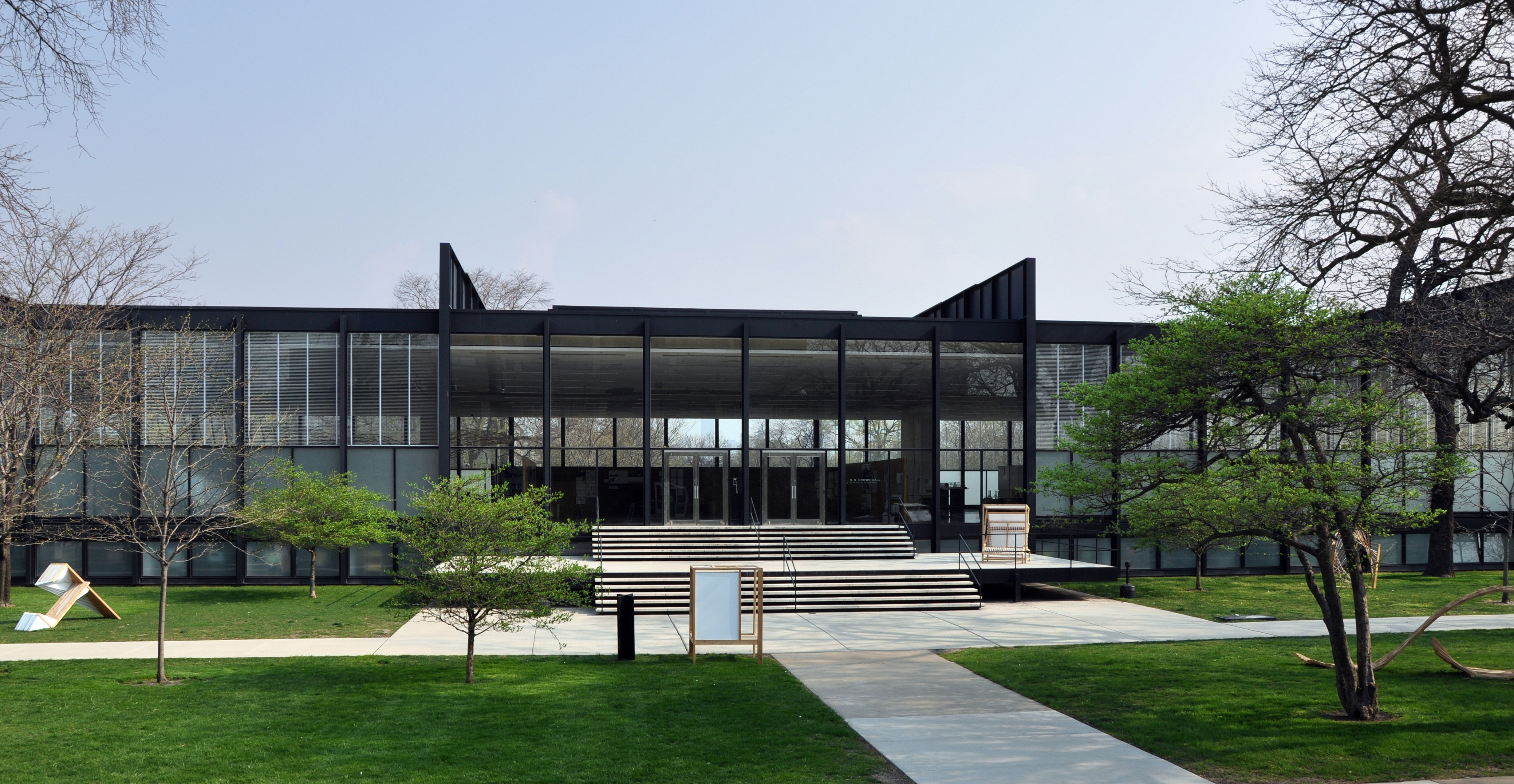
The migration of ideas rarely looks like copying a folder. In Chicago the Bauhaus entered a different industry, market and university culture — and therefore had to become something else.
Editorial thesis
The New Bauhaus shows that method is stronger than stylistic inheritance: Moholy-Nagy retained experimentation, interdisciplinarity and social responsibility, while the school gradually moved from artistic laboratory toward systems and human-centered design. 1
Reader question
What remained of the Bauhaus when its ideas landed in Chicago amid American industry and new technologies? 1
Short answer
László Moholy-Nagy founded The New Bauhaus in Chicago in 1937. Financial problems quickly closed the first version, but it continued as the School of Design, then the Institute of Design, and eventually joined Illinois Institute of Technology. Photography, experimental materials, industrial design and later systems thinking turned the Chicago school into the most direct North American descendant of the Bauhaus — but not its copy. 1
1. 1937: Bauhaus arrives in a city of factories and advertising
Moholy-Nagy did not come to rebuild Dessau in miniature. Chicago demanded engagement with American industry, commerce, photography and mass communication. That is why “New” mattered more than “Bauhaus”: the school had to prove the method could live in another reality. 2
2. Moholy-Nagy: see technology before it becomes ordinary
For Moholy-Nagy, photography, film, light, transparency and new materials were not special effects but tools for a new vision. Students were expected to experiment with what industry was only beginning to master. The principle feels strikingly current: designers should not wait for a technology to mature but investigate its cultural consequences early. 3
3. Photography becomes a laboratory, not documentation
The Chicago school quickly became an important centre for experimental photography. Unusual viewpoints, photograms, high contrast, montage and the study of light extended Moholy-Nagy’s approach. Later Harry Callahan and Aaron Siskind made the photography programme even more influential by connecting formal experiment to personal observation. 4
VANSMITHLAB interpretation: the school’s strength lies not in copying its outward language but in how learning is structured and observation is turned into decisions.
4. The school closes — and almost immediately refuses to die
The first New Bauhaus ran into funding problems and closed, but Moholy-Nagy continued the project under a new name. That administrative instability paradoxically reveals the strength of the idea: the institution changed shells faster than the method changed. The Institute of Design eventually joined Illinois Tech. [source]
5. Buckminster Fuller and the geodesic dome: the course as prototype of the future
During the 1948–1949 academic year Buckminster Fuller taught at ID and guided a student project on the geodesic dome. It is a perfect example of Chicago pedagogy: rather than analyse finished design history, work with a structure still in the process of being invented. [source]
6. The 1950s: from laboratory to function and system
Under director Jay Doblin the focus shifted toward functionalism, social science and systems. Computers and analytical methods gradually entered design. If Moholy-Nagy asked what technology could do to perception, the next generation increasingly asked how to organise complex systems around human needs. [source]
7. Why the American descendant does not look “Bauhaus-like”
That is precisely the success. Genuine inheritance of method does not require visual resemblance. ID moved from photograms and material studies to products, systems design, services and human-centered design. If a school looks exactly the same eighty years after its founding, perhaps it inherited the form but lost the research impulse. [source]
VANSMITHLAB interpretation: the school’s strength lies not in copying its outward language but in how learning is structured and observation is turned into decisions.
8. People and the chain of influence
Moholy-Nagy, Callahan, Siskind, Fuller, Arthur Siegel and later generations made ID a node from which methods spread through American photography and design schools. Its influence is better measured not by a single famous chair but by the number of educational lineages that continue from it. [source]
9. Human-centered design as a distant Bauhaus descendant
Today the Institute of Design works with healthcare, energy, food and digital systems. From the outside it barely resembles Weimar in 1919. Yet the internal logic is familiar: design is treated not as an isolated object but as a way to organise relationships between technology, people and environment. [source]
10. Chicago’s lesson: inherit the question, not the answer
The best thing a designer can take from the New Bauhaus is permission to change the school along with the material of its time. For Moholy-Nagy those materials were light, photography and industry. Today they include data, artificial intelligence and complex services. Legacy works only when it becomes an experiment again. [source]