research
Visionaire — Limited Edition Publishing and the Magazine as Object
The magazine as object: limited edition, material, packaging, collecting, fashion and art.
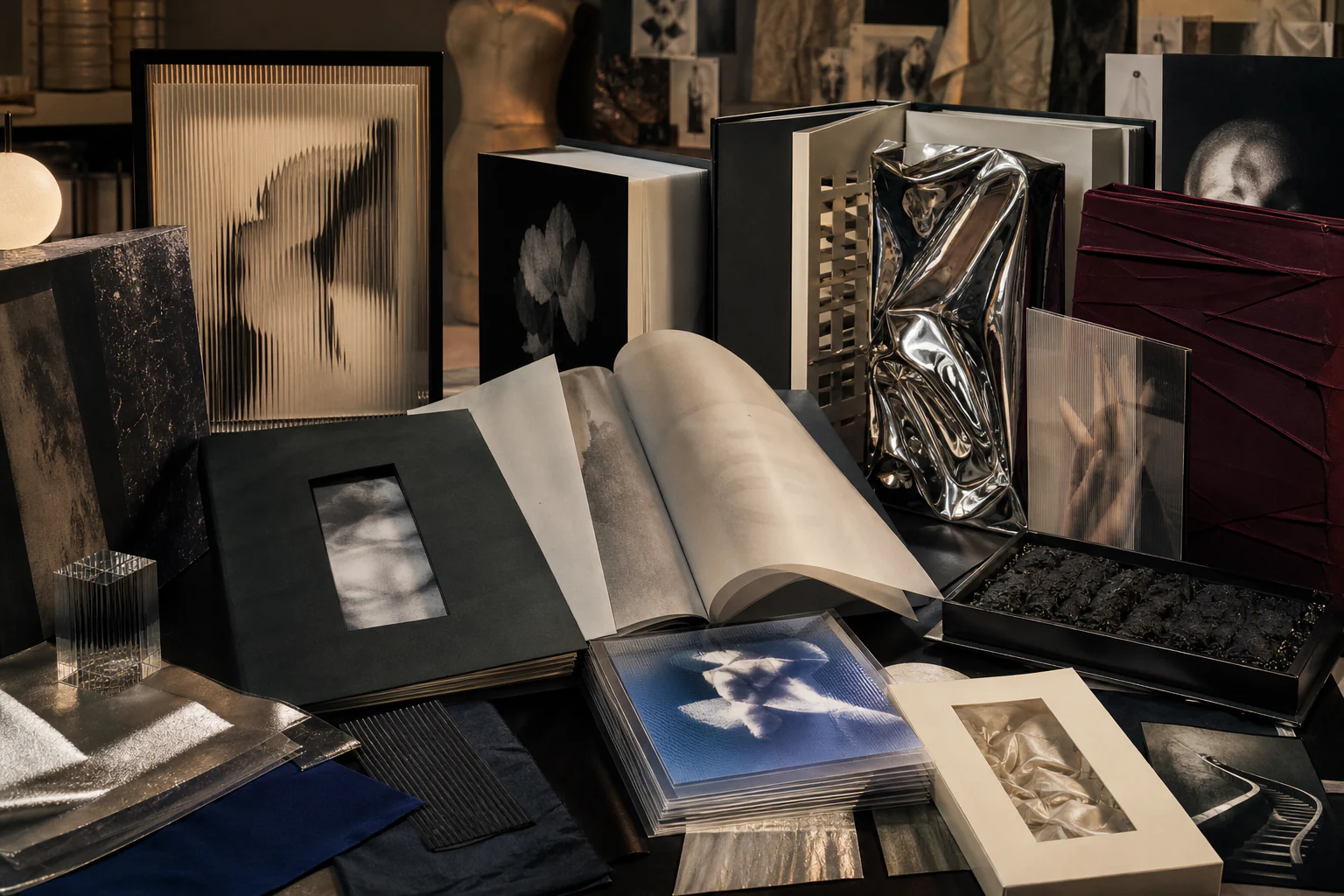
The magazine as object: limited edition, material, packaging, collecting, fashion and art.
Visionaire matters to VANSMITHLAB as a node where the magazine stops being only a media channel and becomes object, collection, exhibition, packaging and experience. Its history shows that an image does not exist only on the page: material, scale, rarity and mode of opening also create meaning.
How can a magazine become an art object without losing its connection to fashion, photography and editorial culture?
Visionaire turns an issue into an event. Each release reinvents its physical form: portfolio, box, altered novel, pop-up paper structure, giant sheet or technological object. It is a model for how the medium itself becomes an author.
01. New York, 1991: a magazine that refuses to be ordinary
Visionaire appears in the early 1990s as a publication that does not accept the magazine as a fixed form. For Visionaire, an issue is not a container for pages but an object, an event and a collectible situation. Its history is best read not through publishing regularity, but through a question: what can a medium for fashion and art become if it starts again each time?
02. Three founders: Stephen Gan, Cecilia Dean, James Kaliardos
The core of Visionaire is connected to Stephen Gan, Cecilia Dean and James Kaliardos. Their roles crossed photography, fashion, make-up, modelling, art direction and publishing imagination. Visionaire did not emerge from a conventional magazine hierarchy but from a small New York scene in which author, editor, producer and collector could almost be the same figure.
03. Limited edition as editorial position
Limited edition in Visionaire is not merely scarcity as marketing. It is part of the editorial language. When an issue cannot be reproduced endlessly, the reader is no longer only a mass consumer; the reader becomes the keeper of a copy. This changes the economy, tactility and responsibility of the publication.
04. The first issue: paper remnants, portfolio, hand assembly
Visionaire 1: Innocent: Spring was assembled as a portfolio of loose sheets printed on different papers. RISD describes paper remnants, vellum, kraft paper, photographs, drawings and the first fashion report by Bill Cunningham. The core method is already present: production is not hidden; it becomes meaning.
05. Theme as issue structure
Every issue of Visionaire is built around a theme. But the theme is not simply a department heading. It determines material, packaging, scale, reading order and mode of participation. A love issue can become an altered novel; a surprise issue can become a paper-engineered object; a scale issue can become a giant magazine.
06. Text nearly disappears; the object begins to speak
Visionaire often operates with very little conventional magazine prose. This is not a loss of meaning but a relocation of meaning into materials, sequence, hand-inserted elements, cover, format and the bodily action of the reader. The publication speaks through how it is held, opened, removed from its case and reassembled.
07. Paper, leather, metal, plastic: material instead of the standard page
In a conventional magazine, material is meant to be almost invisible. In Visionaire, material becomes a protagonist. Paper, leather, metal, plastic, vellum, foil, mirror, lenticular printing and pop-up construction are not decoration; they are modes of perception. This places Visionaire between graphic design, object design and publishing art.
08. Artists and photographers as equal authors
Visionaire invited artists, photographers, designers, fashion designers, filmmakers and musicians not as illustrators of someone else’s idea but as co-authors of the issue. The editorial task was to create a frame in which different authorship could coexist without being flattened into a uniform style.
09. Fashion as an open artistic scene
In Visionaire, fashion is not limited to clothing, runway seasons or advertising imagery. It becomes a way to connect body, object, photography, art, brand, packaging and collecting. That is why Visionaire matters to VANSMITHLAB: it shows fashion as an interdisciplinary medium, not a single industry.
10. Visionaire 18: Fashion Special Louis Vuitton
Visionaire 18: Fashion Special Louis Vuitton is one of the key moments in the series. RISD describes it as the first full Fashion Special, made for the centenary of the Louis Vuitton Monogram and housed in a specially designed leather portfolio. The point is not only the contributor list; the packaging itself becomes the event.
11. Packaging as a collecting event
Visionaire proved that packaging could be more than a protective shell. It could be part of editorial dramaturgy. A case, box, portfolio, insert or folding construction creates expectation before any image is seen. The reader buys not just content but a ritual of opening.
12. Luxury and experiment: working with brands
Visionaire often worked with brands, but did not reduce the brand to a conventional advertiser. Its best collaborations used brand resources as production possibilities: a case, complex printing, larger scale, invited contributors or objects that could not have been made through a normal magazine budget.
13. Visionaire 38: Love Tiffany & Co
Visionaire 38: Love Tiffany & Co shows another kind of editorial object. Old novels were altered by hand through inserted artworks and tokens of love, making each copy effectively unique. The magazine moves from the logic of edition to the logic of variable collection.
14. Lenticulars, pop-ups and special printing effects
Visionaire repeatedly used production techniques that mass printing often considered too expensive, too complicated or too toy-like. Lenticular cards, pop-up paper structures and complex inserts turned printing into a laboratory of motion, depth and surprise.
15. Visionaire 55: Surprise
Visionaire 55: Surprise reimagined the children’s pop-up book through work by Yayoi Kusama, Andreas Gursky, Cai Guo-Qiang, Sophie Calle, Steven Klein and others. Here surprise was not just a theme on the cover; it became the mechanics of viewing, with the page turning into a spatial stage.
16. Visionaire 61: Larger Than Life
Visionaire 61: Larger Than Life pushed the idea of scale to an extreme. RISD describes it as an issue claiming the Guinness-certified title of the biggest magazine of all time. Its giant format turned reading into something close to an exhibition act, while Lady Gaga’s covers became part of a large-scale visual event.
17. Scale as a critique of the magazine
When a magazine becomes physically larger than the reader, it stops being a private object. Visionaire shows that scale itself can critique the medium: the familiar page no longer fits in the hand and demands another space, another body and another duration.
18. The editorial team as production laboratory
Visionaire functioned less like a page-based editorial office and more like a production laboratory. It had to invent themes, recruit contributors, work with sponsors, design objects, solve technical limits, organize assembly and preserve artistic freedom. In this respect the magazine approaches exhibition production.
19. Edition, rarity and price
Rarity became part of Visionaire’s cultural effect. Limited edition size, complex production and rapid disappearance from the market created a collectible aura. But the crucial question remains: does rarity intensify the perception of the object, or does it sometimes overshadow content?
20. Between magazine, artist’s book and art object
Visionaire is hard to describe in one word. It is a magazine because it has issues, themes, editors and periodicity. It is an artist’s book because physical form carries meaning. It is an art object because copies are stored, displayed and resold as things. Its power lies in this in-between position.
21. How Visionaire changes the role of the reader
The reader of Visionaire does more than browse. The reader opens a box, removes sheets, turns an object, compares materials and may even hesitate to touch a fragile component. A special slowness emerges: the magazine demands handling, not scrolling.
22. From page to installation
Over time Visionaire moved beyond the printed issue. Its own history describes a shift from limited edition publishing into immersive, interactive and public projects. This is a logical development: if the issue was always an object and an event, the next step is space and experience.
23. Film, performance and moving image
Visionaire has also worked with film and performative formats. The move to the screen does not cancel the project’s publishing DNA: the screen becomes another medium that can be authored, limited, bodily or event-based.
24. The contemporary phase: experiential agency
Today Visionaire describes itself as a project rooted in limited edition publishing and expanded into public art, film, immersive and interactive experiences, branded content and art multiples. This shows that a magazine can become a methodology for producing culture.
25. Why Visionaire matters for fashion
For fashion, Visionaire matters because it refuses to reduce fashion to seasonal clothing. It shows fashion as a field of authored images, rare objects, scenography, embodiment, brand and memory. In this sense Visionaire is closer to a cabinet of curiosities than to a conventional fashion magazine.
26. Why Visionaire matters for graphic design
For graphic design, Visionaire matters as a demonstration that layout can move beyond flatness. Grid, sequence and typography give part of their authority to material, packaging and the mechanics of opening. This is not the cancellation of design but an expansion of its territory.
27. Why Visionaire matters for object design
For object design, every Visionaire issue can be read as a product: it has form, shell, material, usage scenario, fragility and storage logic. The publication becomes a thing, and the thing becomes a carrier of editorial meaning.
28. Risk: when collectibility overshadows content
Visionaire has an obvious risk: the rarer, more expensive and more spectacular the object, the easier it is to forget content. The strongest issues avoid that trap. They do not merely show off costly printing or packaging; they use physical form to make the theme felt.
29. Relevance in a digital era
In a digital era, Visionaire feels unexpectedly current. As many media systems chase speed, it suggests another path: a slow object, a limited edition, a strong gesture and a clear reason to exist. This matters especially against the backdrop of infinitely reproducible images.
30. Legacy: the medium is also an author
Visionaire’s central legacy is the idea that the medium is not neutral. Format, material, scale, edition size, opening mechanism and packaging also act as authors. A magazine can be more than a page with images; it can be an object that forms the gaze.