encyclopedia
Minimalism
Reduction, space and the discipline of form
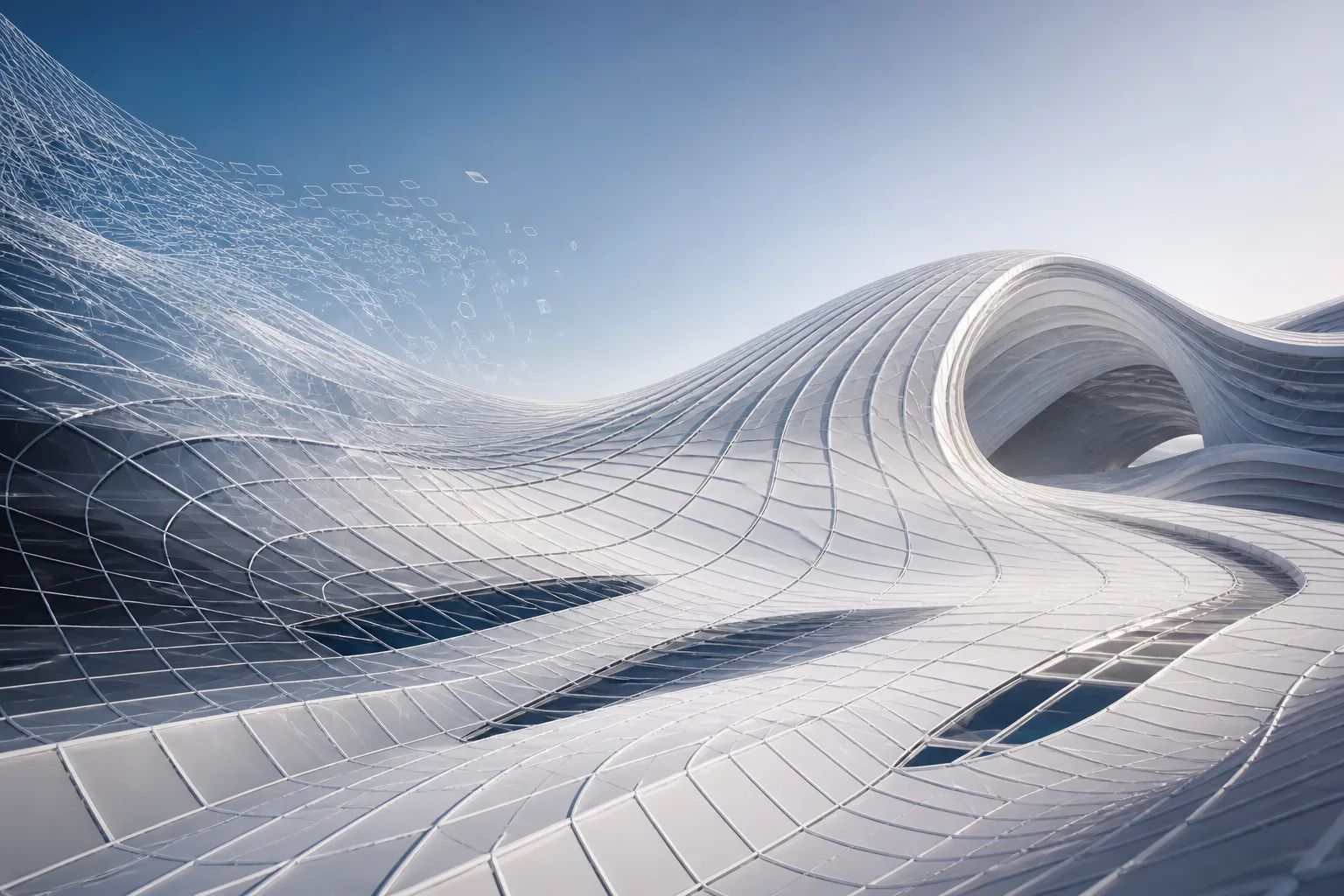
Minimalism does not reduce the world to emptiness. It leaves only what must withstand light, silence, scale and the gaze.
Editorial thesis
Minimalism is often mistaken for emptiness: a white wall, a single object, a smooth surface and the absence of decoration. Real minimalism is not visual poverty. It is a discipline of choice: what to keep, what to remove and where the silence of form begins to speak more powerfully than ornament.
Its visual language is built from repetition, scale, seriality, material, light, distance and the bodily presence of the viewer. A Minimalist object does not tell the story for you. It places form in space so precisely that space itself becomes part of the work. 1
Reader question
Why does one empty interior feel expensive and resolved, while another looks unfinished? Why can a simple cube in a museum become art, while a white box in an interior remains merely dull?
The answer lies in the difference between reduction and simplification. Minimalism removes the unnecessary not to become poor, but to intensify proportion, material, light, pause and the behaviour of a person near the object. 2
Short answer
Minimalism took shape in the 1960s, especially in American art, as a response to the emotional gesture of Abstract Expressionism and the imagery of Pop Art. Artists such as Donald Judd, Dan Flavin, Carl Andre, Robert Morris and Sol LeWitt worked with simple geometric forms, industrial materials, series, repetition and real space. 12
Its logic later moved into architecture, interiors, graphic design, fashion, object design and photography. Its force remains the same: not less for the sake of less, but precision in order to make perception stronger.
1. Minimalism: not emptiness but precision
Minimalism does not begin when a surface has nothing on it. It begins when every remaining decision can hold attention: size, interval, edge, distance from the wall, temperature of light and weight of material.
Weak minimalism merely removes signs. Strong minimalism leaves tension. It reveals what a noisier style hides behind decoration: proportion, assembly, shadow, the sound of a step and the resistance of a surface. 4
2. The 1960s: a response to gesture and image
In the 1960s Minimalism emerged against the exhausted heroism of Abstract Expressionism and the rapid growth of Pop Art. Some artists worked with personal gesture; others with advertising and commodity images. Minimalists chose a third route: an object without psychological confession and without mass-media picture. 1
This was not a refusal of meaning but a refusal of unnecessary mediation. A cube, slab, module, fluorescent tube or serial structure became not a symbol but a real thing in real space.
3. Object instead of composition
Donald Judd used the term specific objects to move beyond the old division between painting and sculpture. A Minimalist object does not necessarily stand on a pedestal and does not need to depict something else. It occupies a place, has size and makes the viewer move. 4
The situation matters as much as the form. The work changes as you approach it, walk around it, notice a joint, reflection or gap. Minimalism shifts art from the image plane into the zone of physical presence.
4. Seriality and repetition
Repetition in Minimalism is not background. It is a way of thinking. One module establishes a unit, the second turns it into rhythm, the tenth into a system. MoMA treats serial forms and repetition as a key mechanism of Minimalist art. 2
Repetition removes the romantic uniqueness of the gesture, but it does not eliminate difference. It makes small changes visible: light falls differently, distance changes weight, an edge begins to act as an event.
5. Industrial materials
Steel, aluminium, Plexiglas, plywood, fluorescent tubes, brick and factory paint gave Minimalism its cool precision. Material stopped being a carrier of the artist's hand and became part of a production logic.
Industrial does not mean lifeless. A polished edge catches the room, aluminium shifts colour near a window, plastic gathers internal light. The fewer the gestures, the louder the surface speaks. 8
6. Donald Judd: box, module and space
Judd turned the box into an instrument of spatial clarity rather than an empty form. His objects often appear as sequences of repeated units: not only material but also air works between them. 4
Edges, inner planes, colour, reflection and interval matter. Judd shows that Minimalism does not have to be colourless. It can be strict and sensual at once, because surface responds to light almost architecturally.
7. Dan Flavin: light as ready-made material
Dan Flavin used fluorescent tubes as industrial, almost ordinary objects. In space the lamp stops being only a thing: light colours the wall, corner, viewer's body and surrounding air. 6
With Flavin Minimalism moves beyond solid form. The work does not end at the tube. It continues in glow, reflection, shadow and the colour temperature of the room.
8. Carl Andre: floor as sculpture
Carl Andre radically changed the position of sculpture. His works often lie on the floor rather than rising as monuments. The viewer does not look at an object from a distance but encounters it as a portion of space. 7
This sculpture is closer to route than pedestal. It makes step, weight, sound and boundary part of perception. Minimalism here literally lowers art underfoot without reducing its significance.
9. Robert Morris: the viewer’s body
Robert Morris emphasized that a simple form changes according to the viewer's position. A large geometric object is not understood at once: it must be walked around, felt by the body and seen in relation to wall and floor. 8
Minimalism becomes not only visual but kinesthetic. It works with how a person stands, walks, bends, loses orientation or suddenly understands that empty space also exerts pressure.
10. Sol LeWitt: idea, system and instruction
Sol LeWitt connects Minimalism with Conceptual Art. In his practice the object matters, but so do system, instruction, sequence and the logic of construction. 5
Reduction becomes an intellectual discipline. The form may be simple, but a clear algorithm stands behind it. The viewer sees not only the result but the possibility of reconstructing the rule mentally.
11. Agnes Martin: the silence of the grid
Agnes Martin is often placed near Minimalism, although her work is softer and slower than its canonical industrial line. Her grid does not resemble a factory drawing. It is closer to breath, horizon and the barely visible deviation of the hand. 9
This matters for VANSMITHLAB: Minimalism is not always metallic and cold. At times it becomes an almost invisible system of attention, where line holds not structure but a state.
12. The white cube and its power
Minimalism intensified the role of the white exhibition space. White wall, level floor and controlled light are no longer neutral. They become part of the work while pretending to be background.
The white cube gives the object silence, but it also imposes a social code: purity, distance, control and museum authority. Minimalism should therefore be read institutionally as well as aesthetically. 1
13. Architectural reduction
In architecture Minimalism works through clear geometry, concealed joints, continuous planes, light slots and precise handling of void. But architectural minimalism is more complex than an art object: a building must withstand rain, people, services and budget.
The simpler a space appears, the more discipline hides in its details. A white wall demands perfect junctions, and an invisible baseboard requires very visible construction responsibility. 2
14. Tadao Ando: concrete, light and silence
Tadao Ando shows how Minimalist architecture can be emotional without decoration. Smooth concrete, water, shadow and a sharp beam of light work as slow instruments of perception. The Pritzker Prize emphasizes his ability to join geometry, material and a spiritual dimension of space. 10
In Ando, emptiness is not cold. It is composed like a pause before sound. Concrete does not disappear; it holds silence. Each formwork line and corner makes light more precise.
15. John Pawson: interior as control of breathing
John Pawson turned reduction into an interior discipline. His spaces often appear simple only in photographs. In reality they depend on wall thickness, depth of opening, floor transition, concealed storage and the way light travels across an empty plane. 11
Such an interior cannot be built with white paint alone. It needs a script for living: where things go, how a door closes, where shadow appears, what a person sees first in the morning and what remains in the room at night.
16. Japanese quietness and Western Minimalism
Minimalism is often linked to Japanese aesthetics, but this requires care. Ma, void, tatami, shoji and tea architecture matter for understanding space, yet Western Minimalism of the 1960s has its own industrial and institutional context.
Collapsing everything into one formula is risky. It is better to speak of resonances: respect for pause, precision of edge, importance of shadow and a small number of elements. Source, method and cultural meaning may still differ. 5
17. Graphic design: grid, pause and typography
In graphic design Minimalism appears through grid, open field, limited palette, strict hierarchy and honest typography. Empty space is not leftover layout; it is an active zone of breathing.
A strong Minimalist poster does not shout. It holds the eye through proportion, contrast and placement. One line can speak louder than ten decorative effects. 6
18. Fashion: clean line and the body
In fashion Minimalism is not simply a plain dress. It appears in cut, fit, fabric, absence of unnecessary hardware and the way clothing moves on the body. Jil Sander and Calvin Klein became key references for clean, disciplined luxury. 1314
Minimalist clothing demands expensive precision. When print and decoration disappear, shoulder, seam, fabric density, lining, neckline and the behaviour of colour in motion remain.
19. Object design and MUJI
In object design Minimalism is often confused with anonymity. But a strong simple object does not need to be characterless. It should be clear in use, honest in material and calm enough to live beside other things.
MUJI became a mass example of this logic: not the absence of design, but design that deliberately lowers brand noise and emphasizes function, packaging, storage and everyday clarity. 12
20. Photography: emptiness as framing
Minimalist photography is built not on having few objects, but on a strict relationship between object, background and frame edge. Empty field becomes powerful only when it is measured precisely.
This matters especially in fashion and product photography. A single bag on a white background can look premium or lost. Scale, shadow, texture, camera height and whether the object has room to breathe decide everything. 9
21. Colour: not only white
Minimalism does not have to be white, grey or black. Colour may be rare but strong: one red module, a warm wooden plane, green glass, cold aluminium or milky plastic.
A limited palette does not mean absence of emotion. On the contrary, when there are few colours, each receives weight. One wrong hue becomes more visible than it would be in a dense decorative system. 10
22. Material as protagonist
Minimalism gives material the leading role. Concrete should not imitate stone, timber should not imitate luxury, glass should not pretend to be emptiness and metal should not signify only technology. Material speaks through weight, sound, reflection, temperature and ageing.
This is why Minimalism handles cheap imitation poorly. When one surface stands alone and there is no decorative distraction, the fake becomes too loud. 11
23. Detail and hidden complexity
The fewer the elements, the more important the detail. A concealed door, shadow joint, clean edge, recessed light, invisible fixing and exact material junction require a high design culture.
Minimalism often looks economical, but it is rarely cheap. It shifts cost from decoration to precision: drawing, sample, mock-up, installation and control of surface. 12
24. The risk of sterility
The main danger of Minimalism is sterility. When reduction becomes only a visual style, space loses life. White walls, identical objects and absence of traces can look like a showroom without a person.
Functional Minimalism allows time: patina, a book on a table, a fold in fabric, warm light, an imperfect shadow. Life does not destroy Minimalism if the system is strong enough. 13
25. Luxury and Minimalism
In luxury contexts Minimalism often works as a sign of control. The less visible luxury is displayed, the more attention shifts to surface quality, fit, proportion, service and quiet confidence.
The boundary is delicate. Restraint can look intelligent, or it can become expensive silence. The difference lies in whether the form contains real material and conceptual density. 14
26. Minimalism in retail
In retail Minimalism manages attention. Empty space around a product raises its status, but it also demands precise light, clear navigation and good acoustics. An empty store can become a brand temple or an uncomfortable sales gallery.
A Minimalist showcase works when a single object can truly withstand solitude. If the product is weak, reduction will not save it. It will simply reveal the problem more honestly. 1
27. Digital minimalism and interfaces
In interfaces Minimalism promises clarity, but it can easily become invisible buttons, weak hierarchy and sterile screens. Good digital minimalism does not remove orientation. It removes noise around action.
White field, large typography and one accent colour work only when the user understands what to do next. In interface design, emptiness should support action rather than create a puzzle. 2
28. Post-Minimalism and the expansion of language
Post-Minimalism showed that reduction does not have to remain hard, industrial and geometric. Soft materials, process, gravity, body and instability expanded the discipline of Minimalism.
For a contemporary author this is an important lesson. One can use Minimalist clarity without copying the cold cube. Reduction can be textile, bodily, fragile, warm and temporary.
29. How not to confuse Minimalism with poverty of idea
Minimalism does not mean: few objects, white background, expensive chair and absence of decoration. That is only the external vocabulary. The essence is that every decision must be necessary and tied to the whole system.
If removing an element changes nothing, it was unnecessary. If adding an element destroys everything, the system was precise. This is a simple test of Minimalist thinking.
30. How designers, photographers and art directors should read Minimalism
A designer should read Minimalism through proportion, material, joint, storage, light scenario and the level of life a space can tolerate. A photographer should read it through frame edge, shadow, scale and the relationship between object and emptiness.
An art director should avoid using Minimalism as an automatic symbol of premium taste. A stronger task is more specific: what should become central - object, body, surface, pause, light or the distance between them.