encyclopedia
Organic Modernism
Nature, space and soft geometry
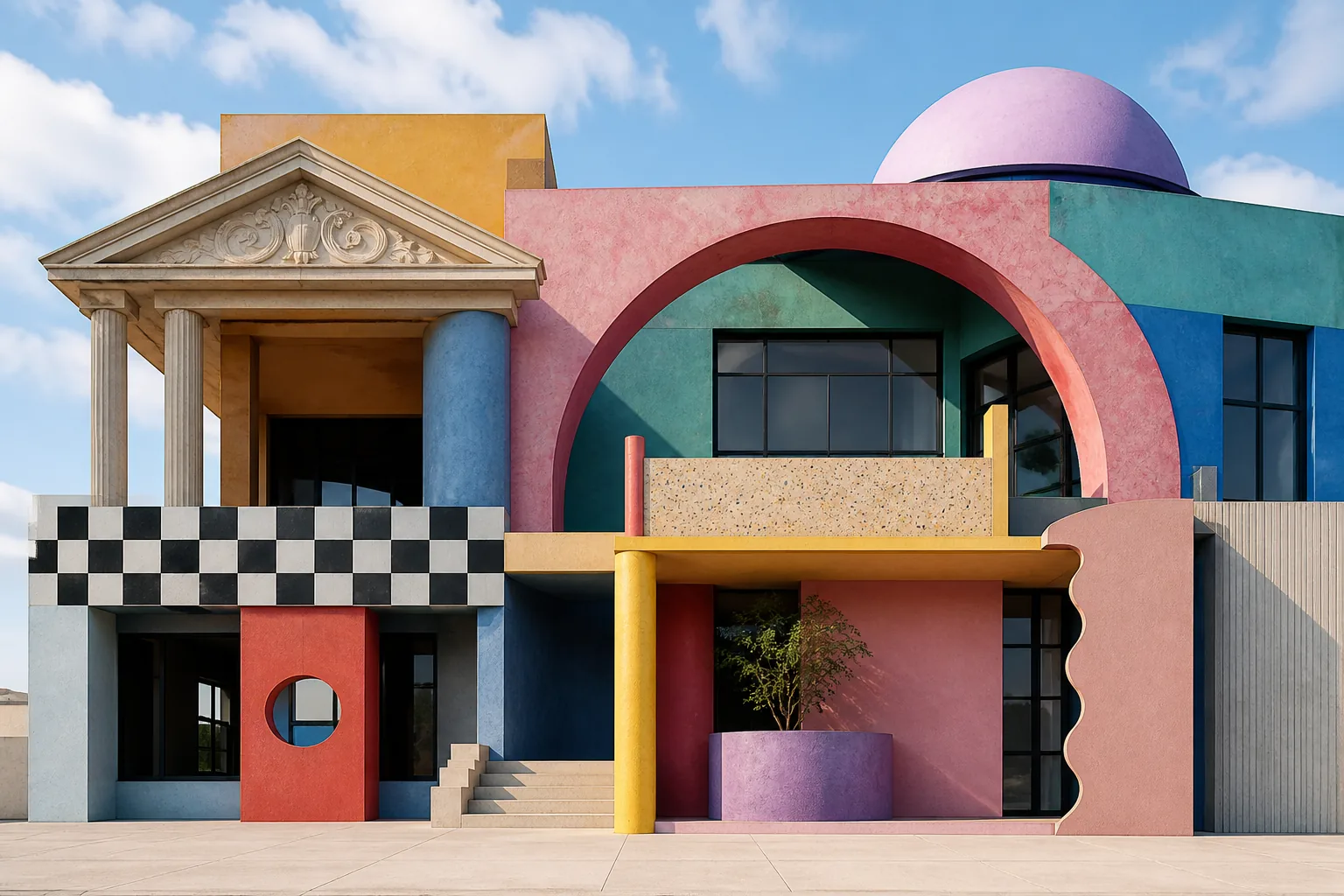
Organic modernism softened the strict machine of modernism. It did not reject function, structure or modern materials, but returned form to the body, landscape, wood, light and the natural rhythm of movement. This is modernism that does not dominate through the right angle, but guides the eye, the hand and the step.
Editorial thesis
Organic modernism softened the strict machine of modernism. It did not reject function, structure or modern materials, but returned form to the body, landscape, wood, light and the natural rhythm of movement. This is modernism that does not dominate through the right angle, but guides the eye, the hand and the step.
Reader question
Why does one modernist interior feel like a cold diagram, while another feels like a living space where wood, fabric, a curved wall and a window view work together?
Short answer
Organic modernism is recognized by soft geometry, open planning, natural materials, built-in furniture, attention to landscape and human scale. Its form does not literally imitate nature; it builds a relationship with it by admitting light, extending the terrain, emphasizing texture and making modernity less rigid.
What organic modernism is
Organic modernism is a direction within modernist culture in which rational form is connected to living space. What matters is not decorative leaves or literal imitation of nature, but the way a building or object grows from site, material, climate and human movement.1
Why it appeared
Classical modernism promised order, sanitary clarity and industrial efficiency. But a rigid version of that project soon began to feel cold. Organic modernism answered that fatigue: it kept modernity, but added warmth, tactility and a relationship with landscape.1
Form follows more than function
Function remains important here, but bodily experience is added to it. A chair must support the back, but it should also feel good to the hand. A house must be rational, but its windows, terraces and materials must speak to the site, the light and the season.1
Soft geometry
Organic modernism often uses curves, rounded edges, free plans, flowing ceilings, asymmetry and diagonal routes. This is not chaos, but a geometry in which the line guides the person more gently than a strict grid.1
Landscape as part of composition
A house, pavilion or chair is not considered separately from its surroundings. The view through the window, the tree behind the facade, the stone of the site, the slope, the water and the direction of the sun become part of the project rather than a background added after construction.1
Frank Lloyd Wright and organic architecture
For Frank Lloyd Wright, organic architecture meant that the building, its furnishings, its setting and the life within it could not be separated. Fallingwater became a key image of this idea: the house does not simply stand near the waterfall, but turns water, horizontal slabs and stone into one spatial system.1
Fallingwater as a lesson in scale
Fallingwater matters not only for its dramatic cantilevered terraces. It shows how modern construction can intensify a natural site without copying its forms. Stone, concrete, water and horizontal lines create a house that does not hide in nature, but enters into a tense dialogue with it.1
Open plan and continuity
Organic modernism favors space without abrupt breaks. A room flows into a terrace, a kitchen into a dining area, a window into landscape, furniture into architecture. Instead of isolated rooms, there is a sequence of light and movement.1
Materials: wood, stone, brick, concrete
Material is not hidden under a perfect shell. Wood shows grain, stone shows mass, brick shows rhythm, concrete shows plasticity. The surface should be modern but not sterile: it may have weight, smell, warmth and the trace of making.1
Alvar Aalto and gentle modernism
Aalto made modernism less dogmatic. His buildings and objects work with wood, curvature, light, acoustics and human posture. In his language, rationality does not disappear; it becomes tactful: form feels less like a machine part and more like an instrument tuned for living.1
Aino Aalto and everyday clarity
Aino Aalto is essential for understanding the domestic side of organic modernism. In furniture, glass, interiors and everyday objects, calm functionality appears: the object does not shout about style, but makes space softer and more precise every day.1
The Scandinavian line
Mid-century Scandinavian design developed this logic through pale wood, simple form, tactile fabrics and democratic furniture. Its strength lies in restraint: objects do not depict nature, but keep its temperature through material, proportion and comfort.1
Eames, Saarinen and organic furniture design
In 1940, MoMA connected the term Organic Design with furniture, lamps and textiles in which parts work harmoniously as a whole. Eames and Saarinen carried this idea into curved plywood, shell chairs and a new language of sitting, where the body becomes the main drawing.1
Plywood as a modern organic material
Bent plywood became an ideal material for this aesthetic. It is industrial yet warm, serial yet plastic, thin yet structural. It shows that the organic does not have to be handmade or archaic; it can be technological.1
Isamu Noguchi: between sculpture and furniture
Noguchi shows how an object can be both functional and almost landscape-like. His tables, lamps and sculptures do not merely occupy space in a room; they change paths of looking, creating small islands of shadow, air and balance.1
Light as a soft structure
In organic modernism, light does more than illuminate an interior. It slides across wood, reveals brick relief, makes a ceiling lighter and a corner deeper. Good light replaces decoration: it proves that the surface is alive.1
Interior as extension of architecture
Furniture is often built in and subordinated to walls, windows and routes. A cabinet, bench, table or shelf does not look like a random purchase: it continues the architectural line, holds the scale and makes the space coherent.1
Organic modernism and fashion
In fashion, this logic appears through soft construction, natural fabrics, free silhouettes, freedom from rigid corsetry and respect for bodily movement. It is not bohemian looseness, but a discipline of cut that does not break the figure.1
Photography: the body in space
For fashion and interior photography, organic modernism offers a strong scenography: the model does not pose in front of a background, but interacts with stair, wood, window, shadow, chair and floor horizon. The image becomes calmer, but deeper.1
Graphics and visual identity
In graphics, organic modernism does not mean plant ornament. It means soft grids, natural palettes, asymmetry, airy margins, tactile paper, material photography and typography that leaves a pause.1
Palette
Typical colors are warm white, sand, clay, olive, grey-green, pale oak, walnut, stone, terracotta and muted black. The palette should not feel like eco-decoration; it should sound like material under different light.1
Texture and touch
The main test of organic modernism is whether you want to touch the surface. Wood grain, matte ceramic, woven wool, leather patina, honed stone and soft plaster create the sense of presence that glossy abstraction cannot give.1
The house as a landscape camera
A window in this kind of house is not just an opening, but an instrument of framing. It selects a tree, sky, water, slope or courtyard and turns the view into part of the interior. This is why organic modernism works so well in photography and film.1
Difference from biomorphism
Biomorphism often creates forms that resemble organisms: shells, bones, leaves, cells. Organic modernism is broader and quieter: it can be almost rectangular if it keeps a relationship with body, material, climate and place.1
Difference from eco style
Eco style often uses recognizable markers: green plants, rattan, linen and pale wood. Organic modernism is deeper: it is defined not by decor, but by design logic — how space lives with the person and the environment.1
Why the style has returned today
After digital fatigue, smooth screens and similar interiors, people again need warm materials, calm forms and spaces where the body does not feel trapped in an office diagram. This is why organic modernism easily returns in hospitality, retail, wellness and residential design.1
Common mistakes
The main mistake is to make an expensive beige interior and call it organic. Without a relationship to plan, light, material and body, it is just neutral decoration. The second mistake is to overload space with pseudo-natural forms.1
How to recognize the style
Look for continuity between interior and exterior, natural materials without disguise, soft corners, low furniture, carefully shaped light, built-in elements, a calm palette and the feeling that form was not imposed on the site, but grew from it.1
How to use it in AI visuals
For AI scenes, do not write only “organic modern interior.” Specify the architecture: low ceiling line, pale oak, stone floor, built-in bench, window to garden, soft diffused light, wool texture, ceramic objects, calm model pose and frame size.1
The main idea
Organic modernism shows that modernity can be attentive rather than cold. Its strength lies in the alliance of structure and softness: precise form remains modern, but within it you can hear landscape, hand, light and life.1