architect profile
David Chipperfield
Precision, reconstruction and the architecture of public continuity
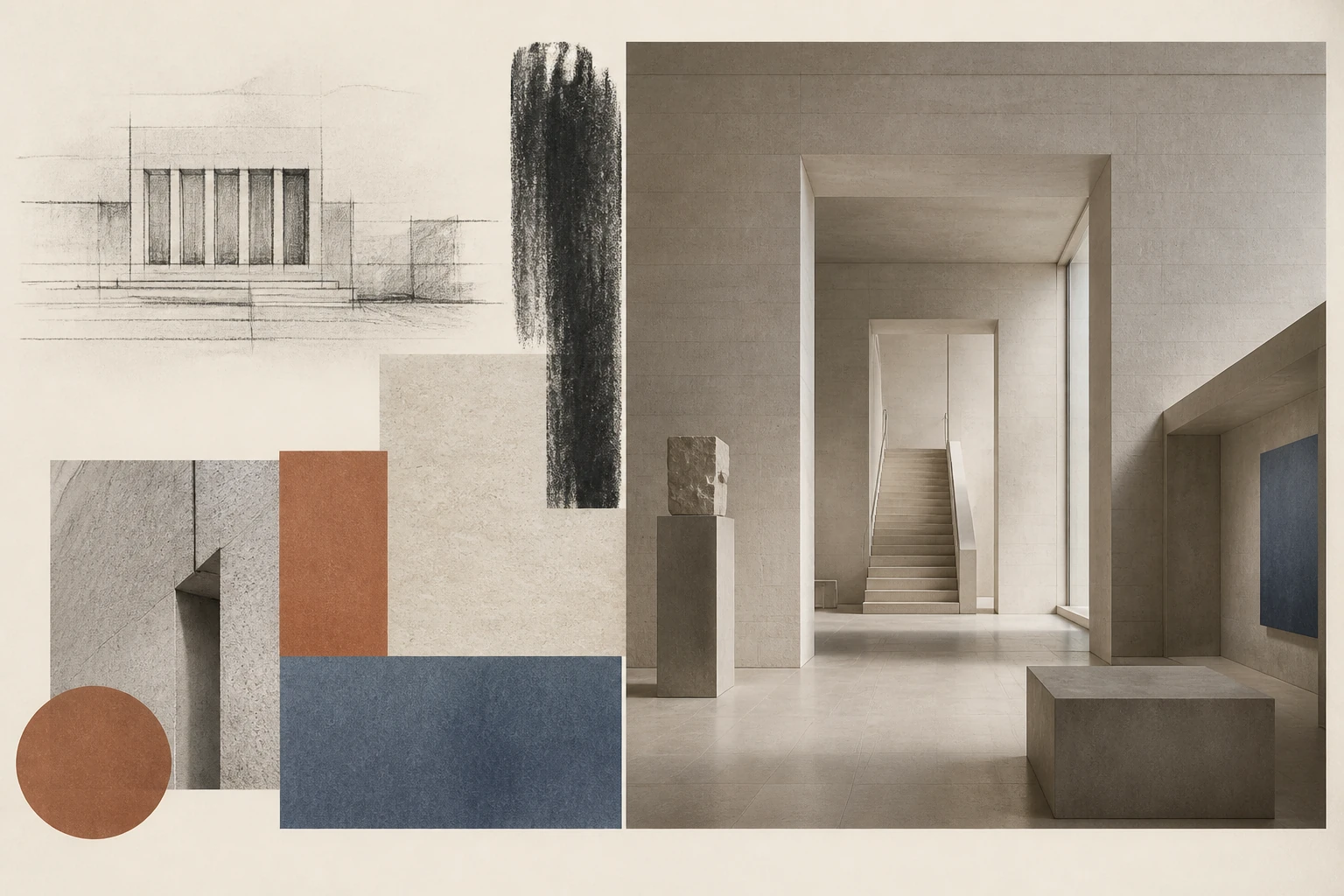
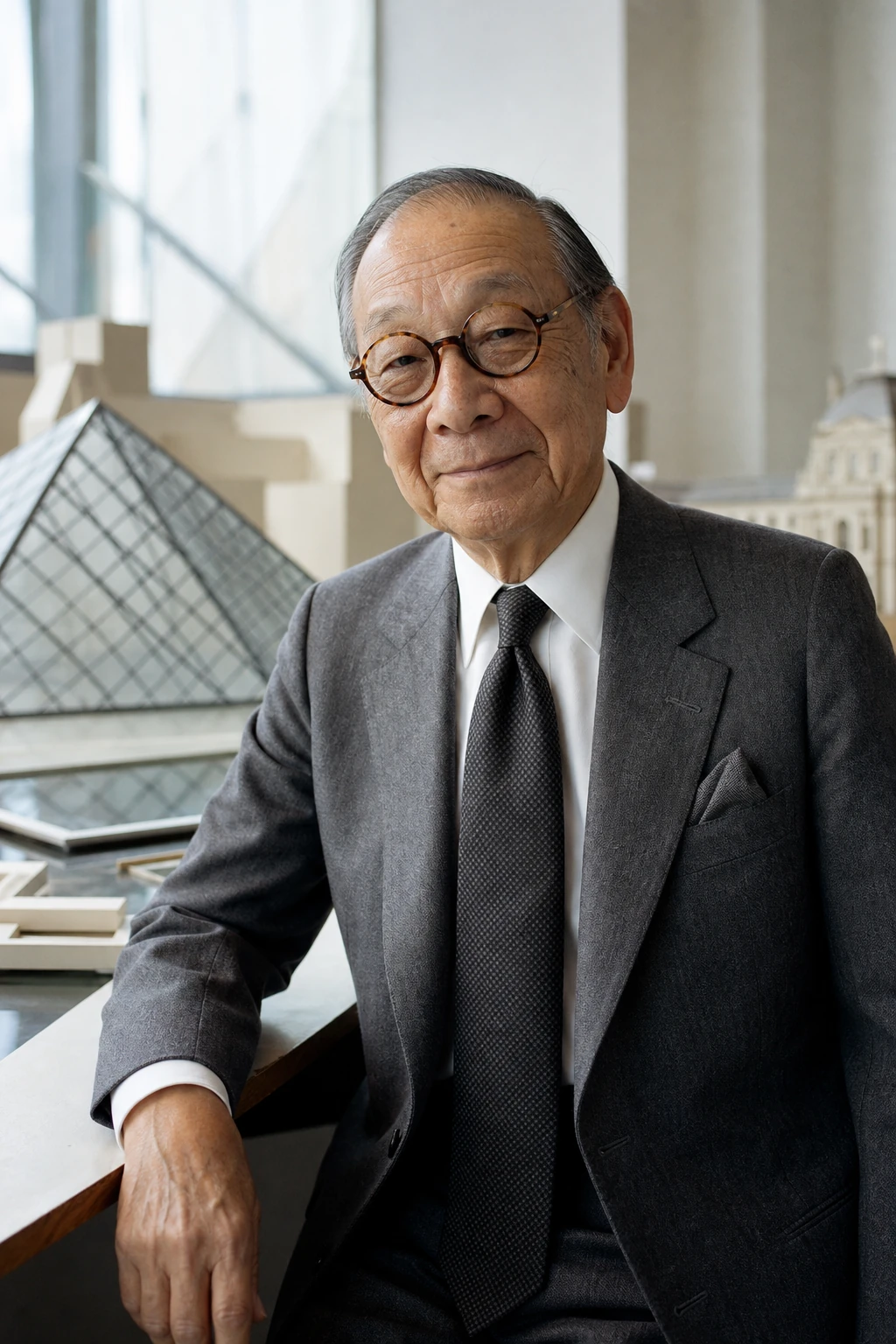
Chipperfield builds architecture not as a spectacular break with the past but as a precise edition of the existing city. His work shows that restraint can be a form of cultural responsibility.
Editorial thesis
David Chipperfield's significance rests on a discipline of proportions, materials and urban continuity. His practice is especially influential where a new building must enter into dialogue with a damaged, historical or institutionally significant context.
Reader question
How did a British architect turn reconstruction, restraint and a precise relation to the existing city into one of the principal languages of contemporary museum architecture?
The core subject is David Chipperfield and the international practice David Chipperfield Architects.
Reconstruction is treated as a design method, not only as technical restoration.
The projects in Berlin are analysed together with their historical and institutional context.
Design authorship includes the partners, restorers, engineers and museum teams.
Current projects and roles have a cutoff date.
Archival images and drawings require a separate rights review.
Short answer
David Chipperfield was born in 1953 in London, studied at the Kingston School of Art and the Architectural Association, and worked in the offices of Richard Rogers and Norman Foster. In 1985 he founded his own practice.
The River and Rowing Museum, the Neues Museum, Turner Contemporary, the Museo Jumex, the James-Simon-Galerie and the reconstruction of the Neue Nationalgalerie show the development of his method. In 2023 Chipperfield received the Pritzker Prize.
1. London, education and early practice
David Chipperfield was born in London in 1953. He studied at the Kingston School of Art and the Architectural Association.
Before opening his own practice he worked in the offices of Richard Rogers and Norman Foster.
He later moved away from technological expression towards a calmer architecture of material and proportion.
2. Founding his own office
David Chipperfield Architects was founded in 1985.
The practice grew through offices in London, Berlin, Milan, Shanghai and Santiago de Compostela.
The international structure allowed the office to work with different systems of heritage and urban regulation.
3. Early shops and minimalism
Chipperfield's early fame came from interiors and shops in Japan and Europe.
Clean planes, controlled light and precise materials were often described as minimalism.
Yet the mature practice shows that restraint is a way of organising context, not a stylistic end in itself.
4. River and Rowing Museum
The River and Rowing Museum in Henley-on-Thames opened in 1998.
The building interprets the typology of the English barn through a contemporary timber construction.
The project confirmed the office's international recognition.
5. Neues Museum
The reconstruction of the Neues Museum in Berlin was completed in 2009.
The building, seriously damaged in the Second World War, was not restored to an imagined original state.
New elements complement the surviving fragments, allowing the different historical layers to be seen.
6. Reconstruction as a dialogue with traces
The method of the Neues Museum rests on recognising loss as part of history.
The new stairways, surfaces and constructions differ from the old but do not seek to dominate.
Reconstruction becomes an act of interpretation: what to preserve, what to add and what to leave unfinished.
7. James-Simon-Galerie
The James-Simon-Galerie opened in 2019 as the new entrance building of Museum Island.
A colonnade, a high plinth and stairways continue the spatial logic of the historic ensemble.
The building organises the reception of visitors, temporary exhibitions and the connections between the museums.
8. Museum Island
Chipperfield's work on Museum Island continued for decades.
It included not only individual buildings but a master plan of movement and public spaces.
Such a process shows architecture as institutional coordination rather than a one-off authorial gesture.
9. Turner Contemporary
Turner Contemporary in Margate opened in 2011.
A group of light volumes faces the sea and the northern light.
The project supported the town's cultural regeneration, but also became part of the debate about the limits of the museum effect.
10. Museo Jumex
The Museo Jumex in Mexico City opened in 2013.
A light stone facade and a saw-tooth roof provide controlled top lighting.
The museum combines a rigorous construction with a public terrace and an open ground level.
11. Royal Academy Masterplan
The Royal Academy project linked the buildings of Burlington House and Burlington Gardens.
New circulation and public routes made the institution more coherent and accessible.
The project shows work with a historic complex through a sequence of small interventions.
12. Neue Nationalgalerie
The reconstruction of Mies van der Rohe's Neue Nationalgalerie was completed in 2021.
About 35,000 original elements were dismantled, restored and returned to their place.
The technical systems, accessibility and museum operation were updated with minimal visual change.
13. The conservation of modernism
Glass, steel, sealants and engineering systems are part of the architectural concept of modernism and at the same time subject to ageing.
Conservation requires deep intervention, even when the result must look almost imperceptible.
The Neue Nationalgalerie became a benchmark example of such work.
14. Kunsthaus Zürich extension
The Kunsthaus Zürich extension opened in 2021.
A stone volume is organised around a central hall and a new public space.
The project was criticised for its scale and for institutional disputes around the collections.
15. Material and proportion
Chipperfield uses stone, concrete, brick, timber and metal through clear constructional systems.
Material rarely becomes an effective surface in itself.
Restraint allows the building to support the art, the city and the existing architecture.
16. Public space
Chipperfield consistently stresses the importance of public space.
He criticises development wholly subordinated to private investment and short-term profit.
His cultural projects extend the territory available to the city through squares, colonnades and passages.
17. Collective authorship
David Chipperfield Architects works through partners and offices with different specialisations.
The Berlin reconstructions were carried out by large teams with the participation of restorers and engineers.
Correct attribution should include the design partners and the heritage specialists.
18. The Pritzker Prize
In 2023 David Chipperfield received the Pritzker Architecture Prize.
The jury noted his work with public, cultural and civic buildings.
The award confirmed the international recognition of an architect who had long influenced museum and restoration practice.
19. Criticism and limitations
Chipperfield's restraint is sometimes perceived as institutional neutrality hiding the power of the client.
Stone and concrete buildings can have a significant material footprint.
Cultural regeneration does not guarantee social improvement and can be accompanied by rising property values.
20. Conclusion
David Chipperfield showed that contemporary architecture can be strong without a demonstrative break.
His best projects create the new through a careful reading of the existing building, city and institution.
Chipperfield's chief legacy is architecture as a discipline of continuity and precise editing.