architect profile
Jean Nouvel
Context, light and architecture as a unique scenario of place
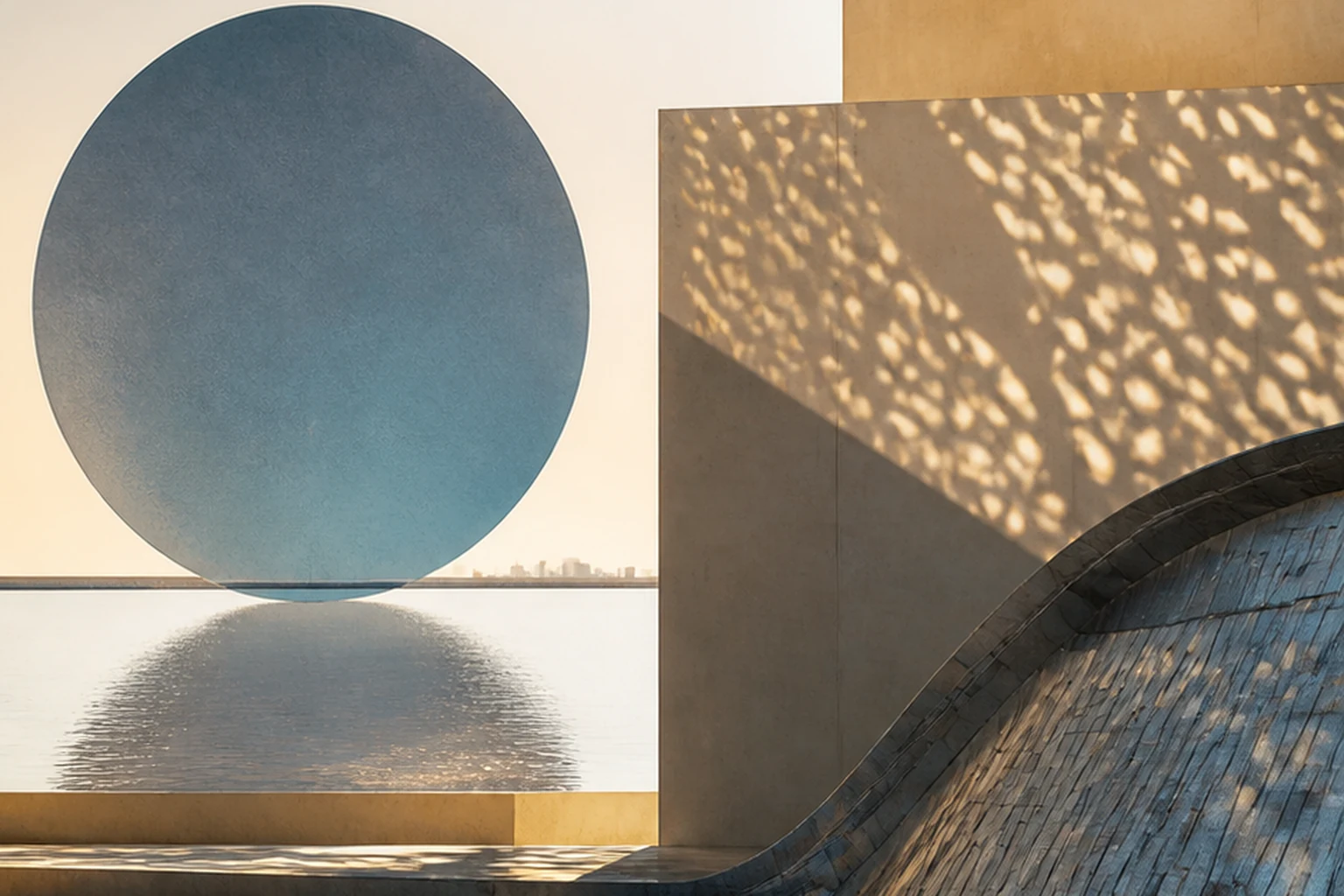
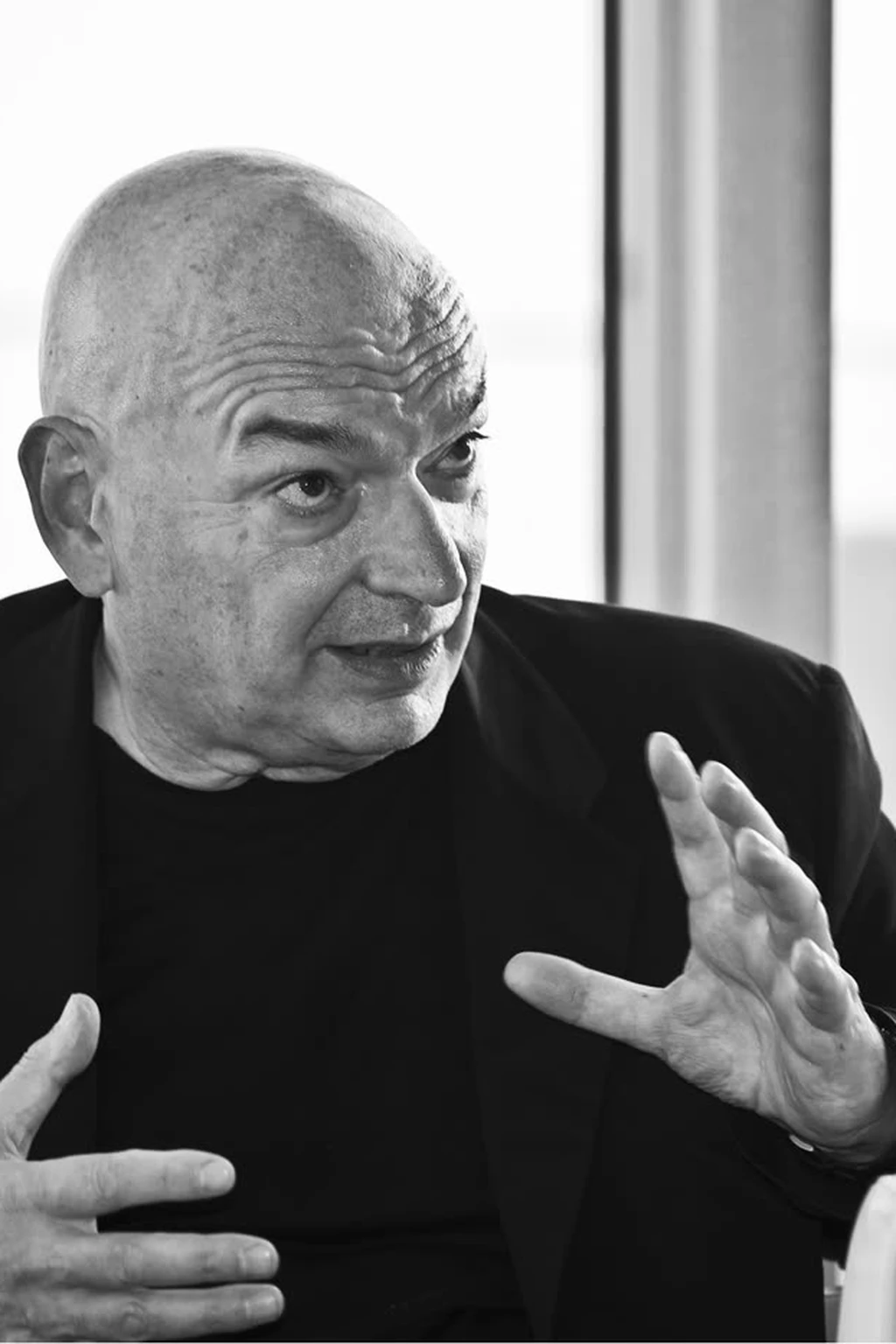
Nouvel avoids a single recognisable style. He treats each project as a separate scenario arising from climate, culture, light, urban memory and the client's image.
Editorial thesis
Jean Nouvel's significance rests on a conceptual contextualism. His buildings do not repeat a single formal language: a mechanical facade, a glass garden, a dark monolith, a giant dome or a disc structure are each time created for a specific place and cultural programme.
Reader question
How did a French architect turn light, image, climate and scenography into a method that allows every building to have its own identity?
The core subject is Jean Nouvel and the international practice Ateliers Jean Nouvel.
The absence of a single style is treated as a method, not as an absence of authorial position.
The projects in the Arab world are analysed together with cultural representation and the state commission.
Authorship includes the partners, engineers, facade consultants and museum teams.
Current projects and news have a cutoff date of 7 August 2026.
Images, facade details and diagrams require a separate rights review.
Short answer
Jean Nouvel was born in 1945 in Fumel, France. He studied at the École des Beaux-Arts in Bordeaux and Paris, worked with Claude Parent, and in 1970 opened his first practice. Nouvel took part in the architectural movements Mars 1976 and the Syndicat de l'architecture.
The Institut du Monde Arabe, the Fondation Cartier, KKL Luzern, the Tour Agbar, the musée du quai Branly, the Louvre Abu Dhabi, the National Museum of Qatar and the Museum of Art Pudong show the range of his method. In 2008 Nouvel received the Pritzker Prize.
1. Fumel, education and Claude Parent
Jean Nouvel was born in Fumel in 1945. After studying in Bordeaux he entered the École Nationale Supérieure des Beaux-Arts in Paris and graduated in 1971.
At the start of his career Nouvel worked as an assistant to Claude Parent and came under the influence of Paul Virilio.
From this period he inherited an interest in conflict, movement, perception and architecture as an intellectual position.
2. Mars 1976 and architectural politics
Nouvel was one of the founders of the Mars 1976 movement and of the Syndicat de l'architecture.
These initiatives argued against professional corporatism and the closure of the architectural system.
Political activity strengthened the idea of the project as a public and cultural statement.
3. The rejection of a single style
Nouvel consistently states that a project should arise from a unique combination of people, place and time.
His buildings can therefore differ radically in material, colour and geometry.
What remains constant is not the image but the aim of creating a specific atmosphere and a scenario of perception.
4. Institut du Monde Arabe
The Institut du Monde Arabe in Paris opened in 1987 and brought Nouvel international fame.
The southern facade is formed by a geometric system of diaphragms that interprets the mashrabiya and regulates light.
The building became an attempt to join French technological culture with architectural motifs of the Arab world.
5. The mechanical facade and cultural translation
The facade of the institute is often perceived as a technical icon.
Yet its significance is connected not only with the mechanism but with the question of cultural translation: how to use a motif without turning it into a superficial ornament.
The project remains at once a strong symbol and an object of criticism for simplifying a complex cultural tradition.
6. Fondation Cartier
The Fondation Cartier pour l'art contemporain opened in Paris in 1994.
Glass planes extend beyond the main volume, reflecting the trees, the sky and the city.
The architecture creates an ambiguous boundary between the garden, the exhibition space and the street.
7. KKL Luzern
The KKL culture and convention centre in Lucerne was completed in 2000.
An enormous flat roof unites the concert hall, congress and museum functions.
Water enters the composition of the building, and the reflection stresses the horizontal connection with the lake.
8. Tour Agbar
The Agbar Tower in Barcelona was completed in 2005.
An oval silhouette, a double shell and coloured panels create a changing image in daylight and at night.
The project became an urban icon, but also intensified the debate about corporate high-rise architecture as branding.
9. Musée du quai Branly
The Musée du quai Branly opened in Paris in 2006.
The main volume is raised above the garden, and the facades, colour, graphics and vegetation create a complex sensory environment.
The museum is criticised for its ways of representing non-European cultures and the colonial legacy; the architecture cannot be separated from this institutional debate.
10. DR Koncerthuset
The DR concert hall in Copenhagen opened in 2009.
A blue translucent screen hides the complex inner composition of the concert spaces.
The inner main hall contrasts with the outer abstract shell and turns the visit into a sequence of scenes.
11. One Central Park
One Central Park in Sydney was completed in 2014.
Vertical gardens and a cantilever with a reflecting system connect the residential tower with the landscape and light.
The project shows a collaboration of architecture, landscape, engineering and ecological systems, but requires an assessment of the long-term maintenance of the living facade.
12. Louvre Abu Dhabi
The Louvre Abu Dhabi opened in 2017 on Saadiyat Island.
The complex is organised as a museum-city of low white volumes beneath an enormous dome.
The project joins water, shade, passages and controlled light, creating a climatically protected public environment.
13. The dome, light and the museum-city
The dome of the Louvre Abu Dhabi consists of a multi-layered geometric structure with thousands of star-shaped elements.
Light passes through the layers as a moving 'rain of light' that changes over the course of the day.
Despite its visual lightness, the dome is a massive engineering structure, so the image and the material reality must be distinguished.
14. National Museum of Qatar
The National Museum of Qatar opened in Doha in 2019.
The composition rests on intersecting discs, connected with the image of the desert rose.
The form unites galleries, shade and movement, but the complex geometry demanded intensive digital modelling and construction.
15. Museum of Art Pudong
The Museum of Art Pudong opened in Shanghai in 2021.
Large mirrored and glass spaces connect the museum with the Huangpu River and the panorama of the city.
The medial facade and the Glass Hall turn the building into a nightly urban screen.
16. Context and scenography
Nouvel often compares the work of the architect with the work of a director.
Route, light, dimming, reflection and a sequence of frames create the dramaturgy of the building.
Scenography enhances the visitor's experience, but can subordinate the everyday function to effect.
17. Light, reflection and image
For Nouvel light is not an additional decoration but an essential building material.
The facades filter, reflect, colour or turn light into an image.
This strategy connects architecture with cinema, photography and media, but requires complex operation and precise engineering.
18. Collective authorship
Ateliers Jean Nouvel works as an international practice with large design teams.
The large museums and towers depend on engineers, facade specialists, artists, landscape architects and local partners.
Nouvel's public image must not hide the distributed authorship of the realisation.
19. The Pritzker Prize
In 2008 Jean Nouvel received the Pritzker Architecture Prize.
The jury noted his persistent pursuit of new ideas and his refusal to repeat ready solutions.
The award confirmed his status as one of the most influential architects of his generation.
20. Criticism and limitations
Nouvel's projects can be expensive, technically complex and dependent on constant maintenance.
Cultural motifs sometimes risk becoming a scenographic image that simplifies local history.
State and corporate megaprojects also require an analysis of labour, the politics of representation and the environmental footprint.
21. Conclusion
Jean Nouvel showed that authorial identity can be built not on the repetition of form but on the constant reinvention of method.
His architecture turns light, climate, reflection and cultural image into a unique scenario of place.
Nouvel's chief legacy is the idea of the building as a spatial event that cannot be fully separated from its specific context.