architect profile
Kenzo Tange
Memorial, megastructure and the architecture of postwar Japan
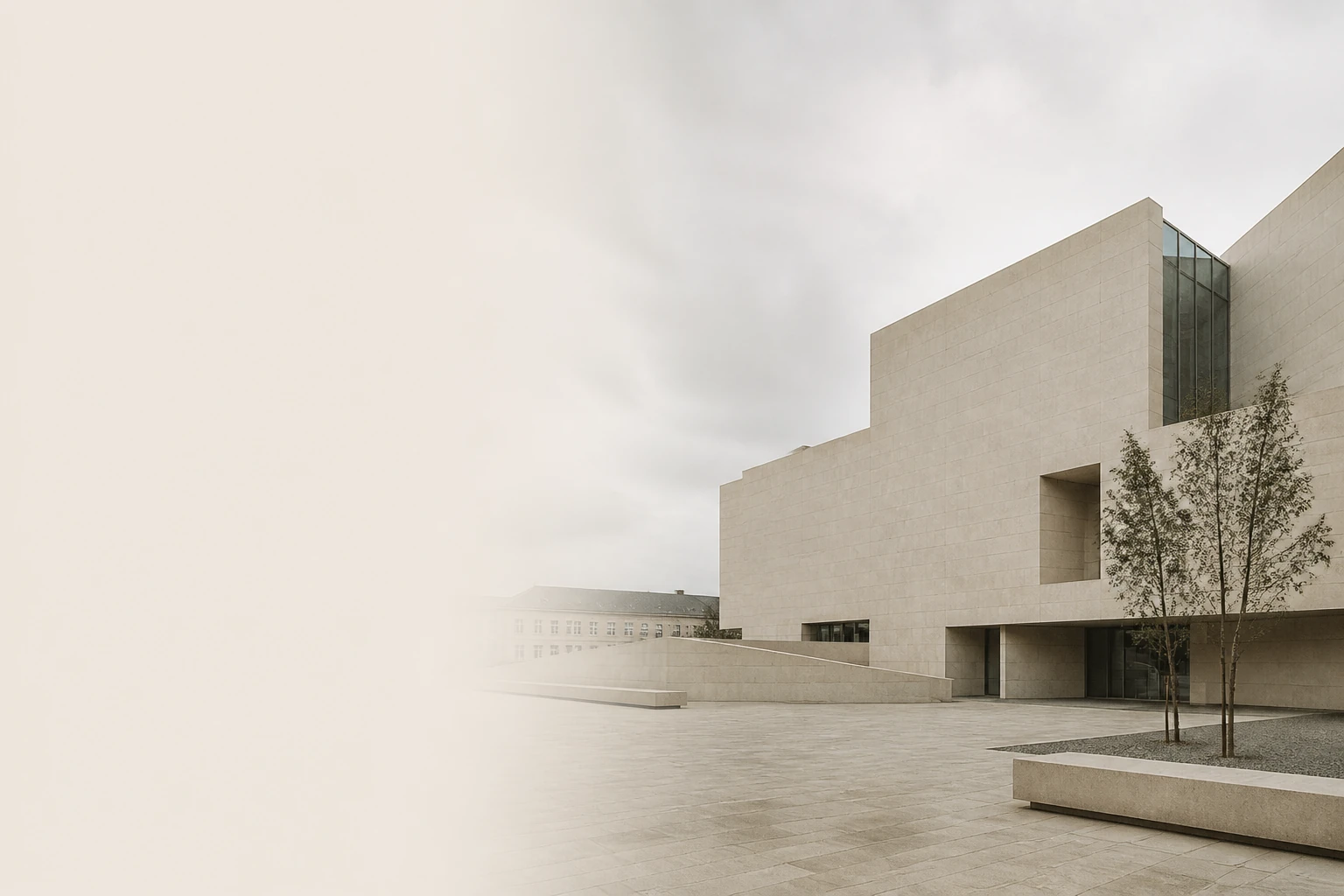
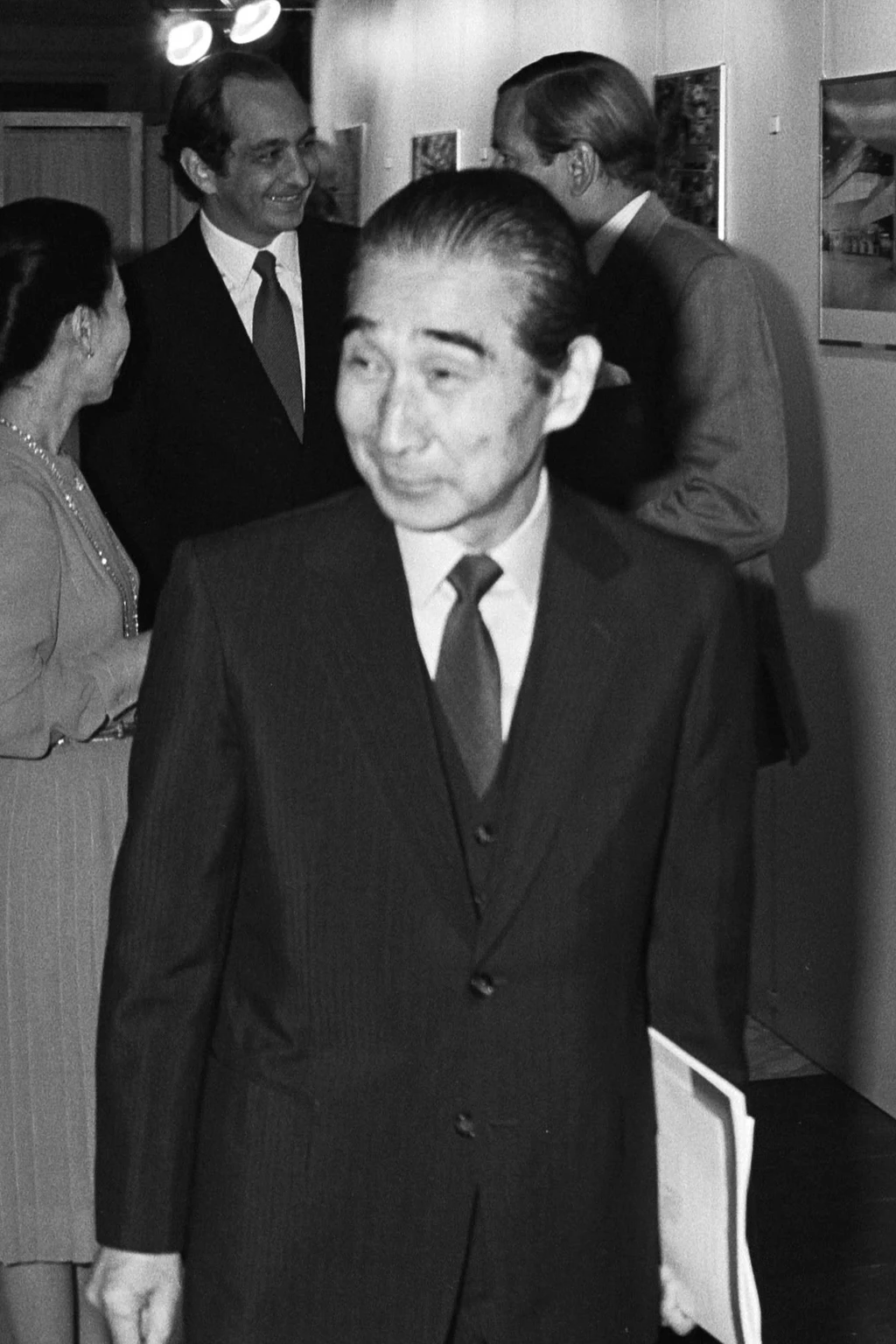
Tange joined the Japanese spatial tradition, modernist construction and the scale of the postwar state. His architecture oscillates between memorial silence, engineering expression and the megastructural faith in the future of the city.
Editorial thesis
Kenzo Tange's significance rests on translating the postwar modernisation of Japan into an architectural language. He worked at once with the memory of war, national identity, infrastructure and the growth of the metropolis.
Reader question
How did a Japanese architect turn modernism into a national and urban project able to work from a memorial space to an Olympic arena and a megastructure?
The core subject is Kenzo Tange: his architecture, laboratory and international practice.
Postwar modernisation is examined together with the memory of war and state building.
The connection with Metabolism is analysed through teaching, projects and intellectual influence.
The megastructural ideas are not equated with the realised city.
The large projects are treated as the collective work of architects and engineers.
Archival photographs, plans and competition materials require a separate rights review.
Short answer
Kenzo Tange was born in 1913 in Osaka, studied at the Tokyo Imperial University and worked for Kunio Maekawa. After the war he became a teacher at the University of Tokyo and one of the central figures of Japanese modernism.
The Hiroshima Peace Memorial Park, the Kagawa Prefectural Government Hall, St. Mary's Cathedral, the Yoyogi National Gymnasium, the Plan for Tokyo 1960 and the Fuji Television Headquarters show the breadth of his method. In 1987 Tange received the Pritzker Prize.
1. Osaka, Imabari and education
Kenzo Tange was born in Osaka in 1913 and spent part of his childhood in Imabari on the island of Shikoku.
He studied architecture at the Tokyo Imperial University and graduated in 1938.
His education took place at a time when Japanese architects were actively absorbing European modernism and rethinking the national tradition.
2. Kunio Maekawa and modernism
After university Tange worked in the office of Kunio Maekawa, a former collaborator of Le Corbusier.
He gained experience of reinforced-concrete modernism, functional planning and public architecture.
Tange later developed this language into a more monumental and state-representative system.
3. Postwar Japan
After 1945 Japan faced the destruction of its cities, political reform and rapid economic growth.
Architecture became an instrument for rebuilding infrastructure and creating a new national image.
Tange found himself at the centre of this process as architect, teacher and public intellectual.
4. Hiroshima Peace Memorial Park
Tange won the competition for the Hiroshima Peace Memorial Park in 1949.
The complex includes a museum, a memorial axis, a cenotaph and a connection with the Atomic Bomb Dome.
The architecture organises a movement between the document of destruction, the memory of the victims and the postwar call for peace.
5. The memorial axis and public memory
The park is built not around a single monument but around a sequence of spaces and views.
The raised volume of the museum frees the ground level and forms a public passage.
The project shows how a modernist composition can become a means of collective ritual.
6. Kagawa Prefectural Government Hall
The Kagawa Prefectural Government Hall was completed in 1958.
The reinforced-concrete frame interprets the proportions and rhythm of traditional timber architecture.
The project became an important example of the synthesis of modernist construction and Japanese spatial order.
7. Tradition without stylistic copying
Tange did not reproduce historical roofs and ornaments literally.
He translated the structure of columns, beams, shadows and open passages into contemporary concrete.
In this way tradition acted as a system of relations, not as a set of decorative quotations.
8. Tokyo City Hall, 1957
The old Tokyo City Hall was completed in 1957.
The project expressed administrative rationality through a modular facade and a clear structure.
It was later replaced by Tange's new complex in Shinjuku, which shows the change in the scale of state administration.
9. Plan for Tokyo 1960
The Plan for Tokyo 1960 proposed extending the city across Tokyo Bay.
A linear megastructure was to unite transport, housing and public functions.
The project was not realised, but became one of the most influential images of the Metabolist city.
10. Metabolism and the Tange Lab
Tange's laboratory at the University of Tokyo became an intellectual environment for young architects.
Connected with it were Kiyonori Kikutake, Kisho Kurokawa, Fumihiko Maki and other participants in the Metabolist discussion.
Tange was not simply a member of the movement: he connected its utopian ideas with state and infrastructural practice.
11. St. Mary's Cathedral
St. Mary's Cathedral in Tokyo was completed in 1964.
Eight curved walls form a cross-shaped plan and rise to a single vertical composition.
Stainless steel reflects the sky, and the concrete interior creates a contrast between the outer shell and sacred silence.
12. Yoyogi National Gymnasium
The Yoyogi National Gymnasium was built for the 1964 Olympic Games.
A suspended roof rests on large pylons and forms a dynamic interior space.
The complex became a symbol of Japan's technological modernisation and one of the best-known sports buildings of the twentieth century.
13. The suspended structure and the Olympic image
The Yoyogi structure joins engineering efficiency and a strong plastic silhouette.
The cables, pylons and curved roof work as a single system.
The image of the building is connected with movement, mass spectacle and the international presentation of the country.
14. The Skopje master plan
After the earthquake of 1963 Tange took part in the international competition for the reconstruction of Skopje.
His team proposed a City Gate and City Wall system for organising transport, the centre and the residential districts.
The realisation was partial, but the project became an important example of transnational modernist planning.
15. International practice
From the 1970s Tange's practice worked actively beyond Japan.
The projects included government buildings, cultural centres, universities and urban plans.
The international scale widened the architect's influence, but sometimes led to the universalisation of the monumental language.
16. Tokyo Metropolitan Government Building
The Tokyo Metropolitan Government complex in Shinjuku was completed in 1991.
Two towers rise above a massive administrative base and form a new symbol of urban power.
The facade grid and the vertical composition join a technological image with references to the Gothic cathedral.
17. Fuji Television Headquarters
The Fuji Television Headquarters in Odaiba was completed in 1996.
A large grid structure unites the office volumes, passages and a spherical observation deck.
The project turns a media corporation into an urban image and reflects the culture of Japan's late economic growth.
18. The architecture of the state
Many of Tange's projects were created for municipal, national and international institutions.
His architecture helped form the image of the modern state through scale, construction and public ceremony.
Such an approach requires an analysis not only of the form but of the political power that the building represents.
19. Collective authorship
Tange's projects were created in the laboratory, and later in a large international practice.
The engineers, partners, state clients and young architects played an important role in developing the solutions.
The public name of the master must not hide the collective structure of architectural production.
20. The Pritzker Prize
In 1987 Kenzo Tange received the Pritzker Architecture Prize.
The jury noted his influence on the development of contemporary architecture and his ability to join the Japanese tradition with international modernism.
The award confirmed his status as a key figure of postwar architecture.
21. Criticism and limitations
Tange's megastructural plans could underestimate everyday life, social diversity and the possibility of gradual change from below.
Monumental government buildings often create a distance between the institution and the citizen.
Large concrete and steel structures are also connected with a high material and energy footprint.
22. Conclusion
Kenzo Tange formed the architectural image of postwar Japan on the international stage.
He joined memory, state modernisation, engineering expressiveness and the utopia of the growing city.
Tange's chief legacy is the ability to turn architecture into a project of simultaneously national, urban and historical scale.