architect profile
Richard Meier
White light, geometry and the architecture of modernist continuity
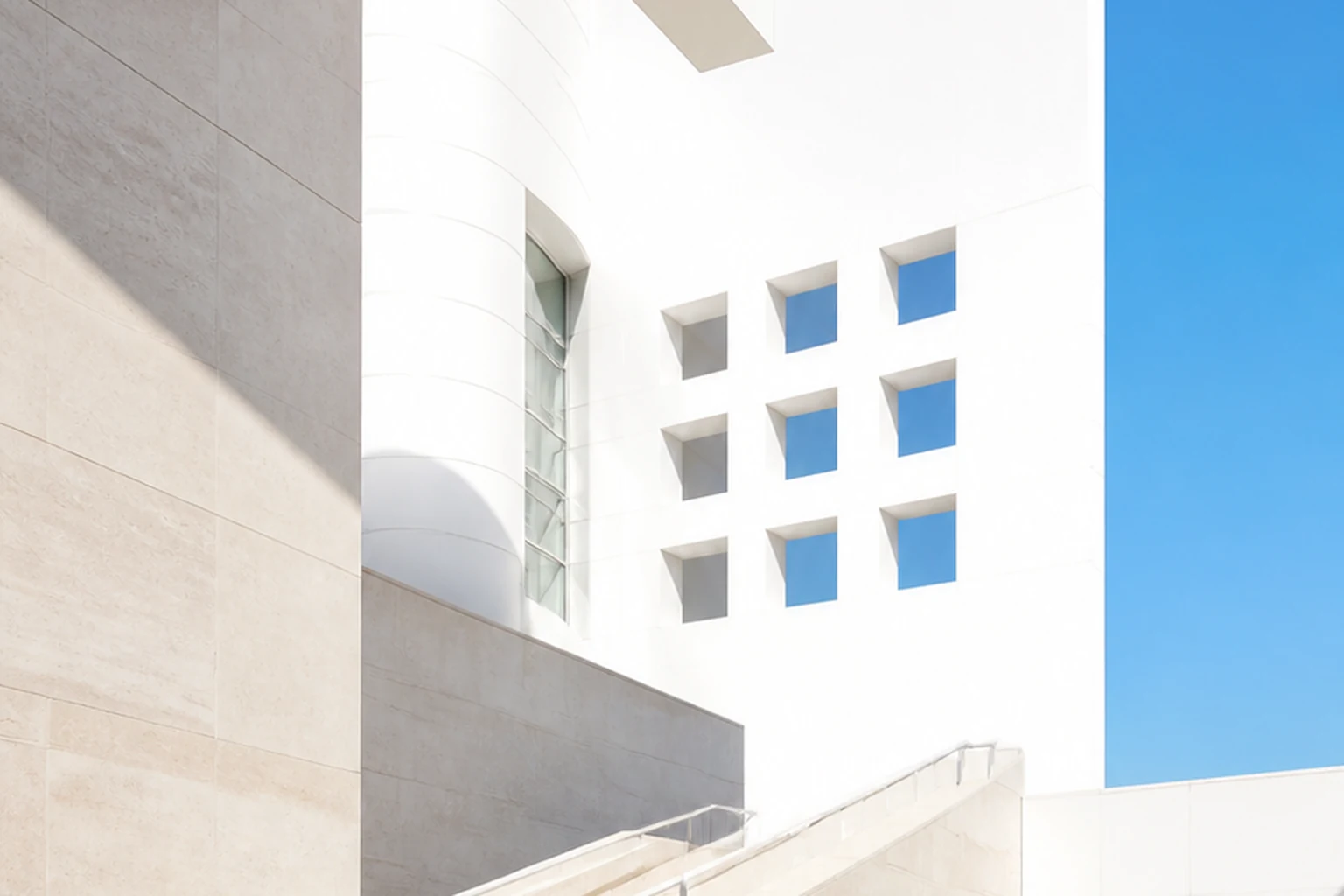
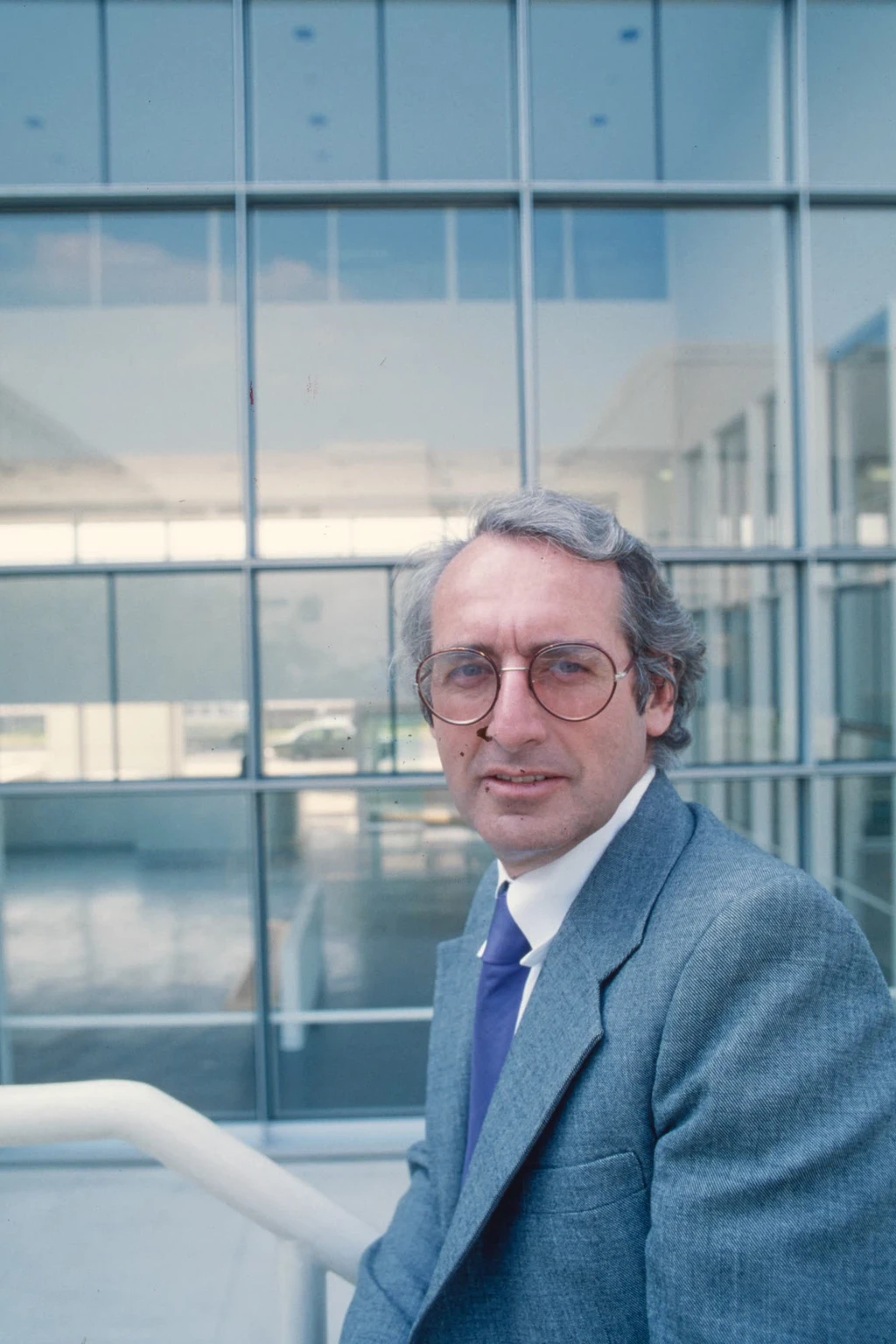
Meier turned the white surface, the grid, the ramp and natural light into a consistent system. His buildings continue the modernist line whilst simultaneously exposing the limits of an architecture that aspires to formal autonomy.
Editorial thesis
Richard Meier's significance rests on the disciplined development of a modernist language: white planes, a structural grid, the free plan, ramps and light. His practice demonstrates both the strength of formal consistency and the risk of turning architecture into a self-sufficient visual system.
Reader question
How did an American architect transform the legacy of Le Corbusier and European modernism into one of the most recognisable languages of museum and residential architecture in the second half of the twentieth century?
The core subject is Richard Meier and his architectural practice.
White colour is examined as an instrument of light and geometry, not a neutral aesthetic.
Projects are analysed together with site, programme and institutional context.
Collective authorship includes partners, engineers and project teams.
The critical section takes into account questions of formalism, cost and professional culture.
Archival photographs and drawings require a separate rights review.
Short answer
Richard Meier was born in 1934 in Newark, New Jersey. He graduated from Cornell University in 1957, worked for Marcel Breuer and Skidmore, Owings & Merrill, and in 1963 founded his own practice.
Smith House, Douglas House, the Atheneum, the High Museum of Art, the Museum of Contemporary Art Barcelona, the Getty Center and the Jubilee Church show the development of his method. In 1984 Meier received the Pritzker Prize.
1. Newark, Cornell and early career
Richard Meier was born in Newark in 1934 and grew up in a Jewish family.
He graduated from Cornell University in 1957, after which he travelled through Europe and encountered the legacy of modernism at first hand.
Work at SOM and with Marcel Breuer gave him experience of large offices and constructive discipline.
2. The New York Five
In the early 1970s Meier was grouped with Peter Eisenman, Michael Graves, Charles Gwathmey and John Hejduk under the label New York Five.
The group was not a unified school but shared an interest in the formal grammar of modernism.
For Meier it became an important stage of public recognition.
3. Smith House
Smith House in Connecticut was completed in 1967.
The white geometric volume opens towards the landscape through a glazed façade, while the entrance side remains more enclosed.
The house demonstrates Meier's early principle: the contrast between a dense shell and an open spatial section.
4. Douglas House
Douglas House in Michigan was completed in 1973 on a steep waterfront site.
The route begins at the top and gradually descends through a system of platforms, stairs and views.
The building is not merely placed on a slope but turns movement across the terrain into an architectural script.
5. White colour as a system
White in Meier's work intensifies shadows, reflections and the distinction between planes.
It helps to perceive the structural grid and changes of light through the day.
Yet white architecture demands constant maintenance and can create distance from local material and climate.
6. Atheneum
The Atheneum in New Harmony opened in 1979.
Inclined planes, ramps and white panels create a sequence of movement towards the panorama of the historic settlement.
The building became one of the clearest expressions of architecture as a managed route.
7. High Museum of Art
The High Museum of Art in Atlanta opened in 1983.
The white cylindrical atrium, ramps and top light organise the museum around a vertical public space.
The project brought Meier wide institutional recognition but also sparked debate about the priority of architecture over exhibition display.
8. Museum of Contemporary Art Barcelona
MACBA opened in Barcelona in 1995.
The large light-filled volume is set within the dense historic fabric of the Raval district and shapes a new public square.
Transparent galleries and ramps link the museum with the city, but cultural regeneration was accompanied by changes to the neighbourhood's social fabric.
9. Getty Center
The Getty Center in Los Angeles opened in 1997.
The complex unites museums, research institutes, gardens and infrastructure on a hilltop.
Travertine softens Meier's customary white palette and ties the ensemble to the landscape and Californian light.
10. Jubilee Church
The Jubilee Church in Rome was completed in 2003.
Three curved white shells form the principal image and channel natural light into the interior.
The project combines modernist abstraction, the symbolism of the sail and contemporary engineered shells.
11. Ramp, grid and route
The ramp in Meier's work is not only a means of accessibility but also an instrument of composition.
The structural grid links façade, plan, furniture and movement.
The route turns the building into a sequence of frames where light and perspective change gradually.
12. Light and museum display
Meier's museum projects use natural light as the primary spatial material.
Top and side lighting create clear orientation and a sense of openness.
At the same time direct light demands complex control to protect works and maintain exhibition stability.
13. The house as laboratory
Private houses allowed Meier to test the relationships of plane, structure, furniture and landscape at a small scale.
Many devices were later transferred to museums and public buildings.
The house became a model of a universal formal system but sometimes insufficiently accounted for domestic changeability.
14. Modernist continuity
Meier openly developed the ideas of Le Corbusier, early modernism and Purism.
He did not seek to abandon modernism but to prove its ability to continue after the critiques of the 1960s and 1970s.
His practice became one of the most consistent examples of late modernism.
15. International practice
After the Pritzker Prize the office received major projects in Europe, Asia and America.
The international language helped in working with museums and cultural institutions but sometimes weakened the connection with local building traditions.
The scale of the practice made authorship distributed among numerous teams.
16. Collective authorship
Meier's large projects were created by partners, engineers, museum specialists and landscape architects.
The Getty Center especially demonstrates the complexity of coordinating architecture, art, infrastructure and landscape.
The architect's public name should not obscure the collective structure of realisation.
17. The Pritzker Prize
In 1984 Richard Meier received the Pritzker Architecture Prize.
At the time he was the youngest laureate of the prize.
The award cemented international recognition of his consistent modernist language.
18. Criticism of formalism
Meier has been criticised for repeating white geometry regardless of climate and culture.
Formal clarity sometimes became more important than domestic adaptability or museum function.
The criticism grew especially strong where buildings were perceived as autonomous objects weakly connected to urban life.
19. Professional culture and legacy
Meier's legacy includes not only built works but also complex questions of professional responsibility and the culture of architectural offices.
The history of the practice must be analysed separately from its formal achievements, neither erasing the architectural contribution nor the institutional critique.
This makes the assessment of the legacy more complex and ethically necessary.
20. Conclusion
Richard Meier created one of the most consistent architectural languages of late modernism.
White colour, the grid, the ramp and light became instruments of precise spatial organisation.
Meier's chief legacy consists simultaneously in the power of formal discipline and the necessity of critically assessing its social and professional limits.