architect profile
Richard Rogers
Architecture of open systems, urban publicness and technological expressiveness
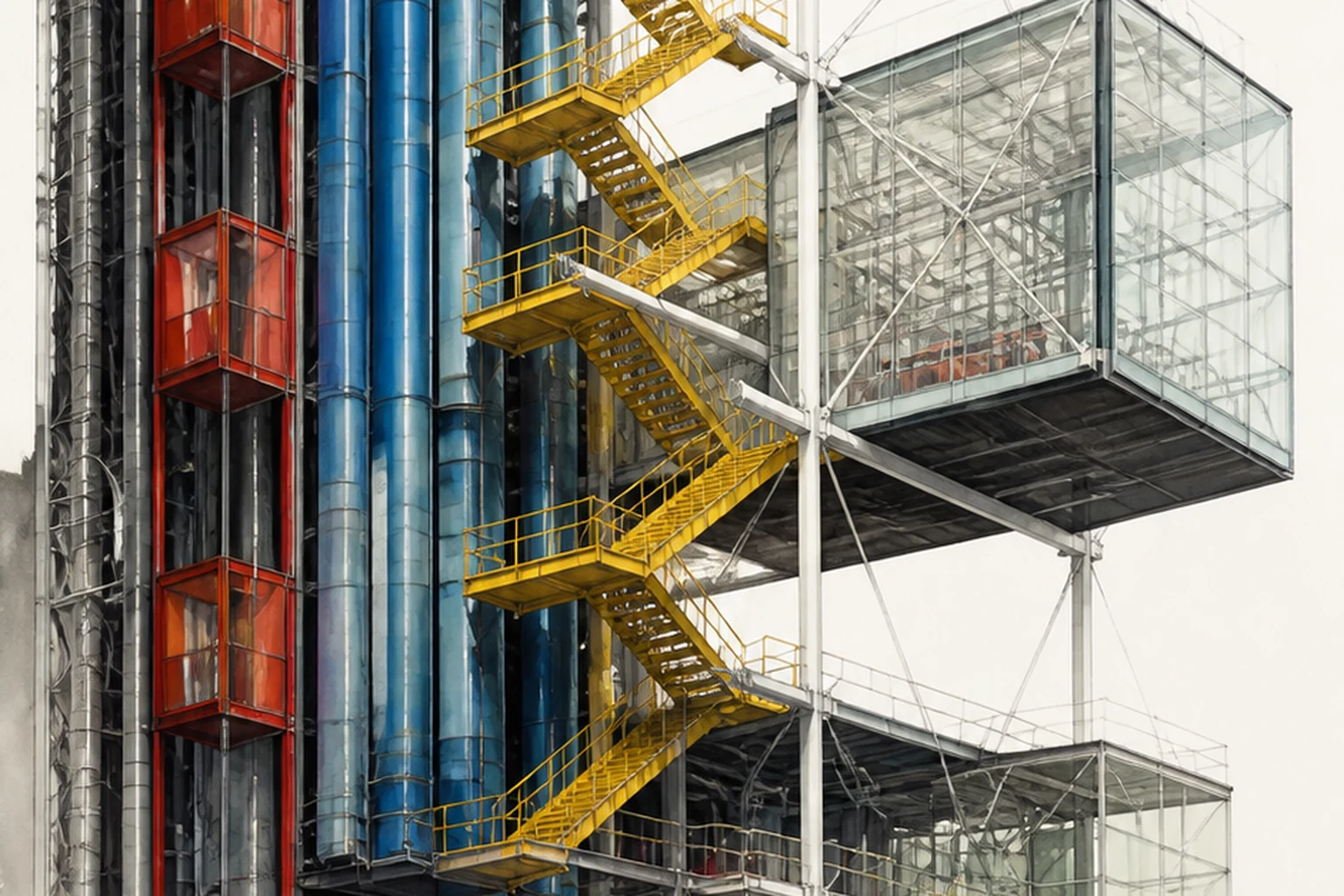
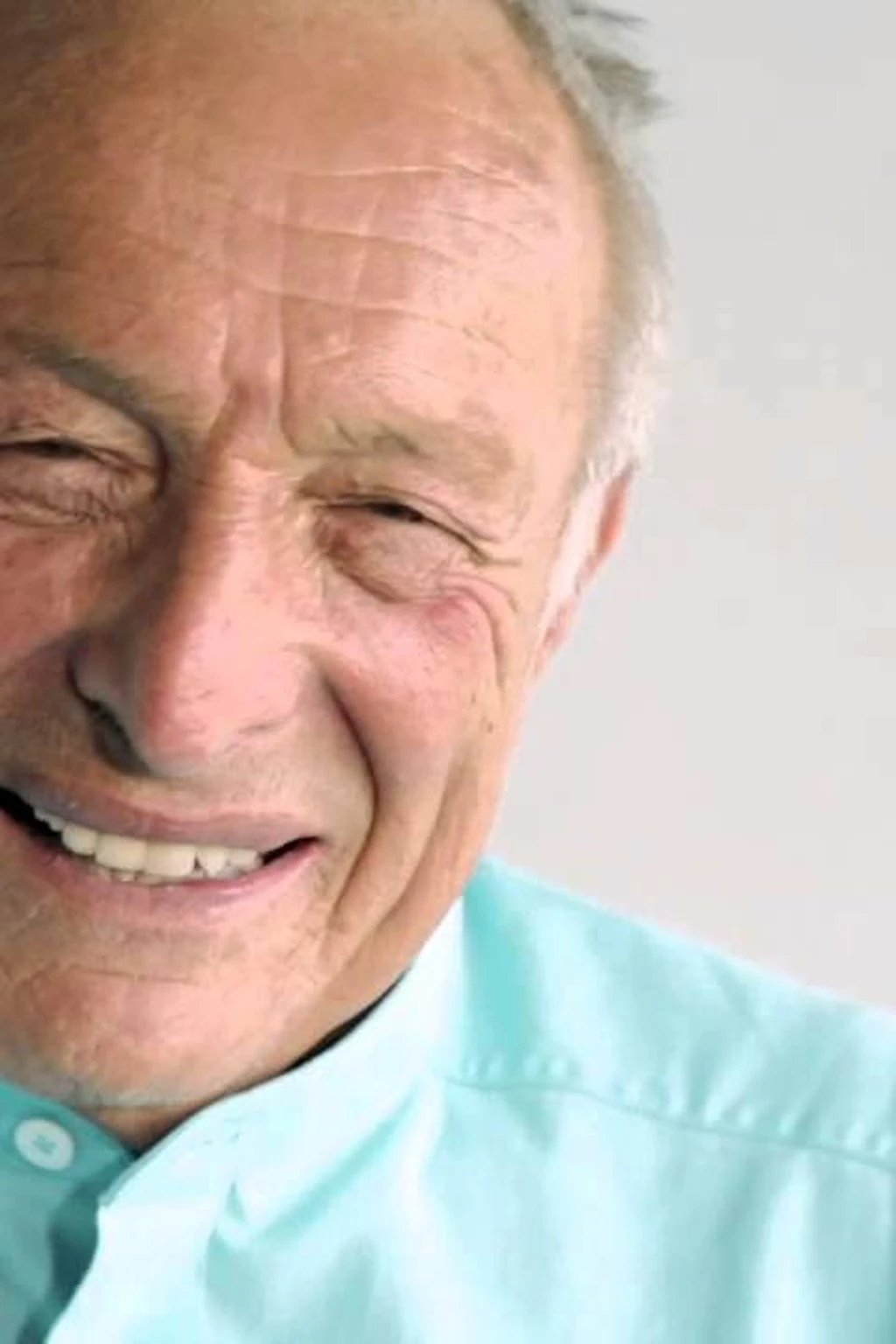
Rogers turned engineering systems, communications and the movement of people into part of a building's public image. His architecture strove to be open, flexible and legible — not only technically but also politically.
Editorial thesis
Richard Rogers's significance rests on joining technological architecture with the idea of an open democratic city. He regarded the building as a changeable system where structure, services and routes can be visible, and public space is an extension of urban life.
Reader question
How did a Florentine émigré raised in Britain turn high-tech from a language of engineering display into a political and urban programme?
To present Rogers as architect, co-author, practice leader and participant in urban policy. The material distinguishes Team 4, the partnership with Renzo Piano, Richard Rogers Partnership and the later practice RSHP.
The core subject is Richard George Rogers, his biography, architectural method and public activity from 1933 to 2021.
The Centre Pompidou is examined as a joint project with Renzo Piano and the engineer Peter Rice.
Major projects of the practice are not attributed to Rogers alone without accounting for partners and teams.
High-tech is used as a historical term but does not replace analysis of flexibility, urban publicness and politics.
Rogers's urban recommendations are considered separately from his built works.
Archival photographs and drawings require a separate rights review.
Short answer
Richard Rogers was born on 23 July 1933 in Florence to an Anglo-Italian family and moved to Britain as a child. He studied at the Architectural Association and the Yale School of Architecture. In 1963, together with Norman Foster, Su Brumwell and Wendy Cheesman, he founded Team 4. International recognition came after winning the competition for the Centre Pompidou, a joint project with Renzo Piano, which opened in 1977.
Later Rogers created the Lloyd's Building, Terminal 4 Madrid-Barajas, the Millennium Dome and other projects in which engineering systems, flexibility and public routes became architectural language. He received the Pritzker Prize in 2007. Alongside practice, Rogers participated in British urban policy, promoting the compact city, public transport and brownfield regeneration. He died on 18 December 2021.
1. Florence, emigration and education
Richard Rogers was born in Florence in 1933 to a family with British and Italian roots. In 1939 the family moved to England, fleeing the Fascist regime.
The experience of emigration and a bilingual environment shaped his understanding of Europe as a cultural and political project. Later he advocated the open city, mobility and social integration.
Dyslexia made schooling difficult but did not prevent him from developing a visual and spatial way of thinking.
2. Architectural Association and Yale
Rogers studied at the Architectural Association in London and graduated in 1959. He then obtained a Fulbright scholarship and continued his education at the Yale School of Architecture.
At Yale he met Norman Foster and came under the influence of American modernism, large engineering systems and industrial production.
His education combined a European social tradition and an American technological culture.
3. Team 4
In 1963 Rogers, Norman Foster, Su Brumwell and Wendy Cheesman founded Team 4.
The practice explored lightweight structures, serial production and flexibility. Reliance Controls became an important early project of British high-tech.
Team 4 dissolved in 1967, but its members continued to develop closely related ideas in different practices.
4. Centre Pompidou
In 1971 the design by Richard Rogers and Renzo Piano won the international competition for the Centre Beaubourg in Paris.
Structure, communications, escalators and services were placed on the exterior, freeing large flexible floor plates within.
The open square in front of the building became no less important than the museum: a cultural institution turned into an urban forum.
5. Peter Rice and engineering co-authorship
The engineer Peter Rice played a key role in developing the Centre Pompidou and Rogers's early technological language.
Cast-steel gerberettes and other elements arose from the joint work of architects, engineers and manufacturers.
This example shows that engineering expressiveness is a collective invention.
6. Architecture of services and flexibility
Rogers sought to separate long-lasting structure from faster-changing engineering and functional elements.
External placement of services facilitated replacement and allowed the building's workings to be legible.
Flexibility was understood not as empty universality but as the building's ability to adapt to new modes of use.
7. Lloyd's Building
The Lloyd's Building in London was completed in 1986. Lifts, stairs, pipes and service towers are placed on the perimeter.
Within, a tall underwriting room is surrounded by galleries. The plan allows workspaces to be changed.
The building became an icon of high-tech, but its complex envelope also showed the high maintenance cost of visible systems.
8. Inmos Microprocessor Factory
The Inmos factory in Newport was completed in 1982. A central structural spine supports lightweight production zones.
The design assumed rapid assembly, expansion and equipment change.
It demonstrates Rogers's interest in architecture as an industrial system, not only as cultural objects.
9. Channel 4 Headquarters
The Channel 4 Headquarters in London was completed in 1994.
A curved glass atrium and open courtyard create a visual link between the organisation and the city.
The project uses technological language to express media openness, though architectural transparency does not guarantee institutional transparency.
10. Millennium Dome
The Millennium Dome in Greenwich opened in 2000 as a major exhibition structure.
A lightweight tensile roof roughly a kilometre in diameter is supported by twelve masts. The internal content was initially independent of the envelope.
The project was criticised for its cost and political symbolism, but the structural system became an important example of a large flexible covering.
11. Terminal 4 Madrid-Barajas
Terminal 4 of Madrid-Barajas airport opened in 2006 and was created by Richard Rogers Partnership together with Estudio Lamela.
A wavy roof, a repeated module and colour navigation help organise a large passenger flow.
The project won the 2006 Stirling Prize but, like any airport, is bound up with the tension between efficient architecture and the carbon intensity of aviation.
12. Leadenhall Building
The Leadenhall Building in the City of London was completed in 2014. Its slanted profile preserves important urban views of St Paul's Cathedral.
Structure and service zones are placed on the façade, and public space passes beneath the raised volume.
The project develops Rogers's long-standing interest in open structure but exists within high-value corporate real estate.
13. The city as an open system
Rogers regarded the city as a space of interaction, not a collection of isolated objects.
He argued for density, mixed uses, quality streets and public transport.
Architecture was meant to support social life, not replace it with a striking object.
14. Urban Task Force
In 1998 the British government commissioned Rogers to lead the Urban Task Force.
The report Towards an Urban Renaissance proposed urban regeneration, the use of brownfield land, improvement of public space and reduced car dependence.
The recommendations influenced British urban policy, though their implementation was partial and uneven.
15. Cities for a Small Planet
The 1997 book Cities for a Small Planet set out Rogers's vision of a compact, ecological and socially mixed city.
He criticised sprawl, pollution and the privatisation of public space.
The text remains important but requires updating in light of climate justice, the housing crisis and digital infrastructure.
16. RSHP and collective practice
The practice changed names from Richard Rogers Partnership to Rogers Stirk Harbour + Partners and later RSHP.
Graham Stirk, Ivan Harbour and other partners led major projects and developed the office after the founder's day-to-day involvement declined.
The history of the practice must record project authorship, not automatically transfer all buildings onto Rogers's name.
17. Colour, structure and publicness
Bright colours in Rogers's work help distinguish functions, routes and engineering elements.
Structure becomes a visual language, not a hidden technical base.
This legibility is tied to a political idea: a public building should explain how it works.
18. Sustainability and adaptability
Rogers linked sustainability with the compact city, public transport, reuse and flexible buildings.
Adaptability can extend a building's lifespan, but complex façades and external services demand significant maintenance resources.
Environmental assessment must consider not only intention but actual performance in use.
19. The Pritzker Prize
In 2007 Richard Rogers received the Pritzker Architecture Prize.
The jury noted his contribution to technological architecture, public space and flexible systems.
The award cemented international recognition of a career that united buildings and urban policy.
20. Criticism and contradictions
Rogers's visible technology can become an expensive aesthetic accessible to large institutions and corporations.
His projects promoted openness but often served financial and state structures.
The idea of the compact city can also be accompanied by rising land values and the displacement of residents if not supported by social policy.
21. Conclusion: technology as a public language
Richard Rogers made the engineering system part of urban culture.
His best projects join flexibility, structural clarity and public space.
Rogers's chief legacy is the idea of technology as a means of openness and adaptation, not merely as an image of the future.