artist profile
Pablo Picasso
The destruction of form, the production of the image and the power of the artistic myth
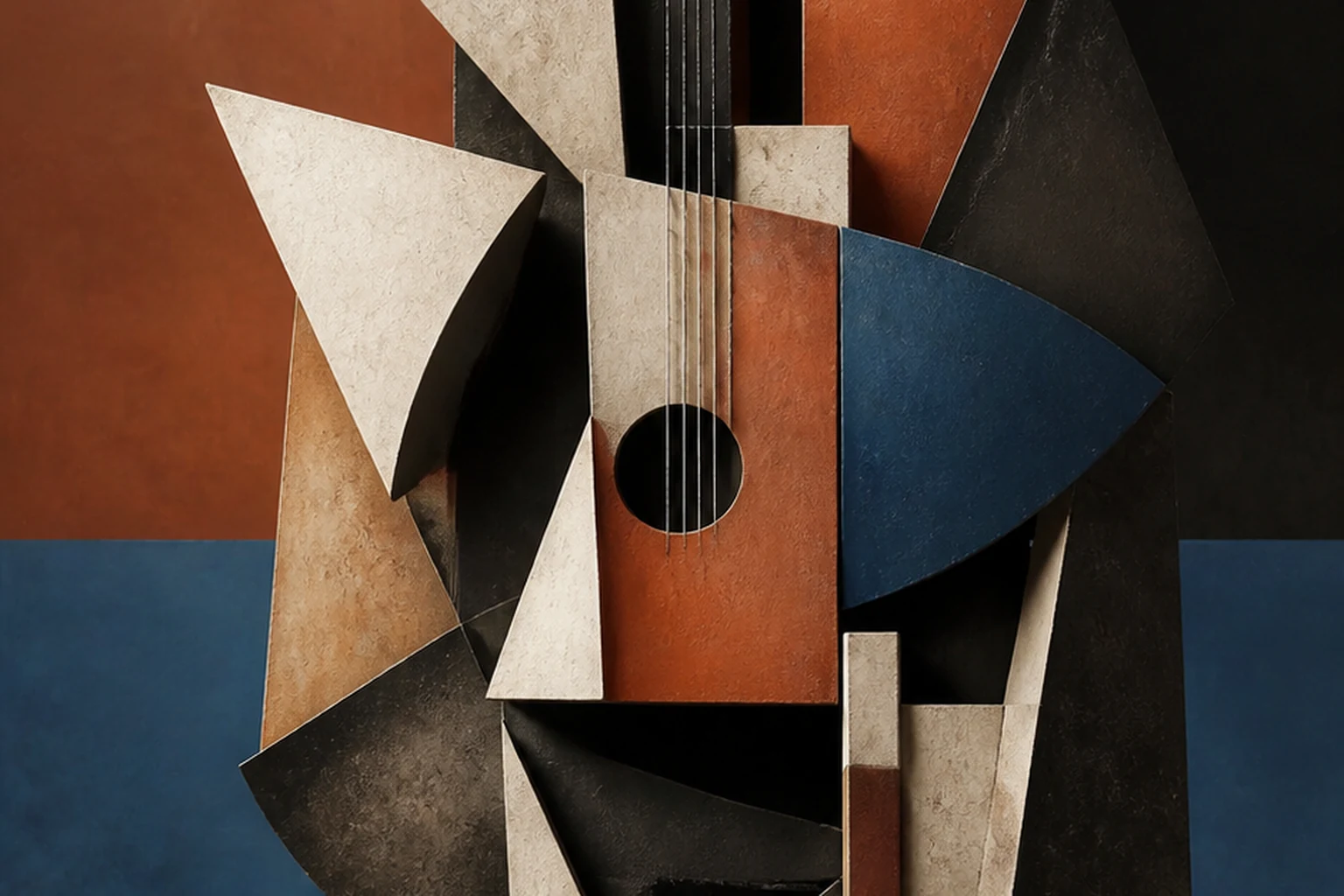
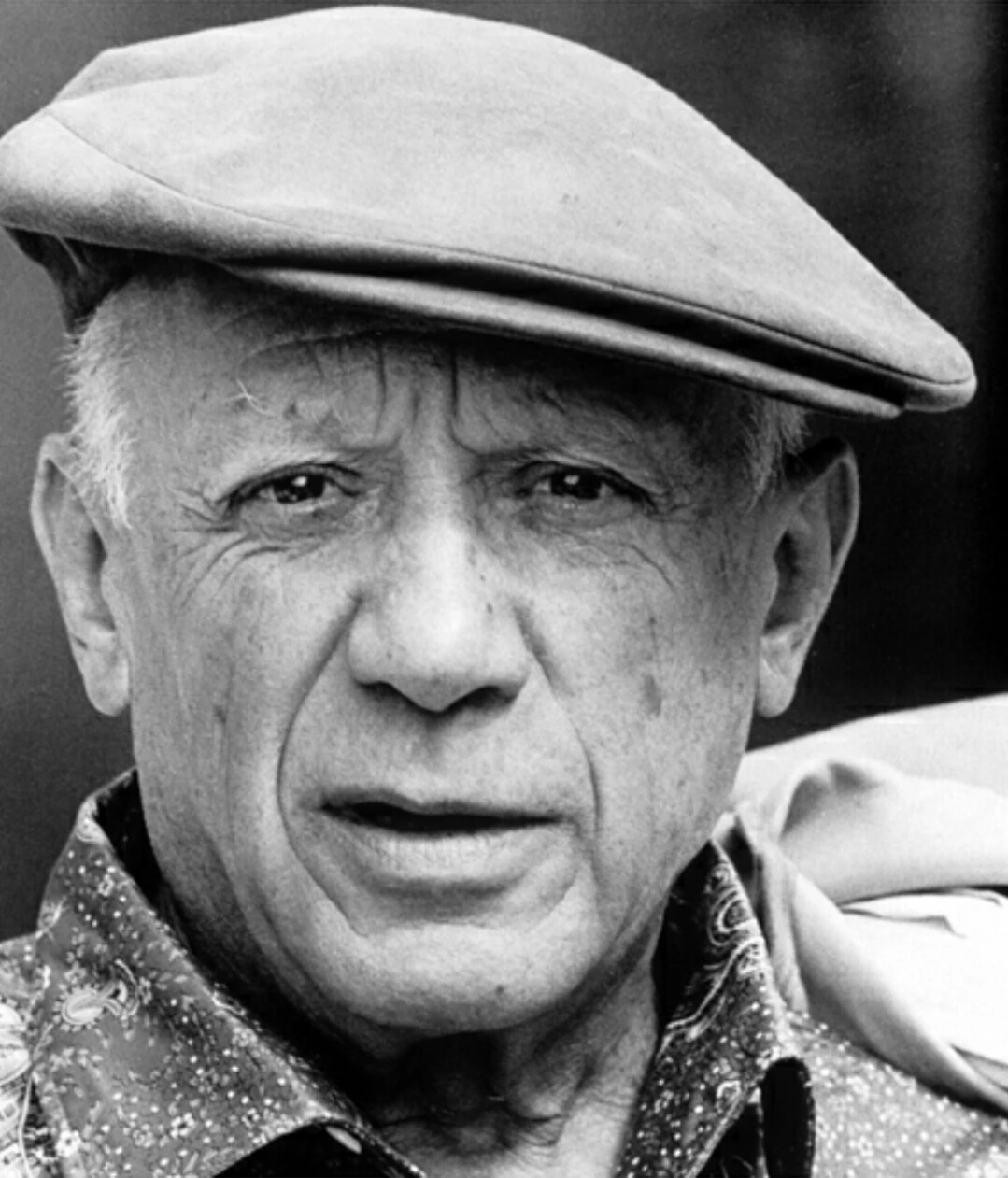
Picasso changed not only the depiction of the human body and the world of objects. He turned stylistic change, the studio, collaboration, public conflict and his own biography into a continuous machine of artistic production.
Editorial thesis
Picasso's significance rests on a radical expansion of the ways of depicting, the material and authorial identity. Yet his canonical status must be examined together with the contribution of Georges Braque, the artists of African and Iberian cultures, the labour of the workshops, his relations with women and the institutional economy of modernism.
Reader question
How could an artist repeatedly destroy his own style, remain a central figure of twentieth-century art and at the same time create a biographical myth that still defines the market, museums and the popular idea of genius?
The core subject is Pablo Picasso: his painting, drawing, sculpture, ceramics, scenography and public image.
Cubism is treated as the joint development of Picasso and Georges Braque, not as an individual invention.
The influence of African and Iberian objects is analysed together with the colonial context of the European collections.
The artist's relations with women are examined without romanticising the concept of the 'muse'.
Guernica is analysed as a political work, a museum object and an international symbol.
The mass market, editions and copyright are separated from the artistic assessment.
Short answer
Pablo Ruiz Picasso was born in Malaga in 1881. He studied in La Coruña, Barcelona and Madrid, and at the beginning of the twentieth century linked his life with Paris. His path includes the Blue and Rose periods, Cubism, Neoclassicism, Surrealist experiments, political painting and a late expressive manner.
Les Demoiselles d'Avignon, the joint work with Braque on Cubism and Guernica became the central points of the history of modernism. Picasso also worked with sculpture, collage, engraving, ceramics, theatre and photography, forming one of the largest-scale artistic practices of the twentieth century.
1. Malaga, La Coruña and family training
Pablo Picasso was born on 25 October 1881 in Malaga. His father, José Ruiz Blasco, was a painter, drawing teacher and museum employee.
The early training was academic: drawing from life, copying plaster casts, composition and technical discipline.
The family's moves to La Coruña and Barcelona gave Picasso access to different art schools and urban culture.
2. Barcelona, Els Quatre Gats and early modernism
In Barcelona Picasso entered the circle of artists, writers and anarchist-minded youth around the café Els Quatre Gats.
He quickly mastered the stylistics of modernism, the graphics of the magazine and the language of the Parisian poster.
The early exhibitions and drawings show that his artistic identity formed through competition, exchange and observation of urban life.
3. Paris and the Blue period
The first trips to Paris began in 1900. The death of Carles Casagemas became one of the emotional sources of the Blue period.
The paintings of 1901-1904 use a cold range, elongated figures and themes of poverty, solitude, illness and social exclusion.
These images created a strong emotional language, but also turned poverty into an aesthetic object for the art market.
4. The Rose period and the image of the artist
In 1904 Picasso definitively settled in Paris and worked in the Bateau-Lavoir.
The Rose period is connected with circus performers, acrobats, harlequins and a warmer palette.
The figure of the performer becomes an autobiographical double: at once a marginal, a professional and a participant in a commercial spectacle.
5. Iberian sculpture and the colonial museum
In 1906-1907 Picasso studied ancient Iberian sculpture and the objects presented in the Parisian ethnographic collections.
Simplified faces, frontality and dense plasticity influenced his move away from naturalistic depiction.
These contacts took place within a European museum system formed by colonial expropriation and the unequal classification of cultures.
6. Les Demoiselles d’Avignon
Les Demoiselles d’Avignon was created in 1907 after a great number of drawings and compositional changes.
Five figures directly face the viewer, and the space is broken into sharp planes without a stable perspective.
The painting became a key work of modernism, but its brothel theme, mask-like faces and aggressive gaze require an analysis of gender, sexuality and the colonial imagination.
7. Cubism with Georges Braque
After 1907 Picasso and Georges Braque began a close exchange of ideas, motifs and technical solutions.
Their collaboration was so intense that individual works are sometimes difficult to tell apart without the signatures and archival data.
Cubism should therefore be described as a joint investigation, not as the achievement of a single artist.
8. Analytic Cubism
In Analytic Cubism the object is taken apart into intersecting planes and shown as a collection of different points of view.
The palette becomes limited, and the distinction between figure and ground weakens.
The depiction does not simply fix a visible object but shows the process of its intellectual construction.
9. Collage and Synthetic Cubism
From 1912 Picasso and Braque began to include newspaper, wallpaper, typography and imitations of materials in their works.
Collage destroyed the boundary between the depiction of an object and the fragment of everyday reality itself.
Synthetic Cubism made the form flatter, brighter and more iconic, opening the way to design, typography and mass visual culture.
10. African art, appropriation and the canon
In the European history of modernism African objects were long described as an anonymous source of inspiration.
Such language hides the authorship of specific cultures, the ritual function of the objects and the colonial conditions of their movement.
Contemporary analysis must at once acknowledge the formal influence and criticise the system that assigned the objects the status of raw material for the European avant-garde.
11. Ballets Russes and scenography
In 1917 Picasso worked with Sergei Diaghilev's Ballets Russes on the ballet Parade.
The project united painting, costume, set design, Erik Satie's music and Léonide Massine's choreography.
The theatre widened his interest in scale, movement, costume and the collective production of the image.
12. The Neoclassical period
After the First World War Picasso, in parallel with the Cubist works, turned to large, heavy and clear human figures.
The Neoclassical manner was not a rejection of the avant-garde but part of a strategy of the simultaneous existence of several languages.
This destroys the idea of his work as a linear sequence of styles.
13. Surrealist plasticity and the Minotaur
In the 1920s and 1930s the bodies in Picasso's works become tense, dismembered and metamorphic.
The image of the Minotaur connects sexuality, violence, blindness, the artist and mythological power.
The Surrealist environment strengthened Picasso's interest in the unconscious, but the artist kept his independence from the group.
14. Sculpture and construction
Picasso worked with sculpture throughout his life, using clay, wood, metal, plaster, found objects and assembled constructions.
The Guitar of 1912 changed the idea of sculpture: the volume was not carved from a mass but assembled from planes.
The later work at Boisgeloup and the collaboration with Julio González widened his metal and spatial practice.
15. The Vollard Suite and printmaking
The Vollard Suite is a series of a hundred etchings, created in the 1930s.
It includes the themes of the sculptor's studio, the artist and model, the Minotaur, violence and classical mythology.
Printmaking allowed Picasso to work in series, repeat the motif and spread the image beyond the unique painting.
16. Dora Maar and the process of creating Guernica
Dora Maar documented the stages of the creation of Guernica in the studio on Rue des Grands-Augustins.
Her photographs give a rare testimony of the successive changes of the composition.
Maar was an independent artist and photographer; reducing her role to the biographical category of a 'muse' distorts the professional significance of her work.
17. Guernica
Guernica was painted in 1937 for the pavilion of the Spanish Republic at the International Exhibition in Paris.
The occasion was the bombing of the Basque town of Guernica by German and Italian aviation supporting the Francoist forces.
A monochrome composition joins the figures of people, a bull, a horse and a destroyed space, turning a specific event into an image of violence against the civilian population.
18. War, France and the political position
Picasso stayed in France during the German occupation and continued to work in Paris.
His art was not always direct propaganda, yet Guernica and the related works formed a durable anti-war image.
The artist's political reputation was formed from the works, the public statements, the exhibitions and the use of his images by various movements.
19. The Communist Party and the image of the public intellectual
In 1944 Picasso joined the French Communist Party.
He took part in peace congresses and created images connected with the anti-war movement, including the dove of peace.
The relations with the party were complex: the artist's symbolic authority did not always coincide with the demands of Socialist Realism.
20. Vallauris and ceramics
After the war Picasso worked actively in Vallauris with the Madoura workshop.
He created dishes, jugs, vases and sculptural forms, using the surface of the vessel as a space of drawing.
Ceramics widened his practice, but also depended on the technical knowledge of Suzanne and Georges Ramié and on the labour of the workshop.
21. The late painting and the dialogue with the Old Masters
In the late decades Picasso interpreted Velázquez, Delacroix, Manet and other masters.
The series after Las Meninas and Le Déjeuner sur l'herbe turn the canon into material for repetition and variation.
The late manner is marked by speed, the energy of the line, frank corporeality and a resistance to the idea of a calm old-age period.
22. Women, power and the myth of the muse
Fernande Olivier, Eva Gouel, Olga Khokhlova, Marie-Thérèse Walter, Dora Maar, Françoise Gilot and Jacqueline Roque are connected with different periods of his life and art.
The popular history often turns them into a sequence of 'muses', erasing autonomy, professional labour and the asymmetry of power.
A contemporary editorial position must take account of the testimony of psychological violence, control and inequality, without reducing the works to biography.
23. The studio and collective production
The scale of Picasso's legacy was impossible without the lithographers, ceramists, printers, photographers, secretaries, gallerists and curators.
Picasso's signature ensured the market value, while the production labour often remained less visible.
Correct attribution must distinguish the authorial concept, the manufacture, the editioning and the posthumous management of the legacy.
24. Photography, cinema and the public image
Picasso constantly interacted with photographers and film-makers, including Brassaï, Robert Doisneau, Lucien Clergue and Henri-Georges Clouzot.
The film Le Mystère Picasso turned the process of drawing into a public spectacle.
The camera supported the image of the artist as a tireless creator and became an important part of the production of his myth.
25. Museums, legacy and the art market
After Picasso's death in 1973 his legacy became the basis of major museum collections, research, exhibitions and legal structures.
The Musée Picasso Paris holds a significant part of the legacy received by the state, and the Museu Picasso Barcelona is especially important for studying the artist's early years.
The high prices, the large number of editioned works and the popularity of the name create constant risks of incorrect attribution, counterfeits and simplified marketing.
26. Conclusion
Picasso widened the boundaries of painting, sculpture, collage, printmaking and artistic identity.
His influence cannot be explained by a single style: it rests on a constant reworking of forms, history, media and his own biography.
A critical understanding of Picasso requires at once acknowledging the artistic power, the collective sources, the political context and the inequality of personal power.