artist profile
Salvador Dalí
Paranoia, spectacle and the production of one's own myth
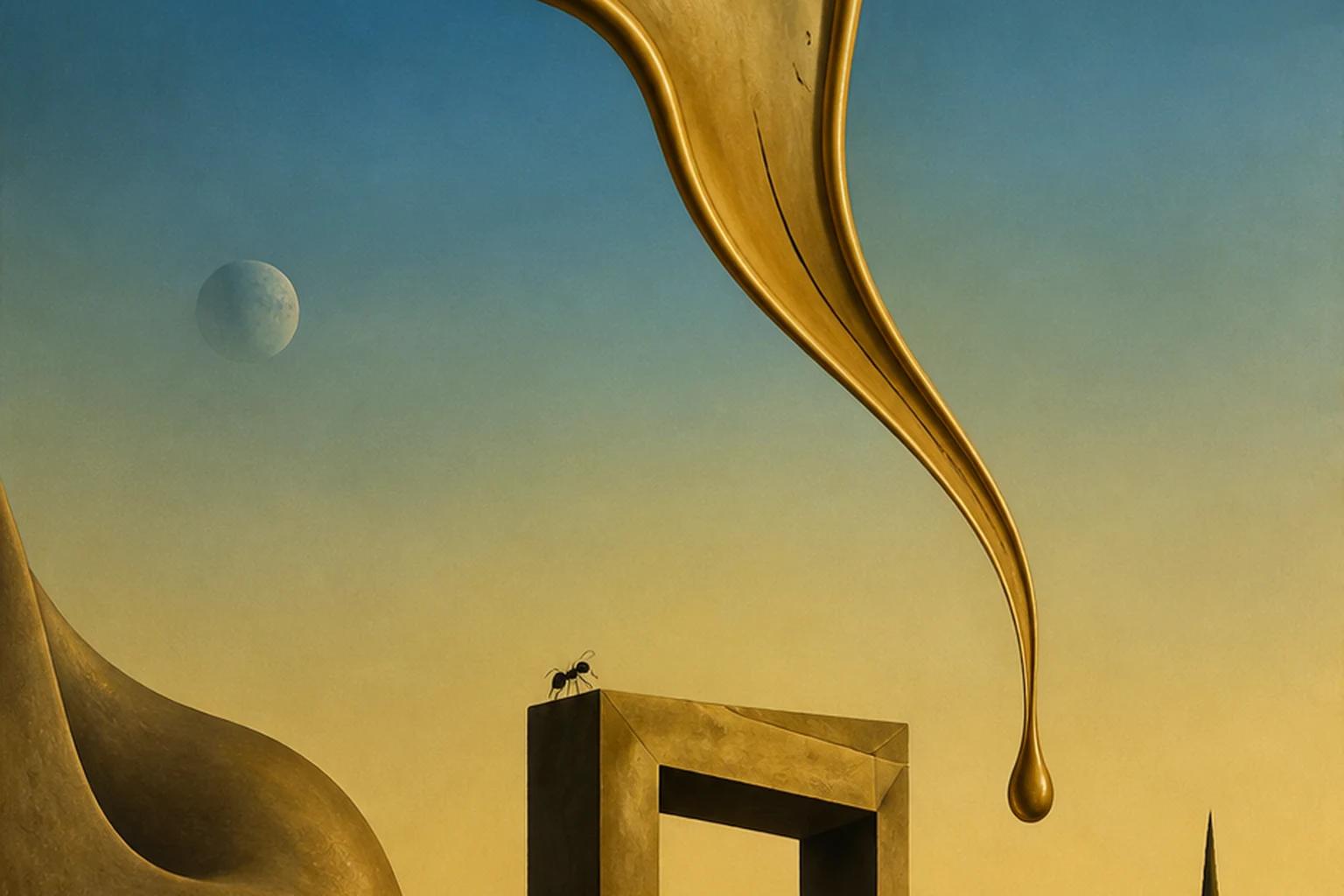
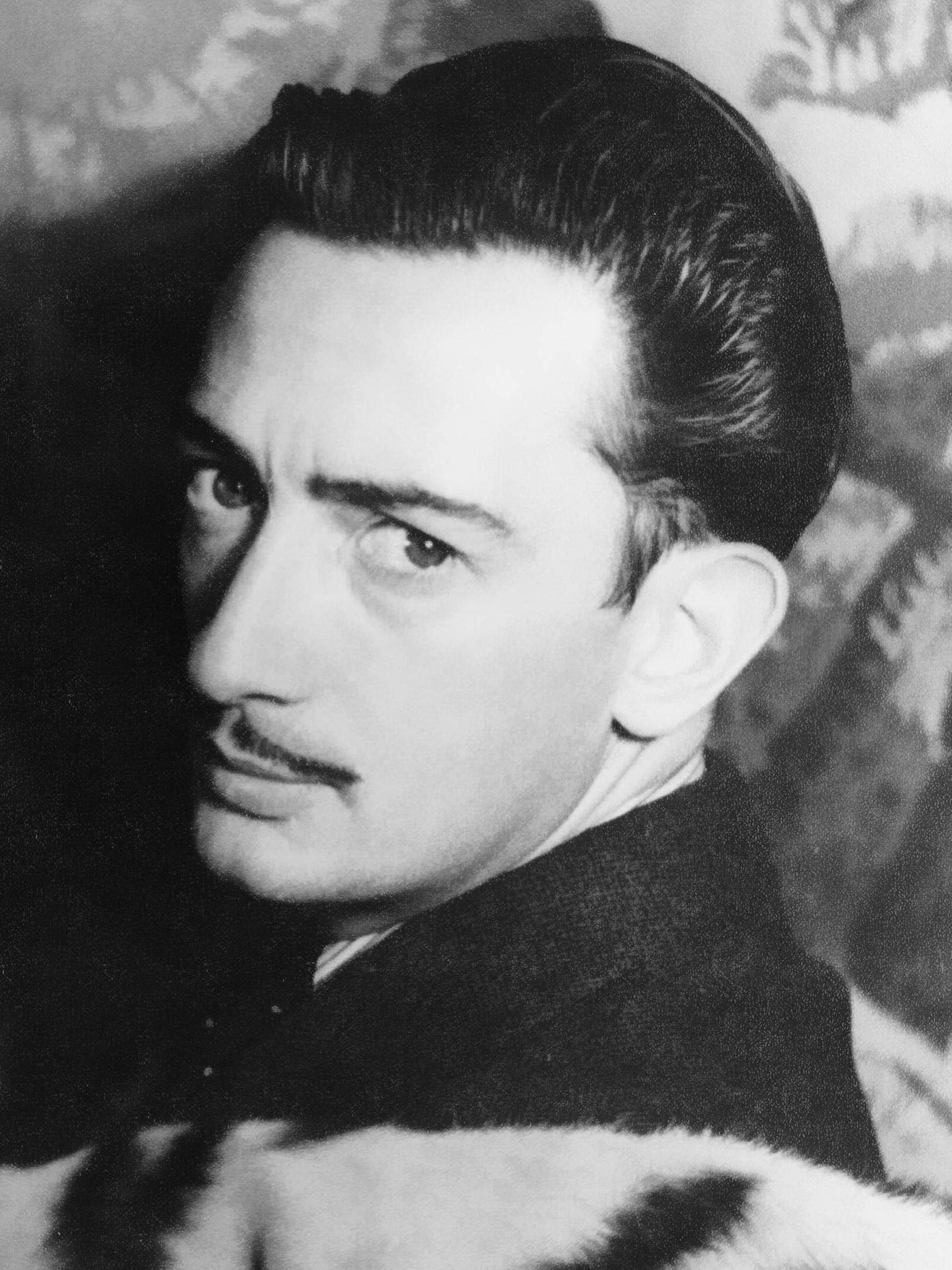
Dalí turned painting, photography, cinema, fashion, advertising and his own appearance into a single media system. His art cannot be separated from the discipline of the image, the theatre of self-presentation and the contradictions of his political stance.
Editorial thesis
Salvador Dalí's significance rests not only on the creation of a recognisable surrealist language but also on an early understanding of the artist as a media brand. He combined academic technique, psychoanalysis, mass culture, scenography and commercial collaboration, continually blurring the boundary between artwork, advertisement and public persona.
Reader question
How did an artist turn dream, fear, desire and cultural provocation into a visual system that simultaneously became avant-garde, mass spectacle and a global brand?
The core subject is Salvador Dalí, his painting, graphic work, objects, cinema, photography, design and authorial persona.
The role of Gala is treated as management, collaboration and complex co-authorship, not merely as biographical background.
Political statements and relations with authoritarian regimes are analysed separately from formal innovation.
Commercial projects are neither separated from the artistic strategy nor romanticised.
The artist died in 1989; the current section concerns the activity of the Fundació Gala-Salvador Dalí and the museums of the Dalinian Triangle.
Archival photographs, film clips and images of works require rights review.
Short answer
Salvador Dalí was born in Figueres in 1904, studied at the San Fernando Academy in Madrid and joined the surrealist circle in the late 1920s. In 1929 he met Gala, who became his partner, manager and a central figure in his personal mythology.
The Persistence of Memory, The Great Masturbator, Metamorphosis of Narcissus, the films with Luis Buñuel, projects for Hitchcock, Disney and Elsa Schiaparelli, and the Theatre-Museum in Figueres demonstrate the range of his practice.
1. Figueres and family mythology
Salvador Dalí was born in Figueres, Catalonia, in 1904. His family history included the death of an older brother with the same name, who died before the artist's birth.
Dalí later turned this fact into part of his own mythology of the double, substitution and exceptionality.
The Empordà landscape, the cliffs of Cap de Creus and the light of Portlligat became enduring elements of his visual world.
2. Madrid, the Residencia de Estudiantes and the avant-garde
In 1922 Dalí began his studies at the San Fernando Academy in Madrid and settled in the Residencia de Estudiantes.
There he found himself among poets, filmmakers and intellectuals who were discussing Cubism, Futurism, psychoanalysis and new forms of art.
His academic technique developed alongside an interest in radical artistic strategies.
3. Buñuel, Lorca and the early network of collaboration
At the Residencia de Estudiantes Dalí grew close to Luis Buñuel and Federico García Lorca.
These relationships shaped his early intellectual and creative environment, though Dalí's later memoirs often distorted the balance of collaboration.
A correct account must separate confirmed documents, the later authorial legend and scholarly interpretations.
4. Un Chien Andalou
The short film Un Chien Andalou was created by Dalí and Buñuel in 1929.
The film joins episodes unconnected by dream logic, bodily shock, montage and the refusal of traditional narrative.
The scene with the sliced eye became one of the best-known provocations of avant-garde cinema.
5. Entry into surrealism
In the late 1920s Dalí entered the Paris surrealist group associated with André Breton.
His precise illusionistic manner made it possible to depict irrational scenes with the conviction of academic painting.
He quickly became one of the movement's most visible public representatives.
6. The paranoiac-critical method
Dalí described the paranoiac-critical method as the active production of irrational connections and multiple interpretations.
Unlike the passive recording of dreams, the method presupposed the conscious use of obsessive logic and visual ambiguity.
Double images allowed one motif to transform into another without physically changing the painting.
7. The Great Masturbator
The Great Masturbator of 1929 brings together the autobiographical head form, insects, sexual desire and fear.
It displays Dalí's early vocabulary: soft bodies, elongated forms, a desert landscape and objects with psychoanalytic charge.
The work must be read together with the culture of sexuality, anxiety and the male gaze of the interwar period.
8. The Persistence of Memory
The Persistence of Memory was painted in 1931 and became Dalí's most recognisable work.
Soft watches join a precise painterly surface with the sensation of the decay of time, matter and rational order.
The picture's small size intensifies the contrast between its physical intimacy and the scale of its cultural fame.
9. Double images and metamorphosis
In the 1930s Dalí systematically developed double and multiple images.
Metamorphosis of Narcissus links figure, hand, egg and flower in a visual chain of transformations.
The viewer becomes an active participant, switching perception between incompatible images.
10. Gala: partnership, management and power
Gala, born Elena Diakonova, met Dalí in 1929 and became his lifelong partner.
She took part in business negotiations, sales organisation, relations with collectors and the shaping of the artist's public image.
This collaboration was productive and simultaneously bound up with unequal power, conflicts and a complex private life.
11. The break with the surrealists
Dalí's relations with Breton's group deteriorated because of political disagreements, commercial activity and the artist's drive for independent publicity.
In 1939 he was expelled from the organised surrealist movement.
Dalí continued to use the surrealist language but increasingly presented himself as an autonomous brand.
12. War, exile and the United States
During the Second World War Dalí and Gala lived in the United States.
The American period strengthened his connection with the press, Hollywood, shop windows, advertising, ballet and mass culture.
Dalí understood that artistic fame could be created through constant presence in the media.
13. The Secret Life of Salvador Dalí
The autobiography The Secret Life of Salvador Dalí appeared in 1942.
The book joins facts, self-staging, fantasies and provocations and therefore cannot be used as a neutral biographical source.
At the same time it is an important work of authorial myth-making.
14. Hitchcock and Spellbound
For Alfred Hitchcock's film Spellbound Dalí developed the concept of the dream sequence.
A shortened version of his imagery entered the final film: eyes, curtains, card tables and distorted space.
The project shows the conflict between authorial imagination, studio production and the demands of narrative cinema.
15. Disney and Destino
In 1945-1946 Dalí worked with Walt Disney Studios on the project Destino.
The original version was not completed, and the film was reconstructed and released decades later on the basis of archival materials.
The project joins animation, music, metamorphoses and the characteristic Dalí landscape.
16. Schiaparelli, fashion and the object
Dalí's collaboration with Elsa Schiaparelli became one of the early examples of a systematic dialogue between art and high fashion.
The best-known results include the Lobster Dress, the Shoe Hat and the Skeleton Dress.
The authors turned clothing into a wearable surrealist object, working with the body, humour and social shock.
17. Photography and Philippe Halsman
Philippe Halsman and Dalí created a series of photographs in which the portrait became a carefully constructed event.
Dalí Atomicus requires a distinction between the spontaneous appearance of the shot and the complex staging with numerous repeated attempts.
Photography became an instrument not of documentation but of the production of a public legend.
18. Advertising, television and mass culture
Dalí took part in advertising, designed shop windows, appeared on television and created commercial images.
He did not consider mass notoriety incompatible with artistic status.
This strategy anticipated the modern attention economy but also contributed to the erosion of quality control and product attribution.
19. Nuclear mysticism
After the Second World War Dalí turned to themes of atomic physics, religion and classical composition.
He called this direction 'nuclear mysticism', joining disintegrating matter with Catholic imagery.
The works of this period display a passage from psychoanalytic surrealism to a grand metaphysical stage.
20. Religion, classicism and late painting
Late Dalí actively engaged with Raphael, Velázquez, Vermeer and other artists of the European canon.
He employed academic composition, optical experiments, stereoscopy and large-scale religious subjects.
Critics are divided on these works: from a technical renaissance to theatrical academicism.
21. Jewellery design and spatial objects
Dalí produced designs for jewellery, objects, furniture and interiors, expanding his practice beyond painting.
Lips, eyes, a heart, insects and moving elements were turned into precious mechanisms and bodily symbols.
Seriality and late versions demand rigorous verification of each object's provenance.
22. The Dalí Theatre-Museum
The Dalí Theatre-Museum in Figueres opened in 1974 in the ruins of the former municipal theatre.
The artist designed it as a complete work, not a neutral museum shell.
The building joins painting, sculpture, optics, scenography, architecture and the visitor's route in Dalí's largest spatial self-portrait.
23. Politics, Franco and responsibility
Dalí's political stance after his break with the surrealists included public anti-communism and demonstratively cordial relations with the Franco regime.
His return to Spain and official contacts with the dictatorship provoked sharp criticism from contemporaries.
Formal analysis of the works must not be used to neutralise this political responsibility.
24. Signatures, editions and the problem of authenticity
The market for Dalí's graphic and editioned works is known for complex problems of attribution, signatures and posthumous use of images.
High demand, wide licensing and insufficiently transparent publishing practices created a favourable environment for forgeries.
Purchase or publication requires catalogue raisonné, provenance, expert verification and rights confirmation.
25. The legacy and the Foundation
The Fundació Gala-Salvador Dalí was created by the artist himself for the preservation and dissemination of his legacy.
The Foundation manages the Theatre-Museum in Figueres, the house in Portlligat and Gala's castle in Púbol, which form the Dalinian Triangle.
Current work includes research, conservation, catalogues, exhibitions, educational programmes and rights control.
26. Conclusion
Salvador Dalí made the irrational image precise, reproducible and fit for mass circulation.
He turned his own appearance, relationships and biography into an extension of his artistic practice.
The chief contradiction of his legacy is the inseparability of visual innovation, commercial genius, political problems and authorial myth.