critic theorist profile
Roland Barthes
Signs, Myth, Fashion and Photography as Systems of Reading

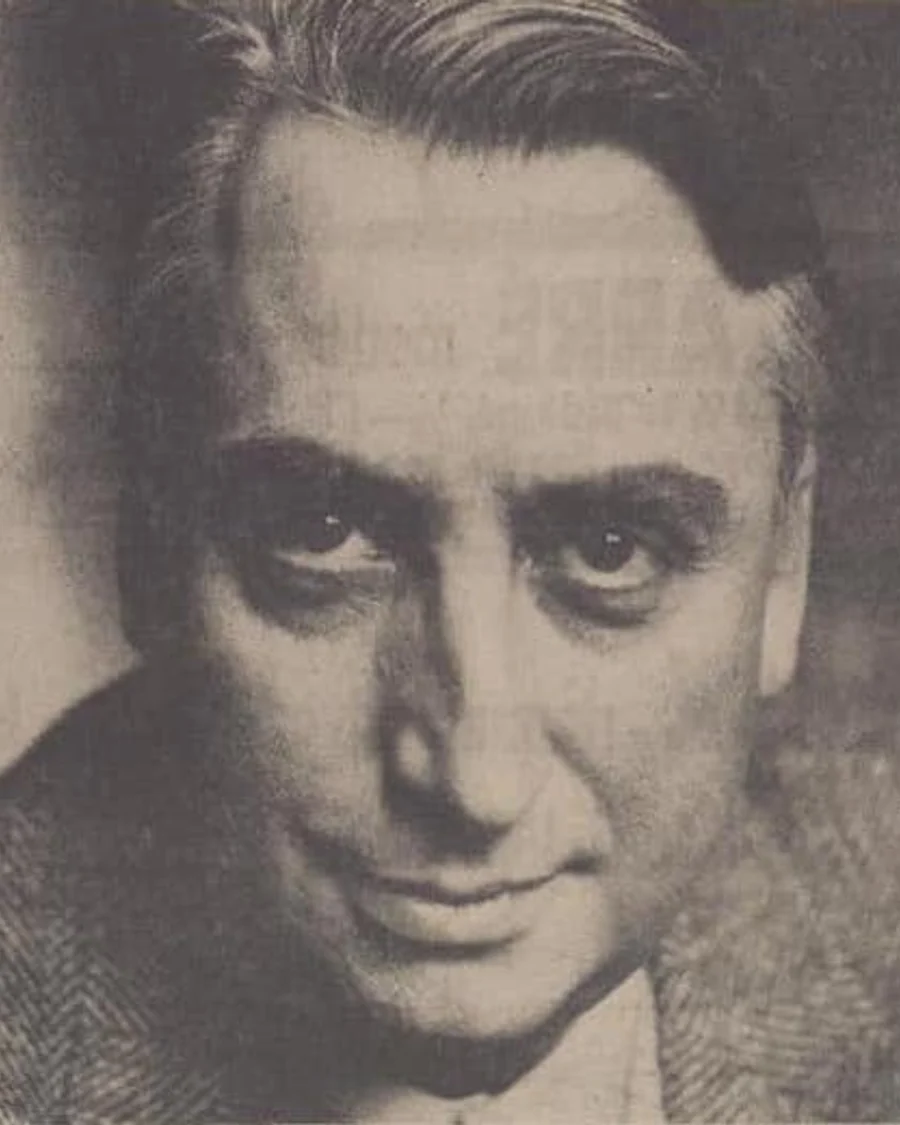
Barthes made criticism a tool for reading everyday life: the car, fashion magazine, advertisement, photograph and even the author become sign-systems whose meanings should be analysed rather than accepted as natural.
Editorial thesis
Roland Barthes’s central contribution to visual culture is not a set of fashionable terms such as myth, punctum or the death of the author. He taught readers to test how cultural systems turn historical and ideological meaning into an appearance of naturalness, then demonstrated the limits of rigid systems by returning pleasure, the body and personal experience to analysis.
Reader question
Why is a theorist who wrote about 1960s fashion magazines and a pasta advertisement still useful for branding, photography, editorial design and synthetic imagery?
Short answer
Because Barthes studied the production of meaning rather than one platform. As long as things receive captions, images enter sequences, brands convert history into myth and viewers read more than makers intend, his tools remain useful.
1. Cherbourg, 1915: a philologist before “semiology” became a brand
Roland Barthes was born in Cherbourg on 12 November 1915. He received a classical philological education in Paris and completed a licence de lettres classiques in 1939. The Collège de France biography shows a trajectory beginning not in media theory but in language, grammar and literature. [source]
That matters for everything that follows. Barthes would write about advertising, fashion, photography and automobiles, yet repeatedly ask a philologist’s question: how does a thing begin to mean, what rules make that meaning legible, and why does it appear natural?
2. Bucharest, Alexandria, CNRS, EPHE: a critic formed between institutions
After teaching in France, Barthes worked at French institutes in Bucharest and Alexandria, then at the CNRS; from 1960 he worked in the Sixth Section of the École pratique des hautes études and became directeur d’études in 1962. [source]
His institutional route does not resemble a career inside one university department. Literature, sociology, linguistics and mass culture constantly intersect. That mobility explains how his criticism moves from Racine to fashion magazines and from advertising language to photography.
3. Writing Degree Zero, 1953: language stops being a transparent shell
Seuil published Le Degré zéro de l’écriture in 1953. Already here Barthes resists the idea that language is a neutral vehicle for a fully formed thought. The BnF bibliography records it as the first major book in his chronology. [source]
For visual culture the move is fundamental. Typeface, caption, crop, layout or tone do not come after content. They participate in the production of meaning just as wording participates in literature.
4. Mythologies, 1957: criticism leaves the museum for the supermarket
Mythologies, published by Seuil in 1957, made mass images and everyday rituals legitimate objects of criticism. The book examines not high art as an isolated sphere but the cultural surface of modern life. [source]
This changes the critic’s scale. Car, advertisement, sport, food or magazine celebrity become carriers of ideology rather than trivial details. Visual culture is too consequential to be left to marketing alone.
5. Citroën DS, wrestling, detergent: the object is read as a scenario
The power of Mythologies lies in asking not only “what is this object?” but “what world does it promise and what behaviour does it normalise?” Barthes’s short texts turn consumer goods and spectacles into social scenarios. [source]
The method remains useful for design. An object carries more than function and form. It may signify modernity, purity, masculinity, progress, status or naturalness—and those meanings are constructed.
6. Myth as a second layer of the sign: ideology disguises itself as nature
In the theoretical conclusion to Mythologies, Barthes describes myth as a system that takes an existing sign and reuses it as material for a new level of meaning. A historical construction begins to look like an obvious fact. [source]
The critical operation is denaturalisation. When a visual system says “this is simply how the world is,” Barthes asks who made that image persuasive, and when. In branding the same question applies to the conversion of history into heritage and social codes into supposedly innate taste.
7. The critic as demystifier rather than judge of taste
Barthes is rarely interested in the binary verdict beautiful/ugly. In Mythologies an object matters because it reveals a mechanism of meaning. [source]
This differs from criticism that distributes prizes. Demystification does not tell the viewer what they may enjoy; it shows which cultural conditions help pleasure, prestige or disgust appear personal and natural.
8. 1957: clothing becomes both historical and sociological object
In Histoire et sociologie du Vêtement Barthes criticised costume history when it was limited to dating isolated details and illustrating a picturesque spirit of the age. He proposed treating dress as an institutional system connected to society. [source]
This begins a line central to VANSMITHLAB: fashion is not a sequence of silhouettes. Garments have economies, rituals, social distinctions and languages, and history has to study their relations.
9. “Le bleu est à la mode cette année,” 1960: the fashion magazine turns colour into a sign
In his 1960 article Barthes analyses fashion-press statements that declare a colour to be “in fashion this year.” He studies the relation between form and concept: dress or colour acts as signifier while youth, season, fashionability or status acts as signified. [source]
The key transition is from textile to statement. A magazine does not merely describe a thing. It produces equivalences through which colour begins to mean a mood, age or social situation.
10. The Fashion System, 1967: the subject is not the dress but “written clothing”
Le Système de la mode appeared at Seuil in 1967 after a long research project. Contemporary discussion and later scholarship stress that its central material was not clothing as physical object but textual descriptions of fashion in specialist press. [source]
That limitation is the point. Barthes studies the mechanism by which real or photographed clothing receives a verbal instruction for how it should be read.
11. Elle and Jardin des Modes: editorial language manufactures fashionability
Materials around Le Système de la mode identify women’s magazines including Elle and Jardin des Modes. Barthes examines how technical descriptions of garments merge with lifestyle rhetoric. [source]
For fashion media the implication is demanding: editing does not merely report what exists. It creates a hierarchy of significance. A caption can make the same object young, urban, evening or daring and thereby change its cultural function.
12. Why The Fashion System matters beyond trends: the magazine produces a user
Barthes is not forecasting a season. He is interested in the subject constructed by magazine discourse. Fashion language offers the reader not only clothes but situations, desires and socially legible roles. [source]
The same mechanism is visible in campaign copy, product descriptions and social captions. A commodity acquires meaning through a scenario of its future user: who they are, where they go and how they wish to be seen.
13. Elements of Semiology, 1964: the map of language migrates into culture
In Éléments de sémiologie Barthes systematised pairs such as langue/parole, signifier/signified, syntagm/system and denotation/connotation. The essay appeared in a thematic 1964 issue of Communications. [source]
These pairs are not a universal designer’s checklist, but they impose useful discipline. One can distinguish unit from system, individual sign from sequence and literal level from cultural overlay.
14. Rhetoric of the Image, 1964: the Panzani advertisement as a laboratory
In Rhétorique de l’image Barthes deliberately chooses advertising because its meanings are intentional and must be quickly legible. He analyses a Panzani image containing packaged foods, vegetables and a shopping net. [source]
This remains a strong model of close reading for commercial imagery. Instead of general impression, the critic identifies which elements produce freshness, Italian associations, home cooking and product identity.
15. Words beside images: the caption is not neutral
Barthes’s analysis demonstrates that words and images divide the work of meaning. Text can stabilise one reading among several possibilities and reduce an image’s ambiguity. [source]
The same operation is constant in interfaces: headline, alt text, product name or caption decides what the viewer should treat as primary. Images rarely exist without verbal framing, even when design tries to make the frame disappear.
16. The Death of the Author, 1967: the maker stops being the final court
The Death of the Author first appeared in English in the multimedia magazine Aspen 5+6 in 1967; French publication followed in 1968. [source]
Its argument is often flattened into “the author does not matter.” More precisely, authorial intention should not automatically close all possible meanings. A work enters a network of cultural codes and continues to generate meaning among readers.
17. The reader as producer: interpretation is not the same as arbitrariness
Weakening authorial authority does not mean every commentary is equally convincing. Interpretation still has to work with how a text is constructed, which codes it activates and which relations it makes possible. [source]
For design this matters directly. A brand may declare one intention, but audiences read form through historical, political and social associations. The maker controls production, not the entire cultural life of the result.
18. S/Z, 1970: one text becomes a network of codes
In S/Z Barthes reads Balzac’s Sarrasine not as a work with one hidden answer but as an intersection of codes and voices. Seuil later published his Sarrasine seminar materials, making the development of this reading practice accessible. [source]
The practical lesson is to resist reducing a complex object too quickly to one “idea.” A visual system may work through plot, symbol, cultural citation, action and enigma at the same time.
19. The Empire of Signs, 1970: “Japan” as a constructed sign-system
In L’Empire des signes Barthes uses Japan as a space for experimenting with writing, food, city, emptiness and signs. Seuil continues to publish the book as a distinct visually oriented volume. [source]
Today it requires a critical qualification: this is not ethnographic description. Barthes’s “Japan” is an authorial construction used to challenge Western habits of meaning. Reading it as objective cultural expertise would reproduce the problem of exoticisation.
20. Erté, Arcimboldo, Cy Twombly: theory enters the history of images
The BnF bibliography records separate Barthes publications on Erté and Arcimboldo, and his writings on Cy Twombly were later collected. [source]
He was therefore never only a literary theorist. In visual art he follows gesture, trace, ornament, writing and moments when form has not yet been closed by a single explanation. The image becomes a mode of thinking rather than an illustration of thought.
21. The Pleasure of the Text, 1973: after system comes pleasure
In Le Plaisir du texte Barthes shifts away from the dream of a strict science of signs toward the bodily experience of reading. The BnF dates the book to 1973. [source]
This does not cancel early semiology; it corrects it. A user is not a decoding machine. Rhythm, surprise, difficulty, pleasure and irritation also participate in the life of a message.
22. Roland Barthes by Roland Barthes, 1975: autobiography breaks into fragments and images
In Roland Barthes par Roland Barthes the writer turns his own figure into material, combining fragments, photographs, handwritten traces and self-irony. The BnF treats it as a major 1975 publication and preserves related archives. [source]
Autobiography stops being a straight line that says “this is who I am.” Identity is shown as montage. For editorial design this is a powerful principle: image sequence and fragments can produce a person without one central portrait.
23. A Lover’s Discourse, 1977: classifying feeling without a linear plot
Fragments d’un discours amoureux appeared at Seuil in 1977 and is organised as a set of figures of amorous discourse rather than a continuous treatise. [source]
Fragmentation avoids one causal story. A subject emerges through recurring states, words and gestures. The form has been influential for humanities writing in which structure can become a network of entries rather than a hierarchy of chapters.
24. Collège de France, 1977: semiology becomes a chair without becoming dogma
In 1977 Barthes took the chair of Sémiologie littéraire at the Collège de France. The institution now preserves his biography, publications and annual course summaries online. [source]
Institutionalisation might have hardened the method into orthodoxy, yet late Barthes moves in the opposite direction—toward the Neutral, fragments, the novel and personal writing. His intellectual value lies partly in revising his own tools.
25. The Neutral: escaping compulsory either/or
Barthes’s 1977–1978 Collège de France course was devoted to Le Neutre, later published by Seuil. The official annual summaries confirm the course topic. [source]
The Neutral can be read as resistance to compulsory binarity. For visual culture the lesson is simple: not every image must be instantly sorted into luxury/mass, masculine/feminine or art/commercial. Sometimes critique begins by suspending the ready-made opposition.
26. Camera Lucida, 1980: photography theory becomes personal
La Chambre claire was published in 1980 by Cahiers du cinéma, Gallimard and Seuil. The BnF catalogue records it as a book on photography combining text and images. [source]
Instead of producing a complete taxonomy of photographic genres, Barthes works through his own response to particular photographs. After early semiology this is a radical turn: personal reaction is no longer treated as contamination of analysis but as material.
27. Studium and punctum: cultural reading meets the personal wound
Barthes distinguishes broad cultural interest in a photograph from the detail that unexpectedly touches a specific viewer. These terms—studium and punctum—became the most portable language of Camera Lucida. [source]
Punctum should not become a recipe for “adding a strange detail.” Its point is unpredictability: what wounds one viewer may remain neutral to another.
28. “That-has-been”: photography as temporal trace rather than image alone
In Camera Lucida photography is tied to the fact that a particular moment existed before the camera. The photograph therefore confirms presence while also announcing loss. [source]
For synthetic imagery this offers a useful historical boundary. A generated image can imitate photographic surface but does not have the same relation to an event before a lens. Barthes did not foresee AI; his theory simply helps us name what has changed.
29. After the author’s death: the BnF preserves the Grand Fichier and even drawings
Barthes died in Paris on 26 March 1980. His archive entered the BnF in 2010; the library separately presents his drawings, while the Grand Fichier contains more than a thousand handwritten cards from his final years. [source]
The archive complicates the famous slogan about the death of the author. Researchers return to handwriting, drafts, photographs and sequences of notes—not to restore one correct meaning but to understand the production of thought.
30. 2026: Barthes matters not as an AI prophet but as a test for naturalised meaning
By 2026 the Collège de France continues digital access to material from his chair, the BnF maintains archival research resources, and Seuil keeps key Barthes titles in its current catalogue. [source]
For VANSMITHLAB his most useful tool is simple: when an image, brand, style or interface feels self-evident, ask which sign-system made it feel natural. That works for a 1960s fashion magazine and for today’s feed without pretending Barthes predicted digital platforms.