curator profile
Claire Wilcox
Fashion in the museum: from historic dress to exhibition as a mass cultural platform
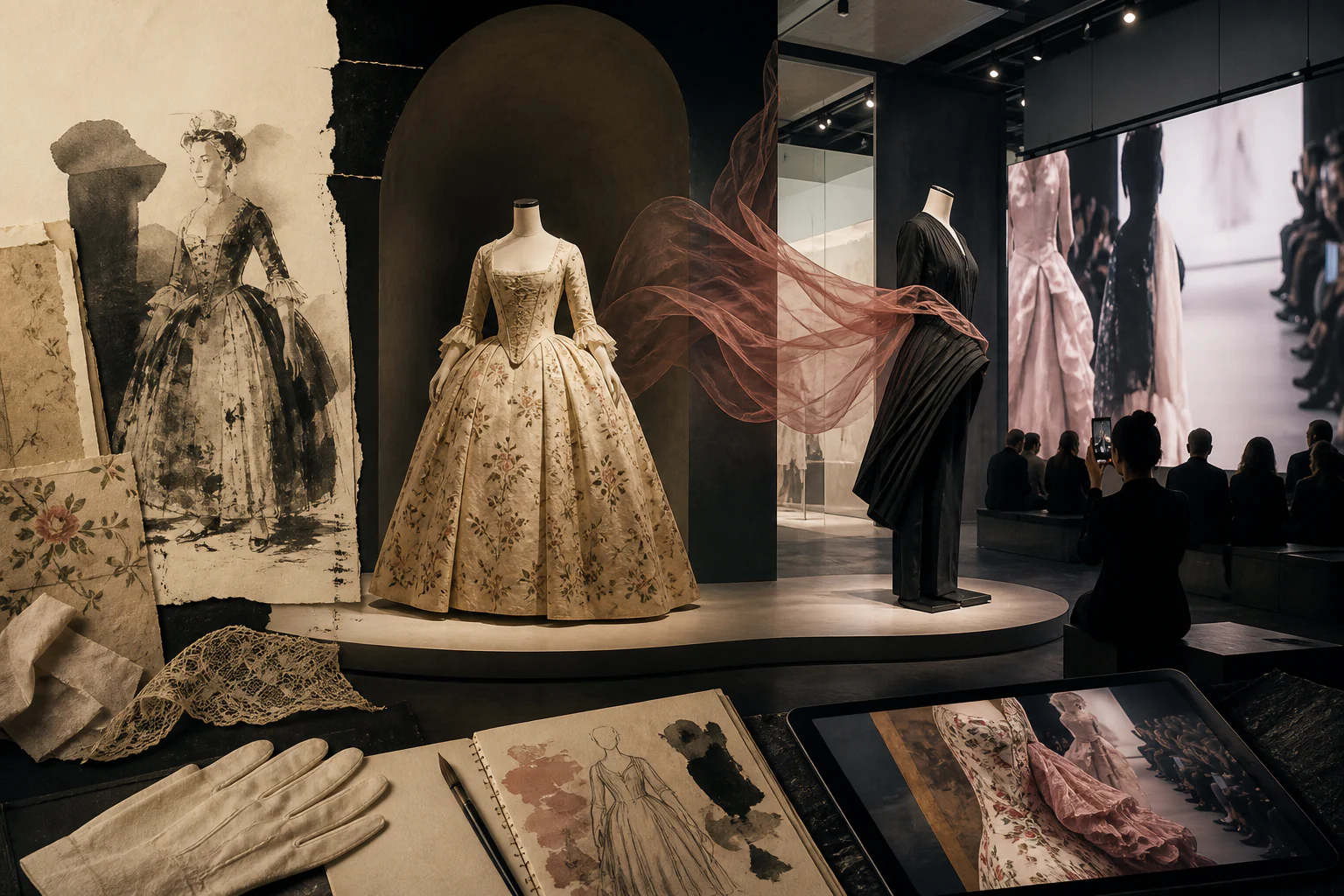
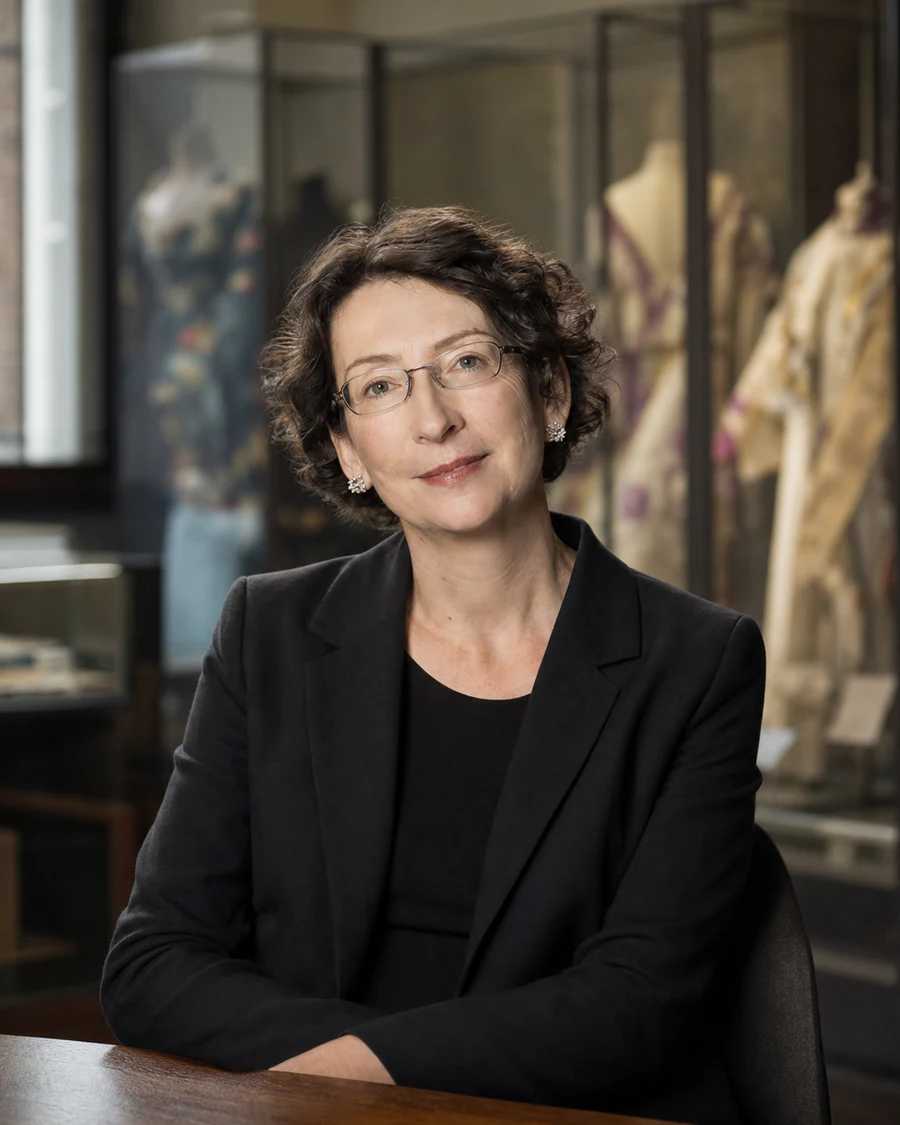
Claire Wilcox belongs to the generation of curators that helped make fashion one of the central public languages of the Victoria and Albert Museum. Her exhibitions connected archive, designer practice, scenography and broad audiences while demonstrating that museum fashion requires precise work with the body, historical context and authorship.
Editorial thesis
Claire Wilcox belongs to the generation of curators that helped make fashion one of the central public languages of the Victoria and Albert Museum. Her exhibitions connected archive, designer practice, scenography and broad audiences while demonstrating that museum fashion requires precise work with the body, historical context and authorship.
Reader question
How can a curator make fashion accessible to a broad audience without turning historical dress into entertainment scenery?
Short answer
Wilcox worked for many years at the Victoria and Albert Museum while developing fashion curation academically. Radical Fashion, Vivienne Westwood, The Golden Age of Couture, Alexander McQueen: Savage Beauty, Frida Kahlo and Fashioning Masculinities demonstrate a range from designer monograph to social questions of body and gender.
1. The V&A: collection as a long conversation
Wilcox spent many years connected to the V&A fashion department, working with the historic collection as an active research resource. [source]
2. Mechanism: collection as system
Long work with a collection lets a curator see objects not only as seasonal exhibits but as nodes linking periods. The point is not an isolated gesture but a way of organising practice. The decision connects author, material, institution, technology and audience, so it cannot be reduced to a personal signature or a polished result. For VANSMITHLAB this episode functions as a mechanism that can be compared across neighbouring practices. [source]
3. Significance: collection as system
This episode explains why Claire Wilcox belongs in VANSMITHLAB’s map of authors. The significance lies in changing professional rules: who decides, how authorship is distributed, what counts as the result, and how the work enters public culture. The profile therefore keeps context attached to achievement instead of turning biography into a list of milestones. [source]
4. Radical Fashion: the contemporary designer enters the museum
The 2001 exhibition Radical Fashion presented contemporary designers through experiments in form, material and body. [source]
5. Mechanism: the contemporary in the museum
A museum does not only confirm an established canon; it can register important processes while they are still developing. The point is not an isolated gesture but a way of organising practice. The decision connects author, material, institution, technology and audience, so it cannot be reduced to a personal signature or a polished result. For VANSMITHLAB this episode functions as a mechanism that can be compared across neighbouring practices. [source]
6. Significance: the contemporary in the museum
This episode explains why Claire Wilcox belongs in VANSMITHLAB’s map of authors. The significance lies in changing professional rules: who decides, how authorship is distributed, what counts as the result, and how the work enters public culture. The profile therefore keeps context attached to achievement instead of turning biography into a list of milestones. [source]
7. Vivienne Westwood: monograph and the politics of dress
The 2004 Vivienne Westwood exhibition examined a long career from punk to historical quotation and complex cutting. [source]
8. Mechanism: monograph without simplification
A designer monograph must hold contradictions: clothing can be commercial, theatrical, political and technically sophisticated at once. The point is not an isolated gesture but a way of organising practice. The decision connects author, material, institution, technology and audience, so it cannot be reduced to a personal signature or a polished result. For VANSMITHLAB this episode functions as a mechanism that can be compared across neighbouring practices. [source]
9. Significance: monograph without simplification
This episode explains why Claire Wilcox belongs in VANSMITHLAB’s map of authors. The significance lies in changing professional rules: who decides, how authorship is distributed, what counts as the result, and how the work enters public culture. The profile therefore keeps context attached to achievement instead of turning biography into a list of milestones. [source]
10. The Golden Age of Couture: the system behind famous names
The 2007 exhibition The Golden Age of Couture examined postwar haute couture including ateliers, photography, clients and production processes. [source]
11. Mechanism: atelier and system
Curatorial history becomes more precise when designers are shown alongside makers, production systems and social infrastructure. The point is not an isolated gesture but a way of organising practice. The decision connects author, material, institution, technology and audience, so it cannot be reduced to a personal signature or a polished result. For VANSMITHLAB this episode functions as a mechanism that can be compared across neighbouring practices. [source]
12. Significance: atelier and system
This episode explains why Claire Wilcox belongs in VANSMITHLAB’s map of authors. The significance lies in changing professional rules: who decides, how authorship is distributed, what counts as the result, and how the work enters public culture. The profile therefore keeps context attached to achievement instead of turning biography into a list of milestones. [source]
13. From Club to Catwalk: subculture becomes museum material
The 2013 exhibition explored British club fashion of the 1980s and the relationship among nightlife, youth culture and design. [source]
14. Mechanism: subculture in the museum
The museum expands its archive by recognising that important fashion emerges outside houses and official runways. The point is not an isolated gesture but a way of organising practice. The decision connects author, material, institution, technology and audience, so it cannot be reduced to a personal signature or a polished result. For VANSMITHLAB this episode functions as a mechanism that can be compared across neighbouring practices. [source]
15. Significance: subculture in the museum
This episode explains why Claire Wilcox belongs in VANSMITHLAB’s map of authors. The significance lies in changing professional rules: who decides, how authorship is distributed, what counts as the result, and how the work enters public culture. The profile therefore keeps context attached to achievement instead of turning biography into a list of milestones. [source]
16. Savage Beauty in London: translating an exhibition between institutions
In 2015 the V&A presented the London version of Alexander McQueen: Savage Beauty, adapting the Met project to a different architecture and local context. [source]
17. Mechanism: translating an exhibition
Moving an exhibition demonstrates that it cannot simply be copied; architecture, collection and audience change its meaning. The point is not an isolated gesture but a way of organising practice. The decision connects author, material, institution, technology and audience, so it cannot be reduced to a personal signature or a polished result. For VANSMITHLAB this episode functions as a mechanism that can be compared across neighbouring practices. [source]
18. Significance: translating an exhibition
This episode explains why Claire Wilcox belongs in VANSMITHLAB’s map of authors. The significance lies in changing professional rules: who decides, how authorship is distributed, what counts as the result, and how the work enters public culture. The profile therefore keeps context attached to achievement instead of turning biography into a list of milestones. [source]
19. Frida Kahlo: clothing, body and biographical vulnerability
The 2018 Frida Kahlo project used clothing and personal objects to discuss self-construction, illness, identity and public image. [source]
20. Mechanism: ethics of the personal archive
Personal objects require special ethics: a museum should not turn bodily vulnerability into decorative exoticism. The point is not an isolated gesture but a way of organising practice. The decision connects author, material, institution, technology and audience, so it cannot be reduced to a personal signature or a polished result. For VANSMITHLAB this episode functions as a mechanism that can be compared across neighbouring practices. [source]
21. Significance: ethics of the personal archive
This episode explains why Claire Wilcox belongs in VANSMITHLAB’s map of authors. The significance lies in changing professional rules: who decides, how authorship is distributed, what counts as the result, and how the work enters public culture. The profile therefore keeps context attached to achievement instead of turning biography into a list of milestones. [source]
22. Fashioning Masculinities: menswear as a history of the body
The 2022 Fashioning Masculinities exhibition examined menswear through histories of body, power, beauty and changing gender norms. [source]
23. Mechanism: clothing and gender
“Menswear” becomes not a neutral wardrobe category but a history of which bodies society permits to count as masculine. The point is not an isolated gesture but a way of organising practice. The decision connects author, material, institution, technology and audience, so it cannot be reduced to a personal signature or a polished result. For VANSMITHLAB this episode functions as a mechanism that can be compared across neighbouring practices. [source]
24. Significance: clothing and gender
This episode explains why Claire Wilcox belongs in VANSMITHLAB’s map of authors. The significance lies in changing professional rules: who decides, how authorship is distributed, what counts as the result, and how the work enters public culture. The profile therefore keeps context attached to achievement instead of turning biography into a list of milestones. [source]
25. Teaching and the Centre for Fashion Curation
Alongside and after museum work, Wilcox has developed research and teaching at London College of Fashion and the Centre for Fashion Curation. [source]
26. Mechanism: curation as discipline
Curatorial practice becomes a discipline with its own methods, archives and critical language. The point is not an isolated gesture but a way of organising practice. The decision connects author, material, institution, technology and audience, so it cannot be reduced to a personal signature or a polished result. For VANSMITHLAB this episode functions as a mechanism that can be compared across neighbouring practices. [source]
27. Significance: curation as discipline
This episode explains why Claire Wilcox belongs in VANSMITHLAB’s map of authors. The significance lies in changing professional rules: who decides, how authorship is distributed, what counts as the result, and how the work enters public culture. The profile therefore keeps context attached to achievement instead of turning biography into a list of milestones. [source]
28. Legacy: fashion gains a durable place in the public museum
Wilcox’s career maps the transformation of fashion exhibitions from specialised events into one of the major ways museums address broad audiences. [source]
29. Mechanism: the public fashion museum
The power of the format demands responsibility: popularity should lead to more complex readings of dress rather than replace them. The point is not an isolated gesture but a way of organising practice. The decision connects author, material, institution, technology and audience, so it cannot be reduced to a personal signature or a polished result. For VANSMITHLAB this episode functions as a mechanism that can be compared across neighbouring practices. [source]
30. Significance: the public fashion museum
This episode explains why Claire Wilcox belongs in VANSMITHLAB’s map of authors. The significance lies in changing professional rules: who decides, how authorship is distributed, what counts as the result, and how the work enters public culture. The profile therefore keeps context attached to achievement instead of turning biography into a list of milestones. [source]